Preview:
In this episode, Ryan answers a thoughtful listener question from Shirley, a pilot who recently inherited a parcel of land from her uncle. With a mortgage still on her home and retirement a few years away, Shirley wonders: should she sell the land to become debt-free or hold on to it and explore other options?
Subscribe On Your Favorite App:
 YouTube
 Apple Podcasts
 Spotify
 Amazon Music
 iHeartRadio
 TuneIn
More About This Episode:
Ryan shares the key considerations when deciding what to do with inherited real estate, especially when it’s not an income-producing asset. He also unpacks why land, while valuable, may not always be the best strategic tool, especially when compared to investments that generate cash flow or help diversify your financial plan. The conversation expands into mortgage rates, opportunity costs, and why financial decisions should always be personalized, not just based on numbers, but based on your long-term goals.
Here’s what we cover in this episode:
🏡 Land vs. liquidity? (It depends on your goals)
💸 Should you rush to pay off your mortgage?
📉 When “dead assets” slow your growth
🧾 Why details matter in inheritance decisions
📊 Why timing and interest rates make all the difference
0:00 – Intro
0:25 – Listener Question: Inherited Land & Mortgage Freedom
2:21 – The Real Cost of Paying Off a Low-Rate Mortgage
4:42 – Why Every Financial Decision Needs Context
💸 Home Equity & Mortgage YouTube video: https://www.youtube.com/watch?v=j37WkBP0Yd4
Resources:
Retire Pilots – https://retirepilots.com
Get your FREE Retirement Toolkit – https://bit.ly/3ZmZsaX
Pilot Tax – https://pilot-tax.com/
The Pilot’s Advisor Podcast is also on video. Watch & Subscribe on YouTube: https://bit.ly/3EIEBW2
Connect with Pilot-Tax: https://pilot-tax.com/
Episode Transcription:
(Note, this is an automated transcription. Please forgive any errors.)
Walter Storholt
On today’s edition of the pilot’s advisor, we’ve got a viewer question from the YouTube channel from Shirley, and Shirley’s curious about inheriting a parcel of land, and what kind of freedom that’s going to unlock for her as she looks to reduce her flying schedule in the near future. So we’ll dive into that pilot’s question coming up on the pilot’s advisor. Right? Ryan, we’ve got a viewer question today from Shirley, and Shirley says, I just inherited a parcel of land from an uncle who never had kids. If I sold it, I’d probably clear just enough to pay off my mortgage. I’m a few years from retirement, and being debt free sounds pretty nice, especially since I’d like to slow down my flying schedule soon. Would that be the best use of the money? Have you seen people in this situation before?
Ryan Fleming
Well, life like this happens, for sure, but it really comes down to the details. I mean, did you inherit this land and it’s totally paid off, so you’d only have to pay taxes on it. How’s it zoned? Is there other opportunities there? The biggest thing about land that I think about, versus owning another house or being able to rent out a house, is that land is not an income producing asset. So if you have a mortgage out on land, or I recently had a client that had an opportunity to buy a bunch of acreage, and he really wants it, but once again, you’d be taken out a mortgage and there’s no income coming in. You just have to pay out. So I think the details of this situation really, really matter. It sounds like even if there was a lien against the land, she could sell it and make make some money to pay off her mortgage. Whether that’s the right long term thing to do or not really depends on the details, so unfortunately, think she’d have to reach out, discuss the details, see what the land opportunity you know the cost benefit analysis of the opportunity cost there is, but I personally have never been a really, really big fan of buying land, simply because it’s not an income producing asset, whereas, if I can go buy a house and run it out, those people pretty much pay off your mortgage for you, and over time, you have a bunch of equity there. So that’s the big thing I would think about. And the other thing to consider, if you’re buying land versus a house, you normally don’t get as good of rates, because the bank looks at it as a riskier lending opportunity as well.
Walter Storholt
Yeah, so if she’s looking to then kind of offload this land and then ends up with a chunk of money to work with, putting that all into the mortgage, I guess that big question kind of then becomes mortgage rate that she’s dealing with, and if that makes sense to pay off, if she’s bought recently and is in that 567, 8% range, then that’s one thing, versus, you know, from a few years ago, if She’s got one of those two and a half percent mortgages
Ryan Fleming
Well, and that’s, and that’s a whole nother question, you know, absolutely, a whole nother conversation. And I’ll actually leave a link for this under this show for my home equity video that I made between Maverick and Iceman, a mortgage is, is not what I consider bad debt, and especially not if it’s, you know, under 554, percent somewhere around there, I’d much rather take my money and allow it to work for me somewhere else, versus paying down that mortgage. Because we pay down a mortgage, you’re basically locking in whatever number it’s at. If it’s 3% Whoo, you locked in your money, money at 3% and then it’s a dead asset after that. It’s not, you know, it may be appreciating. But outside of that, that money that you paid off is not working for you at all.
Walter Storholt
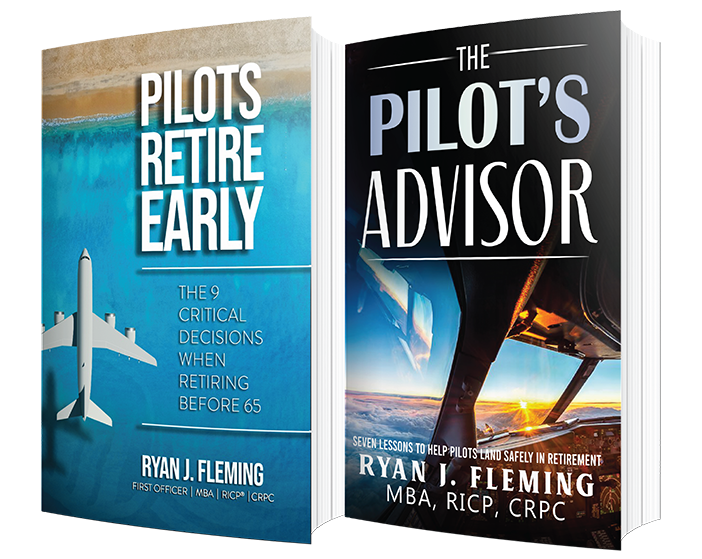
Attention, aviators, when you’ve spent years in the cockpit managing the complexities of flight, isn’t it time you navigated your retirement with the same precision? Introducing retirepilots.com right at your touchdown zone on our homepage, there’s a beacon flashing. Get my free toolkit. Click that and you’ll be cleared for a direct route to Ryan’s retirement toolkit, tailor made for pilots like you. Inside, you’ll find two of his important works, the pilot’s advisor and pilots retire early. Between these two books, you can decipher the nine critical decisions when retiring before 65 and discover the seven lessons to help pilots land safely in retirement. But that’s not all. This toolkit is packed with altitude high value, including extras to get your retirement plans off the runway and light the afterburners on your 401 k vector on over to retirepilots.com to grab your toolkit, and let’s embark on this journey together. Yeah, so we’ll leave a link to the to that video in the description of today’s show. Go check it out. I think that’ll be really helpful for a lot of people to kind of understand maybe some of those benefits there. Ultimately, this question highlights, to me, Ryan kind of as a final thought here, the importance when you have questions like this of talking about your specific situation with an advisor, with somebody who can walk you through things, because you can’t really answer the question and wait till we talk about goals. Get the full picture of what you’re going through, otherwise the advice might not be suitable or fit what you’re trying to do. Yeah,
Ryan Fleming
and everybody should remember, this is a podcast. We’re not talking about your individual situation. We would need to know the details of your situation before we could give you good financial advice. But I see this all the time, where I love it when my clients reach out to me and ask questions like this, because pilots don’t know what they don’t know. And I think those that do it themselves for so long, they’re they might reach out right before retirement and realize that they have a massive tax problem that they haven’t addressed. Whereas, if I could have talked to them 10 or 15 years later, not only could I have made them help them with their portfolio so it grew a little bit better, but then we’d have all these tax issues with some strategic tax planning, and they’d be in a lot better situation. So definitely reach out to an advisor. Definitely get a CPA. There’s a reason why there’s professionals out there. There’s a reason why when my family’s going to the airport, I want a professional pilot up there in the cockpit to make sure that they get from point A to point B. And I think the same thing goes with the financial services industry, whether you’re talking about taxes or anything else. Hire a professional
Walter Storholt
Yep. And if you would like to talk to Ryan Fleming and perhaps work with the pilots advisor, a financial advisor who specifically works with pilots throughout the industry, you can certainly do that. All you have to do is click the link in the description of today’s show. You’ll see where you can schedule a consultation after you’ve ordered the toolkit. So that link to the toolkit is in the description of today’s show that comes with Ryan’s books, special reports, other great information to know about planning for retirement and your financial life, and it comes with that free portfolio analysis that Ryan’s going to walk you through and meet with you one on one to talk about further. So order that toolkit via that link and check out that video we mentioned as well, and until then, we’ll see you next time. Ryan, thank you so much. Walter,
Ryan Fleming
it’s always a pleasure talking to you.
Speaker 1
Information is for illustrative purposes only and does not constitute tax, investment or legal advice, always consult with a qualified investment legal or tax professional before taking any action.
This podcast episode is for educational and informational purposes only. The opinions expressed are those of the speaker as of the recording date and are subject to change. This content does not constitute personalized investment, tax, or legal advice. Please consult a qualified professional before making financial decisions.