Preview:
Today’s story is all too familiar: a pilot nearing retirement, intrigued by a cockpit conversation about options trading, only to watch his portfolio nosedive. In this episode, Ryan gets candid about why jumping into options (especially in your 50s) might not be the best option for a secure retirement. With decades of experience guiding pilots, Ryan explains how speculation, stock picking, and chasing “hot tips” can wreck even the best-laid glide paths.
Subscribe On Your Favorite App:
 YouTube
 Apple Podcasts
 Spotify
 Amazon Music
 iHeartRadio
 TuneIn
More About This Episode:
He shares real stories of pilots who gambled with their portfolios, including one who lost 60% of their retirement savings banking on a JetBlue/Spirit merger, and underscores how financial success often hinges more on avoiding mistakes than chasing high returns. It’s a wake-up call for anyone tempted by get-rich-quick strategies this close to landing. Before you take financial advice from the jump seat, make sure you’re not about to nosedive your future.
Here’s what we cover in this episode:
🚫 Why options trading is playing with fire
📉 A cautionary tale: one pilot’s 60% loss
🧠 The psychology behind poor investing choices
✈️ “Don’t take financial advice from a pilot”
🛑 How to avoid sabotaging your own retirement
0:00 – Intro
0:35 – Perry’s Jump Seat Question: Options at age 58
2:48 – The Real Job of a Financial Advisor
4:29 – Stock Picking, Speculation, and Airline Loyalty Gone Wrong
7:49 – Why You Shouldn’t Take Financial Advice From the Cockpit
10:06 – When Money Mistakes Destroy Marriages
Resources:
Retire Pilots – https://retirepilots.com
Get your FREE Retirement Toolkit – https://bit.ly/3ZmZsaX
Pilot Tax – https://pilot-tax.com/
The Pilot’s Advisor Podcast is also on video. Watch & Subscribe on YouTube: https://bit.ly/3EIEBW2
Connect with Pilot-Tax: https://pilot-tax.com/
Episode Transcription:
(Note, this is an automated transcription. Please forgive any errors.)
Walter Storholt 00:00
On today’s episode, we’ve got a question from Perry. And Perry’s a pilot who was recently sitting next to his co pilot, and they started talking about investing, and options came up. And now Perry’s very into Options, and he’s got some good questions for Ryan on today’s episode. So I think this one’s right up your alley, Ryan, and I’m looking forward to getting to it. So let’s do it here on the pilot’s advisor. Back for another episode of the pilot’s advisor, I’m Walter Storholt, alongside a pilot himself and financial advisor Ryan Fleming and Ryan, I’ve got a great viewer question for you on today’s episode from Perry. Perry says a buddy in the cockpit jump seat was telling me how he’s done really well trading options. I picked up a book to learn more, and I’m thinking about dipping a toe in. I’m 58 so I don’t want to do anything reckless with my retirement glide path. Is this a bad move at my stage of life? And can I just say I appreciate the analogies in Perry’s question.
Ryan Fleming 01:02
Well, first off, I said, Yes, it’s a horrible idea. Run.
Walter Storholt 01:09
All right. Great show. Thanks Perry for the question. Moving on. Go
Ryan Fleming 01:12
plant a garden, or go on a walk, or find the gym, go fishing, I don’t know, find something to not ruin your retirement. The things I’ll say about this, you know, to be a financial professional, it’s, it’s kind of like passing the bar exam. You have to do a series seven or a series 65 and we have to learn all about options and puts and calls and all that. The bottom line behind this is less than, like, point 5% of the population can actually trade options and make any money. Most people that do do it hurt themselves. I don’t do it. I know. I know some pilot friends that do do it. Some of them make make money, but most of them don’t. For the average individual, this is just playing with fire when we talk about, you know, when I actually have a meeting with a new client, excuse me, a new prospect, I tell them that most of what I do is try to get pilots to not speculate, gamble their money, stock picking, market timing, track record, investing, options trading, would fall under that, and you’re gonna hurt yourself more than you help yourself. And I’ve seen so many cases, the individuals that are doing things like that, that read more, that are constantly watching TV, they’re really into their finances. Actually hurt themselves more than they help themselves and versus the person that you know, dollar cost average, put all their stuff in. ETFs had a lot more passive portfolio, but it was very diversified. They tend to have a lot more money in the end. And these guys at stock pick market time, track record, invest trade options, or, you know, my main retirement plan is to win the lottery. You know, it’s kind of the same thing.
Walter Storholt 02:50
That’s really interesting that you said your main role as a financial advisor, just like I would imagine a lot of people, if you ask them, what’s the role of a financial advisor would be to, you know, invest my money and make more, right, a larger return than I could get on my own. But you’re kind of saying that’s not even really my most important function of my job. The most important function of my job is to keep you from doing something dumb.
Ryan Fleming 03:15
No, I 100% agree with that, especially after they’re a client. Do I believe that I can analyze somebody’s portfolio and show them a better way and probably get better long term returns. Absolutely yes, but 100% I would say that the far majority of what I do is a financial counselor. It’s actually a counselor where I’m talking them off the ledge. I’m trying to make sure they don’t do something stupid, making sure they don’t make a short term, emotional decision with their money, versus constantly thinking long term. So there’s, there’s a massive part of money, this psycho, psychologic, or behavioral that is, by far, most of my meetings are actually talking about that when I’m meeting with a client. It’s the psychology, the action, the behavioral side of things, and making sure people don’t make mistakes versus, oh, we got you an extra 1% because we had a better asset allocation.
Walter Storholt 04:05
Yeah, it’s nice to be able to have more efficiency and better returns and squeeze out an extra X amount of percent on the top side. But yeah, how much more powerful is that it’s not compared to losing 50% from making a bad decision, that’s way more impactful to somebody’s life than the extra one or 2% again, nice to have, but doesn’t mean anything if we’re not taking care of that other part and limiting those mistakes.
Ryan Fleming 04:30
Yeah, and I’m going to share a mistake that recently happened, one of the biggest mistakes. Well, I’ll just talk about some of the big mistakes I see. Number one, I don’t think people are nearly as aggressive as they need to be throughout most of their career to save enough, because they don’t understand truly how much you have to have saved to replace your income and retirement. So that’s one aspect, but we talked about the stock picking, one of the things I see a lot is so XYZ pilot works for. United, and then along the side they think it’s a great idea to buy a ton of United stock. It happens with Delta pilots, FedEx pilots, Southwest pilots, so your whole life is tied to that airline, and you don’t need more exposure to that airline. You need diversification. So owning that individual stock doesn’t make sense. Now, if they’re going to sell it to you at a discount, by all means, take that 10% discount, then sell it, diversify it. Let’s move on. But one of the big things that’s come up recently when we talk about speculating and gambling, Jet Blue pilots had the opportunity with Spirit Airlines. They talked about a merger. It looked like it was imminent. I watched a lot of people transition a lot of money, a lot of their retirement assets, into this JetBlue stock or spirit stock, because they thought that merger was going to cause either of those stock positions to pop. Well, guess what? I just sat down with somebody that lost 60% of their whole retirement and is a big number, and they’re in their 50s, and guess what, there’s no way you’re going to recover that. I mean losing 60% of your retirement. And I hate to say it, but most of the time with investing, it’s fear or greed. And this was a clear case of greed. You know, they weren’t scared about what was going to happen. They were, I’m going to make a lot of money off this. And so they put all their chips into the table, and guess what? It didn’t hit. So it’s hard to watch, it’s hard to see, and unfortunately, I see it all the time, but keeping people from making those mistakes that are going to drastically hurt their future, or as I say, that’s not going to allow them to land in retirement, is something that I deal with or with life happening and pick it up to pieces afterwards.
Walter Storholt 06:44
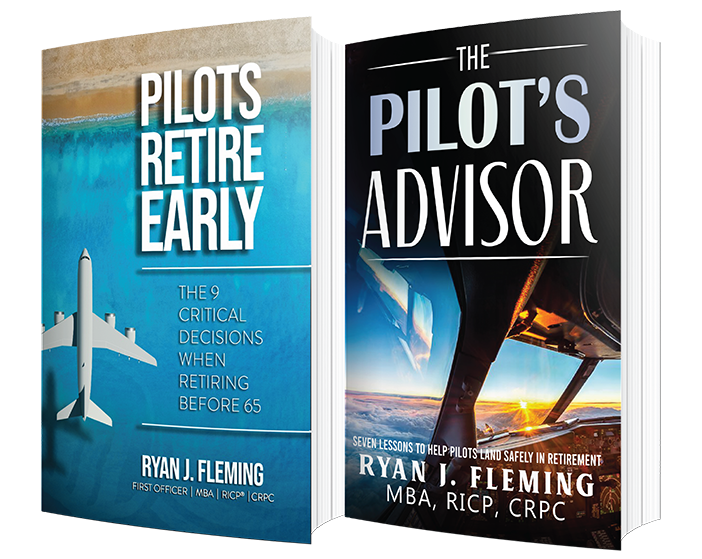
Attention aviators, when you’ve spent years in the cockpit managing the complexities of flight, isn’t it time you navigated your retirement with the same precision? Introducing retirepilots.com right at your touchdown zone on our homepage, there’s a beacon flashing, get my free toolkit. Click that, and you’ll be cleared for a direct route to Ryan’s retirement toolkit, tailor made for pilots like you. Inside, you’ll find two of his important works, the pilot’s advisor and pilots retire early. Between these two books, you can decipher the nine critical decisions when retiring before 65 and discover the seven lessons to help pilots land safely in retirement. But that’s not all. This toolkit is packed with altitude high value, including extras to get your retirement plans off the runway and light the afterburners on your 401k vector on over to retirepilots.com to grab your toolkit, and let’s embark on this journey together. All good points. Ryan, I want to key in on one more thing on this question, and it was right at the beginning, and it’s when Perry said a buddy in the cockpit jump seat was telling me, it doesn’t matter what you fill in the blank with with the rest of that conversation, this sounds to most people like we’re going down a good path, like someone I trust is telling me something important that’s working for them, therefore it can work for me. It’s setting it up in this really positive light. But you’ve seen that steer people in a wrong direction as well the best intentions, right and the best trying to learn, trying to get communicative with them. He even picks up a book as part of that next sentence to try and learn a little bit more, seeming to be doing all of the right things. But you’ve seen people kind of fall into that trap
Ryan Fleming 08:30
before. Yeah, pilots do talk in the cockpit. I mean, you might be crossing the Atlantic ocean or the Pacific Ocean. There’s a lot of time up there, some time, but in most cases, pilots talking is a bad idea. The big joke is, never take financial advice from a pilot. For sure. You know they they talk about, if you want to quickly make $2 million into 1 million, take advice from a pilot. So, so the joke holds true. But I think the bigger thing is, anytime you get somebody else that, if it sounds too good to be true, or you haven’t been doing it yet, and you’ve lived 50 years in this life, it’s probably too good to be true, and it’s something that’s going to hurt yourself. And I’ve watched it, you know, not only with something like option options trading, I’ve seen some speculative opportunities that are out there that have a guaranteed return. And of course, you know, you get the details of it, and it’s like, it sounds too good to be true, and they come back a year later going, Yeah, I just lost, you know, 50 grand. Well, you know, Don’t speculate and gamble through
Walter Storholt 09:26
money. Yeah, I liked your impression of of Perry’s question here, what didn’t sound like Perry’s in a bad spot when it comes to his retirement plan. Sounds like he just needs a hobby. And so, like you said, Pick up gardening, find a different hobby than the options trading.
Ryan Fleming 09:40
Good investing is not sexy at all. It’s actually boring and methodical and disciplined and all those things like, it’s not, it’s not a it’s not flashy and and unfortunately, as soon as you start doing some of those things, you’re gonna, you’re gonna hurt
Walter Storholt 09:55
yourself. Yeah, not sexy until you get to the finish line and you see that big balance in there. But takes, takes a long, long time to mature into that level.
Ryan Fleming 10:04
Yeah, and I get it, it’s a lot more fun be like, Oh, I bought a bunch of Tesla micro strategy. And here’s what’s going to happen, and I’m going to be rich tomorrow, and then it doesn’t happen. So
Walter Storholt 10:15
yeah, yeah, it would feel great if it did. And the one time it may happen, it’ll feel good. But are you going to be right every single time? And
Ryan Fleming 10:22
probably not, but no. And one more point that I’ll say with that is, I’ve watched many I’ve been in many meetings where a lot of money has been lost, and said spouse is not very happy. And if you don’t think that’s going to affect your relationship when you lose half of your money right before you’re about to retire, you are wrong.
Walter Storholt 10:40
Yeah. I mean, we’re joking about most of this episode, but you’re spot on. I mean, this has serious consequences if we do take bad steps here. And yeah, that can, that can ruin marriages, right? I mean, absolutely, what’s one of the number one reasons for divorce? And money’s right there at the top of the list. You know, competing with some other things, but it’s honestly a root of a lot of problems so
Ryan Fleming 11:03
Well, absolutely, and we talked about it before, I think one of the biggest things I do is counseling. And I am a counselor. I mean, sometimes I feel like I’m a marriage counselor, because it does, it does affect all these things. And unfortunately, when life happens, whatever that is, whether it’s divorce, death, marriage, I mean almost anything. When life happens, I get a phone call or an email because it normally involves money. I
Walter Storholt 11:26
want to use the term, don’t shoot yourself in the foot. But what’s the pilot version of don’t shoot yourself in the foot? Ryan,
Ryan Fleming 11:32
I like to use the one where, you know, pilots are really good at cutting off their nose to spite their face.
Walter Storholt 11:38
Okay, gotcha. So, is there a plain term for that? I don’t know. Like, what would you do? Like, don’t, don’t, don’t push the levers the wrong way.
Ryan Fleming 11:47
I don’t know. I’ll have to think about that off. To get back to you another one that I like with pilots, not one that exists. You can create one, right? Yeah, well, I’ll come up with one. We’ll figure one out. But because I do like to use, you know, flying terms, or, like, you know, related to sports or what have you. But, you know, like with market turbulence, one of the big things I always say is, you know, the markets start getting turbulent and pilots panic. Well, if you were flying an airplane and it started getting a little bit turbulent, you wouldn’t just jump out of the airplane. Would you that wouldn’t make any sense at all. And the same thing, same thing applies to the to the market. So I’ll think of a pilot analogy, and I’ll get back to you on that
Walter Storholt 12:23
sounds good. We’ll be on the lookout for it in a future episode. In the meantime, if you’re like Perry, you’ve got questions about what you should be doing when it comes to your retirement, your finances planning for the future, Perry was 58 so he’s getting closer and closer to that retirement date and trying to make the right decisions. Please talk to Ryan about what you’re going through if you’re a pilot and need some help properly planning for your retirement future. We make it really easy to get there and to have that conversation, all you have to do is order Ryan’s retirement toolkit, specifically built for pilots. It’s got some of his books, some additional great resources to help you learn about retirement and finances. And most importantly, comes with a free portfolio analysis where you can meet one on one with Ryan, talk about your goals, look at your specific portfolio and get into the details of your plan. It’s great to cover some general knowledge here on the show, but Ryan obviously loves the day to day basis of diving into the specifics with pilots and their situation. So click the link in the description of today’s show and you can order that toolkit. There’s no cost or obligation to get the kit. Ryan’s going to send it to you for free. And then you can schedule that conversation along with checking out those additional resources, Ryan, thank you.
Ryan Fleming 13:30
Always enjoy talking to you. Walter these, these mailbags are kind of fun. Maybe we should do some more in the future.
Walter Storholt 13:36
Yeah, feel free to send in your questions, folks. There’s There’s links in the description for how to submit questions or leave a comment on the YouTube videos if you’d like, and we can pull questions from there as well. But don’t ever hesitate to reach out if you are curious about something like Perry on today’s show, we’re happy to dive into it. We’ll see everybody next time, right back here on the pilot’s advisor.
Speaker 1 13:59
Information is for illustrative purposes only and does not constitute tax investment or legal advice. Always consult with a qualified investment legal or tax professional before taking any action.
This podcast episode is for educational and informational purposes only. The opinions expressed are those of the speaker as of the recording date and are subject to change. This content does not constitute personalized investment, tax, or legal advice. Please consult a qualified professional before making financial decisions.