Preview:
Raising kids used to follow a predictable pattern: they grow up, move out, and you finally get the house to yourself. But for many pilots today, that “empty nest” moment keeps getting delayed. In this episode, Ryan dives into the emotional and financial turbulence of raising adult children while planning for retirement. If your kids are still living at home, boomeranging back, or needing long-term financial help, Ryan shares what that really means for your retirement runway.
Subscribe On Your Favorite App:
 YouTube
 Apple Podcasts
 Spotify
 Amazon Music
 iHeartRadio
 TuneIn
More About This Episode:
He breaks down how to set healthy boundaries without cutting your kids off, how to stay generous without compromising your financial future, and why pilots—especially those looking to retire early—need to rethink old assumptions. You’ll also hear how housing costs, student debt, and economic headwinds are reshaping the modern family dynamic. Tune in to hear about how you can land a smooth retirement while still helping your kids take off.
Here’s what we cover in this episode:
🏡 Why adult kids are staying home longer
💸 How to support without sabotaging your plan
🛫 Retirement prep when your “nest” is full
🚧 Setting healthy financial boundaries
0:00 – Intro
0:54 – Listener question – no empty nest coming
2:58 – Assessing Your Retirement Budget ‘
4:38 – Healthcare, Legal and Financial Implications
8:02 – Emotional vs. Financial Support
Resources:
Retire Pilots – https://retirepilots.com
Get your FREE Retirement Toolkit – https://bit.ly/3ZmZsaX
Pilot Tax – https://pilot-tax.com/
The Pilot’s Advisor Podcast is also on video. Watch & Subscribe on YouTube: https://bit.ly/3EIEBW2
Connect with Pilot-Tax: https://pilot-tax.com/
Episode Transcription:
(Note, this is an automated transcription. Please forgive any errors.)
Ryan Fleming
So the world’s changing, and I see more and more often where those kids never leave the house, or like the Matthew McConaughey movie Failure to Launch. So how do you plan for retirement when you’ll never have an empty nest? We’ll talk about it on today’s show. Well, it’s
Walter Storholt
an interesting topic on today’s show, as we talk about empty nesters that never actually get there for one reason or another. I’m Walter Storholt, welcome to the show here. On the pilot’s advisor, alongside the pilot’s advisor himself, Ryan Fleming and Ryan, I think this is really interesting. Now there’s a particular reason for this topic on today’s show, a viewer actually sent in this question. But I know we’ll be able to kind of broaden this out a little bit to the other reasons that this tends to happen again. How do you plan for retirement when you’re not going to have an empty nest? So this question comes to us from a pilot. Don’t have a name for this one, Ryan, so that’s okay, but this person says, My son is an adult, but he’s somewhere on the autism spectrum and will probably be living with us for the rest of our lives. He has a job, but I don’t really see him being able to live alone. How do I factor this into our retirement planning, since we’ll never really experience the empty
Ryan Fleming
nest? Well, I think that’s a great question, and I’ve actually dealt with this with a few of my clients, and it definitely changes the retirement planning picture. I think legacy planning becomes even more important, having a trust to figure out how those funds are divvied out to take care of that that child throughout the course of, excuse me, adult, throughout the course of his life. But when I hear that question, it reminds me a little bit more of what we’re dealing with as a as a society today. And it’s for many, many reasons. I mean, like, if we look at the real estate market alone, since interest rates were so low for so long, and then they basically doubled, everybody’s buying power got cut in half, but prices didn’t go down. And if you start looking at it right now, there’s a massive amount of inventory that’s starting to build up in the real estate market, and what’s happened is kids are living at home with their parents. They can’t afford to go out, and, in many cases, even rent an apartment. So I see more and more where pilots are taking care of their kids, whether that’s healthy or not, it’s becoming more and more of a situation. So I think it’s a good thing to talk about,
Walter Storholt
yeah, whether it’s because of a situation with maybe a, you know, a disabled person in your home that’s going to be part of your journey for a longer period of time than maybe what you planned for originally. Or just like you said, maybe it’s that failure to launch reason, or just the economic factors forcing people to be on the payroll longer. And for some people, it’s in different shapes and forms, right? Some people, it’s just, hey, I’m still paying the kids cell phone bill and they’re 35 or maybe it’s still paying for health care for a long period of time, or helping out with these bills, or that bills, or living at home. A lot of reasons why this can pop up. Why is that retirement planning budget going to look different if we’re looking at some of these key areas of planning that go under a shift when this happens.
Ryan Fleming
Yeah, and I’d like to pivot on this a little bit, because I think if we’re talking about, you know, a child that has some some mental disabilities, or is on the spectrum, it’s a much different conversation. I think just looking at it from the standpoint of kids aren’t leaving the house, and once again, I said the failure launch in the intro, because I think of that Michael or
Walter Storholt
Matt McConaughey movie, yeah,
Ryan Fleming
movie where he’s like, 45 still living with his parents, and yeah. And looking at that side of things, your retirement budget is going to look a lot different, because maybe your kids are living at home and they’re they’re putting money away and trying to save for that first house, or whatever it is that they’re doing, and let’s hope they have a job. But regardless, if you still have them in the house, it’s affecting your budget. It’s affecting how much you’re paying in your electric bill. It’s affecting how much water you consume. In most cases, they’re not paying for food either. So when you factor in all those household expenses that are going to continue to go on, it’s a big deal. Also you might not be able to downsize. And you know, many people think about once the kids leave, we’ll move or downsize in retirement, and that that goes out the window because you still need those extra bedroom or
Walter Storholt
two, yeah, if you’re not just two anymore, yeah, three or more,
Ryan Fleming
that condo or whatever it was, is not as appealing. So you might be still cutting the grass and doing yard work, or even paying somebody to do the lawn as well. That adds in your butt
Walter Storholt
point. Yeah, it’s a great point. So I guess it depends on the situation, obviously, if we’re talking healthcare, or what kind of disability we’re looking at, physical versus mental, or, again, just the failure to launch angle. But there are some legal and financial things that I would imagine kind of start to bubble up in these conversations.
Ryan Fleming
Yeah, we talked about that with one of my clients before where, you know, there’s a special needs trust or. Or simple Supplemental Needs, trust is where it gets a lot more complicated, and you’ll want to talk to a trust attorney that specializes in that, or even looking into what kind of government benefits you might get in that situation. So exploring the role or finding an attorney that specializes in that when you’re talking about special needs is definitely something you should do, and I’ve experienced that with with a pilot client already. If it’s just the children, don’t assume that they’re going to take care of you. I mean, I see a lot of individuals that are sacrificing their retirement savings to take care of their kids, just assuming that their kids are going to take care of them down the road and and I always say, Don’t sacrifice your retirement for them, because there’s no guarantees that they’re going to do that.
Walter Storholt
Yeah, not only that, I guess it works in the reverse as well. If you’re in a situation where you’re taking care of the child or the adult, you know the adult in this situation based on this particular question, but like, at some point you may not be able to take care of them either just like they might not be able to take care of you. That’s kind of a two way street. As you age and get further into retirement
Ryan Fleming
well, and it’s sad, but these are conversations that nobody wants to have, or they very rarely have. And there’s certain cultures out there that I think do an amazing job, historically, of taking care of their elders. And unfortunately, we as Americans are not one of those. It seems to be a much more selfish type of society, where, as people age, they become a burden. You know, if you have to have that parent, or, you know, spouses parent move in with you, it becomes, you know, not, not a hey, let’s take care of them. And they’re, they’re prime. But I hear more people talking about is the financial burden of a time burden, or having a lack of patience for dealing with their needs and and so these are definitely the hard questions that you have to talk about, and it definitely complicates things.
Walter Storholt
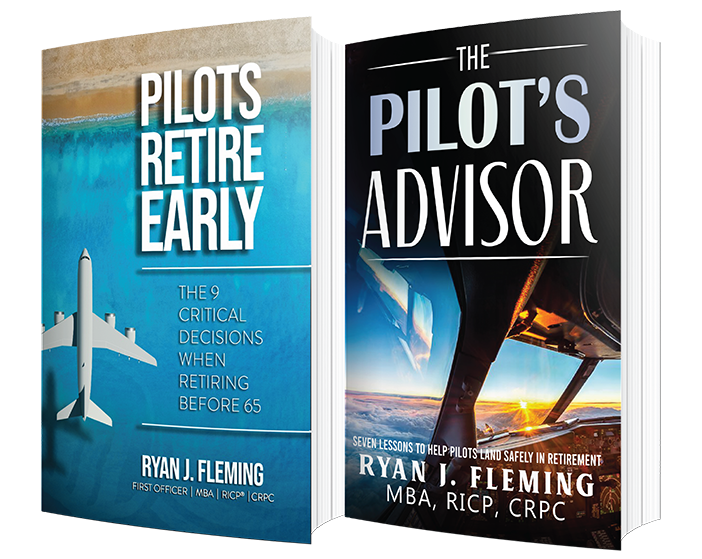
Attention aviators, when you’ve spent years in the cockpit managing the complexities of flight, isn’t it time you navigated your retirement with the same precision? Introducing retirepilots.com right at your touchdown zone on our homepage, there’s a beacon flashing, get my free toolkit. Click that and you’ll be cleared for a direct route to Ryan’s retirement toolkit, tailor made for pilots like you. Inside, you’ll find two of his important works, the pilot’s advisor and pilots retire early. Between these two books, you can decipher the nine critical decisions when retiring before 65 and discover the seven lessons to help pilots land safely in retirement. But that’s not all. This toolkit is packed with altitude high value, including extras to get your retirement plans off the runway and light the afterburners on your 401k vector on over to retirepilots.com to grab your toolkit, and let’s embark on this journey together. I guess Ryan, the reality is every client is going to be a little bit different, right? You’re going to have some that have a very high motivation for that personal care being part of the plan, and others who are not going to want to deal with that. And so financially, they’re going to be leaning more in the direction of hiring professional help you as the planner, I guess have to kind of agnostically approach that and say, whatever your wishes are, I’ll help you make the plan work. But these are the financial consequences of not having mom move in with you, or of not having your adult, you know, your adult live with you longer, your adult child live with you through retirement. And here are the alternatives, but here’s the financial consequence. You got to balance all of that, right? You
Ryan Fleming
have to balance it all. And it really tells me how there’s so many there’s a huge emotional component to any type of planning. I mean, if you’re going to truly have talks about what retirement looks like, to talk about the freedom and flexibility, to talk about taking on a, you know, a parent or spouse’s parent into the house. It complicates a lot of issues, and many people don’t want to talk about those things. Lifelong caregivers go into nursing homes. Nobody wants to discuss those things. But the one thing that’s consistent with all of it money. It affects the budget. It affects how that retirement is going to look, and so having a plan and talking about it, as painful as that is, is much better than having no plan at
Walter Storholt
all. Sometimes, in planning, it’s really easy to just look at the financial component. This is definitely one where we’ve got to balance that with all of the emotional components and relational components that kind of come into this, and that can be some of the hardest planning that you do. Yeah,
Ryan Fleming
and that was, that was one hell of a mailbag question. We’ve run with this for a little bit. It’s almost if I’m depressed, I’m depressed but, but it just goes to show when life happens, I mean, you, or if you do have a special needs child, that things become more complicated and you’ll want to reach out to an attorney and or a financial advisor to help you plan for that situation, because it will have a significant. Difference in your retirement?
Walter Storholt
Yeah, moral of the story is, it’s another layer to the planning process, so you need even more attention, perhaps more guidance and advice through things like this. So if you’re a pilot that has maybe a situation like this popping up in your life, extra care going to be needed. And this was a question about the adult son living with them through their retirement years, but it might be that aging parent and navigating that piece, obviously, that’s a close cousin of a conversation to this one. As we touched on whatever your situation may look like, it’s always helpful to get that customized advice, guidance and reflection, and you can do that with Ryan the pilot’s advisor very easily. The best place to start is to order your retirement toolkit. Part of that toolkit, in addition to resources, books and other great information, is also the opportunity for a free portfolio analysis with Ryan one on one to see where you stand right now in your financial plan and how to improve your financial situation moving forward, and see if you’re a good fit to work with one another. So click the link in the description of today’s show if you want to access that free retirement toolkit and get that portfolio analysis. And other than that, don’t forget to hit Like on today’s video so it shares it and helps promote it to other people so that they can get that kind of help. And subscribe so you don’t miss an episode in the future. Ryan, thanks so much for the help. We appreciate
Ryan Fleming
it as always. Walter, thanks for your time. You guys flying around the world, fly safe.
Speaker 1
Information is for illustrative purposes only and does not constitute tax investment or legal advice. Always consult with a qualified investment legal or tax professional before taking any action.
This podcast episode is for educational and informational purposes only. The opinions expressed are those of the speaker as of the recording date and are subject to change. This content does not constitute personalized investment, tax, or legal advice. Please consult a qualified professional before making financial decisions.