Preview:
What makes one person obsess over saving for the future while another spends freely, and sometimes recklessly, in the moment? Today, Ryan explores how personal wiring, background, and mindset influence financial behavior. Drawing from personal experience, client stories, and even conversations with his teenage daughter, Ryan explains why small, consistent choices lead to real freedom later in life. This episode will help you better understand your financial habits, and how to shift them for long-term peace and purpose.
Subscribe On Your Favorite App:
 YouTube
 Apple Podcasts
 Spotify
 Amazon Music
 iHeartRadio
 TuneIn
More About This Episode:
Ryan gives a powerful reminder that money isn’t just about numbers; it’s about behavior, discipline, and legacy. He also shares hard-won insights from years of advising pilots, including lessons from clients who saved early and now travel the world in retirement… and those who didn’t and now face tough choices. Before you make your next financial decision, ask yourself if you’re building a future you’ll be proud of or one you might regret?
Here’s what we cover in this episode:
✈️ How pilot culture shapes financial habits
💰 Starbucks or stock? The decision that compounds
📈 What over-savers and over-spenders miss
🧾 Taking care of legacy planning matters before it’s too late
🎯 The secret power of forced discipline
0:00 – Intro
0:12 – The Movie Scene That Sparked a Financial Reflection
2:00 – The Power of Discipline
4:12 – The Compound Effect
5:53 – Getting Past the “Broke Mindset”
7:19 – Tragedy Sparks Action: Get Your Estate Plan Ready
9:32 – Finding Balance Between Enjoyment and Preparation
Resources:
Retire Pilots – https://retirepilots.com
Get your FREE Retirement Toolkit – https://bit.ly/3ZmZsaX
Pilot Tax – https://pilot-tax.com/
The Pilot’s Advisor Podcast is also on video. Watch & Subscribe on YouTube: https://bit.ly/3EIEBW2
Connect with Pilot-Tax: https://pilot-tax.com/
Episode Transcription:
(Note, this is an automated transcription. Please forgive any errors.)
Ryan Fleming 00:05
You know, so Walter, I was actually sitting in bed with the wife the other night, and we were watching a movie before we fought fall asleep. And of course, you know, you watch movies, it makes you think about certain things. And one of the things that came up, it was two brothers, you know, one of them was very passionate about music. The other one had no musical talent at all, but was pretty good at sports. And it made me just start thinking about how we all have these little things that we’re either good at, interested in. You know, we have so many different personalities out there, and what makes you know me become a financial advisor, or why is it that I’m more comfortable talking about money or allowing, you know, have a better concept of how to get from point A to point B, whereas, if you were playing a guitar in front of me, I would, I mean, I don’t have the dexterity in my fingers, and I wouldn’t be able to read the music. Your thought about that
Walter Storholt 00:56
absolutely. I mean, I think, you know, it’s interesting that you pick the guitar example, because anyone who can sit in front of me and play an acoustic guitar, they could be terrible. And I don’t care. I think they’re amazing, you know, I just hear like, oh my gosh, you could play more than three notes in a row. I’m blown away, because I just don’t have that talent. So I appreciate that they’re good at that thing, and I don’t even care how good it is that they’re playing. I just, I just love things like that. I love, I can watch a YouTube video about, I don’t know, the stupidest thing in the world. I once watched YouTube videos about some guy that ran an ant farm, and he was showing the ant farm, and I was like, why am I still watching this video 15 minutes later? And it’s not because I was bored. It was because this guy was really passionate and told the story in such an interesting way about why it, why this matters, what you can learn from it. And I’m blown away by anybody that just is passionate about something and has an interest that I don’t normally have because of that same reason you kind of brought up like I respect and enjoy the different things that make us all tick
Ryan Fleming 02:00
Absolutely. And everybody has their different passions. And of course, sadly, I’m dealing with professionals talking about taxes and investment planning, and it it’s kind of dry, and I understand why many pilots don’t want to deal with those things at all, but in
Walter Storholt 02:13
little less adrenaline pumping than flying, right?
Ryan Fleming 02:17
But it made me start to think about why my brains wired differently, where I can just see the power of compounding interest and how building that snowball and it’s so easy because it’s just discipline, no different than an athlete knows that they have to work out and run and and do all the little things to be able to perform on the field. In my brain, I can see all those little details of how you can get to retirement and have enough money, and not just enough money, but more money than you need, so that you have the flexibility and freedom to do what you want to do. But yet, the same individuals that are professional pilots, that Starbucks or that car or whatever it is, is way more important than that long term legacy planning, flexibility and freedom that I desire. Or another way I think of it is, if I take this $20,000 and invest it, it’s going to be so much more 10 years from now where that doesn’t excite other people at all.
Walter Storholt 03:18
Yeah, I think that I’m just picturing your life and how you’ve, you know, developed over the years, and football, especially at the Air Force Academy, you talk about getting structure in multiple ways, but also the repetition that you went through because of that structure, you really started to See over the years how small changes, small differences, make a big difference in the long run. So if I can lift an extra five pounds in the summer, I know that that means in the fall, I’m going to be able to get that half inch extra elevation over the defender to make that catch, or I’m going to be able to shrug off that one extra defender to reach the goal line, or I’m going to have that flexibility of an extra half an inch to reach the corner post. I see how all of that translates to the financial world of if I save that extra $5 from the latte each day and put that into this account, that’s an extra, that’s a that’s a car that’s going to get me through my retirement when I get there by not drinking that calf, you know, you’re able to see these little, small changes in how they build up. And a lot of people, maybe because of their background or just how they’re wired, don’t see those the same way.
Ryan Fleming 04:27
Well, that was a fantastic lead in, since my favorite book is called the compound effect, if you’ve never read it, I guess we’ll drop it in the show notes for today. But sure, yeah, those little changes do make a massive difference in the end, and I always talk about the forced discipline of saving, where you set up some automation, where it’s automatically forcing you to save each month, and I think that’s probably one of the most powerful things out there, but people don’t take advantage of it, or life happens, and then they turn it off, or I’m going to do it next month or next week. Week, and I tried. I’ve had, I’ve had this conversation with my my daughter, because she keeps going to Starbucks, and I’m like, and it kills me, because not only the way I grew up, I mean, you know, I grew up with living paycheck to paycheck. My parents didn’t, didn’t have the ability to give me any money. You know, I was out there cutting grass and hiding the money under my mattress because I didn’t know how to invest back then, and now I just feel like the whole world, you know, limiting that broke mindset, has opened up a whole new world for me, where I’m like, Hey, Jaden, how about you either don’t buy don’t go buy Starbucks, or buy Starbucks stock, if you like Starbucks that much see what happens over the course of 20 years. And unfortunately, her being a 16 year old, she doesn’t have a care in the world about money or how things work, or budgeting or anything like that.
Walter Storholt 05:51
Yeah. But you run into a lot of pilots who are kind of of that same mindset. So when you work with your clients who aren’t wired because of the background that they had, or their personality. How do you still coach them effectively? How do you get them onto the right track?
Ryan Fleming 06:06
It’s actually very interesting, because culturally, they’re all very different, where you actually are trying to fight beyond that broke mindset and learning how to let money work for you. You know, not putting it in a checking account or a savings account and just letting it sit there, not leaving it in cash because you don’t know what to do. Or one that I bring up all the time, you know Jeff Bezos or Elon Musk, when he goes and buys a house, he doesn’t pay cash for it, even though he could why, because it doesn’t make any financial sense. And so getting past that broke mindset and learning how to have that mindset of abundance and letting your your money work for you is definitely something that I, I talk to pilots all the time about the other side of it is, you get the Battle of, hey, yeah, but I want to live today. I’m living for, you know, right now and and I’ve seen some very, very sad sides of both of that. I mean, I’ve watched individuals that have saved, you know, very aggressively, and then two years later, they have brain cancer. I’ve seen the exact the other side of it, where they didn’t save at all, and then they’re entering into retirement, and their their lifestyle that they got so used to is going to have to be cut in a third, even though there’s warning of that. You know, we saw that train coming down the tracks, but they still couldn’t get out of the way, yeah, which actually brings up another point that I definitely want to get out to our our listeners even more recently lost, lost a pilot friend. He passed away in his sleep in a hotel room, and he was way under age, you know, not even was actually celebrating his 50th birthday. And you know, not only is a good friend, and that hurts so badly, but just making sure that all the i’s are dotted, the T’s are crossed. I mean, reach out to your advisor. Reach out to me if you’re a client, making sure all your beneficiary paperwork is squared away. There’s no holes, because if it isn’t, it’s going to cause a lot of pain for those people that you care about the most. So just a reminder to you know, check out your beneficiary information if you have a trust, making sure that trust is up to date, making sure your spouse knows where all your financial accounts are, or insurance or they have somebody at that company they can reach out to should something happened to you, I think is all very important things to think about.
Walter Storholt 08:26
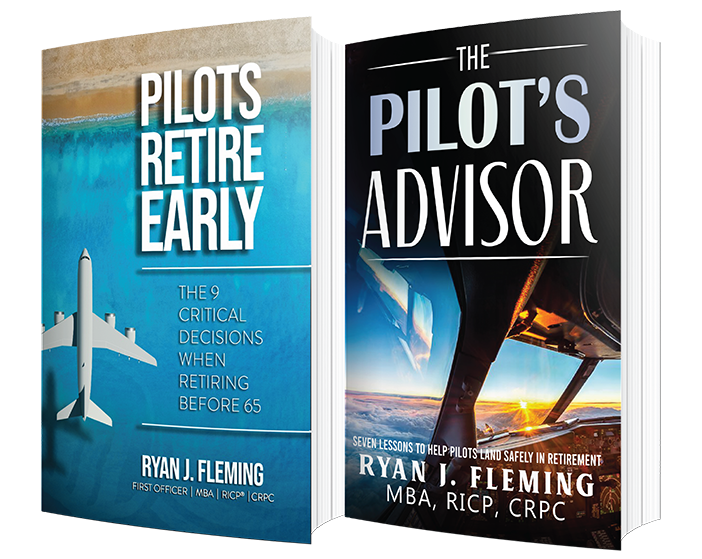
Attention. Aviators, when you’ve spent years in the cockpit managing the complexities of flight, isn’t it time you navigated your retirement with the same precision? Introducing retirepilots.com right at your touchdown zone on our homepage, there’s a beacon flashing. Get my free toolkit. Click that and you’ll be cleared for a direct route to Ryan’s retirement toolkit, tailor made for pilots like you. Inside, you’ll find two of his important works, the pilot’s advisor and pilots retire early. Between these two books, you can decipher the nine critical decisions when retiring before 65 and discover the seven lessons to help pilots land safely in retirement. But that’s not all. This toolkit is packed with altitude, high value, including extras to get your retirement plans off the runway and light the afterburners on your 401, k vector on over to retirepilots.com to grab your toolkit, and let’s embark on this journey together. Sometimes I think people look at extremes, right? And so they see, okay, Ryan, you’re an over saver. And that story terrifies me, of the person that saves and saves and saves and then dies a year into retirement, and I don’t get to enjoy all of that hard work that scares me. So they run to the other direction, and then you have the flip side right where you see people who spend, spend, spend, and so out of that fear, you never enjoy life in the moment, you’re not trying to get people to switch extremes. It sounds like one of your goals is to really drive. People toward balance, you can have both of these things, but perhaps it’s just making sure that the long term one has at least a little bit more priority. Sounds like that’s what you’re trying to teach your daughter. A little bit like, hey, Starbucks is okay, and if you want to go get that treat every once in a while, cool, but what if you only went half the time and put the other into Starbucks stock, or some other way of saving those dollars. Think about that impact. Is that a sacrifice you can make? Is that a good balance for you? That’s a small little example, but you’re having those on really big picture conversations with clients.
Ryan Fleming 10:33
I’m all about balance, and for those clients or listeners out there that know me very well, and I’ve lived my life this way, I’m all about working hard and I’m all about playing hard. So I think maybe too much of a life balance when it looks like that, but But understanding the power of putting a little bit more away, or having a plan, or having insurance outside of a company, insurance policy to protect your family. And it’s funny, if you do a little bit starting early, how much of a compound effect that has by making those small changes no different than you talked about at the gym or running a little bit longer, or going to bed and getting a little bit more sleep, or hydrating your body, or watching your blood work, all those little tiny things are going to help you in life, and really having a coach To help you do those little things. I mean, I I constantly. I don’t really care about food that much. I like to eat, but my wife’s that coach day to day, like, Hey, how about I make you a salad? Or you really think you need those fries? You know, we need those people to our lives to make sure we’re going down that right path.
Walter Storholt 11:38
Yeah, you hit on, I think the key misnomer kind of final thought from from my end of things, Ryan, and that’s that you’re having to make this sacrifice on the fun category now to switch over to this long term thing. And you feel like that’s robbing your short term or your your fun in life. It’s the opposite. You are a perfect example of that by taking care of the long term, and making that the priority, it has now given you the freedom and the flexibility to enjoy the moment, because now you know you can afford it, and you have the that room in your budget, and you have the clarity of mind to be able to make conscious decisions of we’re going to have fun in this way and not feel bad about it, because I Remember when I was, you know, just getting started and wanting to have fun and wanting to save for long term, I remember that struggle of, like, going and treating yourself and then feeling guilty about it, right? Like going on a trip and being like, Oh, this is I’m doing what I want to do, but I know it’s financially straining me that’s No, not a fun place to be. So then that helped inspire me to race toward financial stability so that when I want to go have fun, I can enjoy it and not be guilty about it. And I think that’s a something a lot of people could drive in that direction and probably feel a lot better about
Ryan Fleming 12:52
life. Yeah, the dividends of, you know, memories is definitely a factor. But I’ve gotten to see both sides, where someone that saved early on, and then they had an abundance of wealth in retirement. Well, guess what? They’re traveling the world. They’re getting to have, they’re getting to live life and have way more experiences than that person that might have burned up some of that in their younger years. And now they’re in retirement. Now they have all that time, but they don’t have the money to do it. And I would argue that making that, you know, it’s not massive changes, it’s small changes. It’s just just forcing discipline small changes, putting a little bit more away and having a little bit more of that life balance is going to allow you to have abundance in retirement. Because the last thing you want to do when you stop flying airplanes, you don’t want to be forced to be out there and be at Walmart or Chick fil A or being the greeter at a Home Depot. You want to do that because you want to do it for something to do, not because you have to.
Walter Storholt 13:52
Yeah, all good points. Ryan, much like Ryan’s wife, tells him when to eat a salad and stop eating the french fries, he can do the same for pilots out there who are trying to get their financial house in order. If you need that nudge, if you need that help, not just the financials, right? That’s part of it. How can I make my 401 K, you know, the best position for my situation? We always talk about that. That’s really important, but sometimes it’s the softer stuff. Where can I save a little bit more? Where can I spend a little bit less? Where can I get that coach who’s kind of pushing me in these right directions and challenging me a little bit. That’s a real value in an advisor right there. And that’s what you get when you work with the pilots advisor, Ryan Fleming. And if you’d like to set up a time to visit, you can do that by ordering the retirement toolkit. So not only are you going to get that portfolio analysis and that one on one meeting with Ryan, but you’ll also get his books some additional helpful resources, again, specifically tailored toward pilots and planning for your financial future. You can order that in the description of today’s show. We’ve got a link there for you. Or go to retirepilots.com as your other location where you can get all that info that you need. Again, retirepilots.com or just check the description for all the information. You, Ryan, thanks for your thoughtful insights today. I appreciate that.
Ryan Fleming 15:02
Yeah, it was a great conversation. Walter, I appreciate it and everyone out there take care of your wingman.
Speaker 1 15:12
Information is for illustrative purposes only and does not constitute tax investment or legal advice. Always consult with a qualified investment legal or tax professional before taking any action you.
This podcast episode is for educational and informational purposes only. The opinions expressed are those of the speaker as of the recording date and are subject to change. This content does not constitute personalized investment, tax, or legal advice. Please consult a qualified professional before making financial decisions.