Preview of what we’ll cover today:
📋 Ramsey’s 9-step plan: simple but limited
🛫 Pilots need strategies beyond “one-size-fits-all”
⛽ “Always take more gas than you need” — Ryan’s analogy for oversaving to build flexibility
🔑 Sometimes liquidity beats paying off your mortgage
🏥 Healthcare and Social Security require nuance, not broad strokes
Subscribe On Your Favorite App:
 YouTube
 Apple Podcasts
 Spotify
 Amazon Music
 iHeartRadio
 TuneIn
More About This Episode:
Dave Ramsey is one of the most recognized voices in personal finance. His 9-step retirement plan is simple, direct, and built for mass appeal. But is it really the best path for your retirement? On today’s show, Ryan digs into where he agrees, where he disagrees, and what he thinks is missing from Dave Ramsey’s approach entirely.
Ramsey’s advice provides a solid foundation for people just getting started, especially those battling debt, but high earners like pilots need more nuanced strategies. We’ll talk about why 15% savings might not be enough, why paying off your mortgage early could hurt more than help, and how complex issues like Social Security, healthcare, and taxes require more than one-size-fits-all answers. If you’ve outgrown cookie-cutter advice, this episode will help you think more strategically about your path forward.
Go Deeper Into The Episode:
0:00 – Intro
2:18 – Gen X Has Had a Wild Ride
5:55 – Key Confidence Statistics
9:05 – Maximize What You Can Control
11:30 – Working After Retired, Uber & Self-Driving Cars
15:24 – Real Estate Market & Cash-Out Refinance
16:36 – Making a financial plan
Resources:
Retire Pilots – https://retirepilots.com
Get your FREE Retirement Toolkit – https://bit.ly/3ZmZsaX
Pilot Tax – https://pilot-tax.com/
The Pilot’s Advisor Podcast is also on video. Watch & Subscribe on YouTube: https://bit.ly/3EIEBW2
Connect with Pilot-Tax: https://pilot-tax.com/
Episode Transcription:
(Note, this is an automated transcription. Please forgive any errors.)
Walter Storholt 00:00
Well, you’ve probably heard of Dave Ramsey, one of the more recognized voices in the personal finance landscape. Well, he has a nine step retirement plan he’s talked about for a long time. It’s simple, it’s direct, it’s built for mass appeal, certainly. But is it really the best path for retirement and financial planning, and especially for pilots? Well, on today’s show, we’re going to dig in and see if we agree or disagree with the nine step plan. And we’ll have an actual financial advisor who’s also a pilot, Ryan Fleming, react to this nine step plan, and we’ll see if this is the approach you should take, or if we need to make some adjustments to this strategy. Let’s dive in. You. Foreign Walter Storholt, back with you here on the pilots advisor, with Ryan Fleming, financial advisor and pilot himself and Ryan looking forward to today’s conversation. How much of Dave Ramsey Have you consumed over the years? You heard the radio show and kind of seen stuff on social media as a financial advisor, I’d imagine it’s hard not to come across this stuff, right?
Ryan Fleming 01:01
I listened to Dave Ramsey when I was younger, and thought it was the gospel for a whole lot of years. And I’ll be the first to admit that I think that a lot of his principles in guidance for the average person are spot on. I mean, but, but we got to realize that who he’s really talking to is that person that probably makes 50, $60,000 a year is in massive credit card debt and trying to get out of that debt. So I don’t really think it applies to pilots, but I think principal alone, just having I like to think of it as fundamentals, like if you’re a football player or a basketball player, let’s get back to the fundamentals, and then they’ll guide us in the right direction. But if you want to play in college or you want to be an elite athlete, it’s going to take a lot more than these nine steps, but it’s a good framework.
Walter Storholt 01:46
Okay, excellent. Well, let’s break them down and just kind of see, since people might be familiar with these, and kind of see where there’s some good in here, maybe where there’s still some gaps missing, and get your reaction to each of these steps. So he likes to start with step one, as set your retirement goals. He says, dream big, RV, life, Lake House, etc, which is great. But what if you’re still in your 30s and your 40s and you’re still trying to figure some of these things out? Well, I think
Ryan Fleming 02:12
writing down your goals and dreaming big is a great thing to motivate yourself. So I have no problem with writing those, those goals down, or trying to envision your retirement, because the earlier you do that, then you’re going to have to take action to get there. Now, the problem that I’d have with that is that if you’re in your 30s and 40s and you’re still trying to figure out what you want to do with your life, it’s overwhelming. It could be completely overwhelming. And I think that, I think that that happens with a lot of people, where they realize, Oh my gosh, I have to save so much for retirement, and they and they don’t want to talk about finances. It’s been a source of stress for so long that you find yourself waking up 1020, years down the road and you just kick the can down the street, and now you have to have that really hard conversation. So yeah, I love, I love the fact of writing down your goals and planning, because if any plan whatsoever is better than ignoring it, and no different than being a kid growing up. We all wanted to be a professor, not all of us. But you know, I know that I wanted to be a professional baseball player, professional football player, what have you. And I think every if it was Dabo Swinney says this all the time. He goes, if it was easy, everybody would do it. And like anything else in life, it takes a lot of work, lot of sacrifice, and having a RV Life or or lake house takes, you know, different paths. So you got to plan accordingly,
Walter Storholt 03:35
yeah, and keep in mind, plans can change, right? My wife and I were approaching 40 in the next couple of years, we’ll keep it loose like that.
Ryan Fleming 03:43
That was a nice slider.
Walter Storholt 03:47
And so we’re just starting to kind of really more seriously talk about retirement and what it might look like, and so, but we’re not sure yet, right? Like, we don’t know if we want to try and strive for a house at the beach and the house of the mountains and do half and half we don’t have we still have our first kid on the way. So like, we still have a lot of life between now and then, and preferences that will change and things that will happen, and where the kids are going to live, and what’s going to be going on in their lives. So like, we can set all the goals we want, but I don’t know if that’s going to be reality, but I also don’t see anything wrong with at least having those dreams and goals. We can adapt those over time if we want to live the RV life now, but then we change our mind when we’re in our 50s or approaching the 60s. We can change our mind later, but let’s at least work it into the plan. Now. Seems to make a lot of sense to
Ryan Fleming 04:31
- Well, and the more money you have saved, it’s really easy to pivot. It’s when you don’t have that saved and you don’t have options. Yeah, it kills those dreams,
Walter Storholt 04:40
I guess, let’s, let’s plan for the extravagant retirement. We can always dial it back, but it’s a little bit harder to strive for the sweet tea on the porch, doing, you know, with no travel retirement and then want to do those things later on.
Ryan Fleming 04:53
Yeah, yeah. And people, people, people want to do different things. I mean, I always laugh at the airline pilot, because. Is, you ask any airline pilot what they want to do when they get home, and the answer is absolutely nothing. I want to lay in my own bed after a life of travel and living on the road, right? And then the spouse is like, I want to travel. Let’s go do something. I’ve been waiting on you to get home. Let’s go. Let’s go.
Walter Storholt 05:16
Yeah, it’s a tough part for pilots to have to deal with that, that bit of difference. Let’s look at steps two through four. We could we could talk about goals and all that kind of stuff all day long. I’m sure I’m going to combine steps two through four. So those are, save 15% of your retirement income, or your income for retirement, contribute to your 401, K and invest in a Roth IRA, again, he separates those out, but we’re going to combine them here. How do you prioritize those three things as they come in quick succession, and how much is realistic to save from person to person in each of these if we’re starting with that 15% mark in retirement?
Ryan Fleming 05:54
Well, this is not financial advice, and this totally depends on the person and their job and their situation and their tax bracket. What have you I think, I think priority Roth money, I think, is one of the best things out there, where you can pay the government to go away, stay out of your pocket, and that money grows tax free forever. So I think Roth money is huge. I think inside of four, 1k now you do have the Roth option. So if you’re not taking advantage of that, you probably should, and we work with CPAs that know pilots and yes, you may be in a lower tax bracket in retirement, but with the airlines putting so much money in tax the tax deferred bucket, you need to have both buckets, or you’re going to get yourself in a lot of trouble down the road. I’m not, I’m not convinced 15% the right number. I think it’s got to be 20 and maybe more. I mean, I know I’m a saver, but the more you save early, the more options you’re going to have later on, and you can always pull the throttles back later. Or for flying airplanes, I always like taking more gas than I need. Why not? So I think the key behind all this is actually just being an aggressive, consistent, unemotional saver. And, you know, put your head down to the grindstone. And if you’re doing all those things, you’ll wake up down the road and realize, hey, all that hard work benefit benefited me or paid off. When I talk to young investors, which I love, talking to young investors, people in their 20s, they’re just getting started, and I try to talk to them about forcing that discipline, setting it, forgetting it, never going backwards, but always going forward. And you find out a lot when people have a job where it doesn’t pay that much, they don’t want to invest at all, or they’re like, Well, I’m in first year pay, and then then I’ll do this. So, you know, once I get this debt paid off, then I’ll well, if you’re not making hardly anything, then 10% or 20% of nothing’s nothing. So I don’t care how little your income is, you still need to take a percentage of that and start putting it away. And yes, as you make more, you’re putting more away, but coming up with excuses for not doing it or not being disciplined and and setting that that that up is only going to be a recipe for disaster, in my opinion.
Walter Storholt 08:09
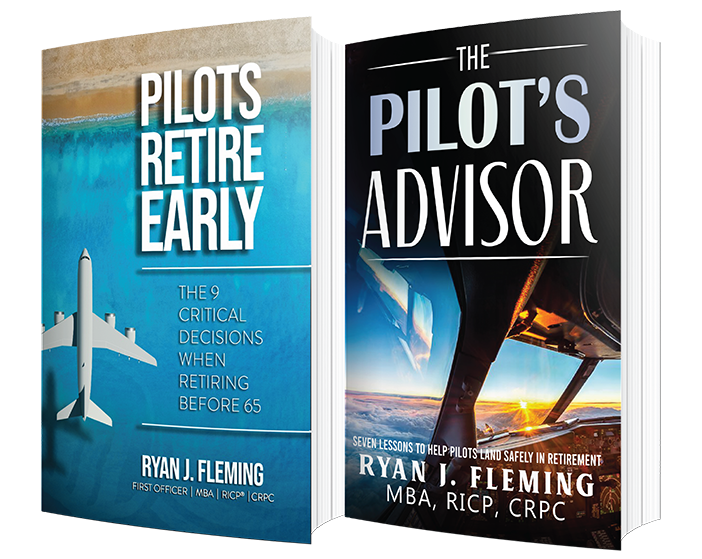
Attention, aviators, when you’ve spent years in the cockpit managing the complexities of flight, isn’t it time you navigated your retirement with the same precision? Introducing retirepilots.com right at your touchdown zone on our homepage, there’s a beacon flashing. Get my free toolkit. Click that and you’ll be cleared for a direct route to Ryan’s retirement toolkit, tailor made for pilots like you. Inside, you’ll find two of his important works, the pilot’s advisor and pilots retire early. Between these two books, you can decipher the nine critical decisions when retiring before 65 and discover the seven lessons to help pilots land safely in retirement. But that’s not all. This toolkit is packed with altitude high value, including extras to get your retirement plans off the runway and light the afterburners on your 401 k vector on over to retirepilots.com to grab your toolkit, and let’s embark on this journey together. The earlier we can start those habits, the better, no doubt about it. Step number five for Dave Ramsey comes to paying off your mortgage early. So hey, you’re saving for retirement. You’ve set some goals. Let’s get rid of that mortgage. Obviously, his main focus is on getting people out of debt. So this is really high on the list in terms of steps for him. Is this where your advice or your feelings start to divert a little bit from Ramsey’s path? Are you comfortable with that as one of the steps here? I 100%
Ryan Fleming 09:39
disagree with this one, and I’ve done a whole whiteboard on it, which we can link in the show notes. I think that, especially in this day and age with low interest rates, paying off your mortgage is not not a good plan. I think that I don’t view a mortgage as bad debt. Real Estate growing at the pace it is, you’re going to. To build equity over time, but it really is about that opportunity cost. I mean, can you take your money and allow it to work for you somewhere else and beat that four or 5% interest rate? And the answer should be yes, all day long, at the rates that we see there. Also, I think liquidity is a huge, huge deal. And having that money working for you, having it liquid where, if life happens, you can access it. Is a lot different from I paid off my mortgage, or I, or, excuse me, pay off my house, or I have all this equity in my home and I can’t access it because it happens all the time. I mean that the time when you truly need money and then you don’t, let’s assume you don’t have a home equity line of credit when you truly need money because you lost your job or something crazy happened, that’s when the bank’s not going to give it to you. So planning ahead and using that house, or having that ability to to keep those assets outside of that mortgage and have liquidity, I think said a much better plan. And I love having this conversation, because I think, I think it was beat into us, or beat into our parents generation, that you wanted to pay off your pay off your house. And I just, I just don’t agree with it. Walter, what do you think
Walter Storholt 11:08
about that one? Well, I agree with you, especially if somebody’s got a mortgage that’s in that two something, or even the threes interest rate, like the math, that becomes a math question, not even a fact, a feelings question, right? It’s a math question and and you can do better than that. It’s, it’s great lending money our I think it was beaten into us, right? Because our parents were taking out mortgages with 12, 1314, 15% interest rates, and so felt like a losing game if they were still hanging on to those rates for several years. That’s when you wanted to get out of that faster, because it was basically credit card debt just about,
Ryan Fleming 11:40
yeah, well, and I actually have this conversation, and I talk to people about that, when you look at the emotional side of it, just know that you could press that button at any point in time and pay that mortgage off tomorrow. If
Walter Storholt 11:53
you’re, if you’re taking what you would pay extra, and you’re putting it in a different account to grow differently and what, at what’s hopefully a faster pace, you’re still reserving the right to pay that mortgage off early with that big balance you’ve had building on the
Ryan Fleming 12:04
side Exactly. So you can do emotionally, you can press the button to pay it off tomorrow, but it doesn’t make financial sense. And so we got to wake up every day and go, I know I can do that. The money’s sitting right there to pay that mortgage off, but it doesn’t benefit me. It doesn’t make financial sense. So this is why I’m doing what I’m
Walter Storholt 12:21
doing, by the way, as we work through these steps, if you find yourself trying to better plan for your financial future, for retirement, you’re not quite sure where to start. If you’re a pilot, be sure to check out retirepilots.com you can order the retirement toolkit that Ryan has put together specifically for pilots. It’s packed with a couple of books, great resources and more information to help you prepare for retirement. It includes a free portfolio analysis. Well, Ryan will take a look at your specific situation and help you plan for your retirement future. So if you want to take advantage of that, you can get it for free. It’s all@retirepilots.com and linked in the description of today’s show. Next on the list, Ryan here. Step number six from Dave Ramsey’s plan is to study social security options and looking at those pros and cons of taking it early, taking it at 6567 waiting all the way till, you know, 69 or so, lots of different variables there that people can consider. Yeah,
Ryan Fleming 13:16
and this one’s getting very gray, in my opinion. It used to, I used to, I used to always start this conversation and say, well, when are you going to die? Right? Yeah. And then we can work back from there. Obviously, the more you defer Social Security, it’s gonna be a much bigger balance. And whether you’re taking that 63 all the way to 70, at 70, I mean, it’s, it’s significantly more. But I think there’s a conversation out there that we just don’t know if social security is going to be around. I think it’s gonna be around. I just think it’s gonna probably be a reduced amount. They’ve recently come out to say, you know, don’t just take it to be grandfathered into the older age, which I think changes the conversation once again. So I think that when we talk about Social Security, do a lot of your own research. Talk to a trusted financial advisor look at your income and retirement and how things are looking, and I think all those different variables are going to determine when you actually should take your Social Security.
Walter Storholt 14:09
Yeah, this next one step seven is interesting. It’s plan for healthcare costs. And I’m thinking about retirement, Ryan, and it’s like, you know, at first you saved up your whole life to retire so that you just like originally, right? You were dying pretty soon into retirement back when Social Security first came out. In fact, you were supposed to really not outlive your social security by any means. That was the beauty of the program at first, and then we made this nice transition where you’re saving up to go and have fun for 1015, hey, maybe even 20 years in retirement before you pass away. Well, now we’re living so long, and we’re band aided together. You know, those who are have parents or grandparents, maybe in their 80s, 90s, or even 100 now they’re seeing this where you can kind of get that body to limp along for a really long time in a lot of cases. But instead. Of planning for a retirement of, you know, of a wonderful and, you know, exploratory and energetic retirement for 30 or 40 years. Well, it’s 30 or 40 years now because we’re kind of band aided together again. So all that to say we’re sort of living in all of this life and saving up all this money to have a few years of fun and then a lot of years of, years of kind of just keeping the keeping the train rolling down the tracks.
Ryan Fleming 15:23
Yeah, well, you know, and that’s why health care for life, with whether you served in the military, I think it becomes even more beneficial than the pension that you can get. Yeah, Dave talks about getting long term care insurance at 60, and that makes me want to laugh. Okay, great, Dave. Let’s look at the premiums when you’re 60 and then you’re trying to buy it. It’s like a another mortgage payment probably. So healthcare is scary to me. I think, I think AI is probably going to help that a little bit, because I think there’s going to be a lot more automation that’s going to help lower costs eventually, but, but once again, safely, stay safe. And I think his step eight talks about keeping a long term perspective, yeah, I think it’s more of a mindset. I think the planning, the force discipline, you know, having that long term resilience, to just put your head, head down, save your 15, 20% and just keep that long you know, even investing, always think long term. You know, don’t make short term, emotional decisions. And I think that’s the same with saving. Just keep the long term perspective. And Step nine, for him was work with a financial advisor. Yeah, I’m glad I made the list.
Walter Storholt 16:34
Not a self serving little suggestion there at all.
Ryan Fleming 16:39
Well, I just find it all the time that you you don’t know what you don’t know. Or I’m amazed by pilots that I talk to, and I think they’re very, very intelligent people. And then you get into a conversation about finances and retirement and all the principles that we have there, and they’re completely clueless. And it just, I mean, my mind is blown many, many times because of that. So definitely reach out to a financial advisor, have conversations. You’re going to be in a much better spot. And all the studies support
Walter Storholt 17:07
that, yeah. Well, there’s a lot of financial advisors out there, but very few who work directly with pilots and who also are pilots actively working in the industry. That is Ryan Fleming, of course, and so you can have a conversation with him by ordering the retirement toolkit that he has@retirepilots.com Again, you’ll get great resources and information books about planning for retirement, as well as that free portfolio analysis. So take advantage of that by ordering the toolkit today. Again, it’s for free, and it@retirepilots.com’s it’s linked in the description of today’s show for you as well. Ryan, great breakdown of these. Dave Ramsey, nine steps today. Appreciate that, and we’ll talk to you soon.
Ryan Fleming 17:46
Sounds great. Walter, appreciate your help with everything. Dave Ramsey has some great principles, but it’s a lot more complicated than that. Not just a checklist.
Walter Storholt 17:54
Yep, you got it at some point. You still got to fly the plane, and things don’t always go according to the the nine step plan, right? You gotta, gotta make sure you’re flexible and nimble and able to navigate through the terrain. And that’s why we have pilots, and that’s why we have advisors.
Ryan Fleming 18:07
Flexibility is the key to air power. There you go. All right, we’ll see
Walter Storholt 18:11
everybody next time, right back here on the pilots advisor.
Speaker 1 18:18
Information is for illustrative purposes only and does not constitute tax investment or legal advice. Always consult with a qualified investment legal or tax professional before taking any action.
This podcast episode is for educational and informational purposes only. The opinions expressed are those of the speaker as of the recording date and are subject to change. This content does not constitute personalized investment, tax, or legal advice. Please consult a qualified professional before making financial decisions.