Preview of what we’ll cover today:
🛫 Gen X pilots are the first true 401(k) generation
📉 Market crashes and inflation have reshaped retirement confidence
💡 Taxes & Inflation: the hidden forces that can drain your nest egg
🔑 Control comes from preparation, not last-minute scrambling
Subscribe On Your Favorite App:
 YouTube
 Apple Podcasts
 Spotify
 Amazon Music
 iHeartRadio
 TuneIn
More About This Episode:
Cue the mixtape of Nirvana, Madonna, and Prince… Gen X, it’s your turn to get ready for retirement. And the stakes are high. You were the first 401(k) generation, hit by two major market crashes, and now you’re entering retirement with more financial uncertainty than the Boomers before you. But you also have something else: resilience. If you’re a pilot between your mid-40s and early 60s, it’s time to get serious about what retirement will look like for your generation.
In this episode, Ryan lays out the unique challenges facing Gen X pilots today, from catching up on retirement savings to managing tax-deferred accounts and preparing for life after the cockpit. You’ll hear why “kicking the can down the road” is so dangerous, how inflation and taxes could erode your nest egg, and what smart strategies can help you stay in control. You’ve survived recessions, AOL dial-up, and parenting in the age of smartphones. Now it’s your turn to take control. Retirement isn’t the end; it’s just the next remix.
Go Deeper Into The Episode:
0:00 – Intro
2:18 – Gen X Has Had a Wild Ride
5:55 – Key Confidence Statistics
9:05 – Maximize What You Can Control
11:30 – Working After Retired, Uber & Self-Driving Cars
15:24 – Real Estate Market & Cash-Out Refinance
16:36 – Making a financial plan
Resources:
Retire Pilots – https://retirepilots.com
Get your FREE Retirement Toolkit – https://bit.ly/3ZmZsaX
Pilot Tax – https://pilot-tax.com/
The Pilot’s Advisor Podcast is also on video. Watch & Subscribe on YouTube: https://bit.ly/3EIEBW2
Connect with Pilot-Tax: https://pilot-tax.com/
Episode Transcription:
(Note, this is an automated transcription. Please forgive any errors.)
Walter Storholt 00:00
Well, cue the mixtape, pilots, Nirvana, Madonna Prince, whatever your flavor was, Gen X, Hey, it’s your turn to retire. You’re coming up next now, and the stakes are pretty high for you now. You’re entering retirement with more financial uncertainty than the boomers before you. So how do you handle it all, especially in a career field like being a pilot? Well, Ryan, of course, the pilots advisor is going to join us today and help us walk through some of the key things that Gen X needs to be focusing on right now when it comes to retirement planning, back on the pilots advisor again, Walter Storholt alongside Ryan Fleming, the pilots advisor himself, at not only a financial advisor, but also a pilot, and looking forward to today’s conversation. Ryan, Hey, you are Gen X. Now I’m a millennial still, so I get to kind of observe this conversation a little bit as an outsider, but I’m still gonna be playing some close attention, because it’ll be our turn next before we know it. But Gen X, you guys are on deck to start retiring soon, and it comes with its own problems and challenges.
Ryan Fleming 01:04
Well, I appreciate that Walter, and I appreciate you letting us, our audience, know that, uh, that you are so young, younger than I am, even though you’re more mature and have that great radio voice.
Walter Storholt 01:14
Happy, happy to slide out there my youth. I got it, got it, to get it in there these
Ryan Fleming 01:18
days, you know. No, I think, I think today’s topic is actually going to be just an interesting talk, or I like to, I guess, say, you know, call it like it is, because it is. It’s the first generation that’s really having to figure this out on their own and not having pensions. And I think it’s a problem that I really see, because people don’t have a clue how much they truly have to save to can, you know, not only to retire, but to retain, especially with airline pilots, to retain their current standard of
Walter Storholt 01:47
living. Well, I’d like to take a look back at the history of Gen X and what they’ve been through, Ryan, and then we’ll get into some of the specific planning ideas for folks that fall into this category, which, by the way, again, we’re talking about mid 40s to early 60s is the loose definition of somebody who is in that Gen X category. So as you can imagine, those in their early 60s, they’re the ones on deck for retirement, and your generation is going to be the one talked about when it comes to financial and retirement planning over the next two decades approximately. So take us a little bit through what Gen X has been through. You guys like to brag. I know you’re at the tail end of the Gen Xers, but Gen Xers like to brag. At least some of the ones that I know that they grew up during, like, the golden age of America. You know, 80s kids, back when the world was amazing, before the internet and smartphones and computers kind of dominated our world. But it hasn’t necessarily been an easy ride, despite the nostalgia. Well, I
Ryan Fleming 02:41
don’t know. I mean, I think everybody feels this way, but I feel like I had the most awesome childhood, you know, where you rode bikes everywhere, and your parents had no clue where you are. I think you’ve seen some of those pictures of a bunch of kids digging around in a sandbox. That was totally, totally me. You know, I lived on a farm. We were making mud pies and hiking through the woods, and I mean camping out, making forts. So from a childhood perspective, I think it’s awesome. And I don’t really know. I don’t think we truly know all the effects of today’s world with the kids playing on their iPads or iPhones non stop, and I think we know it’s not good for them, but what are the long term consequences of that. So I don’t know that just the walk down memory, memory laying there as a childhood but, but when I start thinking about from a retirement perspective, I mean, these are the these are the people that it’s the first ones that we’ve really pushed out there that don’t go work at the factory, or don’t go work at that job for 30 plus years with that that pension that basically mirrors their income they had and and I think most of our parents or people we know were in that, you know, that are older than us were in that, that situation, you know, I think about navigating, working through all those years and being responsible to put your own money away in that 401, K, health care, education costs are through the roof and continue to go up where, I mean, unless you got in early. And I think about even my wife’s father, who got long term care disability when he was super young, it’s almost unaffordable for anyone that’s out there at this point. There’s been multiple market crashes. Help me here. But, I mean, I’m thinking the.com bubble, yeah, of 2000 2008 with the real estate crisis, yep, covid. We had covid, you know, which is like a two year crisis, you know? And of course, 2022 was a really, really horrible year with sky high interest rates, right? As these people are nearing or getting close to retirement. And I mean, that didn’t help their 401, K balances, yeah, interest rates in the housing market right now. I mean, we’re basically out of gridlock. And one thing I didn’t notice, but I was looking at this, and he started realizing this more and more, is one of the other things about Gen X that I find. Interesting is dual income households like that is the norm. Now, it used to be, you know, not to my wife would get mad at me for this, but it used to be all stay at home moms, right? And I think that that’s drastically changed. And sadly, in many cases, you need dual income families to make it work.
Walter Storholt 05:20
Yeah, it for a while it was empowering to have that dual income household like it should put you ahead of the game. Right now, you just kind of feel like you need it to survive. I think many people would kind of express that opinion in that in that feeling so that one can be either looked at as a positive or a benefit or still a detractor and a negative to what this generation had to experience over the years. Obviously, it’s going to change from person to person, but trying to brush with broad strokes, it definitely highlights a lot of challenges that they faced over the last couple of decades, in their prime, working years and leading into retirement. And I think it’s interesting Ryan, because if we look at confidence among the Gen X, Gen Xers out there, looking at some recent studies, almost half of Gen Xers say that they’re not financially prepared for retirement. Good news is they still have some runway if they’re in that kind of early stage of or late stage Gen X like you, you’ve still got some years to kind of maximize your benefits here and kind of get things on the right course if you’re off track a little bit. But how does this jive with pilots that you work with that are Gen X are they kind of lacking in this confidence as well?
Ryan Fleming 06:27
Well, the first thing I want to do is I want to throw out the term dinks too. We didn’t talk about that dual income, no kids dinks. Yes, I don’t know. I was just thinking about that.
Walter Storholt 06:36
And I think that’s one of the weirder little acronyms in it.
Ryan Fleming 06:40
Well, and if you have older Gen Xers that are actually being they’re pretty well prepared for retirement, because they both have stable jobs for many, many years. But yeah, I think the numbers were that you’re talking about, what was the key stat that you said five
Walter Storholt 06:54
half say they’re not financially prepared for retirement.
Ryan Fleming 06:57
I think, you know, excluding pilots, and I’ll talk about PILOTs here in a second. I think those numbers are low, because I think there is, like 90 plus percent of people either aren’t prepared for retirement or don’t have a clue what they need to do to be prepared for retirement. And then the caveat, move back towards pilots. I think most pilots, because, you know, after the major legacy carriers lost their pension, when, when a lot of these legacy, legacy carriers are putting 18 and 19% into their 401, K, definitely gets them in a better spot. And many have done a good job of saving. Now there’s some tax consequences to that, because that’s all tax deferred money, which goes into a whole nother conversation. But, but amazingly to me, you have these people that did a very, very good job of saving, and then you’ll talk to another pilot that’s like, 54 and hasn’t saved, like, 50 grand, and you’re just like, Well, where did the money go? Or, like, did you not realize that you have to save for your own retirement? Yeah, and I think that there’s a sentiment, and I’m not saying, you know, the numbers are high with pilots, but it’s out there where people just kick the can down the street. They kick the can down the street. Oh, I’ll do this. Or they’re dumping money into their their kids or their house, or vacations, or whatever, living that, that living large lifestyle, yeah. And then all of a sudden, you know, I’m almost there where, like, all sudden, 50 hits, or 55 hits, you’re like, oh my gosh, I got to get serious about this. And especially with pilots, and only being able to work till 65 you know, you go get some other Learjet job for a couple years after that, but, but you have that hard stop. And I think the biggest thing that I would, I would voice to people out there is, you talked about having more runway. Well, that’s fine, but when you’re playing catch up, you have to put so much more money away than if you just were consistent, you know, through all your years. Or if I could scream to younger pilots, or I do it with younger athletes right now with n i L is act like it didn’t happen, or consistently put money away through your 20s and 30s, and you’ll be so far ahead of the game, just because the power of compounding interest. And I know you’re a pretty good saver, and you know how that looks.
Walter Storholt 09:04
Yeah, for those who do feel like they are behind, though they’re lacking that confidence, because maybe that balance isn’t as high as it needs to be to make them more confident, pilots are all about control. So what are some things that we can tangibly do to catch up a little bit if we need to, other than just socking away as much money as we can.
Ryan Fleming 09:21
Yeah, I don’t know how much control they have, but of course, the government has control, and you know, so they give you a maximum that you can put in your 401, K, and then if you’re over 50, we have some catch up opportunities for those over 50. And I they even did the one recently, and my brain’s not working this morning, but where it’s like, super ketchup, like, right near the end, right, you can even dump a little bit more in there. But of course, that still means that you have to have that income to dump in there. So, so I look at it as you have some catch up opportunities inside your 401, K, you have that, that extra little. And I think it’s 60 to 65 I don’t remember where you have that. But I’ve been saying this for years. Yes, of course, if you can max out your 401 K, and I’m talking max it out between you and the company at 70k not just your 23,500, with an $8,000 catch up if you’re over 50, that that you still have to save outside of your 401 k plan. I mean, I think the whole Hey, I’m going to save 10% and I’ll be fine, is not really the case, because, yes, we’ve locked in taxes for a little while with the big, beautiful bill, but inflation is, you know, still going to be a major factor. I mean, people don’t really understand how much taxes and inflation have an effect on your retirement, especially if you have that massive amount of tax deferred money, you know, where you haven’t paid income tax. I always think it’s, it’s amazing when I have a pilot that gets into retirement and they’re pulling out what they need each month, but they haven’t even thought about the tax bill at the end. And I’m like, you know, we either need to withhold or you’re gonna have a big tax bill at the end. And oh, that tax bill comes around. And guess what? You have to pull you have to pour out more money, which creates another tax bill. It screams that, you know, we know we have to save for retirement, but we really don’t understand the distribution phase of retirement, how that works, which is a whole nother thing, when you don’t have a pension, you know, and you have to create this income from whatever nest that you built over all those working years and throwing this out there. And I know I’m just doing a lot of talking and a lot of thought this morning Walter, but that’s why you see, I think in so many cases, you walk into a Walmart, or you walk into a Home Depot and you see somebody there in their 70s, and they’re greet you at the door. Or, I guess Uber has become a big one where you have these pretty much older Uber drivers.
Walter Storholt 11:48
Yeah, I would say about we just did a trip where we Ubered a lot. Actually, we switched to Lyft halfway through the trip, because Uber was taking forever every time we tried to use it. And so for the first time ever, I tried Lyft, and that did prove to be a smoother experience. So maybe that’s market dependent on which one’s faster or more efficient. But I don’t know, just a casual anecdote there, but nonetheless, I would say half of our drivers were retired, and just doing it for extra income. Do it a couple of days a week, gives them some fun spending money to supplement the other things they have coming in, more power to you, if that’s something that you enjoy doing, getting around, driving, and it’s kind of a low hanging fruit, easy thing to do, but, you know, it’s unfortunate if you’re having to do that in retirement, and you don’t want to be doing that
Ryan Fleming 12:31
in return. Well, and I see many people in their working years that are doing it a couple days a week for that extra cash or to bridge the gap, to make ends meet. Yeah. So it’s, it’s, it’s a scary world out there. And I’m even more apprehensive and scared for my children, you know, to get a job after after college and pave their own way. And what that’s going to look like. I think that you bring up Uber and Lyft, and I’m not convinced they’re going to be around. I think Tesla is probably going to have driver, you know, cars running year round without people in it, I think it’s much closer than people realize.
Walter Storholt 13:06
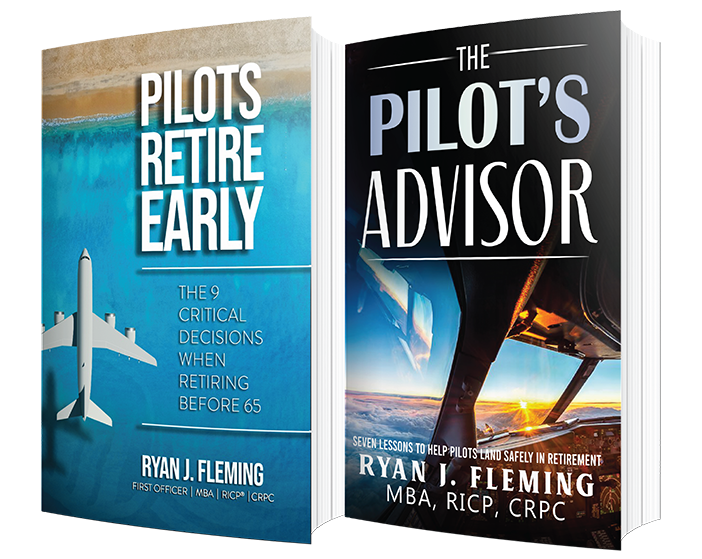
Attention aviators, when you’ve spent years in the cockpit managing the complexities of flight, isn’t it time you navigated your retirement with the same precision? Introducing retirepilots.com right at your touchdown zone on our homepage, there’s a beacon flashing, get my free toolkit. Click that, and you’ll be cleared for a direct route to Ryan’s retirement toolkit, tailor made for pilots like you. Inside, you’ll find two of his important works, the pilot’s advisor and pilots retire early. Between these two books, you can decipher the nine critical decisions when retiring before 65 and discover the seven lessons to help pilots land safely in retirement. But that’s not all. This toolkit is packed with altitude high value, including extras to get your retirement plans off the runway and light the afterburners on your 401 k vector on over to retirepilots.com to grab your toolkit, and let’s embark on this journey together. I agree with you. I think we’re the days of humans driving cars, at least on large scale. It’ll happen fast when it happens like, once that switch starts churning like there’ll be people like me that probably try to hold on to that steering wheel for as long as possible, because I love driving myself. But even I’ve already experienced a driverless car. When we were out in Phoenix a couple of years ago, we tried one of the waymos that that, you know, zipped you around. And it was a little hair raising to try it for the first time, but we tried it and it was like, Yeah, I mean, it wasn’t terrible
Ryan Fleming 14:41
well, and the actual data is there that it’s much safer with them, them driving than car, people driving.
Walter Storholt 14:47
I mean, a robot’s not checking its phone while it’s driving, right? In theory. So that’s a big winning and selling point, knowing how distracted we all are these days. But anyway, not to get too far off on another tangent, but you’re right. Are these, we’re already having to think creatively about how to generate extra income. That’s only going to get more difficult for retirees as some of these creative solutions disappear due to AI and simplification and all these other things that are going to be going on. So we got to kind of get retirement. To me, it feels like you got to get retirement right first, because some of these creative solutions are going to evaporate in the tail end well, and
Ryan Fleming 15:24
I think something else that’s come up, we’ve talked a lot about the real estate market here recently, and one of the things that’s things that’s interesting right now about the current state of affairs, so many people have locked in those low interest rate loans that they’re not moving, but yet, one of the biggest things that’s happening right now is a cash out refinance, or people that are actually doing reverse mortgages just to live off of, cuz they gotten themselves in so much debt, they have to do a cash out refinance to pay off that debt and unlock that 3% 2.5% loan, because they have to, because otherwise nobody ever would, or doing a reverse mortgage just a little off of and so I think something that is a little a little bit different about this generation or what’s going on right now is I think the data supports that one of the biggest assets that anyone has is the equity tied up in their home. And I think that we’re going to see more and more people pulling income out of their home to live off of in retirement. I think that’s definitely something that’s going to happen in the future.
Walter Storholt 16:23
Yeah, may not be ideal, but it’s another lever that can be pulled. And we talk about creative ways of solving these problems, these shortfalls, that one might become more and more popular over time, as you mentioned. So we’ll keep an eye out. Tell me a little about what happens when somebody sees this situation. Ryan, I’m a Gen X pilot. Let’s say I’m watching this podcast on YouTube or listening on an audio app, and I’m thinking, all right, I’m doing okay for retirement, probably better, or maybe I’m not even sure of how I’m doing. How do you help Gen Xers see where they are right now, paint the path forward and help them kind of figure out that financial flight
Ryan Fleming 16:58
plan? Well, 100% it’s a case by case basis. I think meeting with an advisor and understanding what the numbers look like long term and how much you need to save and and facing that reality is half the battle. I think that if you are in your 50s and you and you know you’re behind, well, we got to come up with a plan and some force discipline to get caught up, because it’s going to take that much more. But I like to throw out the big numbers out there. I mean, you know, if we talk about a safe withdrawal rate, you know, whether that’s four or 5% I mean, a million dollars is only going to spit out about 40 or $50,000 a year. I mean, just let that sink in. I think when we start, you have a pilot that’s making 250 $300,000 a year. And I throw that number at them, and then they go,
Walter Storholt 17:42
oh, man, right, that’s not what I’m used to. Yeah, and
Ryan Fleming 17:46
one. And just to replace a $300,000 income where you’re talking $6 million they’re not going to have $6 million and I think that’s a that’s a big wake up call for most, most people. And I get asked all the time, what is that number? Well, the number is completely different depending on how you live your lifestyle. I mean, I think that you’ve been you’re from our conversations, you’re a saver, like I am. I grew up, you know, so poor that I have a fear. I have a fear of not having assets or money to be there. And I don’t need that huge house, or there’s amazing cars. I don’t need things, but some people do, and some people live that way. There’s other individuals that they don’t even need their pension. They’re like, well, I’ll live off my pension easily and probably still put money away. So I think it’s very, very different. One of the things that scares me is I do watch a lot of people that are that are totally prepared for retirement, but then they want to move and buy that new house right before they retire. And that’s kind of like throwing all the the checkers up in the air and starting over right before retirement, which makes it a little bit interesting. So but you know, talking a lot, to put a bow on this conversation, I think it’s great to work with an advisor. Look at your numbers, know where you are, because at least then you can talk about this and have a plan. And you know, if we’re talking about PILOTs, UPS or FedEx, I mean, that’s pretty much the only pensions that are out there. So you’re going to need a much, much higher 401, K balance, and you’re going to need to build that up, because all of your income is coming from that, and it takes a lot of planning. So we’re here to help order the toolkit, set up a meeting. We’ll talk, see where you’re sitting and and decide how much more aggressive we need to get. So because you definitely want to be in the driver’s seat. If you’re a pilot and you want control, you want to be in the driver’s seat as you near retirement, meaning you’ve saved too much, and you’re not, you know, worried, versus being on the other side of things, where you’re watching that fuel gage, you’re not going to reach your destination, and then suddenly you’re worried about your engines flaming out. So,
Walter Storholt 19:51
yeah, not good. We don’t want that to be the case. So if you are looking for next steps, how do you engage? How can you take that next step forward to a better. Financial future and retirement. It’s very easy. All you have to do is go to retirepilots.com and order the free retirement toolkit specifically designed for pilots to understand more about planning for retirement, your financial situation and how it all works, specifically for the industry of you know, flying and for pilots out there. So again, that’s retirepilots.com We’ve got it linked in the description of today’s show. Along with ordering that toolkit, you’re going to get that free portfolio analysis and additional great resources to help you prepare for your financial future. So check that out. I hope this helped a lot of Gen Xers out there today. Ryan, thank you for your help and guidance on the show. Have a great rest of your week. Fly safe, and we’ll talk to you soon.
Ryan Fleming 20:41
Sounds great. Walter, enjoy, and thanks for waking up early as normal. You got it.
Walter Storholt 20:45
We’ll see everybody next time, right back here on the pilot’s advisor.
Speaker 1 20:52
Information is for illustrative purposes only and does not constitute tax investment or legal advice. Always consult with a qualified investment legal or tax professional before taking any action.
This podcast episode is for educational and informational purposes only. The opinions expressed are those of the speaker as of the recording date and are subject to change. This content does not constitute personalized investment, tax, or legal advice. Please consult a qualified professional before making financial decisions.