Preview of what we’ll cover today:
💵 Emergency fund strength: why liquidity is a sign of wealth
🚫 Living below your means: the “millionaire next door” mindset
📈 Strategic investing: the power of systematic savings
🛫 Long-term focus: ignoring short-term turbulence for lasting success
Subscribe On Your Favorite App:
 YouTube
 Apple Podcasts
 Spotify
 Amazon Music
 iHeartRadio
 TuneIn
More About This Episode:
Most people don’t feel wealthy. But what if your day-to-day habits are quietly building serious financial strength? A recent article from Kiplinger outlined five surprising signs that you might be richer than you think. And none of them involve yachts or private jets. Let’s analyze the habits that signal real, lasting wealth, and what to do if you are (or aren’t) on the right track.
In this episode, we’ll share stories from the cockpit and the advisor’s chair to show how pilots often underestimate their financial position. Habits matter more than flashy purchases. Building an emergency fund may not feel exciting, but small consistent choices stacked over time may pack a bigger punch. You don’t have to feel rich to be on the right track. If you’re checking off some of these boxes, you’re quietly building wealth in a way that lasts.
Kiplinger Article: 7 Signs You’re Secretly Getting Rich (and Don’t Even Know It)
Go Deeper Into The Episode:
0:00 – Intro
2:17 – Emergency Funds: The Real Safety Net
5:38 – Living Below Your Means: The Millionaire Next Door
11:26 – Strategic Investing and Forced Discipline
15:17 – Multiple Income Streams
17:26 – Long-Term Focus: Navigating Market Turbulence
19:44 – Closing Thoughts: Quietly Building Wealth
Resources:
Retire Pilots – https://retirepilots.com
Get your FREE Retirement Toolkit – https://bit.ly/3ZmZsaX
Pilot Tax – https://pilot-tax.com/
The Pilot’s Advisor Podcast is also on video. Watch & Subscribe on YouTube: https://bit.ly/3EIEBW2
Connect with Pilot-Tax: https://pilot-tax.com/
Episode Transcription:
(Note, this is an automated transcription. Please forgive any errors.)
Walter Storholt 00:00
Even as a pilot, a lot of the times you don’t feel wealthy, but what if your day to day habits are quietly bringing about serious financial success and strength? Well, there was a recent article in Kiplinger magazine that outlined five surprising signs that you might be richer than you think, and none of them involve yachts or your own private jet. So what we’re going to do is analyze those habits on today’s show and see if these are signals of real, lasting wealth, and what to do if you’re not on the right track. Today, we’re going to talk about being The Millionaire Next Door, five signs that you’re richer than you think coming up on today’s episode. Welcome to another edition of the pilots advisor. I’m Walter Storholt alongside Ryan Fleming, financial advisor pilot himself. And of course, this is the show all about financial planning and retirement planning, specifically for pilots. And Ryan, it’s great to talk with you again this week. How’s life? Treating you?
Ryan Fleming 00:57
Pretty good. Pretty good. I mean, you know what? You keep trying to make this into a financial advisor podcast, and I tell you, I want to talk about college football.
Walter Storholt 01:05
I know you’ll notice, Ryan, that I had you talk about football before we got on the show to hopefully get it out of your system.
Ryan Fleming 01:12
Right now, I’m seeing what you’re talking about. Okay, well, then I’ll try to focus.
Walter Storholt 01:16
You see my strategy. You see my strategy? Well, I think it’s a good show today. We’re going to talk about these signs that you might be richer than you think. And before we dive into the actual five signs, I just want to get an idea from you. What is the sentiment of most pilots that come through your door? Are they usually feeling like, Hey, I’m I’m among you know, I’m wealthy, I’m well off, I’m set up, I’m in great shape, or are they a little bit more hesitant to be that confident?
Ryan Fleming 01:40
Well, I think that’s why this, today’s show is going to be so much fun to talk about, because, you know, prospects or clients, you get both, like, both sides of the spectrum. Okay, what I find most interesting is pilots. We know exactly what they make, and it doesn’t matter what airline you fly for, most of those contracts are, you know, relatively competitive or near each other. So to see the dichotomy of people that are making the exact same amount of money, and then to see the differences in lifestyle and saving is what I find truly interesting.
Walter Storholt 02:15
Oh, that’s pretty interesting. Okay, so you’re seeing it from all angles. I think that’s a great launching point to get into the these five signs that you might be, you know, wealthier than you think. So here’s the first one, Ryan, is that you’ve prepared an emergency fund. Certainly not the sexiest thing in the world to focus on, but there’s a reason that that’s our foundation, and the first thing that they talk about in this article, yeah,
Ryan Fleming 02:35
and actually looking at that as an absolute minimum, I think the pilots are really good at getting their 41k contributions in and maxing out their 401, K simply because most of the companies, after they lost their pensions, put in 18 or 19% I mean, it’s crazy the amount of money that the airline employers put in. But then you look on the outside, and I actually ask people this all the time. I go, well, where’s your liquid security? In many cases, there’s a lot of pilots that have absolutely nothing, not a dime to their name outside of the 401, K, and it makes me very scared, going, Wow, Where’s where’s it all going? So yeah, you see those people that have the emergency fund, and in most cases, if they have the emergency fund, they actually have a taxable investment account as well. Because we’re still going down that path after you’ve saved three to six months, I think where you really take yourself to the next level is where you actually have an emergency fund and a taxable investment account. At some point, you can actually take that emergency fund and invest it and let it work for you as well. Because once you get to a point where you know you have a market adjustment, even if the market’s down 10 or 20% you still have your emergency fund there. But in the meantime, when you look at the market being up three out of every four years, it only makes sense to let that money grow and work for you.
Walter Storholt 04:04
Yeah, makes a lot of sense. Ryan, I think it’s really wise to look at our savings and realize that it’s this sounds counterintuitive based on what we talk about all the time here on the show, but it’s not all about the retirement savings. There’s other places to put that put those dollars. And so if you find yourself pummeling everything into retirement, but then having nothing to work with in the short term, that’s just as big as a problem as the opposite or at least it’s similar to the opposite problem.
Ryan Fleming 04:28
No, I totally agree. And it’s amazing to me that a lot of people don’t understand that you can actually invest your money and it not be in a retirement account. It’s almost and I just don’t get it. But a lot of people just think that they have to only put it in this to only put it in a savings account or or now, after inflation was so huge in 2022 everybody’s talking about a high yield savings account, which I don’t know, you know, this high yield savings account, I would totally get rid of those altogether, because people don’t realize they’re only really paying the cost of capital at that time. Time. And of course, now that inflation has come down a little bit, they’re not really paying that much, but, but yeah, I mean, you can actually let your money work for you, just like it doesn’t afford 1k and build it over time. And I do, I call it the liquid security. And one of the questions I ask my clients or prospects, that I think really gets them to think about it, when I talk about liquid security is like, hey, life just happened, you know, and we could come up with a myriad of different things, but you need $50,000 right now. Where is it going to come from? And there’s a lot of deer in the headlights look, because people aren’t prepared. And as a pilot, I think this is even more relevant because of health issues. I mean, your profession is tied to your direct health, and I think you know, if you haven’t thought about the fact that you may lose your medical because X, Y, Z happened, you need to live your life and plan for that to possibly happen to protect you and your family.
Walter Storholt 05:59
Few extra wrinkles that pilots have to consider. Now our next point that was in this article rings really true with what you just talked about Ryan in the intro, and that was that you see people kind of with all different lifestyles coming through the door. So sign number two, that you might be richer or wealthier than you think, is that you live below your means your your lifestyle is not increasing every single time your paycheck does as well. And that’s counterintuitive, because you would think the person that’s out spending and, you know, getting the new truck or the new car and having a blast out there spending their money would be the one that actually, you know, sort of feels richer. But it’s not necessarily the case when you then look at kind of the numbers behind the scenes,
Ryan Fleming 06:40
yeah. And I think that in general, people that have more money feel actually have more stress. But pilots, I mean, we talk about pilots that buy the captain house when they’re still in fo or the guy that has the crazy cars and toys and airplanes and boats, and unfortunately, the person that projects all that wealth, or the one that’s on the road, spending money, throwing it around, they don’t have anything. When you start looking under the hood, per se, there’s nothing there. And it’s really sad where, you know, and we we’ve talked about The Millionaire Next Door, but I see it all the time, where there’s a pilot that doesn’t have a nice car and doesn’t have nice things, and then you start seeing what they’ve saved up, and they’re way ahead of the game. I had a, of course, I can’t say any names, but I think about a lot of different people, and there was this guy that I used to fly with all the time, and he, I mean, the company bought us new uniforms every single year. I mean, so there was zero reason to not have pants that were brand new and a shirt that was white. Well, this individual, his shirt was just always discolored and like old. I mean, he had a 1980 Casio watch we’d go on a trip, because I ended up flying with him a lot. And, I mean, these shoes had to be 25 years old, and then he had, like, three shirts. Well, this, this guy was The Millionaire Next Door. I mean, he was didn’t buy anything, but then had millions, put away millions, and you’re just like, wow. You know how differently people can live life. And you get to see the the drastic difference when you start looking start looking at, you know, pilots in general, because I think that some of them are living very large, way outside their means, and then you have other ones like that,
Walter Storholt 08:30
you’re making me feel good. I’ve got one pair of dress shoes, and they’re from my wedding day, which I’ve been I’ve been married a little while, but I like them. They’re the most comfortable shoes I’ve ever worn. They still look decent, I think so. Why need to? Why do I need a second pair? Well, I’m down with that.
Ryan Fleming 08:48
The way you grew up has a drastic effect on how you feel about money and scarcity, or how you’re going to live your life. I mean, I I do okay, make decent money, but I still can’t. I have a hard time buying shorts that are over
Walter Storholt 09:00
$20 right? Same mentality inflation are not horrible.
Ryan Fleming 09:04
And my wife is, you know, she can’t stand it. But the other thing is, you know, I would really like to have a nice watch. I’d love to have a nice watch, and I just can’t do it. I cannot spend that much money on a watch, you know. And even my wife talks to me, Well, it’s an investment. It’s actually, you know, it’s a fairly family heirloom. You could pass it on to our son one day, and I still can’t pull the trigger on it. Just can’t do I think a part of me, though too, is not only growing up with very little and living paycheck to paycheck, but I also know now being in the industry for so long, the power of saving and the power of compounding interest. So when you think about it as an opportunity cost, like, Hey, am I do I want to give up that $5,000 worth of growth for the next 20 years, just so I can have that watch, right? And I always think about, well, if I just wait a few more years, then I’ll, you know. It won’t matter. But yeah, yeah. Anyway, I got I got sidetracked.
Walter Storholt 10:04
No, no, you’re right on point, though, because these are the conversations. They sound small and simple, but if you make those decisions over and over and over again, you’re leaving a lot more on the table than you probably realize. So that’s why it’s so important to live within your means. Kind of delay that gratification a little bit even as your career is advancing. If you do those things, you’re just going to set yourself up for a much stronger future. So I think you’re right to go down that rabbit
Ryan Fleming 10:29
hole well. And we have, we have these conversations you and I have these conversations all the time, and I think that we’re pretty well aligned with saving and living below our means. And I try to talk to my my clients, a lot about you just upgraded to captain, but act like you didn’t, you know, or Yeah,
Walter Storholt 10:46
either even if you can just delay it for a year before you start acting like, yeah,
Ryan Fleming 10:51
or even, I have a lot of younger pilots now that are upgrading, and I’m just like, you know, if you can just live below your means for the next six to seven years, while you’re single and not married and don’t have kids, you’ll be light years ahead, because, you know, once, once you start getting married and kids. I mean, you know, a lot of the budgeting, you still have to budget, but if they’re just expensive, kids are expensive for
Walter Storholt 11:14
first kid on first kid on the way, I’m finding out, yeah, we just, we just put the deposit down for daycare. Oh boy. Oh, I love it. So yeah, we gotta be careful. Gotta make sure we’re living within our means. All right, we beat that one pretty good. Let’s go to the next here from the list, five signs that you’re a pilot who’s wealthier than you think. You invest strategically. And that’s pretty broad. Ryan, so when I was reading the article, I was like, Okay, well, we gotta define that a little bit better. So what does that mean to you and to pilots specifically?
Ryan Fleming 11:44
Well, I think about this as being one of the most powerful tools or habits, because, you know, life’s all about habits. I think pilots are very good at every single month saying, Hey, I’m going to put 10% away into my 401, K. But why not put 10% away every single month in a taxable investment account on the outside. You’ve heard me talk about it. I call this forced discipline. Every month on the third or the 17th or both, $500 goes away. It’s the simple principle of paying yourself first, if you’re you know Dave Ramsey guy or or what have you. But that that discipline, that forced discipline, and then every paycheck that you, you know, get, get a pay raise, bump it up. So I don’t care if you started out at $50 a month or $5,000 but the power of that over time is massive. I mean, we all like to talk about, you know, dollar cost averaging and then being systematic with our saving, but it truly is powerful and more than one time. And I, of course, you know that I’m thinking about clients right now like they’re going through the Rolodex, but where I met them, and they were, you know, maybe middle of their career, or late in their career, and they didn’t have any of this financial security outside of their retirement account, and I got them to start systematically saving. And I’ll never forget, one of the guys goes, it was like, two years later. He’s like, where the where the hell that $100,000 come from? And I’m like, Well, you know, we’ve been putting away $1,000 a month, you know, or whatever, you know. And and he was amazed that it had happened, because if you just get it out of your checking account, you can’t spend it, and then you actually make life decisions based off of what that checking account looks like. So I tell I, you know, my goal every single month is when I get paid, I try to get out of my checking account as quickly as possible.
Walter Storholt 13:38
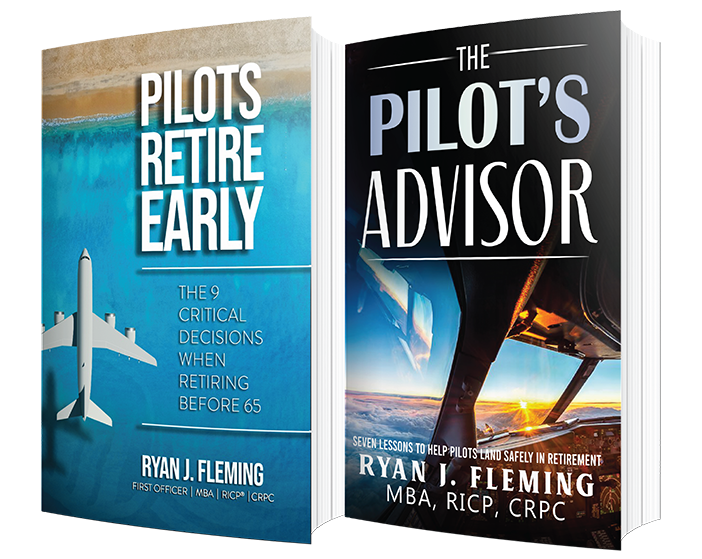
Attention, aviators, when you’ve spent years in the cockpit managing the complexities of flight, isn’t it time you navigated your retirement with the same precision? Introducing retirepilots.com right at your touchdown zone on our homepage, there’s a beacon flashing. Get my free toolkit. Click that, and you’ll be cleared for a direct route to Ryan’s retirement toolkit, tailor made for pilots like you. Inside, you’ll find two of his important works, the pilot’s advisor and pilots retire early. Between these two books, you can decipher the nine critical decisions when retiring before 65 and discover the seven lessons to help pilots land safely in retirement. But that’s not all. This toolkit is packed with altitude high value, including extras to get your retirement plans off the runway and light the afterburners on your 401k vector on over to retirepilots.com to grab your toolkit, and let’s embark on this journey together. You Yeah, it’s almost like, I feel like I’m aligned with you. It’s almost like, you know, we didn’t get paid by the time whatever’s left hits, hits the account and settles a day later. It’s kind of like, well, wait, what happened?
Ryan Fleming 14:55
But, but the power of that is unbelievable. And then. Or whatever is left over in the account because you already paid yourself first. Go spend it all. Go do whatever you want. Go out to you, but you’ve you’ve already paid yourself first. You’ve already done the things that you need to do. And then, of course, you know, you’re gonna have your bills and what have you. But other than that, you know, have fun.
Walter Storholt 15:16
Yeah, great points. All right, we got two more areas where you might be richer than you think, and that is, if you have multiple income streams. And you could apply this both for while you’re working and also once you retire. This principle applies to kind of both phases of life, right?
Ryan Fleming 15:31
Well, it does. And I think any, any income stream, whether, I mean, I think about, you know, yes, you could have real estate that was producing income. Maybe you have a pension from being in the military. You know any, any one of those things where it’s less that you less money that you have to pull from your retirement accounts, you’re going to get yourself in a situation where those accounts are going to keep growing over time, and we are talking about the top 1% of the population here. I mean, great jobs, people that are maxing out their 401, K is almost every single year. Many, many of my clients have, you know, rental properties, or at least one from just moving or what have you. And yes, if you have any of those things, you’re definitely way ahead of the game. And, and I find it very interesting that when I’m having conversations, it takes a long, long time to get to a million dollars. I mean, it really does, but then 2 million comes really fast. And I don’t think people truly see the power of compounding interest until they’re like, have built a bigger snowball and they’re later in their years. Whereas if I think they would have saw that or understood it earlier on, they would have been much more aggressive with saving. Does that make sense? Makes total sense? Ryan, absolutely, yeah. And so, so getting to actually watch that or the difference between a true saver versus a spender, I’ll have the conversation. I’m like, All right, so you’re living a lifestyle right now, about $300,000 a year. How much do you think you have to have saved to continue that lifestyle in retirement? And when you start doing the math, and the safe withdrawal rate, I mean, I you know, I’ll talk about a million dollars is only going to spit out about 40 or 50 grand a year. So you start doing that math, and all of a sudden, it’s like, oh my gosh, yeah. And I go, Yeah, your lifestyle is going to drastically change unless you make a change today.
Walter Storholt 17:25
Yeah, great points, all right. Last, but not least, the fifth point from this Kiplinger article about signs you’re richer than you think. You focus on the long term. So we actually started off a little bit talking kind of about the short term, right? And gusting that up making sure you’ve got that emergency fund and some more liquid assets available to you, but it always does circle back to that long term focus.
Ryan Fleming 17:48
Whenever I hear long term focus, I feel like it’s the most powerful thing out there with investing, because you got to be long term and you got to be absolutely unemotional. It’s very easy for me to be unemotional, but investors are the exact opposite. I mean, they’ve done whole studies on how you’re too emotionally attached to your your money to make good financial decisions any given time somebody’s panicking about something. We had a, you know, one of the fastest downturns earlier this year, fastest 20% sell off we’ve had in the last 75 years, people were panicked, and here we are. And, you know, August, September, and the markets up, things are good, and nobody even remembers that that happened. But during that, that window, there was a lot of short term, emotional decisions that are made that and I watch it because I know somebody’s going to hurt themselves. I’m like, Oh, my God, don’t do this. God, don’t do this. But I see it all the time, where people will make a short term emotional decision, versus staying the course and staying in that portfolio. And it’s a good conversation to have. I had of a buddy who’s a financial advisor that used to talk about this, where we could show you a track record of portfolio performance, but the only people that got that really good track record were the ones that stayed on board through the ups and downs of the market and were disciplined and you know, and I talked about it with flying, where, if you’re flying an airplane and you hit turbulence, you don’t just jump out of the airplane, do you? And of course, no, absolutely not. Well, then why are you trying to do that in your portfolio? So pilots are emotional, and I say it all the time.
Walter Storholt 19:25
They need the seat belt, and the pilot yelling at him to stay seated and sit down right and like, please, for the safety of everybody, don’t get up.
Ryan Fleming 19:35
It’s sad, but that’s I mean, the studies show everything of what investors do to hurt themselves.
Walter Storholt 19:41
Yeah, it’s amazing to see that. Well, again, these are just some illustrations that you don’t have to feel rich to actually be on the right track. So if you’re checking off a lot of these boxes, a lot of these habits and principles that we’ve talked about over the last couple of minutes, you’re probably well on your way to building wealth that’s going to. Last the rest of your life. And so before you look at somebody else, another pilot out there, and compare yourself to them and get concerned over maybe you’re not living right. You’re not doing it the right way, maybe get an analysis of your actual financial situation. Talk to Ryan and his team at the pilot’s advisor, make sure that you’re set up properly for where you are right now in your career, and also well prepared for when you hit that retirement date. He can help run a portfolio analysis after you order the retirement toolkit, and walk you through exactly what the planning process looks like. And again, give you a clear picture of where you are now, where you’re headed into the future and changes that might need to be made, and the time to make those changes is now not a year before retirement, or when you’re already retired, which unfortunately sometimes happens, there’s just less levers that can be pulled. There’s less course correction that can take place. So do that early in the trip, so that you create a smooth ride. The rest of the time, all you have to do is go to retirepilots.com. Again, that’s retirepilots.com. We’ve got that link down in the description of today’s show, get your toolkit. You’ll also qualify for that free portfolio analysis. Ryan, thanks for the help today. We enjoyed going deep with you, and we’ll talk to you again soon.
Ryan Fleming 21:10
It’s always great being on the podcast. We enjoyed talking with you as well. Walter, and the retirement toolkit is free. The analysis is free. Why not check out how you’re doing compared to other people. It’s probably one of the most important things that you will do in your life, and we don’t want to keep kicking that can down the street.
Walter Storholt 21:29
Absolutely, we’ll see everybody next time, right back here on the pilots advisor.
Speaker 1 21:38
Information is for illustrative purposes only and does not constitute tax investment or legal advice. Always consult with a qualified investment legal or tax professional before taking any action.
This podcast episode is for educational and informational purposes only. The opinions expressed are those of the speaker as of the recording date and are subject to change. This content does not constitute personalized investment, tax, or legal advice. Please consult a qualified professional before making financial decisions.