Preview of what we’ll cover today:
🛩️ What AA’s new plan really is: how the Market-Based Cash Balance Plan works behind the scenes
📉 Lack of control & conservative investing: why the pooled structure limits growth
💥 The tax time-bomb problem: how spillover contributions worsen future RMDs
💰Roth vs. spillover strategy: why many AA pilots should consider opting out
📊 A better long-term approach: controlling taxes, liquidity, and retirement flexibility
Subscribe On Your Favorite App:
 YouTube
 Apple Podcasts
 Spotify
 Amazon Music
 iHeartRadio
 TuneIn
More About This Episode:
If you’re an American Airlines pilot, you’re facing a major decision: whether to participate in the newly announced Market-Based Cash Balance Plan. Ryan is joined once again by Zach Smith from Pilot Tax to break down how the plan actually works, what AA pilots need to know, and the long-term tax consequences many pilots aren’t thinking about. Most importantly, we explore how this decision affects retirement flexibility, future RMDs, and your ability to control your own investment strategy.
Go Deeper Into The Episode:
0:00 – Intro
0:31 – What is the Market-Based Cash Balance Plan?
1:42 – Thought Process Behind the New Plan
4:42 – The Ticking Tax Bomb
14:57 – Look at The Bigger Picture
Resources:
Retire Pilots – https://retirepilots.com
Get your FREE Retirement Toolkit – https://bit.ly/3ZmZsaX
Pilot Tax – https://pilot-tax.com/
The Pilot’s Advisor Podcast is also on video. Watch & Subscribe on YouTube: https://bit.ly/3EIEBW2
Connect with Pilot-Tax: https://pilot-tax.com/
Episode Transcription:
(Note, this is an automated transcription. Please forgive any errors.)
>> Walter Storholt: Welcome back to the Pilot’s Advisor once again. I’m Walter Storholt and we’ve got another special episode for you today where Ryan Fleming, the Pilot’s advisor, will interview Zach Smith from Pilot Tax. But this time it’s about the latest retirement benefit very specifically announced by American Airlines. It’s the market based cash balance plan. What is it? How does it work? Let’s see what Ryan and Zach have to say and join the show.
>> Ryan Fleming: So here we are again with Zach, uh, Smith at Pilot Tax and we’re here to talk about American Airlines market based cash balance plan. So what’s new at American? American Airlines has introduced a new market based cash balance plan as an additional retirement benefit option for pilots. This program present, uh, presents what appears to be an attractive supplemental savings vehicle, but in reality, in our opinions, it’s probably more nuanced than it first appears. So what we’re going to do is we’re going to talk about that critical decision that you guys have coming up and we’ll talk about the key decision points that we view with this market based cash balance plan. So we want you to understand the plan, what the mechanics of it are, evaluate, uh, the long term tax consequences that it would turn into and also assess the impact of it on your retirement income planning for later on. Um, some, uh, other considerations are alternate strategies for tax diversification. And we’re going to examine the plan, what it means for your future taxes, retirement flexibility and also your financial independence by making, uh, and talking about the, uh, marketing materials that you guys were presented. So, Zach, thank you for being here. Let’s dig in.
>> Zach Smith: Absolutely.
>> Ryan Fleming: Uh, on the surface, do you want to talk about anything about the plan or should I just go through in a simplified version of exactly how it works and then you can interject as needed?
>> Zach Smith: Yeah, let me jump in real quick and kind of explain the thought process behind these. That way we can kind of understand exactly why the airlines are doing this. So we’re seeing these roll out. Delta’s already got one, American’s the next one out of the gate, and United Airlines isn’t going to be far behind. So really what happened here? As the contracts were being negotiated, the companies in the unions recognized that we were going to have a problem. Right. With the, uh, company match that’s going in or the NEC that the pilots are getting. They recognized at the income level that we were going to have this big problem, Ryan, where we are going to hit that max that can go into the retirement account during the year, right before the year is up and we’re still earning and the company’s still required to give you your nec. So it was this big question of what do we do with the money, right? What do we do with this excess money that they owe you per the contract? This is where these market based cash balance plans have come out. Now there’s going to be a lot of pros and cons to these. I, uh, agree with Ryan. We see more cons with these things. Um, so I’ll let Ryan jump in a little further here.
>> Ryan Fleming: Yeah, and that problem is even more profound when we have pilots that are making their own contributions because they want to take care of Roth, they’re going to get to that $70,000 ma for 20, 25 even quicker. Right. So, uh, the company contribution overflow. Just talking about this, you guys can see the slides. But all these companies, and of course as the contract goes, it’s 18, 19%, it goes up. So the spillover amount right now they’re talking about having it redirected into this market based cash balance plan rather than going into taxable compensation for pilots. So what exactly does that mean? How does that work? How does that from a tax standpoint? Well, that money that spills over is going to go into a pool. Professional management. So those contributions are dumped into this pool, overseen by the company, mind you, um, and some of their fiduciaries. So unlike your 401k plan, you’ll have absolutely no control over these assets, how they’re invested, or any of the investment choices. Um, the other thing about the market based cash balance plan is you have credit interest, uh, credit growth. So the account balance grows based off interest credits tied to underlying investments that you have. I think the biggest thing to consider here is that regardless of whether you’re a pilot that’s in his 20s, 30s, 40s or 50s, it’s going to go into this pool and you have no control over how it’s invested. And in most cases it’s just to try to retain the principal. So if you’re in your 30s, I don’t think that the money that is invested in there is in any way good for you. It’s not invested towards a risk tolerance of growth that you’d probably want for retirement. Um, and then lastly, how does it end? Well, you could get access to it or roll it over or rolled into the other part of the 401k at 59 and a half. But eventually you’re receiving that accumulated balance as either a lump sum payment or you can come up with an annuity stream or distribution, uh, plan after and in retirement. But the important thing that I think to talk about this is just how, how it plays into the distribution phase of retirement and the battle that Zach and I are constantly waging war on, which is just having so much tax deferred money. Go ahead, Zach.
>> Zach Smith: Yep. That’s the big thing here is this money goes in any of the spillover, goes into this cash balance plan. And Ryan is absolutely right. We have no control over how it’s invested. It is all pre tax money. This is the battle that Ryan and I are constantly fighting. Right. The retirement ticking tax time bomb. And this is extrapolating that problem even more. But it’s doing it with the money being very, very conservatively invested and we can’t touch it, we have no access to it and we have no control. So in our opinion, while there is some benefits Ryan’s going to go through, some of these, uh, that do make it appealing to participate. Um, this does not help our endgame retirement type of strategy.
>> Ryan Fleming: Yeah. And big picture, you’re getting a little bit of tax savings, you know, because that money is going to be tax deferred, it’s going to grow tax deferred, but it’s not in a growth strategy. So it’s actually compounding the problem. It’s not a, it’s not a tax solution per se. It’s going to compound the RMD problem that we’re talking about before. Um, and then the other problem with that too is we don’t know what taxes are going to be like in the future. We have no clue what the tax rates are. We have massive government debt right now. I think if you ask most people, they’ll say that, well, yeah, taxes are probably going to go up and you know, we have to make assumptions every day on what’s best and everybody’s situation is case by case. Uh, but no control, more tax deferred money compounding the problem that we talk about all the time, which makes me go eh, versus also, you can have it spill over into a taxable investment account where you have control, you can control how it’s invested and liquidity for day to day life and things that are happening. So the fundamental issue here is you’re kicking that tax problem down the Runway, um, so it doesn’t disappear at all. It’s often making it a, a heavier burden just later on. Um, even though it feels good today you’re going to start hitting RMDH or be in retirement, the distribution phase and have no control.
>> Zach Smith: Absolutely.
>> Ryan Fleming: Zach can you just talk about the RMD problem? We call it the ticking tax time bomb, the explosion, what that actually looks like for most, most pilots in retirement. And you, uh, could talk about. Irma, I know you talk about that a lot, but what I find is pilots know they have to save for retirement, but they don’t really understand the distribution phase at all. And once they get into retirement and they think this is all their money, every little penny that they take, they got to give a cut to the government. And it’s kind of surprising to them that they have to pay income tax on all that money. And then you got to find out a way to pay the tax bill, you know, after you’ve pulled all those assets. And then Also, boom. What’s RMDs? I don’t know what RMDs are. Oh, my gosh. This is going to hurt really bad.
>> Zach Smith: Absolutely. Absolutely. And this, this is the big problem with retirement. And this is what we talk about all the time. Most of the pilots that we work with in my practice, when they hit the age 65 for mandatory retirement, the problem isn’t usually that we don’t have enough money to retire.
>> Ryan Fleming: Right.
>> Zach Smith: That’s usually never the problem. The problem is everything is tax deferred. They may have done a very good job of saving IRAs, 401ks, and so on and so forth, but everything is tax deferred, meaning we’ve got to still pay tax on this money to touch it. And this becomes a huge problem when we get into retirement. Right now, the required minimum distribution age is 72 and a half. What that means is today when you hit that age, the IRS mandates that you start pulling money out of your traditional IRAs, traditional 401ks. IRS wants their money while you’re alive, so they force you to start taking money out of these accounts based on your age and life expectancy. So we may hit a phase in retirement where not only do we have these RMD starting, many pilots have a pension, whether it’s from the military or another airline. We have Social Security coming in, and then we have these huge balances in these traditional accounts. We’re going to get to 72. And this age does step up. Soon it’s going to step to 75. But nonetheless, we run into it many, many times where we have more income than what our pilots are spending in retirement because of these RMDs, and there’s nothing we can do about it. We have some strategies before RMD time that Ryan and I utilize a lot. But once we hit that. We can’t stop these rmd’. And furthermore, when you’ve got high income in retirement, these IRMAA pieces, something people aren’t really, really aware of till we get there. And what IRMAA is the income rated Medicare adjustment. Your Medicare rates in retirement are based on your taxable income on the tax return. So if we’ve got pensions and Social Security and big RMDs on the backside now we’re paying a ton of money for our Medicare insurance and a lot of this is avoidable or it’s able to be reduced by putting money in other vehicles. Uh, and Ryan and I are going to get a little more into that. We love the Roths, we love the brokerage accounts. We laugh all the time. The brokerage accounts are my sweet spot from the tax side. We love those. We love that stuff. Right? It gives us so much flexibility from tax and distribution without hitting the tax return with a lot of money. So I’ll let you continue, Ryan.
>> Ryan Fleming: Yeah. And of course this slide here shows you about the lack of control that we start talking about with the market based cash balance plan. I don’t want to be a beat the dead horse, but I think we should go to just a better approach. Some of the things that we talk about, um, Zach and I are on the same pages, you know, with a lot of this stuff. Um, but if, if it was up to me, and this is me personally, everybody’s case is a little bit different. I look at it as I want to get as much Roth money that I can for my contributions into $70,000 and race the company, whoever you work for, to that $70,000 mark and then start pushing that spillover. But with that spillover, I would much rather have it in a bigger paycheck that I could put in a taxable investment account that not only I would have the ability to invest it however I want, but the other side of it is it’s not. Trapped in a qualified retirement plan. I have liquidity for day to day life on things that are going to happen. Um, the reality is if you get $70,000 into a 401k plan every single year, regardless of the split of how much of that’s tax deferred versus Roth, you’re going to have a lot of money in retirement, you’re going to go down a path to where we got to start thinking about taxes and we got to start thinking about legacy planning. Um, and this is where I think that kicking the can down the street’s not the best Strategy. Taking control now of your financial future is the way to go. Uh, and you know, on this slide, we’re talking about the better approach that in many cases Zach and I are always talking about, uh, with our clients.
>> Zach Smith: Absolutely. And the better approach that we’re going to be suggesting with the market based cash balance plan. And again, I want to emphasize, uh, Ryan touched on earlier, there is going to be specific scenarios and, and every situation is going to be different. But by and large, I, I agree with Ryan. We want to push as much as we can to the Roth. And then those pilots at American Airlines, you guys, fortunately, are going to have the ability to opt out of participation in the cash balance plan, tier one versus tier two. Okay. And Ryan, I think is going to dig into that just a little bit more here. I would love to see our clients, um, especially in our prime age range, right. 30 to 50 that Ryan alluded to. We would love to see a lot of our clients, in order to control their money a little bit better, opt out of this cash balance plan. Let the spillover come to you as cash over cap. I know everybody’s terrified about paying taxes. We want you to have your hands on that money and get it in another vehicle. Okay. BackDoor Roth IRAs, taxable brokerage accounts where we can control the income and we can control the tax and we mitigate that big RMD problem later on down the road.
>> Ryan Fleming: Yeah. And unfortunately, we did a podcast for a bunch of Delta pilots, and I think a lot of people decided, you know, that aren’t our clients or didn’t know exactly what it was, they did not opt out of it. And now seeing what’s actually going on, they’re pretty disappointed. And there’s no option to opt out of it at this time. I’m sure maybe at some point they might have that, uh, option going. You know, if enough people speak, uh, up about this. But I think it’s important just to, you know, we’re trying to get our view out there, and I’m just going to go ahead and read this, that I think it looks like the market based cash balance plan, although it has some tax things that work for you on the surface, but deferring taxes and building more of that tax deferred money, I don’t think is looking at the bigger picture. It actually magnifies the existing problem rather than solving it. Um, you can see here the core issues, complexity, not control. It magnifies that RMD problem. It eliminates flexibility, and you’re making a huge bet on lower future Tax rates, and even if they are a little bit lower once you have no control and suddenly you have this major balance and we do the calculation and you’re having to pull hundreds of thousands of dollars out every single year, you’re going to get just destroyed on taxes and there’s nothing you can do about it at that point. So once again, what we recommend, um, and I will say this, this is not investment advice, this is not tax advice. This is just in general for how the airline industry looks for most people, um, it’s definitely a case by case basis. But if it was up to me, I would be pushing more Roth money into the 401k, trying to take cash over cap is spillover, keeping control of it, keeping liquidity, and then you’re looking at capital gains tax when you need money versus kicking the can down the street. You have anything else to add on to that, Zach?
>> Zach Smith: I think that’s absolutely the case. And what I would add is if you, even if tax rates are 10% lower for you or 12% lower than what they are for you in retirement, we’re going to have a, uh, you know, based on these investment styles between Roth and the brokerage accounts, you know, assuming a lot of this stuff will be long term in our brokerage accounts. And I know Ryan is very, very good about tax loss harvesting and being very careful with his clients about what we sell. You’re still going to have a tax differential. Even if tax rates are lower later, we’re still going to be way, way money ahead. And we’ve got control, We’ve got control over what we invest in. You’ll make up, in our opinion, with the market law of averages, you will make up the difference with different investment options than what’s going to be in the cash balance plan. My big concern from the cash balance plan, American Airlines has a caveat. In this cash balance plan contract, as does Delta, they’re not guaranteeing any kind of return. The only thing they’re guaranteeing in there is that you will at least have what you put in at the end. Uh, that tells me how conservative these things are. And that’s what concerns me with the lack of the potential of growth for these things.
>> Ryan Fleming: Yeah. And I, I don’t, you know, many times we cut off our nose despite our face or we’re being very, very short sighted. And the last thing I’ll add on this is just that it’s not about maximizing every tax deferral opportunity. Okay. What we want to look at is the big picture and how do we have a retirement strategy that has flexibility, that has control, and has manageable future tax obligations? Otherwise, we’re going to be constantly dealing with the tax problem versus just enjoying our retirement 100%. All right. I don’t really have anything else to add. Of course, if you’re a client, you can reach out to either of us at any time if you have more questions or want to talk about your individual situation. If you’re a American Airlines pilot out there and you’re not working with a financial advisor and, or a CPA that truly understands the airline industry, uh, you should definitely reach out to Zach Smith at Pilot Tax or myself. Go to retirepilots.com order my retirement toolkit. You can get a free portfolio analysis and we could really start digging into these issues and make sure that you are strategic, strategically tax planning and taking advantage of all the opportunities, uh, you have in your 401k plan and all the benefits you have as an airline pilot in this industry. All right, everyone, fly safe. Zach, I appreciate your time on this as always. I know the American pilots have to make a decision here shortly. I hope our view, our opinion is, gives you a little bit more, uh, uh, information on what might be best for you.
>> Zach Smith: Absolutely. Happy to be here, Ryan.
>> Ryan Fleming: All right, everyone, fly safe. Talk to you soon.
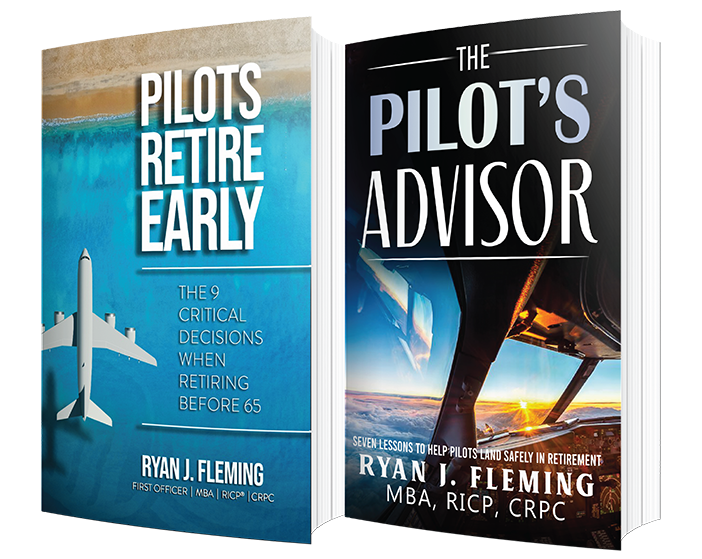
>> Walter Storholt: Attention, aviators. When you’ve spent years in the cockpit managing the complexities of flight, isn’t it time you navigated your retirement with the same precision? Introducing retirepilots.com right at your touchdown zone. Um, on our homepage there’s a beacon flashing. Get my free toolkit. Click that and you’ll be cleared for a direct route to Ryan’s retirement toolkit tailor made for pilots like you. Inside, you’ll find two of his, um, important works. The pilot’s advisor and Pilots Retire early. Between these two books, you can decipher the nine critical decisions when retiring before 6:30 and discover the seven lessons to help pilots land safely in retirement. But that’s not all. This toolkit is packed with altitude high value, including extras to get your retirement plans off the Runway and light the afterburners on your 401k. Vector on over to retirepilots.com to grab your toolkit and let’s embark on this journey together.
>> Zach Smith: Information is for illustrative purposes only and does not constitute tax, investment or legal advice. Always consult with a qualified investment, legal or tax professional before taking any action.
This podcast episode is for educational and informational purposes only. The opinions expressed are those of the speaker as of the recording date and are subject to change. This content does not constitute personalized investment, tax, or legal advice. Please consult a qualified professional before making financial decisions.