Preview of what we’ll cover today:
🦃 Thanksgiving Plans & Traditions: how holiday rhythms mirror financial habits
🎈 Parades & Planning: staying focused on direction in your financial life
🍽️ Feast Prep & Market Timing: why timing the market is as tricky as timing the turkey
🏈 Football & Investing: understanding strategy, patience, and long-term plays
😴 Post-Meal Nap: the peace of a financial plan you can relax into
Subscribe On Your Favorite App:
 YouTube
 Apple Podcasts
 Spotify
 Amazon Music
 iHeartRadio
 TuneIn
More About This Episode:
This week, Thanksgiving takes center stage and your finances get a seat at the table! Ryan serves up a fun, insightful discussion where holiday favorites like parades, turkey carving, and football run parallel with the keys to successful retirement planning. Discover why consistency in investing is like the annual parade, how carving the turkey mirrors smart distribution in retirement, and why it pays to plan for plenty of financial leftovers.
Go Deeper Into The Episode:
0:00 – Intro & Thanksgiving Traditions
3:11 – Parades and Financial Planning
5:50 – Preparing the Feast and Market Timing
7:37 – Football Games and Investment Strategies
10:55 – Cutting the Turkey
12:24 – Family Table Conversations
13:17 – Leftovers and Retirement Planning
15:24 – Post-Meal Nap and Retirement
Resources:
Retire Pilots – https://retirepilots.com
Get your FREE Retirement Toolkit – https://bit.ly/3ZmZsaX
Pilot Tax – https://pilot-tax.com/
The Pilot’s Advisor Podcast is also on video. Watch & Subscribe on YouTube: https://bit.ly/3EIEBW2
Connect with Pilot-Tax: https://pilot-tax.com/
Episode Transcription:
(Note, this is an automated transcription. Please forgive any errors.)
Walter Storholt 00:00
Well, Happy Thanksgiving week if you happen to be watching our episode today, right around the time that we release it, from the Macy’s Parade to carving the turkey and, of course, some Thanksgiving football, the traditions around this time of year can actually teach us a lot about also creating a great financial plan. So what we’re going to do is match some of the most loved parts of Thanksgiving in the surrounding time and link them with the present and how you prepare for your retirement future. This will be fun. Let me grab Ryan, and we’ll get started. Walter Storholt With you here alongside Ryan Fleming, the pilots advisor, and it’s a Turkey Day edition of the pilot’s advisor today, Ryan, Happy Thanksgiving week to you, my friend. Any big plans for you this? You know, Thanksgiving day and weekend?
Ryan Fleming 00:44
Yeah, actually, I’ll be spending with my sister and my mom. They both live down in Destin Florida. I was stationed down there as a lieutenant, and then I couldn’t stay. The beaches are beautiful. I had to leave and go serve my country, and suddenly all my whole family lives there, and I don’t get to enjoy the beach, but I’ll be going there to spend it even with them. So it’ll be fun.
Walter Storholt 01:02
You were the trailblazer, it sounds like. So you laid the foundation, and everybody followed, but then you had to go elsewhere. So
Ryan Fleming 01:08
guess so. But living on the beach in Destin Florida during my 20s was actually a pretty good place to
Walter Storholt 01:13
- I can imagine that was a lot of fun as someone who also grew up on the beach. It’s a pretty good place to be when you’re younger. So much to do. Absolutely doesn’t feel much like Thanksgiving, though, when you’re at the beach. We used to do Thanksgiving at the beach all the time, even before we moved there, when I was a kid, that was kind of our place, that was our tradition growing up, was going to the beach on Thanksgiving. But we’ve been very non traditional Thanksgiving folks, kind of all of our years. My family has I’m
Ryan Fleming 01:39
all about being non traditional. I’ve had enough practice getting my cold, you know, cold Thanksgivings in Ohio, where I grew up, and, of course, many white Christmases. But what I figured out was I didn’t really want to live in seven months of overcast depression of the Midwest after I was in the military for a while. I’m like, wait a second, there’s a better way here. And, yeah, it’s okay. I don’t need, I don’t need to have a bunch of, you know, leaves on the ground playing football outside anymore. I enjoyed that those Thanksgivings. Yeah, my childhood. I’ll take the beach any day now.
Walter Storholt 02:10
Yeah, absolutely. We, we cook duck on Thanksgiving. So that’s how non traditional we are. I’m like turkeys for turkeys for the birds. Pun intended, we go with the duck much fattier and tastier and better, I think, than turkey. So well,
Ryan Fleming 02:23
my mom is so frustrated now because my wife doesn’t eat meat, and now my sister and my brother in law both decided to be vegetarians
Walter Storholt 02:31
too. Wow. Are you guys making a Tofurky? Is that what they call that thing?
Ryan Fleming 02:36
She’s just like, What? What the hell are we doing? And I’m like, Mom, I still eat turkey. Let’s do this. I want to take a nap after I eat. You know,
Walter Storholt 02:44
so well, you being, you know, military and a pilot and a former football player. I mean, you’re like, What is this noise?
Ryan Fleming 02:50
I’m not giving up meat at all. But my mom, poor, poor thing. I mean, you know, traditions, and she’s like, what we’re not eating turkey.
Walter Storholt 02:59
Yeah, that’s non traditional, for sure. Oh, man, after she spent her whole life trying to perfect that turkey. Now nobody wants
Ryan Fleming 03:06
- Well, her and I will enjoy it, and they can eat whatever cabbage they want. There you go.
Walter Storholt 03:10
I love it. Well, let’s jump into our fun topic today, and hopefully people will get a kick out of some of these comparisons. Again, we’ll throw out an element of Thanksgiving, Ryan, you make the connections to what that kind of can teach us in a financial plan perspective, let’s talk about the parades. I’m not a parade guy, but certainly people love the Macy’s and I forget what all the other competing wins are, right? But there’s a bunch of parades that happen on Thanksgiving Day, and that’s a big part of a lot of people’s tradition on that day is to sit back and watch the parade with family.
Ryan Fleming 03:37
Yeah. So Walter told me that we’re going to talk about a bunch of Thanksgiving stuff and try to relate it to financial planning and how that fits into building out your retirement. So you’re gonna have to bear with me on this one parade. Well, is it the Macy’s Day Parade that’s around Thanksgiving?
Walter Storholt 03:51
Yeah, that’s, that’s the one that I always know. I know there’s a couple others that also go on at the same time, but the Macy’s is the one I’ve always kind of been
Ryan Fleming 03:57
aware and I don’t sit there and watch them either. I know there’s a ton of coordination that goes into that a ton of money. I think the thing I’ll take away from a parade is, you know, it’s a tradition. It happens every year. I think that what I pull from that is consistency. You know, maxing out your 401, K every single maxing out your Roth. True, truly powerful things happen when you’re consistent. Another thing I think about, you know, each each float going by every single month, Dollar cost averaging into a taxable account, if you’re consistent in finances and saving for retirement, truly powerful things happen. Nice.
Walter Storholt 04:35
I think about the coordination of it all right, so you’ve got the parade, and it looks like it’s this nice, smooth procession. Everything goes off without a hitch, hopefully, but it doesn’t happen like that magically. There’s a lot of planning that goes into it, just like a retirement you would want the same kind of thing to happen to make it look easy, but you know that there’s a lot of work going on behind the scenes to make it
Ryan Fleming 04:55
happen. Well, I think something to pull from that too, is we, you know, somebody will look at a portfolio, and they’ll. Look at the 10 year return average, or whatever it might be, the only people that got those numbers were the ones that didn’t panic and stayed in that portfolio. But what people don’t realize is there as many ugly, ugly periods during that 10 year period, you know, where the market was down 20% or we had massive volatility, like people tend to forget the pain and suffering or the mistakes that happen behind the scenes to get those numbers. And that’s why it’s truly important to not panic. Don’t make short term emotional decisions. Imagine the parade planner that every time she ran into a little problem, or he ran into a little problem, they just panicked and said, Oh, screw it. Well, you know, this sucks. It’s not going to work. Yeah? Chaos, yeah. Whereas you know it, there might be chaos behind the scenes, but as the parade goes, it all looks wonderful for the viewer on the outside. All
Walter Storholt 05:49
right. Well, channel your mom on this next one, preparing the feast for the family. Obviously, somebody’s kind of got that role, or maybe a few people in your family are carrying that role each Thanksgiving. Any financial comparisons there?
Ryan Fleming 06:02
Well, what it makes me think of is we’re in 2025 right? Now, we are 2025 right?
Walter Storholt 06:07
Yes. So we had, always takes me a second to remember what year I’m in. We’re of that age now, right?
Ryan Fleming 06:12
Well, I have to do math to figure out how old I am nowadays. So nice. So 2025 we had the fastest 20% sell off that we’ve ever had in the last 75 years. So depending on when you put your money in, I’ve taken over accounts in April, and I’ve looked at them and they’re up 36% on the year, and I’m like, holy crap. But what happened was we, you know, we took over an account and bought in while the market was all the way down. Conversely, you could have gotten a new account and invested it in January or February, and then it lost 20% it lost 20% so it just goes to show the importance of timing, but at the same time, that’s why we dollar cost average. That’s why we’re unemotional, because the market’s going to go up, up or down, but dollar cost averaging forces you to do exactly what you’re supposed to do. You know, you invest every single month if the market’s down, guess what? You bought more. If the market’s up, you buy less. And with investing, you know, you can’t. I think one of the biggest mistakes I see is people that are sitting on the sidelines, or they’re trying to time the market. Oh, I think this is going to happen. They want to get out. And all those things are actually going to hurt you timing wise. And I’ve heard this from Warren Buffett and so many other great investors, probably the biggest factor with investing is time in the market. The t factor, when you do all the equations, is the biggest factor time. So when’s the best time to get in the market? Right now?
Walter Storholt 07:36
Love it. What about football games? I know you’re watching football on Thanksgiving, right?
Ryan Fleming 07:40
Well, you know, I don’t like football. I don’t like football at all.
Walter Storholt 07:44
No, there’s such a horrible sport
Ryan Fleming 07:46
well, and I think you’re the same way. It’s probably changing a little bit as we move forward. But when I think about Thanksgiving, I think about the Dallas Cowboys, I think about the Detroit Lions, and I I think about my uncles falling asleep in front of the TV. And, you know,
Walter Storholt 08:00
because it was the lions, right? Yeah, that might be reversed this year. The Lions actually make you excited for it. And it’s the cowboy game you fall
Ryan Fleming 08:07
asleep in. Well, historically, it was a horrible game, you know, as a total blowout, because these teams were so bad. But you, you know, you think about the guy the MVP, or, you know, I think about John Madden back in the day, and they’re eating a big old turkey, turkey leg, right? The turducken, yeah. So football, yeah, I like football. Trying to think of how football relates to investing. The best I can come up with is, you know, football is one of the few sports where every single athlete on the field probably looks totally different. You know, the linemen look totally different from the quarterback or from or even offensive linemen actually don’t look a lot like defense alignment. It’s very, very specialized and and that diversification of talent creates a one whole team that works together. You have to have an offensive strategy and a defensive strategy, but if any one person doesn’t do their job. It doesn’t work out. And I feel like building a strategic portfolio is the same way you have to have all the pieces of the puzzle to make it work, and up and down markets and understanding, you know, somebody’s risk tolerance, and being disciplined after you engineer that portfolio, to not jump out of it just because some little thing happens, I know, another way to relate it to football, just because you’re trying to run the football, run run the football, and it’s not working out. You hear all the time about these offensive coordinators, you got to stick with the running game. You got to stick with the running game because it’s going to open up the pass. And you just got to stick with your game plan. And I think investing is like that.
Walter Storholt 09:42
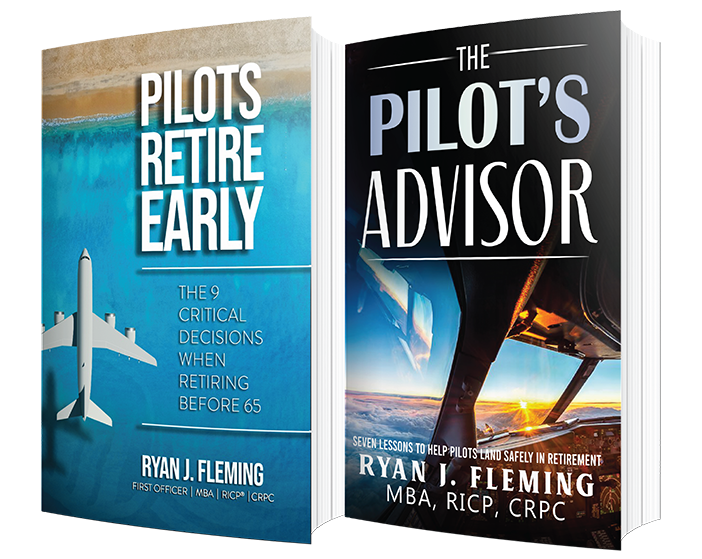
A 10 attention aviators, when you’ve spent years in the cockpit managing the complexities of flight, isn’t it time you navigated your retirement with the same precision? Introducing retirepilots.com right at your touchdown zone on our homepage, there’s a. Beacon flashing. Get my free toolkit. Click that, and you’ll be cleared for a direct route to Ryan’s retirement toolkit, tailor made for pilots like you. Inside, you’ll find two of his important works, the pilot’s advisor and pilots retire early. Between these two books, you can decipher the nine critical decisions when retiring before 65 and discover the seven lessons to help pilots land safely in retirement. But that’s not all. This toolkit is packed with altitude, high value, including extras to get your retirement plans off the runway and light the afterburners on your 401 k vector on over to retirepilots.com to grab your toolkit and let’s embark on this journey together. Certainly sounds like we could do a whole nother podcast all about all the comparisons between football and financial planning. I think you could pull out. You could just keep going. So we’ll save that one for another day for sure. What about cutting the turkey? You know, that’s that nerve wracking thing like, Oh, you got to cut the turkey right, right? What’s the right way to hold the knife? What direction do I cut in making sure everybody gets the right piece that they want. All that kind of stuff goes into it. Maybe it’s stressful for some people. Maybe not. Any financial comparisons there.
Ryan Fleming 11:14
Well, it used to be when we all got together as a family, and we get together at my mom always house, REL of Fleming, 96 river drive. When we all used to live in Ohio, we’d all drive there, you know, the uncles, aunts, we you know, all the cousins. Sadly, as life changes, we don’t do that anymore. So it used to be the size of the turkey. It was almost like the distribution phase of retirement. You had to get in there earlier. You might run out of money, right? You might run, yeah,
Walter Storholt 11:39
and the one cut. You couldn’t cut those first pieces too big, or else, everybody at the end of the line was getting little tiny slices. Well,
Ryan Fleming 11:45
absolutely. And my dad grew up with a couple brothers, and I remember him used to always saying, you know, He, He who eats this the fastest, eats the mostest, nice. And I always thought that kind of rang true, because if I looked at my dad’s older brother and my dad’s younger brother, it looked like my dad got most of the turkey. Nice. He was the biggest one of them all, but, but no, so, yeah, I mean, obviously, you know, you cut the turkey and then somebody, the special person, that gets to cut the turkey and, and that’s what Thanksgiving is all about. Man, put some gravy on that. Let’s go.
Walter Storholt 12:17
Yeah, good lesson there, though, of diversification, but more so even distribution, making sure that’s parceled out nicely in retirement, too. All right, what about family table conversations? We could take this one in a lot of different directions, right? But that’s something that people either look forward to at Thanksgiving or dread that Thanksgiving. I think it’s
Ryan Fleming 12:34
a little bit of both. I mean, you know, you’re all excited to go see your family, and you have some crazy conversations and drama around the table, and then you’re always happy to be leaving, or they’re, you know, if you’re hosting, like, All right,
Walter Storholt 12:45
everybody get the hell out of here. The stereotypical crazy uncle you got to hear from, right?
Ryan Fleming 12:49
Yeah, yeah. Well, and I guess this is a little bit more Christmas than it is Thanksgiving, but it just made me think of the crazy uncle from
Walter Storholt 13:02
Christmas vacation, from Christmas vacation. Uncle Eddie, yeah, we were just watching we were just watching that the other night.
Ryan Fleming 13:07
Yeah. What a great movie. What a classic. I could watch that 10 times that throughout the year and and love it every single time. Yep, yep, it’s good stuff.
Walter Storholt 13:17
All right, let’s go to leftovers. What’s Thanksgiving without a bunch of leftovers, right? Do we get leftovers in retirement
Ryan Fleming 13:23
planning? Well, I guess we could get, I mean, it’s very good to have leftovers. Well, you know, a party is not good if you run out of beer. Thanksgiving is not okay if you run out of Turkey. So I look at this like planning for retirement. We’re not trying to plan to have just enough, right? We want to be in retirement and have access to where, you know, hey, we can go on that extra vacation. We’re not worried about running out of money. We have an estate plan. We’re going to pass some on to our kids. I look at that as good planning and retirement. So more is better. And think about it with thanksgiving. I mean, leftovers are actually the best. I mean, a day or two later, after it’s all kind of marinated a little bit. You you make that turkey sandwich and throw some mayonnaise on there. I mean, that’s, that’s what Thanksgiving is all
Walter Storholt 14:08
about. Yeah, that’s a great point, though, and you’re exactly right. You know, we kind of joke all the time about the saying, you know, I want my last check to bounce, but you really don’t like that’s not how you help people plan. That’s really not the goal. So it’s funny to chuckle about that, but that’s really not how you design a financial plan. We want leftovers. We want wiggle room, because it makes the party better in in Thanksgiving, and it also then is going to provide maybe for others. It’s going to let you make the next people that you know, hey, you got multiple people coming over the course of the weekend. You want those leftovers for the other people that are coming to hang out and visit on Friday, Saturday and Sunday.
Ryan Fleming 14:42
Absolutely. I don’t know why it made me think of this, but I’m gonna bring it up. There’s a guy named Dave beffort that I work with, and it’s kind of different from airline pilots, because airline pilots know that they’re going to retire probably at 65 or earlier, and then they’re going to be in a lower tax bracket. And Dave always talked about like. So you’re going to plan to make less money. Like, why would you ever do that? Now, for an air you know, it’s a little bit different in the airline industry, but if you’re, you know, if you’re a business owner, you want, you keep wanting to make more and more money as time goes on. And I don’t know why, you know, I wanted to share that, but it just, it just came up.
Walter Storholt 15:18
Yeah, well, maybe you’ll find a way to link it to our last one here, or a final direction to go in one more comparison, Ryan, and then we’ll get out of here and go enjoy our Thanksgiving the post meal nap. Have you ever had a better nap than that one that you get on Thanksgiving Day?
Ryan Fleming 15:32
I think that that’s what Thanksgiving is all about, and why I like it so much.
Walter Storholt 15:36
There’s probably a button in that top button.
Ryan Fleming 15:40
I think Thanksgiving tends to have a little bit less drama than Christmas, a little drama, and you plan to gorge yourself and then take a nap and then feel like crap afterwards, and that’s what and we’re and then we’re supposed to be thankful for that. And I think that, you know, when I if you were a very, very good saver, and you had an amazing retirement because of it. I mean, that’s you earned it. You did it right. You had that discipline. You spend a little bit less through your 30s and 40s to have excess in retirement. And that’s what I want to be. I want to be that. I want to be that guy that can not only do whatever I want to do in retirement, but I want my kids to eventually, one day go, man. Dad was pretty smart. You know, Dad had it going on, and I think I’m finally seeing that with my wife, although I don’t think she’ll, she’ll admit it. Maybe she would admit it. Yeah, well, we were lieutenants flying around, and I was trying to explain to her a budget and, like, who even went through the numbers a few times where she’s like, well, so all our money’s gone, like, halfway through the month, and I’m like, Yes, we’re doing it wrong. You know, I had her on a pretty strict budget. We were pretty good savers. And I think, you know, here we are mid 40s, and I think she’s starting to realize, man, you know, as much as I was irritated by that budget early on, now we’re starting to see the rewards where I think we’re, you know, very much ahead in our retirement planning.
Walter Storholt 17:03
Yeah, same, same thing with my wife, where we’ve she’s seen over the years. She’s like, All right, let’s say the paycheck this month, she looks at the bank account and it’s like, what, where did they go? Well, it went to two different retirement accounts. Taxes. We withheld extra for this. We move this over here, then this automatically gets deducted, and then you have this other tax and then Social Security savings, and then you’re in a 401, a plan that gets moved over here, and
Ryan Fleming 17:29
that’s what’s left well. And the quicker you move it out of your checking account, you get that paycheck, the quicker you make most of it disappear, the less your spouse can spend. That’s right? There’s credit cards, right? There’s credit cards, and many people do that when you can’t pay off your credit card at the end of the card at the end of the month, that’s a problem. So you got to balance out.
Walter Storholt 17:46
That’s where we got to clean things up. Well, I was just thinking the post Emile nap was like reaching retirement. Hey, here you are. You’re retired now. You get to rest, relax, do whatever you want and take it easy.
Ryan Fleming 17:56
So successful retirement planning would be that you never run out of gravy. There’s always more gravy to pour on top, and we know we like the gravy.
Walter Storholt 18:06
That’s those leftovers. Love it. Well, thanks for having some fun on today’s episode, Ryan chit chatting about some of these Thanksgiving items. I think the lesson is, whether it’s your portfolio or pumpkin pie, everything’s a little better when you plan ahead, share wisely with others, perhaps in your family and in your life, and savor the results at the end of the day. You can’t go wrong with that strategy, whether it be Thanksgiving or your retirement plan. Enjoy your retirement. Well, not your retirement. Enjoy your Thanksgiving, Ryan, and you’re not at retirement quite yet, but enjoy your Thanksgiving, and have a great rest of your weekend. And I know we’ll be catching back up on more financial stuff next episode.
Ryan Fleming 18:42
I don’t know about you, but I’m hungry now.
Walter Storholt 18:46
Let’s go eat. Folks. Enjoy your Thanksgiving. Thanks for joining us. We’ll see you next time on the pilots.
Speaker 1 18:55
Advisor information is for illustrative purposes only and does not constitute tax investment or legal advice, always consult with a qualified investment legal or tax professional before taking any action.
This podcast episode is for educational and informational purposes only. The opinions expressed are those of the speaker as of the recording date and are subject to change. This content does not constitute personalized investment, tax, or legal advice. Please consult a qualified professional before making financial decisions.