Preview of what we’ll cover today:
🌍 Tariffs & Markets: Uncertainty and volatility in the market
🧾 Big Beautiful Bill: Real financial implications
📉 Market Lessons: Having discipline during turbulence
🔮 Looking Ahead: Positioning for 2026
🎄 Year-End Note: Perspective and gratitude
Subscribe On Your Favorite App:
 YouTube
 Apple Podcasts
 Spotify
 Amazon Music
 iHeartRadio
 TuneIn
More About This Episode:
2025 was loud… tariffs, market swings, tax headlines, and nonstop uncertainty. But not everything that made the news actually mattered for your long-term plan. In this year-end conversation, Ryan reflects on what truly impacted investors, what tested discipline, and why staying unemotional proved more valuable than reacting to headlines. Listen in to separate the noise from the lessons and head into 2026 with clarity and confidence.
Go Deeper Into The Episode:
0:00 – Intro & Personal Holiday Plans
3:10 – Tariffs
4:37 – One Big Beautiful Bill
6:47 – Tune out all the noise
10:01 – Good news & market wins
12:55 – Looking ahead (2026 predications)
13:59 – Stick to the plan
16:44 – Free portfolio analysis / final thoughts
Resources:
Retire Pilots – https://retirepilots.com
Get your FREE Retirement Toolkit – https://bit.ly/3ZmZsaX
Pilot Tax – https://pilot-tax.com/
The Pilot’s Advisor Podcast is also on video. Watch & Subscribe on YouTube: https://bit.ly/3EIEBW2
Connect with Pilot-Tax: https://pilot-tax.com/
Episode Transcription:
(Note, this is an automated transcription. Please forgive any errors.)
Walter Storholt 00:00
Well, it’s our final episode of 2025 and to mark the end of the year, we’ll do like most shows do, and look back at the year. It’s our Year in Review Show. But don’t miss this one. We’re not just going to retread over the headlines. We’re going to talk about what worked, what didn’t, even for individual investors, some key lessons to learn and to apply. Forward into 2026 it’s the pilot advisor. I’ll grab Ryan. We’ll get started coming up next. Well, Brian, we have arrived. Walter Storholt, to all of our viewers and listeners out there. Welcome back for our final episode of 2025 as always, joined by Ryan Fleming, of course, the pilot’s advisor and Ryan, we’re here at the end of the year. If you can believe
Ryan Fleming 00:42
it, I can believe it, you know, I know I’m getting older, and I know I’m not
Walter Storholt 00:45
as normally. You say it went by so fast. It sounds like this year we’re on you a little bit.
Ryan Fleming 00:50
I just, I just feel tired, just tired, tired and old. And you know that you are, you know, it’s a, it’s a mental state of mind. Well, mentally, just tired and old.
Walter Storholt 01:02
What do you think did it this year? Just the age you think, just like, something about being a year older than a switch has flipped, perhaps, um,
Ryan Fleming 01:09
I don’t know about that. Who knows what it is? This was an interesting, interesting year. And, you know, we’ll talk about some of these issues, but from an investor standpoint, and dealing with clients, and some of the things that I had to deal with and handle when we had the fastest 20% sell off that we’ve had in the last 75 years because of all the the, you know, the tariff scare and all that. I mean, it was just one of those years that was a very trying time on counseling people to be long term and unemotional. And there was just so many things that could have got you off track and made you want to jump out of the airplane and and so it was an interesting year, and I guess we’ll talk about it
Walter Storholt 01:48
well as we dive into each of these things in our year in review, you’re right. When we were putting this episode together, we were kind of like, man, there’s a bunch of stuff to talk about. Like, a lot did happen this year, so maybe that’s a little bit of the reason for the tiresome feelings here, hopefully 2026 will bring you some renewed energy, my friend.
Ryan Fleming 02:05
But, well, no, actually, you know we’re leading up to the holidays. I don’t know exactly when this episode is going to get released, and I love I love my in laws. I love them very, very much. But my wife’s Carrie’s whole family will be coming to our house here for Christmas. Watch what you say. This is a public video, right? Well, and her dad, her dad even listens to the podcast. So love you, Randy. Can’t wait to see you, but no there. I think everybody’s coming to our house, and, you know, I think maybe Christmas Eve and staying through New Year’s. So I’m sure it’ll be a lot of fun. I’m sure we’ll have a lot of fun, but I’m sure I’ll be worn out afterwards.
Walter Storholt 02:41
Yeah, it’s like a good vacation that wears you out, and then you need a vacation from the vacation. Same thing with like, family visits, even if it’s you got a great family, it’s not one of those ones that tears you down or makes you sad when at the end of it, but still, it can definitely zap you a little bit.
Ryan Fleming 02:55
Absolutely, I always need a vacation after my vacation, and because I have that old state of mind. I mean, what I wouldn’t do just for a afternoon nap? Every day I would give anything for a nap. That sounds amazing. Hilarious.
Walter Storholt 03:09
All right, let’s get into it. We’ve belabored the tiredness long enough. Let’s talk about something. I am tired of hearing about, Ryan the tariffs. That was big news this year, right? Liberation Day was kind of when most of them kind of hit. That was sort of the big beginning of it all, I guess, back in April timeframe. But tariffs have pretty much been in the news constantly for the last several months, right? The whole year.
Ryan Fleming 03:32
Well, it really affected the markets in the first quarter. I mean, big time, affected the markets. And here it is. We’re recording this on December 16, and guess what the news is today, we’re waiting on the Supreme Court to make a determination on tariffs, so we’re still talking about tariffs. And unfortunately, investors wanted to make emotional decisions way back when in the first quarter on trying to predict what was going to happen with the markets because of this. And here we are in December, and I still feel like we still have that uncertainty. Other things to talk about. I mean, we had interest rate uncertainty. Still. We’re talking about the Fed and what decisions they’re going to make. We were doing the same thing back in January, February, March, April, and it’s persisted. But I think the big lesson here is that’s all the noise, and the noise hasn’t shut off this whole year. But if you look at the markets, I mean, you know, we’re closing a lot of our portfolios at 17, 18% right now, you know, outpacing the s, p5 so it just goes to show you the value of staying the course and being unemotional.
Walter Storholt 04:37
Yeah, well, speaking of being unemotional, I mean, so we had the had the inflation, we had the tariffs, the conversation, as you mentioned, as well the, you know, debt kind of getting talked a little bit about, and their interest rates, all those kinds of things. But we also had the one big, beautiful bill, or the OBB ba got pronounced about 75 different ways, I think. But that was right in the middle of the. Year in July that brought a big, lot of big changes from a tax perspective, although some of those big changes were just keeping things, you know, consistent and steady. What’s your take on kind of the big, beautiful bills impact on the year’s finances?
Ryan Fleming 05:13
I think overall, the big, beautiful bill, I think that the administration that’s in right now is good for business. It’s good for the markets. Obviously, any change takes a little bit of time. It doesn’t happen overnight, but I do feel like rates and inflation are finally starting to pull back. Something that affects everything that we do is gas prices, and nobody’s really talking about it, but we’re back into, like, between two and $3 a gallon. Yeah, I mean, I want to say we’re over five $5 a year or two ago. And you know that that alone decreases costs on so many different goods and services, you know, just moving stuff around,
Walter Storholt 05:52
it would be the lowest that it’s been in so long, literally, like the exact time I’ve done the least amount of driving in my entire life with the newborn at home, like we’re not going anywhere, doing anything. Of course, the rest of the year we’re putting on 25,000 miles on the vehicle. But oh well, that’s okay. I won’t
Ryan Fleming 06:09
sometimes you win, sometimes you lose. You know, that’s right, yeah, I’m
Walter Storholt 06:13
picturing you as the Grinch by the way, up on the hill, as you’re looking down on Whoville with all this stuff going on the past year, when you said, all the noise, noise, noise.
Ryan Fleming 06:23
I kind of am The Grinch. And I, you know, my wife always makes fun of me. She says I’m kind of frumpy, you know, she has a positive attitude and has a beautiful smile and and she’s very empathetic, and all those good qualities. And then I’m like, Fi, five, fo Fum and, and get off my lawn. I’m that guy, so it’s kind of, you know, I relate that to the markets, though. I mean, I have to have my my fingers in this every single day. And it seems like there’s always been this sense of something bad that’s going to come around the corner, are going to happen around the corner and and that’s why you have to turn it off. You have to turn off the noise. And for me to relate it to pilots. I try to anything we talk about. I try to relate it to pilots so we can understand it. And it reminds me of like this flights where there’s like that constant turbulence, you know, where the plane’s shaking and it’s uncomfortable, but all the systems are still operating fine. The airplanes flying, the ride’s a little bit uncomfortable, but you know, that’s that’s the environment that we have to stay disciplined in, because that’s when investors make mistakes. That’s when they make those emotional mistakes where it is uncomfortable and it is a little uncertain. And another way I’d like to relate it is if you’re flying an airplane and also you get a little bit of a wind bump, or you’re not constantly, you know, moving the controls all over the place with every little bump, you know, you just got to kind of let the airplane fly a little bit. And I think that’s that proved very true this year with the markets
Walter Storholt 07:57
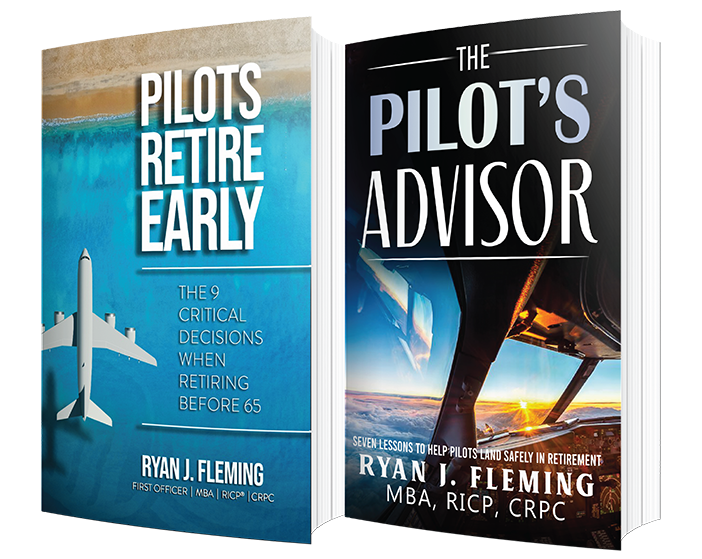
attention aviators, when you’ve spent years in the cockpit managing the complexities of flight, isn’t it time you navigated your retirement with the same precision? Introducing retirepilots.com right at your touchdown zone on our homepage, there’s a beacon flashing. Get my free toolkit. Click that and you’ll be cleared for a direct route to Ryan’s retirement toolkit, tailor made for pilots like you. Inside, you’ll find two of his important works, the pilot’s advisor and pilots retire early. Between these two books, you can decipher the nine critical decisions when retiring before 65 and discover the seven lessons to help pilots land safely in retirement. But that’s not all. This toolkit is packed with altitude high value, including extras to get your retirement plans off the runway and light the afterburners on your 401 k vector, on over to retirepilots.com to grab your toolkit and let’s embark on this journey together. You’re right. And actually very spot on from a tiredness standpoint, because when you think about flying across the country, let’s say no turbulence, you feel fine when you get to the other side, pretty refreshed. You don’t feel like it took a lot out of you, but for and even if you had a little turbulence here and there, not a big deal. But if it’s one of those storm systems where it’s like, Hey, folks, this the seat belt side is going to be on basically the entire flight. That can be very uncomfortable, and just kind of always keeping you on edge and just sort of still having this ominous feeling, this this feeling of awareness in your head you can never fully relax. That’s kind of what this year was, wasn’t with when we kind of look back at the big, beautiful bill, we haven’t even gotten to it yet, but the government shutdown that lasted for about two months, all the tariff talk back and forth. It just sort of this constant state of turbulence, ominousness, being talked about and kind of in the in our consciousness. Maybe that’s why you just get this little bit of since we’re in this financial world so heavily, we are feeling a little more tired than usual, and maybe some of our investors and. And savers out there too?
Ryan Fleming 10:01
Yeah, for sure. And I actually took some notes on this. I’m going to reference my notes here,
Walter Storholt 10:06
but look away from the screen. It’s okay, Ryan,
Ryan Fleming 10:09
despite all the anxiety and all the things that happened this year, the things that held true, the markets continued to move forward. Earnings mattered more than the headlines, right? So there’s always these headlines, but things kept going. Diversification did exactly what it was designed to do. If you have a true portfolio that we’ve built and engineered and you stayed the course, it all worked out even when the US markets were way pulled back. Some of that diversification in a portfolio worked out for us, and then the long term investors were rewarded for their patience. I had many, many clients called me in a panic with, gosh, I should have taken notes on this. On all the calls I got. I’m trying to think of what the latest ones are. Oh, the latest is, there’s the AI bubble. Everybody wants all their cake. They want to be invested in all these AI stocks. They want these huge gains, but AI bubble comes out, and then we’re all panicked, and we got to run and sell off and and go hide. And you know, that was a huge thing, or still is a huge thing. So looking at the year, though, were there pullbacks? Well, absolutely there was, well, it was there some uncomfortable months. Yes, I mean February, March, April. Really, really ugly where, you know, if I took over somebody’s portfolio in February, it didn’t feel very good, because, you know, we had that big pullback. New clients that I got in April, they’re up like 47% on the year. So you can see how timing markets can drastically affect what the overall picture looks like. But it’s kind
Walter Storholt 11:44
of like sports statistics, right? You can, you can trim off a couple of games and make somebody’s season look really good. Same thing with looking back at the year’s performance in the market. Well, let’s just, let’s just look from April onward. How have we done? We’ve done fantastic. But well,
Ryan Fleming 11:57
they do that with quarterbacks too well in the last three games. Here’s the numbers, right? Yeah. And so when we look at that and we have a portfolio, and we stayed the course, you know, there wasn’t a flaw in the system at all. It’s just we that is the system, the uncertainty, the noise, the unpredictability that that’s just markets in general. And to relate it to flying, some of the things I wrote down, you don’t just abandon the flight plan because there’s a little bit of turbulence, right? You stay the course. You got to trust your instruments and what they’re telling you versus what it feels like, and relying on the training and the process, the systems, the unemotional systems, in place so that we don’t make those short term mistakes that many investors make. You know, and all good financial plans are built the same way. It’s unemotional, it’s long term, it’s disciplined, and knowing that you have a portfolio that is really built to handle the storm. So yeah,
Walter Storholt 12:55
it’s a great point. Anything else you’re keeping your eye on at the end of the year, or as we turn the page into 2026 and the coming year, that any of these strike you as something that you’re going to be kind of a little bit still worn out by in the new year, or glad that it’s wrapping up. I don’t know what are
Ryan Fleming 13:10
your takes. I still think that I’m still amazingly bullish. I think that there’s this market has I think 2026 is going to be amazing. I think the investors that are going to get hurt are those ones that are emotional and try to go to the sidelines because of the short term uncertainty. Things right now, what is the Supreme Court going to say about the tariffs? Who’s going to be the new Fed chairman? But I don’t think over the long term or the big picture, that that really affects things. And I think the biggest risk to your retirements. Not really the market. It’s it’s reacting emotionally to the short term noise. And unfortunately, that’s what investors do all the time, and that’s what I constantly try to talk to investors about not doing, how to not make those, those mistakes that most people make.
Walter Storholt 13:59
Well, it’s important to keep all of those kinds of things in mind. It’s really about adapting, but also knowing the right time to adapt. I think you hit it well, Ryan, sometimes we don’t adapt, right? It’s the changes we don’t make, the moves that we don’t make, the staying the course. That is the right decision. When the rest of the world is really quick to change and abandon the plan, you want to be a little bit slower to move in those regards. Most of the time it sounds like, Well, yeah,
Ryan Fleming 14:24
and those that stayed, stayed invested, those that you know, stayed within the portfolio, rebalanced when it made sense, when the system told us to kept their consistent contributions into their their portfolio, you know, doing the dollar cost, averaging, buying more when it was down, buying less when it was up, focusing on those long term outcomes. And here we are. It’s kind of nice at the end of the year, those people that did that have been rewarded, you know? And it just goes to show you, you know, how staying disciplined, paying yourself first, and staying the course, you get down. Outcome that you want, or I’ve said to you many times, Walter, the only people that get those long term returns that you see in a portfolio are those that stayed in the portfolio, that didn’t make emotional decisions, that didn’t stock pick, that didn’t try to time the market or track record invest. And so it’s nice for me to be here at the end of the year with 2025 and knowing that if you stayed the course, you won. It worked. The system worked. Great.
Walter Storholt 15:29
Way to wrap it up, I think the system works when you stay on the path, when you control the plan, when you have it all planned out in advance, and then follow the great plan, it’s going to lead you to a path of success. So if you haven’t done that before, if you’re a pilot, listening or watching today’s episode, here at the end of the year, thinking about what you’re going to do in 2026 hopefully, one of those things on your list is to get a better financial plan in place. If you’ve never written one down, you’ve never met with an advisor, you’ve never really talked about your financial future in seriousness, other than just, you know, saving and investing and doing your thing, but if you haven’t really looked at all the other components, all the other moving parts, will be a great time to do that, at the beginning of 2026 so the best first step to take is to pick up Ryan’s retirement toolkit. We’ve got it linked in the description of today’s show. Clicking that link in the description, you can get that toolkit. You’ll order it. It’s free. It’s going to be packed with Ryan’s books, other resources, lots of great information for pilots, specifically about retirement planning. And then it’ll also qualify you for a free portfolio analysis where you can meet one on one with Ryan, talk about your plan, your situation, see if you’re a good fit to work with one another, and start mapping out that future plan. Again, all you have to do is click that link, order the toolkit, and that’ll start the process. Ryan, any final thoughts for 2025 before we turn the page to 2026
Ryan Fleming 16:49
Yeah, I was just thinking about you telling people about the toolkit, and it just made me think of some things that have happened here recently. You know, pilots are really good about talking in the in the airplane about finances. They’re constantly comparing themselves to their peers. And it’s really funny, because I don’t know why somebody wouldn’t reach out and do a free portfolio analysis, and even if they’re really happy or feel like they did pretty good, well, let’s compare what your returns have been over the last 10 years versus what I’ve done for my clients. And it’s funny this year. And I know, you know, certain individuals don’t want to do business with friends, but I’ve had a lot of my friends reach out recently where they just couldn’t stay away any longer because they’ve, they’ve heard how others are doing, or, you know, they’ve referred a few friends of theirs to me, and then they’re starting to hear feedback on on what things have looked like, or what what we’ve done over the past, you know, 510, years and and I don’t know why you wouldn’t at least go see or explore, because you don’t have to make a decision, but once you see the numbers, I think that it kind of pushes people over the edge. And I call it the IQ test. Yeah. And the power of compounding interest really, really matters.
Walter Storholt 18:03
Well, see that difference for yourself. Do that comparison again, all it costs you is ordering the toolkit, which is free, so it doesn’t really cost you and 15 minutes of your time to chat back and forth with Ryan a little about your plan and your situation. So have the conversation. See what the differences could be with proper planning, and go from there. Ryan, thank you so much. Hope you enjoy the rest of the holidays. Happy New Year to you, and we’ll be chatting in 2026
Ryan Fleming 18:28
Merry Christmas and a Happy New Year to you as well. Walter, this will be the first Christmas with your baby boy, right? This can be exciting times. It’d be great, Yep, yeah, he won’t know what’s going on, but maybe next year. And then it’ll be it’s to be more and more fun and and anyway, I’m excited for you and your family, and I hope you guys have a great, great holiday season, and to all our our listeners, enjoy family and enjoy the holidays.
Speaker 1 18:56
Information is for illustrative purposes only and does not constitute tax investment or legal advice. Always consult with a qualified investment legal or tax professional before taking any action.
This podcast episode is for educational and informational purposes only. The opinions expressed are those of the speaker as of the recording date and are subject to change. This content does not constitute personalized investment, tax, or legal advice. Please consult a qualified professional before making financial decisions.