Preview of what we’ll cover today:
📦 FedEx employees have unique pension options that require personalized planning.
💰 Choosing between lump sum or annuity isn’t one-size-fits-all — and mistakes can be costly.
🧩 Many FedEx professionals are underutilizing their 401(k) and employer match benefits.
✈️ Pilots have different timelines and flight-hour restrictions that impact retirement strategy.
🚨 Beware of advisors who don’t specialize in aviation or FedEx-specific retirement plans.
Subscribe On Your Favorite App:
 YouTube
 Apple Podcasts
 Spotify
 Amazon Music
 iHeartRadio
 TuneIn
More About This Episode:
Big paydays can feel like smooth air, until the next decision changes the flight path. In this episode, Ryan and Dave Befort talk through the money moments FedEx pilots face when contracts, pensions, and career milestones converge. Rather than focusing on tactics, the conversation zooms out to the bigger picture of balance, protection, and long-term direction.
Go Deeper Into The Episode:
0:00 – Intro
1:22 – Ryan’s Ruptured Disc
3:10 – Investment Strategies and Financial Planning
8:25 – Survivor Benefit Plan vs. Whole Life Insurance
21:15 – Monthly vs. Annual Premiums
29:18 – Legacy & Policies for Children
37:25 – Resources
39:05 – Convertible Term Insurance
Resources:
Retire Pilots – https://retirepilots.com
Get your FREE Retirement Toolkit – https://bit.ly/3ZmZsaX
Pilot Tax – https://pilot-tax.com/
The Pilot’s Advisor Podcast is also on video. Watch & Subscribe on YouTube: https://bit.ly/3EIEBW2
Connect with Pilot-Tax: https://pilot-tax.com/
Episode Transcription:
(Note, this is an automated transcription. Please forgive any errors.)
Ryan Fleming 00:04
Matt, welcome to another edition of the pilots advisor podcast. Have a treat for you today, probably a little bit more specific to FedEx pilots today. This might come into play for Delta pilots right now that are getting their profit sharing checks that are pretty big and impressive, but we’re lucky enough to have the one, the only Dave Bedford, on the show today. I know many of you guys have talked to Dave. If you haven’t, you’re going to learn many ways that he can help with this whole retirement picture that we bring together. Dave’s a fellow Air Force Academy grad former a 10 pilot, really smart guy, and so Dave, thanks for being on the podcast again. Appreciate you taking the time. What I wanted to do today is just kind of have a little bit of a back and forth Fireside Chat per se, talking about the specifics of FedEx pilots, not only one with a contract negotiation going on right now, and they’ll probably be a big windfall, a big lump sum back payment. But also at the end here, we’ll talk about the pension in a better way. For the Survivor Benefit Plan, if you plan ahead, how you could probably protect your family a lot better, and also legacy planning for a family. So thanks for coming on the show.
Dave Befort 01:19
Yeah, thanks for having me back, man. Good. It’s been a while. It’s been too long. We always talk. Every time we talk, hey, we need to do another recording, and then one thing comes up or something,
Ryan Fleming 01:28
yeah, well, life happens. And I was just telling Dave, I I actually found out I had an MRI done, and I ruptured a disc in my back, so I have fluid leaking out, and I’ve been limping around like an old man, and been in a lot of cool
Dave Befort 01:41
story behind it, though, you must have been doing something really cool.
Ryan Fleming 01:44
Sadly, I want to have to come up with a story, because I was doing nothing. I wasn’t even putting on my underwear or even putting on a sock. I had no incident at all. It’s just my hips started hurting, and all that sciatica pain down your leg, and I think it, think it’s just long term degeneration of the, you know, discs in my back from, I guess all the stupid things I’ve done in my done in my past.
Dave Befort 02:08
Yeah, yeah. Well, you know, it is what it is. I guess I’ll be there at one point. But I didn’t, I didn’t take quite the impacts you took during your football career. So I guess I’m thankful for that?
Ryan Fleming 02:20
Yes, yes, I get it. You’re much younger and much better looking than me. I get all that. It’s good.
Dave Befort 02:25
I just didn’t play as much football as you I got out, I got hurt and got out early. So there you go. But yeah, man, this is a great conversation, and I hope it’s a very timely conversation, meaning that FedEx contract that’s been going on for feels like decades too long. Gets gets finalized very soon. So I’ve been hearing the rumors from a lot of the FedEx pilots I’ve been talking to that, hey, they feel like things are getting close. I think you know when we’re recording right now. Yesterday was a union meeting. I got a debrief with somebody on that, actually. So hopefully there’s some progress.
Ryan Fleming 03:02
Hell has already frozen over, and we’re still waiting on a contract, so we’ll see, hoping it happens sometime soon. It’s been far too long, but, but more than just that, that’ll take care of itself. But there, would there be a big windfall? If somebody has a big windfall, or even Delta pilots that are getting a big profit sharing check? How do you envision that? And we’re obviously talking to you as a guy that knows insurance very well overfunded whole life. And I look at, you know, I look at it as a vital piece to the overall picture in retirement, and I’ll talk about that. But when you hear about these windfalls, how would you want to direct that conversation for our listeners and what they could do with that.
Dave Befort 03:42
Yeah, so there’s a lot of things, and I think what a lot of people have in mind is, oh, I can pay off that car and go buy that boat and go on that vacation, whatever it may be, and that stuff’s all great, right? We need to improve our standard of living, our quality of life over our lifetime a little bit. But it doesn’t mean you got to use it all for that, you know. So I go back to this. You might have seen this Shaquille O’Neal video. Real smart dude. That guy’s worth a lot of money, right? He did it, right? He’s one of the rare examples of dudes who left professional sports and became more wealthy after the fact. But I remember him taking a piece of paper, ripping it in half, and saying, you know, most guys will, you know, they tell you to do this. Take half of that, set it aside. Save, invest, put it away. Let it grow. The other half. Spend. He’s like, I take the other half. Rip it in half again, put that over there. Save, invest, put it away. You know, build your wealth, and 25% of it just do whatever I want with, and that’s the way he’s lived his life. And I thought that was brilliant. I mean, we may not all be able to do that with our income, but we certainly can with something like a windfall. If you get, you know, $100,000 windfall, take 25 grand. Have fun with it. Right? You know, treat the family, treat the wife, the other 75 have a plan for it. So, I mean, there’s some people that do 100% great, but throw that out there
Ryan Fleming 05:11
well, and I’ve lived by that. I mean, I the things I talk about is paying yourself first, you know, as a principal, forced discipline, you know, where you automatically invest money every single month, or even you got that upgrade, you upgraded to captain. Well, guess what? Act like it didn’t happen. And I think it’s all about working smarter, not harder, because the more aggressive you are younger, and the more you build out a system while you’re young, that time factor is going to take over and really get you in a much, much better place and and, you know, Shaq doesn’t have to worry about a thing. I mean, obviously he had a very good basketball career, but I heard something like, he owns like 155 like Taco Bells or five guys, like a lot of
Dave Befort 05:55
different guys, burgers. Yeah, he owns so much. He’s diversified every time,
Ryan Fleming 06:02
like he’s a great case, for sure. Yeah, you
Dave Befort 06:05
see him everywhere. But just like you were saying, some people do stay at at a certain level, and they don’t increase their lifestyle, they’ve conquered what we call Parkinson’s Law, which, you know, Parkinson’s Law is that your expenses will rise to meet your income, and that’s usually where most people fall as time goes on, to get more money, you spend more money. I was talking to somebody you introduced me to one of your clients recently. The guy’s going to retire in a year. He’s got nearly 5 million in his 401 K and he said his two secrets was that he’s got the same wife he started with, and he never stopped living above his fo pay. So when he made captain, he still kept living his life as an fo, you know, that kind of standard of living, and put that money away and and now, and he’s got a lot of money to spend down before he’s gone, he’s going to have a lot of fun, and he plans on it well.
Ryan Fleming 06:57
And one of the things I always say, and I get this from a guy who owns a winery in Napa Valley, and you know, I’m Scott Becker. He always says the best is yet to come. And I think that if you’re smart when you’re early, and you do some of these things that we talk about now, you’re on the right side of the normal curve, and it’s all downhill, and life’s good because you save while you’re early. And it’s funny how these conversations come up. I like to think about the insurance policies in a couple of different ways. Number one, it’s safe money. If you’re going to have any fixed income portion of your portfolio and you’re going to pull the throttles back, well, then it should be run through an insurance policy for multiple reasons. Number one, it’s going to be tax free forever. You’re going to get dividends and interest on it forever, and it’s guaranteed to not go down. So when the market has a pullback, you always have money to pull from for income. So boom, that’s an amazing thing, right? It allows you to leave the throttles up in retirement as well. But what often comes up with FedEx pilots, and I want it to come up, you know, with with, as we bring on new clients, I want it to come up in their 40s and 50s, rather than right when they’re like 60 and they start thinking about their survivor benefit. It seems like guys right around 60 go, Wait a second, all this insurance that I have is going to disappear as soon as I walk away from this job and I have this 50% survivor benefit, what should I do? And the average guy just selects the 50% survivor benefit. So tell me a little bit about the conversations you have with the on the Survivor Benefit Plan. I know what I say, and we talk about it back and forth, but man, there’s a much, much better way to build out your future, but you just have to plan for it, and you have to set it up. And of course, the earlier you set it up. You don’t have to take that 50% survivor benefit. You don’t have to take that hit on your pension. You can keep that money in your pocket. You want to expand on the conversations you have about that,
Dave Befort 08:52
yeah, because that’s a major conversation. That’s a big piece of the conversation. Every time we talk to a FedEx pilot, and I talked to a lot of them, and like you said, I feel like eight out of 10 that I talked to and that I end up working with as clients are 60 years old or older, which is never too late, but it could be a lot earlier. So I don’t know what’s going on at FedEx, but I know you have a lot of there’s a lot of young guys there, and they’re just not grabbing on to this soon enough. Or they’re, you know, other airlines, I talk to those pilots all the time, and they’re about my age, but it is what it is. But you know, and a lot of it comes around, like you said, this comes up with the Survivor Benefit Plan. So, as everybody should know, the Survivor Benefit Plan, you pay into that during retirement, or really, they take part of your pension and keep that at the company and and ensure that your spouse, if he or she outlives you, gets to receive a portion of your your pension for as long as they live. Right? So it sounds like a great deal, but you look into and you start. Again, when I look at this from my perspective, you’re taking on a lot of risk by signing up for Survivor Benefit Plan, where first you have to die first, if your spouse out dies before you, it’s all sunk cost. You’ve lost all that money. You’re not going to get that back second, your spouse has to outlive you long enough to recoup everything you’ve paid in into that plan, right? So, I mean, if, if you and your spouse are both about the same health and you’re going to live about the same length, it’s probably not going to pay off. You know? Now, when we compare that with what I do and something you believe in, you do it yourself with specially designed whole life insurance, which, if you guys want to talk, you know, learn more about the actual the concept itself, the Infinite Banking concept, recommend going back a few episodes, and maybe you can put those in the show notes or something. But you and I, we’ve, we’ve talked a lot about that. The concept itself,
Ryan Fleming 10:56
absolutely enough. I’ll throw out the website that we designed, IBC, the number four pilots. IBC, four pilots. There’s a lot of good videos on there to explain the concept and get you going down that path. Because a lot of it’s education. I mean, I oh yeah, I’ve never found somebody that doesn’t want to do this once they truly understand it.
Dave Befort 11:17
It is education. That’s the first step in the process. And that pi, that website we designed specifically for pilots. Me being a pilot, you know, in the Air Force and commercial airline pilot for a couple years, we speak that language, so I made this pilot proof IBC, four pilots calm the number four. You don’t even have to spell out the word for just the number and and there’s a free download of an e book there that’ll take you 15 minutes to read, and that’ll be a really great primer on this concept. But going back to Survivor Benefit Plan, when you compare that side by side with a properly designed cash value whole life insurance policy, there’s a lot of differences. The biggest one is risk. With Survivor Benefit Plan, you take on a lot of the risk, a lot more than the company takes on. Probably statistically, with whole life insurance, you actually transfer 100% of that risk to the Mutual Life Insurance Company. They’re very good at taking on risk. They’ve been around for 120 years. Oh, that’s another thing. These companies aren’t going anywhere. FedEx, I don’t know. Stranger things have happened in a company, a company just disappearing overnight, and pensions being lost, Survivor Benefit Plans lost. Not to be doom and gloom, but stuff happens, right? So there’s, there’s a lot of benefits with the whole life. You can create your own Survivor Benefit Plan today, and the earlier you start, the bigger it’s going to be. You can leave it to your spouse. You can leave it to your kids. If your spouse dies before you, leave it to your kids, grandkids, to charity, whatever you want, right?
Ryan Fleming 12:50
Let’s and let’s just talk about the math of it real quick, because obviously the longer you wait. Insurance is more expensive. It’s just the way it is. I mean, it wouldn’t, you know, you got to go get pre qualified to see if you can even do this, right? So what’s your what’s your age, what’s your health, what does your blood work look like? But the earlier you do it, the more efficient it’s going to be. But just just as example, right now, if you got a full pension at FedEx, it’s $130,000 a year. So if you take that 50% survivor benefit, the numbers are all different by when you got hired and a few other things. But, I mean, it’s what normally around, like 15 grand a year.
Dave Befort 13:25
15 to 20 grand I’ve seen,
Ryan Fleming 13:28
yeah, so anywhere between 15 or 20 grand you’re you’re going to lose, this is going to go away right off the top that you’re not going to receive. And right, let’s say something happens to you. You know, day one you die. Well, you take that 130 or whatever that pension is, and divided by two, okay, that’d be 65 after taxes. Your benefits may be 50 some $1,000 a year for your spouse, okay, right? Not a lot. So that’s, that’s the benefit that we’re trying to replace. But if we do one of these plans, you have 15 to $20,000 of premium that you were going to throw away anyway, that was just going to disappear. And whether you get a million dollars or $2 million of insurance, I can tell you right now, if your spouse gets a $2 million payout, tax free lump sum, should something happen to you, we can provide way more than $50,000 a year in retirement for them to take care of them, and that you get, you know, let’s say you live 1015, 20 years after you retire, you’re not only getting to keep that 15 or 20 grand in your pocket every single year because you have the cash value of the insurance policy, but it’s growing, and that death benefits growing, right, right? Absolutely.
Dave Befort 14:39
So that’s what we look at, we look at and I compare that, I take that net number that a spouse is going to receive on an annual basis, call it 50,000 bucks, like you just pointed out at probably at the maximum 50 to 55 grand and and we look at what kind of using the exact same dollars, but putting them in as something that you own. Loan you control and you have access to how much death benefit is that going to create? And I just take that death benefit number and divide by $50,000 that’s how many years that this equates to in a survivor benefit plan. And there’s other ways to have that paid out. It could be paid out as like an annuity, right? So they could pay it out on a monthly or annual basis and make it last a lot longer. Or you take that tax income tax free chunk your spouse does hand it to somebody smart with money like Ryan, and say, Hey, grow this and just let me live off the interest. And you can make that last very long.
Ryan Fleming 15:37
Yeah, and we can set it up where the income, you know, shows up in your checking account every single month, just like you still had a job. Still had a job and life’s good, and the biggest factor of it is that it’s money that you were thrown away anyway. You were losing it. It was going away anyway. And all we’re doing is we’re showing you a more efficient way to have more protection and better legacy planning by just coming up with a plan in advance. And what I found, as we get into retirement, I say all the time, that pilots know they have to save for retirement, but they don’t really understand the distribution for his retirement, right? And so when we start looking at this, not only does this insurance policy provide you better protection than the 50% survivor benefit, but it also gives you permission to spend down your 401 K, most people aren’t spending it down, but the 4% safe withdrawal rate goes out the window. It’s more like 9% if you have an insurance policy. So regardless of how much you live in retirement, go on all the vacations you want, because when you retire from this earth boom, $2 million tax free. The government gets none of it, and you’ve provided a legacy, whether that’s from your spouse or your children, right?
Dave Befort 16:47
Exactly so many benefits to it. And you know, one of the greatest one a living benefit. That’s why it’s called Life Insurance, not death insurance, because with this life insurance, you actually get some living benefits that 15 to 20k you were going to give to give to the company, but now you’re putting in somewhere you own and control. That’s grown for you have access to that. That’s capital available for you, like you mentioned earlier in this conversation, the volatility buffer. When that market takes a dip, stop taking money out of the market, because your 401, k is not going to last as long if you do, reach over here into your cash value, start taking that as a tax free income through the loan feature, and let the market rebound. When it rebounds, you go to take it back out of the market. Like you said, it gets you a license to spend because your 401, k will last longer. You get to spend more in retirement and you leave more behind. That’s all actual that’s a result of a study that Ernst Young did in 2022 I’ve got the link right in front of me. By adding permanent life insurance to your portfolio, you actually get to spend more in retirement, and you leave more behind. And I know, and the results of this was really interesting, because it really matched up almost exactly with your philosophy. When we talk a lot. You talk about having, you know, about 25% of your portfolio in a safe money asset, Ernst and Young compared 10% 30% and 50% of your your your nest egg being in, you know, going towards permanent life insurance. Well, the sweet spot was the 30% one. So you’re right there.
Ryan Fleming 18:19
And that number is not, you know, and I want to throw that out there real quick too, because you know what Dave’s talking about with the market volatility. It’s, it’s preventing sequence of returns risk. It’s us coming up with a system, or, you know, we all flew airplanes redundancies. So regardless of what happens, we’re still good to go. So that not that number for you. If you have a pension and a military pension, it might not be 20% or 25% it might be more like 15% right? That doesn’t matter. What we’re trying to show you is a system that is in your best interest, that’s going to protect you and your family, and I hate it, because I know it’s in my client’s best interest, it actually takes assets away from me, so it’s counterintuitive, but I know that it’s better for my clients, and my job is to provide something that’s better for my clients, and if they can build that out prior to retirement, the distribution phase is so much easier, so so much easier, because it lowers that overall standard deviation of their their portfolio significantly. When you can put a portion over here that there’s no risk at all, it’s guaranteed to go up, right? I think either when you need it, I think it’s more, you know, we talk about education, but let’s talk about the philosophy behind it. Because I think what happens is a lot of people, number one, they hear insurance, and they’re like, oh, I don’t do that. You know, whole life, oh, I don’t do that. And they think about it as a as a payment. And so that’s why I try to talk about it. It’s not a payment. It’s just the fixed income portion of your portfolio. You’re taking money from over here that is in equities, we’ll say, and you’re moving it to another pocket. You still have control of those assets. You’re just moving it somewhere else. You know, people would have no problem putting in their checking account or their savings account, or a high yield savings account, or whatever it is you. But this is the exact same thing, but it grows tax free. It has the liquidity. Oh, and by the way, there’s this massive tax free death benefit that rolls with it,
Dave Befort 20:09
yeah, and you get to access all of that while you’re alive. Not the death benefit, the cash value, of course, but you know, and I use it for for so many things, what I would tell people who are coming up on a pay, raise, a contract increase, an upgrade, a lump sum back, pay. Have a place for that money to go, right? And by doing this, this is a perfect place to capture that. And like you said, pay yourself first, which people pay lip service to. They don’t actually pay themselves first. They pay somebody else first, because where’s all the money under their control. This is where I put all my money under my control, and then from there I can direct it anywhere else I want. But it’s just simply redirecting funds you’re going to put somewhere else, put it here instead, and see what it can create for you.
Ryan Fleming 20:53
Yeah. And if you start digging into all the other benefits, that’s where we start talking about financing cars, financing college kids, college, education, and I think those are very, very valuable things, and we probably need to do a podcast on that, really, like building it out and explaining it to people versus, like, a 529, plan. Because I think, you know, I definitely think it’s a better way. But talk to me a little bit some questions I have. What’s the difference like? So if somebody’s built a lot of liquid security, they got a couple $100,000 couple $100,000 in their checking account, or a a taxable investment account. They could obviously pay 30, $40,000 premiums every single year, no problem, probably just off the growth of those accounts. There’s a lot of people that you know they should want this, but if they haven’t built that liquid security to pay an annual premium. How do things change if you were just going to earmark a monthly premium? Like, let’s say we’re going to earmark $1,000 a month, or $2,000 a month to pay a premium versus that annual premium. How does that change things? What did like, What’s your perspective on that?
Dave Befort 21:56
So you know, it’s whatever suits your your lifestyle, your situation, whether you pay annually or you pay monthly, it doesn’t matter. Some people like them monthly, because it’s like a forced savings plan, and it’s automatic. It comes out of your account, just like any other you know, standard, conventional investment, where they just pull it automatically. It’s very hands off. It’s very easy. But a lot of people’s question is, Where do I come up with this extra 1000 bucks? Well, one way we’re talking about is with a pay raise. So have a plan for it. Another way though, it’s really all about redirecting where your money’s going already. You know, most people, when I talk to them, have several different buckets where they’re putting money, and some are very disciplined. They put this much in for a car fund, they have a different checking account for a car fund, the next car that you’re going to buy in five years. Over here is vacation. Over here is the taxes and insurance they got to pay on something, or kids, tuition, whatever. I take a look at that, and we devise a strategy where you can redirect that money through a policy first, before it ever leaves your hand forever. Because what happens is, when people are paying cash, they’re giving up the interest they could have earned on that cash for the rest of your life. What’s the opportunity cost if you could earn a modest 5% on your money for the rest of your life? What’s the opportunity cost of paying 30,000 cash for a car versus doing it this way, that’s 30,000 at 5% every year for the rest of your life. That’s what you’re giving up. To use an example, you’re giving up the ability to compound that growth over time by not first capturing a portion of your money into one of these policies where it will compound uninterrupted and you still have access to it at the same time. Well, I really
Ryan Fleming 23:43
start thinking about it. It’s more about sequencing money through a policy, even if it was already earmarked for something else. Just run it through an insurance policy. You can, you know, borrow against that policy, but now you’re at least letting that dollar you know that dollars are working for you for the rest of your life and the death benefit, even though you already used the money for something else.
Dave Befort 24:02
So building another asset, it truly is another asset that you’re building well.
Ryan Fleming 24:07
And that’s why I like, you know, there’s that one book, and I forget who the guy we know, the guy that can’t remember his name, but he calls it the and asset, and it truly is where your money’s working for you in multiple different places.
Dave Befort 24:17
Yeah, right, it is. It’s not either or it’s both, and I can have both.
Ryan Fleming 24:23
So a lot of it, a lot of it, for me, is just not, you know, not understanding. And I would challenge anybody to try to educate yourself, because once you see it, then you’re like, Oh, now I get it. And I personally find as people get farther and farther down the line, or in retirement, where they have to move money anyway, whether that money’s, you know, because we have the all that tax deferred money, we saved up this whole 401, K, we got to move the money anyway, because otherwise we’re going to give it to the government. We’re just going to give it out in RMDs and and they want to move it into the policy because they see how it never goes down. And it’s getting those, those. Tax Free dividends and, yeah, and I wish they would have got a bigger policy. Yeah, it’s
Dave Befort 25:05
usually the number one complaint. Second complaint number one is, I wish I would have done this earlier. Yeah. Number two is, I wish I would have gone bigger. But you’re right. You create strategies with with because you and I work together on creating strategies for clients that where you can maybe draw down their 401, K, prior to their required minimum distribution age, so that that RMD isn’t so big, because a lot of people don’t want what they’re going to get at that time, but they’re going to make them the government will make you take it anyway. So take some early and start putting that towards this premium
Walter Storholt 25:40
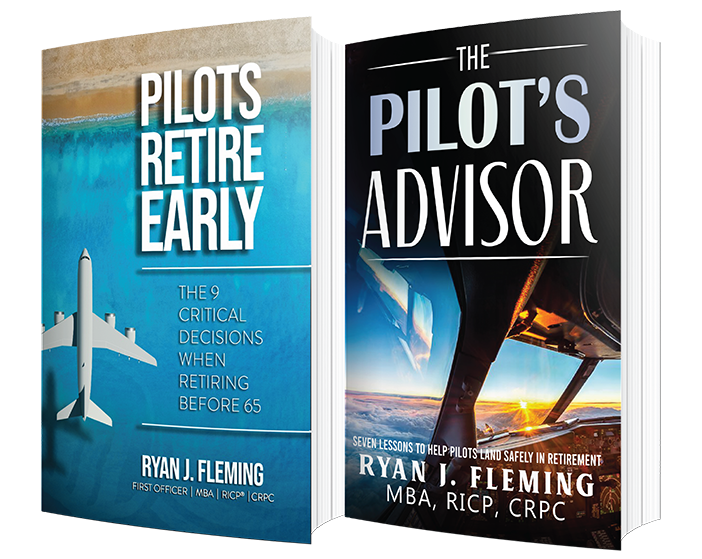
attention aviators, when you’ve spent years in the cockpit managing the complexities of flight, isn’t it time you navigated your retirement with the same precision? Introducing retirepilots.com right at your touchdown zone on our homepage, there’s a beacon flashing. Get my free toolkit. Click that and you’ll be cleared for a direct route to Ryan’s retirement toolkit, tailor made for pilots like you. Inside, you’ll find two of his important works, the pilot’s advisor and pilots retire early. Between these two books, you can decipher the nine critical decisions when retiring before 65 and discover the seven lessons to help pilots land safely in retirement. But that’s not all. This toolkit is packed with altitude high value, including extras to get your retirement plans off the runway and light the afterburners on your 401 k vector on over to retirepilots.com to grab your toolkit, and let’s embark on this journey together.
Ryan Fleming 26:41
So I want to challenge two things. Number one, people talk about Dave Ramsey. You know Dave Ramsey’s talking to the person that makes $60,000 a year is in massive credit card debt. So it’s very non specific. That’s not, that’s not this audience, yeah, and it’s so it’s like, oh, buy term, invest the difference, or whatever. Well, once we start maxing out a 401, K, once we built, you know, we’re doing backdoor Roths on the outside, we’ve built a great taxable investment account, I feel like this is like, well, what’s next? Well, this is what’s next, just most people don’t get there. And when I bring that up, what I want to ask you about Dave is very, very intelligent. Wealthy people have been using this for generations to pass on wealth, and they’re not done. They’re not dumb. It’s no different than you know. If Elon Musk goes and buys a house, he doesn’t go, he doesn’t go pay cash for it because he wants to use other people’s money and let his money continue to work for him. So what I bring that up to ask you? Tell me about how wealthy people and names that people know have been doing this for generations to pass on wealth so that the and they’re basically getting it so the government doesn’t stick their hand in the cookie jar.
Dave Befort 27:54
Yeah, exactly. You know, one of the name everybody knows is Rockefellers. They’re a perfect example where generation after generation, permanent life insurance is purchased on every Rockefeller, and the beneficiary of every policy is a family trust. So when somebody graduates from this earth, that trust gets replenished. But then there’s rules set up on how much somebody can borrow. And guess what, if you never pay it back. It’s going to get paid back when you die. And wouldn’t it be great? You know, some people say, Yeah, my kids don’t need all of that. I’m thinking, man, what if, when you were going through your all your training, like those people who had to pay out of pocket for their training, you know, $100,000 to get all your ratings and get qualified to get hired by FedEx, like some people had to go to the bank, right get a bank loan, and they’re still paying on it today. Wouldn’t it have been nice to be able to go to your family, your father, your mother, and say, Can I take a loan from the Family Bank to do this, and then you pay it back under more beneficial terms, and or maybe there’s a plan where you don’t have to pay it back, I don’t know, whatever the family decides, because that money is there and it’s getting replenished. Like, that’s who I want to be for my kids. Well, I want to be the bank well.
Ryan Fleming 29:15
And I see I started thinking about this once I truly discovered it. It’s not for somebody that’s selfish at all. This is definitely a long term play. It’s definitely a legacy planning play. I’m one of those guys that I want when I retire from this earth. I want my kids to be like, Man, that dude had it figured out. Yeah, he’s the one that made all these sacrifices so that we can live the way we’re living. And look at this legacy that was built. And I think a lot of that’s because I had a chip on my shoulder. I was definitely the kid that grew up on the other side of the tracks. Didn’t have much, and I didn’t want to live paycheck to paycheck like we did, so I wanted to change things, and once I start seeing the power of this, like taking out a policy on your kid, let’s talk about that, because you. I have policies on myself to protect my family, and I sleep a lot better at night because of that. But I did. I took out policies on my kids, and they’re, you know, did it when they were 13 and 10 or something like that? Yeah, and talk about that. I mean, you’re a little bit limited on what you can do, but the power of that, if you keep funding those policies over the long term, or even, you know, say you do do it only until they’re 30, and you make them take it over. Yeah.
Dave Befort 30:25
I mean, you’re creating legacies, first with yourself, and then you you create that with your kids to take care of your future grandkids. But, I mean, like you were saying, you know, the way you grew up like nobody. It’s crazy to think back however many hundreds or 1000s of years in my lineage. Nobody in my bloodline has built a legacy that’s got a financial legacy that has lasted through the bloodline. Well, somebody’s got to do it. It’s going to be me. I’m going to start that in my bloodline, and then it’s going to continue with my kids, because they’ve all got policies. I got seven kids. Every kid has a life insurance policy. My two oldest since they’re adults, 18 and 19, they’re going to be getting their own and start funding their own policy, because they understand it. They’ve seen the power of it, and they know the importance of it. But you know, a lot of people think, Why in the world would I need life insurance on my kid? They don’t make any money. It’s not going to be a financial disaster if something happens to them, which is typically the the general thought on life insurance, not about that. It’s, you don’t get it, not about that, right? It’s about, I mean, the policies I started on my kids, they all, most, some started younger, you know, one of them was maybe, you know, a year old when he got a policy. Because I learned from the older two. And what these do is they’re going to create something. I mean, my I’ve got two boys who we’ve already been able to use their policies to buy their first car, and then they’re paying they’re paying me back,
Ryan Fleming 31:55
but they’re getting all the interest, because it’s the Family Bank and not some random USAA or Bank of America is getting the
Dave Befort 32:01
interest right. Who would you rather pay interest to your family members? Or, you know, Mr. Potter down the street in Pottersville? I think
Ryan Fleming 32:12
what scares a lot of people too, especially if we talked about paying policy premiums on on your kids, what if I don’t want to pay that premium for the rest of my life. Can you talk a little bit about where at some point you let the dividends just pay the premium
Dave Befort 32:25
you absolutely could? And that’s a big question with people going into retirement, typically. I mean, if you’ve been funding these things for about 10 years, then the dividend, the annual dividend, which are not guaranteed, dividends aren’t guaranteed. But this you know, the companies that I write for and that you’re familiar with have been in existence for longer than 120 years, and they paid out a dividend every single year for 120 plus years. It’s pretty good track record. So those dividends start compounding over time, and eventually they get to be the size that they could actually cover your premium for you, what’s called premium
Ryan Fleming 33:04
offset risk, but just pays it. Could pay the premium by How
Dave Befort 33:07
incredible is that? Then you can be completely hands off if you want. But also, by that point, every dollar you’re paying is maybe creating $1.50 or $2 in cash value. So you could choose to keep paying it and still make a huge gain on your money that year. So so many, so many different options you have. But with these kids, the juvenile policies, it’s really fun to look at this when I decide to hand to transfer ownership to them, which I don’t ever have to do. And it’s not going to be a carte blanche. Every kid at 25 years old, they become the owner. No, it’s going to be, are you intelligent enough? Are you serious enough? Are you going to treat this thing like an actual bank and not a piggy bank? But when I transfer it to them, it’s going to be the greatest savings account they’ll ever have, because by that time, every dollar they put in there in premium is probably creating three or $4 in cash value that year. Where are they going to get that kind of return anywhere else, unless they invested in Bitcoin in 2009
Ryan Fleming 34:06
Yeah, I just don’t, you know, it’s almost embarrassing, because I get excited about this, and I want to educate my children, and I want them to unders understand how money works, because once you start understanding it, you make you make better and better decisions, and you understand How to allow your money to compound over time and, and, of course, taxes became, become a huge thing once you understand what tax code does and where you’re losing your money and and what’s, what’s the most beneficial type of money. And I just wish that we could educate people when they’re younger, yeah,
Dave Befort 34:38
and this is a great way to do it by example. And guess what, if your kids decide not to get educated, then they don’t get to reap the living benefits of that policy you’ve created for them. You keep it until they are ready, and that’s probably going to be some good motivation for a kid to get smart about money. And guess what, you stop being scared of money. Most people are really scared of money. If they really if. Think about it, or they
Ryan Fleming 35:01
don’t want to talk about it, you know, it’s still like taboo, you know, like politics or what have you. Yeah, I’m one of those people that I think it’s probably one of the most important things in our lives. It makes the money, it makes the world go round. It’s how you protect your family. It’s if you don’t talk about it, you’re not going to be prepared for retirement. I mean, you know, and that’s one of the whole reason why we work in many cases, you know, we live day to day. But why are we saving? We’re saving so we can retire one day, and if you don’t talk about it, or you don’t get your money working for you efficiently, you’re just falling behind. You can’t keep kicking that can down the street.
Dave Befort 35:35
Yeah, the earlier, earlier you start, the better, because time is the one factor that you can’t really you can’t escape.
Ryan Fleming 35:42
So I feel like nobody has any problem putting money in a CD. They don’t have any problem building it in their checking account. They have no problem throwing money in their savings account, where it’s just sitting there, doing nothing for them, not even keeping up with inflation. But yet, they can’t see how this is not a payment that this is probably one of the best places for you to store capital. What do you say to those people?
Dave Befort 36:06
Yeah, I’d say it’s really a it’s a complete paradigm shift when you start thinking about money, and the way that we think about money, which is, I never want to, I never want to lose my my principle, my face value, the amount of money that I earn from my blood sweat, blood, sweat and tears. I don’t want to give that away and lose the ability to earn on that ever again. So I try to stack as much as I can inside my own system so that I get to keep that and the earnings on that for the rest of my life, and I can just leverage it to go put somewhere else. A lot of people say this is the funniest comment I ever hear is I’m pretty conservative, so that doesn’t sound like it’s for me. And what they’re saying is, I follow the crowd, and the crowd doesn’t do this. So it’s not for me, because they confuse following the crowd conformity with being conservative financially, and it’s anything.
Ryan Fleming 37:00
But if you’re conservative, this is the best place to put money. This is
Dave Befort 37:04
because generations have been doing it. I mean, whole life insurance has been around for like, 250, years.
Ryan Fleming 37:09
Well, it’s never going to go down in value. It’s the, it’s the only one of the very few things where we can say the G word. I can’t say the G word hardly at all.
Dave Befort 37:17
No, you can’t. I can say it all day long. I love guarantees, yeah.
Ryan Fleming 37:21
And it is an amazing thing when you start thinking about it that way. I want to make sure that you know, if you guys haven’t listened to the wealth warehouse podcast, Dave and Paul on there, it’s great listening, just to reframe your mind and get you to under understand this a little bit better. The show notes, www IBC, for the number four pilots.com and one of my favorite things is, you did that video. It was a long time ago, but I think it’s got like, millions of views now. And I’m gonna say it’s only like, four or five minutes where you just talk about what happens with money, and then, like, you know, the it’s just a very, very succinct, short way to explain the overall picture, yeah.
Dave Befort 38:02
So that’s, if you search my name on YouTube, you’ll that one will come up. I don’t think it’s got millions yet, because I haven’t started receiving paychecks from YouTube, but it’s got, you know, three or 400,000 views. And I will say it’s probably the best four and a half minute summary. But actually, Ryan, that video is on that website, on
Ryan Fleming 38:22
IBC for pilots. I know I want to link in the show notes separately. So at a minimum, if you don’t have time to educate yourself, or if this isn’t important, watch that video, and then you’d be like, Whoa. Let me think about this in a different way.
Dave Befort 38:36
Yeah, watch that video. Get the download of the book, maybe even order the other book that’s on there, and then schedule time to talk to me. You know, there’s, there’s never any pressure I’ve talked to I mean, I spend my days talking to people having introductory calls and and see, is this a fit for you? And, you know, let’s strategize about what to do with that windfall and that pay raise you got coming. Capture that somewhere where it’s going to be working for you forever. And you know, don’t let that money control you. You control that money is really what it comes down to,
Ryan Fleming 39:09
any final messages. And like I said, this is for FedEx pilots once they get a new contract. Delta pilots right now that are getting profit sharing checks. I hate to say it, hate to bring it up, but you know, you have a mom or a dad that passes away and you get a windfall, why not create a legacy with that money so it passes on for generation and protects your family, protects your spouse, protects your kids, and then you can have a lot more fun in retirement.
Dave Befort 39:35
Yeah, so I guess my parting shot would would be, if it sounds like something you want to do, then there is a way to kind of set yourself up to hit the ground running as soon as that money comes in, as soon as that contract finalizes, and you get all that, I’m a big fan of convertible term insurance, so we can get you set up and qualified right now, get a, you know, cheap in the sense that it doesn’t cost very much money every month. It’s not a big pain. It, you get that term insurance put in place, and as soon as the contract changes, or you get your next pay raise, and I’ve got clients to do this already, they’re ready to start a new policy, a whole life policy, because they’ve already been approved for the death benefit with that term insurance, what
Ryan Fleming 40:15
does that convertible term do? Does it lock in those rates right then when you did it, or does it lock it in when you put the big lumps on, or that bigger payment of premium? So a convertible
Dave Befort 40:25
term insurance is just like any term insurance, which everybody knows, it’s a standard payment for 1020,
Ryan Fleming 40:30
or 30 years, whatever you decide. Insurance companies love term insurance, yeah, because
Dave Befort 40:34
it never pays out, because nobody dies. I mean, it pays out maybe 1% of the time. The stats are somewhere like one to 2% of the time they have to pay out. That’s a big money maker,
Ryan Fleming 40:44
versus what I get all the time. Oh, my term policy that I got, well, it expires at 66
Dave Befort 40:50
Yeah, so you better die early, yeah. You know, if you want to win and recoup that financial cost. But what convertible term guaranteed convertible it just means you’ve locked in your health today. So you go through underwriting, you get your rating. They say, Hey, we’re we’ve locked in your rating no matter what happens. Say in the next 10 years, you could come down with cancer, God forbid, and they would still guarantee you the ability to create a whole life policy from what you already approved over here without going back through underwriting. So why
Ryan Fleming 41:23
would anybody ever just buy term insurance? Why wouldn’t you do convertible term because they
Dave Befort 41:27
don’t know about it. Yeah, because they don’t know about it. You know how many people hit that point where they’re like, Man, my term is about to expire. I want to keep it because I’m uninsurable now. I mean, pilots become uninsurable, like I was talking to a guy who had a high PSA rating recently, and he’s not insurable, or, you know, a fib. A lot of pilots have a fib, I found, and some some of them are not insurable. But if you had this in place already, it doesn’t matter what happens to you in the eyes and the insurance company, because they’ve already given you the right to start a whole life and keep that insurance forever, make it permanent.
Ryan Fleming 42:03
Well, I don’t know why anybody wouldn’t do convertible term, whether they’re in their 20s, 30s, 40s. I mean, it just makes more sense, because they have the option before, you know what? Tomorrow brings health issues and and I’m gonna bring this up, and I hate it, but I’ve been dealing with this a lot lately. You know, pilots don’t have a good track record anyway, being at altitude all that time. I mean, I’ve just in the past week, heard of brain cancer, pancreatic cancer. I mean, it’s it’s horrible, but it’s a reality. And I think we’re going to hear more and more cases of this, and too little too late, if you haven’t protected your family already,
Dave Befort 42:38
absolutely, and this is the easiest way to protect them, and it’s the simplest thing in the world after somebody graduates from this earth, the insurance company sends a check to the beneficiary. Tax free. Go cash it, do whatever you need to with it.
Ryan Fleming 42:53
Well, have a conversation with me, or go to IBC for pilots. I would, at minimum, sign up for a appointment with Dave to start the process. Doesn’t mean you have to press forward, but educate yourself. Watch some of those videos. We’ve tried to make it pilot proof. I don’t know if it’s marine proof, but we’ve done our best. You know, I got to give a shout out to my Marines. I always, I always pick on them, just because some good dudes out there, some really great guys, a lot of the Harrier pilots and yeah, so I always pick up my Marine guy, so there, there’s your shout out. You know who you are, because I’ll hear about this. But Dave, we need to do it more often. It’s a piece of the puzzle that I think most people don’t actualize and know where it fits in. But once you fit this in, you have so much more control on so many levels, not only certainty, yeah, not only on the living you know, day to day, well before retirement, but definitely in the distribution phase of life. So thanks for coming on our show. We’ll have all that stuff in the show notes. Let’s have you on the podcast a little bit more. I would love to set out a call up in the future just to talk about how we can use this instead of 529 plans.
Dave Befort 43:59
Yeah, we need to do that for sure.
Ryan Fleming 44:02
Absolutely So to all the FedEx pilots out there, let’s hope you get a contract sometime soon. It’s been a long, long time. Anybody with any windfalls, Delta pilots with your profit sharing checks, reach out to us. We’ll talk to you all soon.
Speaker 1 44:22
Information is for illustrative purposes only and does not constitute tax investment or legal advice. Always consult with a qualified investment legal or tax professional before taking any action.
This podcast episode is for educational and informational purposes only. The opinions expressed are those of the speaker as of the recording date and are subject to change. This content does not constitute personalized investment, tax, or legal advice. Please consult a qualified professional before making financial decisions.