Preview of what we’ll cover today:
📋 How Trump Accounts Work – Custodial structure, contribution limits, automatic investing
🎯 Problem It’s Trying to Solve – Early investing, retirement readiness, financial literacy
💸 Taxes & Criticisms – Ordinary income treatment and administrative complexity
⚖️ Better Alternatives? – Comparing custodial Roth IRAs and other strategies
📚 Financial Education Impact – Why early exposure to investing changes behavior
Subscribe On Your Favorite App:
 YouTube
 Apple Podcasts
 Spotify
 Amazon Music
 iHeartRadio
 TuneIn
More About This Episode:
A new government-backed savings account for kids is on the way, and it’s already raising eyebrows. On the surface, Trump Accounts look like a win: free money for newborns, long-term investing, and a built-in head start toward adulthood. But as Ryan explains, the real story lives in the fine print. Taxes, flexibility, investment control, and long-term trade-offs all matter.
Go Deeper Into The Episode:
0:00 – Intro
1:21 – What are Trump Accounts?
2:26 – The Goal of Trump Accounts
4:12 – Potential Yield After 18 Years
6:19 – Cons & Criticisms
8:24 – Are There Better Options?
12:41 – Ryan’s Alternative
14:05 – Getting Kids Interested in Investing
Resources:
Retire Pilots – https://retirepilots.com
Get your FREE Retirement Toolkit – https://bit.ly/3ZmZsaX
Pilot Tax – https://pilot-tax.com/
The Pilot’s Advisor Podcast is also on video. Watch & Subscribe on YouTube: https://bit.ly/3EIEBW2
Connect with Pilot-Tax: https://pilot-tax.com/
Episode Transcription:
(Note, this is an automated transcription. Please forgive any errors.)
Walter Storholt 00:00
Well, there is a new government backed savings account for kids coming. We think it’s going to happen at this point. We’ll see if it truly comes to fruition. And on the surface, it seems like a pretty good deal for newborns, giving them some long term investing opportunities and a cool gift to start out their lives. As a new parent, I’m kind of intrigued. You’ve probably heard them also talked about as Trump accounts? Well, we’re going to talk a little bit about what we know about them at this point, what you should be thinking about. If this might impact you, we’re going to talk a little bit about it on today’s show Ryan and I’ll get started right after this. So Trump accounts, are they free money and something that should be celebrated, or is this going to cause future headaches for savers out there? We’re going to kind of break down at least what we know about the accounts on today’s show. I’m Walter storholtolt is always joined by Ryan Fleming, the pilots advisor, and going to be an interesting show today, Ryan. I mean, we’ve been kind of hearing some buzz about these for a little bit now, and we’re only a couple of way months away from them, apparently, kind of getting started and funded for the kids out there. We’ll give all the basics here in a second, but,
Ryan Fleming 01:06
yeah, let’s talk about it. I mean, I’ve had a few of my clients ask about Trump accounts, but not a lot. So I don’t think everybody understands what’s what’s about to happen on kids, probably, but I’ll just read through it here, the big picture on what we know. Okay, I think it’s going to launch in July of this year. So July of 2026 and what it is, is the government, if you’re if your kids were born between 2025 and 2028 which is pretty cool, Walter, your son will be a part of this right fell right into that. Yeah. So the government’s going to give you $1,000 when the child’s born and it goes into their own account. Parents are the custodian. Until they’re 18, employers can contribute money. Others can contribute money. There’s limits on that $5,000 per year for others. Employers up to 2500 the money’s automatically invested, so you don’t have control over the money and how it’s invested. But they’re talking about it being in a low, low cost US equity fund, an index fund. So hopefully that’s one that you know focuses on growth. I’m sure will be. But the big kicker here that I see is that when you withdraw the money from them, it’s taxed as ordinary income. That’s the big picture. And just talking about, you want to talk about, like, what I think about it, or what your thoughts are on it. I guess we’re going down.
Walter Storholt 02:25
Yeah. I mean, I think we can get into that a little bit. I mean, what are, what are the problems they’re trying to solve with this program? Maybe is a good starting point. And then we can go into some, maybe some pros and cons or criticisms. And I’d love to get your opinion on a few of those things. I’m, I’m sure that automatically invested element is something that you would kind of pick apart because you’re somebody who probably wants a little bit more control. But if we look at the problem they’re trying to solve with this, it kind of makes a little bit of sense they’re trying to set kids up for better success in the future with a new kind of savings program.
Ryan Fleming 02:56
Well, I think, I think a couple things. Number one, we know there’s a massive problem with Social Security, not only government funding it, but for in most cases, people can’t live off that benefit. So it’s up to our individuals. And then, you know, pensions are gone, so individuals saving and learning how to save, it has to happen for our country to survive going forward. I mean, that’s just a thing, yeah? And we talk about all the time how nobody has a clue how much they actually have to save in retirement to have the same lifestyle they have right now. They just don’t get it. Yeah? So what this is really doing, I think, which is amazing, and I love it, is, if you put $1,000 away when your kid’s born, they’re going to be a millionaire when they’re 60 without even trying, right? You know, so it’s it’s opening up that time factor, and rather than paying out Social Security, imagine if all the money that you actually paid into Social Security was yours and it just grew over time in a program like this. Do you realize how wealthy you would be? Oh, it
Walter Storholt 03:58
would be awesome. I mean, even without additional contributions, the numbers look pretty amazing.
Ryan Fleming 04:03
Yeah, but the problem is, of course, mismanagement of our funds, and then we get limited on, you know, you pay way more into Social Security than you ever get back.
Walter Storholt 04:11
So I just typed it in just just to do the math a little bit. I know a lot of what the Trump administration has put out is looking more so at what the accounts would look like at 18 years old, if you do nothing versus if you invest up to the maximum and showing those differences and that kind of thing, but you talk about a Social Security replacement. So I just did $1,000 compounded annually for 60 years. So when the kid’s 60 years old now, I put in 10% just kind of like a historical S and P average, right? Just for fun, over 300,000 bucks. Yeah, for doing and that’s not adding any additional contributions. So I think it’s a great way to creatively fix the Social Security problem, for sure, especially since a lot of the funding is apparently private, right? This isn’t even government money going into these accounts. So it’s privately funded. They’ve gone out and. Gotten some benefactors to help fund these things. Certainly we could. We’re not going to pull off the political lid of, you know, biased motivations by those benefactors and other things like that. That’s for another podcast. But just purely at looking at it from that perspective, I see that as nothing but, but good and at least a good attempt at trying to solve some
Ryan Fleming 05:19
problems here. Yeah, and I, screw this up by talking about Social Security, and, you know, because I don’t think it’s a replacement for that, but it easily could be. Imagine if, yeah, rather than worrying about Social Security later, they just somebody’s born and the government puts $10,000 in an account that you can’t touch, yeah, until you retire. Well, guess what? The money will be there.
Walter Storholt 05:38
Yeah, I like the automatic investing too. Because although there are folks like us that like to get into the nitty and gritty, I know just as many people like in their working lives, they had money going into a 401, K and never invested it. It just sat in cash and didn’t experience that benefit of compounding interest. And so the fact that the government’s gonna at least say we’re gonna go ahead and do that for you again, help solve some of that problem. Yeah, I saw too
Ryan Fleming 06:04
many people in the military where they had their money sitting in the G fund your whole career. And I’m just like, oh my gosh, your money would have, you know, doubled three times. Yeah, the missed opportunity, swimming and treading water, keeping up with inflation anyway. Yeah. I think the biggest problem I have, like, I love the time factor. I love getting ahead of it a small amount when a child’s born. I think all those things are absolutely amazing. What I don’t like is that there’s they’re going to tax you on it when you take it out. Like, for me, that was like, Oh, this is amazing. This is great. Oh, okay, that there you go. Because ultimately what it does is we’re growing that money into a much, much bigger pot, like you talk about $300,000 right? And then you’re going to pay income tax on it, yeah, so the government still wants to take, take some versus, why can’t we have this $1,000 or keep it, keep it limited, but that it grows tax free forever, and when you take it out, it’s tax free. So my argument with this would be, well, you know, why don’t you do a custodial Roth IRA, yeah, you know, why would you do this Trump account? And I’ll take the free money, but any other money that I’d be putting in there, I’d be finding a different
Walter Storholt 07:13
vehicle, because there aren’t, as far as we understand, tax deductions on contributions. Yeah, you’re not getting a tax benefit on the front end, and then you’re getting the tax set on the back end.
Ryan Fleming 07:24
Yeah, so some of the criticisms that are out there, it’s got a bit of a reporting issue, so you might need a CPA to help you with the Trump account and how to file it. Administrative hassle, the do it yourself tax software, so you might, might require an accountant, yeah, no tax deduction on contributions. Like you brought up the withdrawals are taxable, like I brought up on like a Roth IRA, which is a great thing, and then the limited flexibility, obviously, from the the investing standpoint. But there’s a reason why David Randy’s so popular, and you know, it’s because he’s, he’s trying to keep it very simple for the average person that has very, very little knowledge of markets and investing. So we got to have a template where it’s virtually impossible for you to make a mistake, right? And I kind of look at that this program is being a little bit like that, like 1000 bucks put it away and you don’t have control over it. You can’t, don’t screw this up, you know, yeah, yeah.
Walter Storholt 08:23
And hey, if you, if you’re not well versed enough to invest anywhere else or save money anywhere else for your child, like this gives you a vehicle that you can then relatively easily put more money into on top of that additional 1000. You know, I view it as it’s better than nothing, right. Like this is for those who otherwise wouldn’t do anything. This is a great program for those who are well versed. It’s sounding to me, Ryan, like there might be some better options out there. So the strategy may be for someone who’s more well versed. Might say, well, I’ll take the 1000, but there might be some better places for me to put dollars to help grow them for my child. I mean, would you take a brokerage account and just, you know, putting money in a brokerage account for your child to help build up funds for them that way over the Trump account, based on what you know about it so far, I
Ryan Fleming 09:13
think it depends on the problem that we’re trying to solve and and what I mean by that is, I love the fact that this is money that you can’t touch. It’s not, it’s not liquid, where, you know, a brokerage account would be liquid, just money trapped away, kind of basically a qualified retirement account till you’re 18, I guess. So there’s some inherent good. And keep keeping people’s hands off money, because they do. They like to tap into their 401, K, or whatever they have, and go spend on that new shiny object. So I think if the if the goal is to have that long term growth for this money, then it’s good to have it in a in a retirement account, or a qualified account, or a Trump account, because then you can’t touch it to your 18 Yeah. But if you want that flexibility. Money. Well, now we can talk about some of these other options. And liquidity is good. It’s a great thing, depending on what our goals are. I just can’t, and I’m sorry to take this in a different direction, but I just can’t it’s got my wheels turning on. How if we just as a country, you know, it’s all about control. Taxes are all about control. But just imagine they take money out of your paycheck, if you’re a w2 employee, whether you want to or not, like you know, the withholding just happens right for taxes, but the amount that they take for Social Security, imagine if whatever they took meaning you did the work they forced, forcefully took your money away, but they automatically put it in an investment account just for you. It wasn’t pulled into everybody else and taking care of everybody else, but you put in the work, and then a certain percentage was pulled away by the government held an account for just you. Do you realize how many problems that would solve? Yeah, because then you knew that you were taken care of. That money would grow until you retired, and everything would be great, and there’d be a I bet you’d be a massive surplus sure of money versus what you’re getting in Social Security right
Walter Storholt 11:12
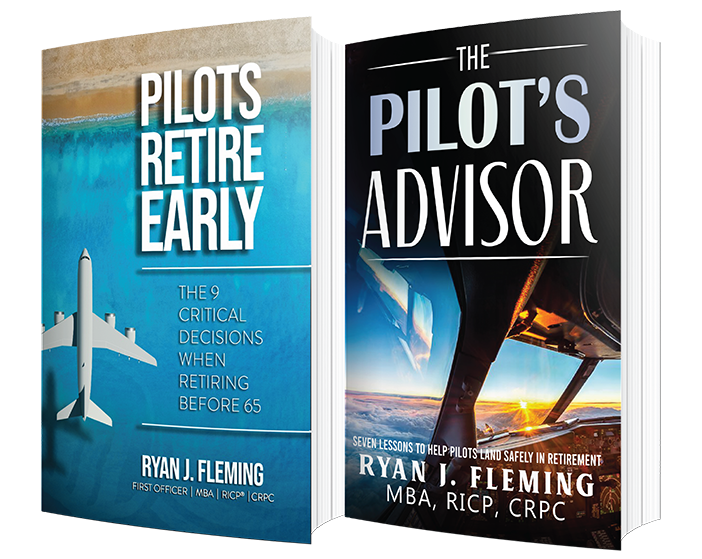
now. Attention aviators, when you’ve spent years in the cockpit managing the complexities of flight, isn’t it time you navigated your retirement with the same precision. Introducing retirepilots.com right at your touchdown zone on our homepage, there’s a beacon flashing, get my free toolkit. Click that and you’ll be cleared for a direct route to Ryan’s retirement toolkit, tailor made for pilots like you. Inside, you’ll find two of his important works, the pilot’s advisor and pilots retire early. Between these two books, you can decipher the nine critical decisions when retiring before 65 and discover the seven lessons to help pilots land safely in retirement. But that’s not all. This toolkit is packed with altitude, high value, including extras to get your retirement plans off the runway and light the afterburners on your 401 k vector on over to retirepilots.com to grab your toolkit, and let’s embark on this journey together. It’s really interesting to look at the different types of solutions that are out there to try and wean us off of the Social Security problem. This seems to be one of those. Whether it works fantastically for everyone is maybe still left up for debate. And also, things could still change. Before the launch happens in July, we could see a few more details come through, a few more changes still get ironed out. So you know, the book isn’t closed on this thing exactly yet,
Ryan Fleming 12:40
but since we’re already sidetracked, can I sidetrack you go for it, sure. What if you started in your working years? And so let’s call it 20, or for me, you know, I was 10 or 12 when I started working, right? But rather than the government taking money away from you for Social Security, what if you had the option, no different than you have the option, you know, with different retirement plans or different health care plans, you could choose the option of whatever money you take for me, I’m opting out of Social Security altogether. But all that money that you would have taken from from me for Social Security goes into an investment account that’s now mine. I would opt into that in a heartbeat and opt out of Social Security. I security. I don’t know
Walter Storholt 13:23
about you, yeah, that’s pretty much happened at my wife’s work. So she has those, one of those 401, a plans, I guess, right, that, which is like, kind of what you’re describing, where it she can pick her own investments, her own funds, but it’s still automatically put away by the company, but the trade off will be, right? She’s not continuing to contribute to social security, so starting to get weaned off of that a little bit. So kind of an interesting, an interesting plan to learn about.
Ryan Fleming 13:51
She’s a government worker,
Walter Storholt 13:53
no health care, so,
Ryan Fleming 13:56
but she’s by her doing that she’s losing her social
Walter Storholt 13:59
she’s losing her Social Security benefit? Yeah,
Ryan Fleming 14:02
I would do in a heartbeat. Oh, my God, I would do in a heartbeat.
Walter Storholt 14:05
Yeah, there’s one last thing I want to mention about these Trump accounts being a good thing, is that it gets, hopefully gets someone interested in finances and tracking money and dollars at a young age. I think that’s incredibly powerful. I’ve talked about my grandmother before, I think, on this show over the years, Ryan who gifted us kids small amounts of stock, but in companies that we were interested in, right? Hershey, chocolate, Harley Davidson motorcycles, things like that. When we were growing up, Walt Disney was the original when we were little babies, and it was just a handful of stock for Christmases and birthdays and things like that. But we then got to log in and see that in our accounts, and then got to see it grow, got to see it go down. Got to ask questions about it. It was so cool, and got you thinking that way at a young age, and got you interested in the the highs and the lows of investing and understanding it. And it’s just, it’s a seed that’s planted or. Early on, that just, I think, pays dividends to be financial about it long into life later on. And I see that being a fantastic thing for families who otherwise wouldn’t be getting that exposure. This is pretty cool.
Ryan Fleming 15:11
I 100% agree. And I get passionate just hearing in your voice how passionate it is. And getting young individuals interested in investing is unbelievably powerful. And we know with, you know, compounding interest, yeah, I just wish that, even in school, though, they teach about kind of like your grandma did, you know, picking individual stocks, which, you know, of course, for me, is like, No, you can’t do that, you know, yeah, versus having an index fund or something that invests in, you know, a lot of different companies so that you spread out your risk. But I agree with you. I think that just the idea of kids having their own money, and you know now they’re so so much on screens anyway, being able to log in and see their money grow is an extremely powerful thing. And as a matter of fact, I didn’t think about that. I need to get my kids to where they’re actually looking at the money that’s growing that they have saved or put away. Yeah, look at it every day and see it.
Walter Storholt 16:06
Yeah, absolutely. I think that’s it’s incredibly powerful. So we’ll see if a Trump count is correct for you, and you happen to have a newborn who might be able to take advantage of it. We’ll see what the final version of this looks like come apparently in July, and maybe we’ll do another episode on it, then Ryan to kind of put the final word on it as things get rolling. Until then, if you’ve got any questions about your own preparation for retirement planning, not necessarily about perhaps a newborn, but for yourself as you get ready for your financial future in retirement, we always like to mention the retirement toolkit that Ryan has put together specifically for pilots, helping you get to and through retirement, the toolkit itself is packed with Ryan’s books, resources, other great information. Click the link in the description and you can go get that toolkit, which also qualifies you for a free portfolio analysis, a one on one chat with Ryan to go over your goals and how to accomplish them. Ryan, another good episode. Thanks, man. Yeah.
Ryan Fleming 16:58
No, it was a great episode. I enjoy talking about that, all these things. And, you know, I’m a competitive person by nature. I think pilots are anyway, type A and I want to challenge our listeners. You know, if you’re not a current client, let’s check out what you’ve done over the past 10 years. I can show you how to pull your returns. We’ll look at it, we’ll see it, and we’ll compare and see if there’s a better way. And if you like bigger numbers, then you know, might be a good fit.
Walter Storholt 17:22
Love it. Reach out, see how those things stack up. Absolutely. We’ll see everybody again next time, right back here on the pilots advisor. Thanks so much. Take care. See you.
Speaker 1 17:36
Information is for illustrative purposes only and does not constitute tax investment or legal advice, always consult with a qualified investment legal or tax professional before taking any action.
This podcast episode is for educational and informational purposes only. The opinions expressed are those of the speaker as of the recording date and are subject to change. This content does not constitute personalized investment, tax, or legal advice. Please consult a qualified professional before making financial decisions.