Preview of what we’ll cover today:
✈️ Risk Management: Matching risk to your situation
📅 Time Horizon: Why age isn’t the deciding factor
⚖️ Asset Allocation: Finding the right balance
🚨 Common Mistakes: When being too conservative backfires
💰 Income Planning: Building retirement paychecks
Subscribe On Your Favorite App:
 YouTube
 Apple Podcasts
 Spotify
 Amazon Music
 iHeartRadio
 TuneIn
More About This Episode:
Many pilots assume that as retirement gets closer, they should automatically become more conservative with their investments. But according to Ryan, that’s not always the right move. He explains why risk management has less to do with your age and more to do with your time horizon, income sources, and retirement goals. If you’re trying to strike the right balance between growth, protection, and income planning, Ryan shares a valuable framework for thinking about risk.
Go Deeper Into The Episode:
0:00 – Intro
0:50 – Risk Management for Pilots in Their 50s and 60s
3:47 – Differences Between 50s and 60s Pilots
5:04 – Diversification and Asset Allocation
6:17 – Mistakes in Retirement Planning
8:03 – Get a Retirement Portfolio Analysis
Resources:
Retire Pilots – https://retirepilots.com
Get your FREE Retirement Toolkit – https://bit.ly/3ZmZsaX
Pilot Tax – https://pilot-tax.com/
The Pilot’s Advisor Podcast is also on video. Watch & Subscribe on YouTube: https://bit.ly/3EIEBW2
Connect with Pilot-Tax: https://pilot-tax.com/
Episode Transcription:
(Note, this is an automated transcription. Please forgive any errors.)
Walter Storholt 0:00
In our last video, we talked about risk management across those that are in their 30s and 40s. Well, today we’re going to talk about those of you who are in your 50s and 60s. What does it look like if you’re aggressive in this age bracket? What does it look like if you’re conservative and somewhere in between? We’ll hit all of those, and then ask Ryan what conversations he’s having with clients in this range, and how it shifts depending on where somebody is along that aggressive or not spectrum, should be a lot of fun. We’re going to dive right in. Coming up next, Walter Storholt back with you, alongside Ryan Fleming, the pilot’s advisor, and Ryan, we’re talking risk management and aggressive conservative, what that looks like again on today’s episode, but we’ve bumped up the ages a little bit, so now we’re talking to pilots who are in their 50s and 60s, we’re talking to pre-retirees at this point. So, talk to us a little bit about what an aggressive person looks like in this age bracket, what a conservative or cautious pilot might look like, and then those that are finding their balance in between, and I know that we’re going to discover it might look or sound a little bit different than those who are in their 30s and 40s.
Ryan Fleming 1:03
Yeah, I think people in their 50s are still very much in the accumulation phase. They still have a long enough time horizon that we really shouldn’t be having too much conversations about pulling the throttles back, you know, unless they’re trying to retire early. Most pilots go to 60 or 65 but this is where education really starts to step up, and we have conversations because most people think they need to be more conservative as they get closer to retirement, and it or their age, you know, I’m getting into my ‘s, I need to pull the throttles back and be more conservative, but it’s really not the case because it has nothing to do with your age and it has everything to do with your time horizon for that money, and the way I like to talk about this is, and I’ll differentiate this between, like, a FedEx and UPS pilot versus like a Delta or United pilot. Delta and United, they lost their pension many, many years ago, where FedEx and UPS still have a pension. So, as we lead to get closer to retirement, the conversation is very, very different for most FedEx pilots. They have a pretty sizable pension; they may even have a military pension. So, how much income they need off of their four 1k in retirement might not be the huge amount, and because of that, maybe 80 to 90% of their four 1k they may never touch, or it’s going to continue to grow. The time horizon for that money is very, very far off. So we can actually put, put protections in place where we can keep the throttles up on that money and try to get that long-term growth. Well, if you’re a Delta pilot or United pilot, you don’t have any other pensions, and from day one you need to get all your income from that 401 k plan, and your savings, you know, minus social security, and everything like that, it’s a different conversation, because you can’t handle that volatility. We got to think about sequence of returns, risk, and retirement, because we don’t want to be pulling from that portfolio if it’s down 15, 20% in those first couple years, that could blow up your, your retirement picture. So this is where it really, really depends on a person’s situation, and understanding those different pots of money is going to dictate probably where you should fall within this risk tolerance, and why, and have a reason why in that system. Does that make sense, Walter?
Walter Storholt 3:16
Yeah, I think so, and that’s why you get some people who are more aggressive, want to push down the controls a little bit, and those who want to peel back and be more conservative, and maybe they want to move away from stocks. The old advice, right, of move away from stocks and into bonds, they might be following outdated advice if they’re not informed, or if they’re just kind of going off of what may be a previous person in their family, how they handled this transition, and also sounds like you’re identifying, hey, 50s and 60s, we’re lumping these together in the purpose of this conversation, but there may be a big difference between 50s and 60s, like there’s a transition point at some point where we’ve got to start thinking differently, but a lot of people don’t, aren’t very good at identifying when that transition happens,
Ryan Fleming 3:56
yeah, and I think it would be a healthy conversation to split the 50s from the 60s, because it is a very, very different situation between accumulation and then, hey, retirement, you know, I see it coming around the corner. The other thing I see a lot of is is people that are in their 60s or 70s and they’ve become extremely conservative with their money, and I ask them, are you, are you ever going to touch this money? You’re basically living off your pension, and I see this a lot, actually. And they’re like, well, no, we’re very comfortable with our pension, and we, you know, I’m sure we’ll pass that money on to our kids. Well, if that’s the case, you should push the throttles all the way back up on that money and let it grow, let it work, and then you could pass on that much more. For you being conservative with money that you’re never going to touch, it doesn’t make that much sense at all from a legacy planning standpoint, and I see this a lot. So, if you truly want to pass on money for legacy, then you probably want to look at it not from the perspective of you touching it, but what can you actually pass on to your kids, where they’re talking. Horizon is, is that much farther down the road.
Walter Storholt 5:02
Yeah, all great points. I guess you’ve got people that are in the middle too, where they start thinking about diversifying away from both stocks and bonds. Is that something you typically view as like an important part of that role, or is that almost a mistake to start looking away from the core and the basics?
Ryan Fleming 5:19
I think that’s definitely the core and the basics from a diversification standpoint, where I see stuff outside of stocks and bonds, it’s a lot of real estate owning houses or a rental house or trying to produce cash flow from something like that, like a hard asset, but the thing that I would say is even somebody in retirement still has, you know, that most people go to that 6040 model that we all talk about, where 60% of their money is still exposed to equities, and why they have to have that long-term growth to outpace inflation. So, we have 40% of the portfolio that’s in fixed income or bonds, you know, which is going to reduce our volatility, because they can’t handle the volatility. So, that 6040 but that 60% equities is helping us to outpace inflation, so we’re not just losing value and not getting any market returns during this retirement year. So, you got to have a little bit of the ying to the yang to have a successful retirement.
Walter Storholt 6:14
Yeah, very great, very well said. Anything else you’d like to say to folks that are in that age bracket and thinking about risk and what’s the right amount for them, and how they can kind of nail this down, this big conversation down in their retirement plans.
Ryan Fleming 6:27
We’ve had this conversation at a lot of advisor conferences, and it’s funny because a lot of people have come out that the mistakes that people make are not being aggressive enough through more of their years, because we have to take into account taxes and inflation, and you have to get a lot more money than you realize, and I say this all the time, I don’t think people truly realize how much they have to have saved to continue the current lifestyle they have. A million dollars is only going to spit out about 40 or 50 grand a year over the course of a 2530 year retirement, using a safe withdrawal rate, and I think that that number is very alarming for most people.
Walter Storholt 7:08
Yeah, absolutely. I love that kind of as a final lesson today, maybe rethinking the old school line of, you know, thought process of let me get more and more conservative in retirement, not to completely go the other direction, and say, you know, become evil can evil in the way that you approach your portfolio, but let’s recalibrate that we might need to stay more aggressive in some areas than the typical line of thinking would have been for many years.
Ryan Fleming 7:32
Yeah, and maybe for a future podcast it, once again, it’s more about your time horizon and not your age, and then also when we look at retirement income planning, we build out a bucket strategy for that exact reason. Let’s invest this money for a one to three year time horizon. This bucket is for three to five years, and then this bucket is for five to 20 years, and all of those are going to have different risk tolerances and different asset allocations for the time horizon when that money is needed.
Walter Storholt 8:00
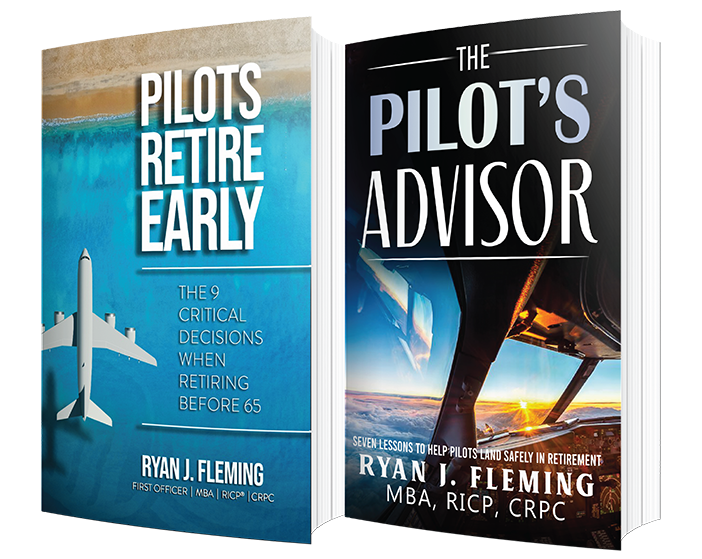
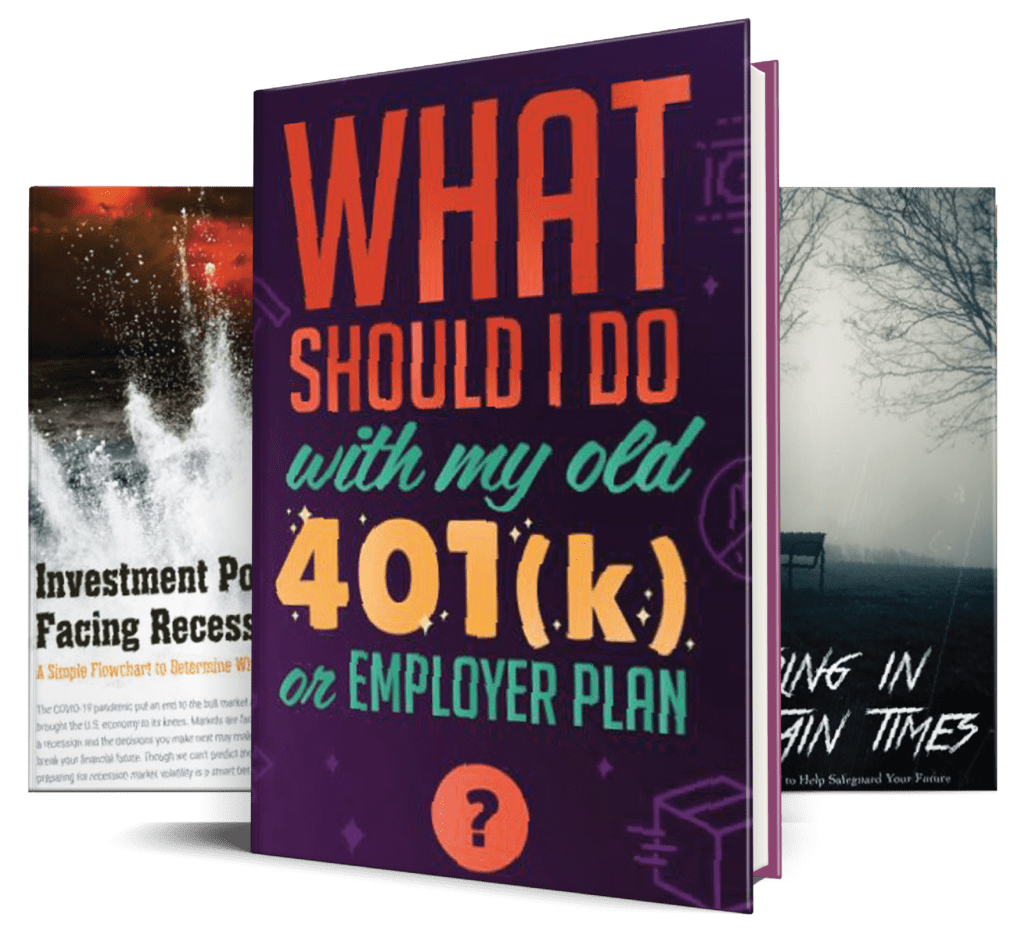
Yeah, all good points. Well, if you’ve got questions about the appropriate risk and how to manage that for your portfolio and your situation in life right now, especially if you’re a pilot listening and watching today’s episode, reach out to Ryan, have a conversation about where you are right now, where you’re trying to get, and how to appropriately build a plan to accomplish your financial goals. The best starting point is to click the link in the description of today’s show, or go to Retire pilots.com and order the toolkit. This is a toolkit, that physical box that Ryan’s put together. It’s packed with his book, helpful guides, and more information about planning for retirement. It also qualifies you for a free portfolio analysis, that’s the one on one visit with Ryan, where you can have a conversation about your specific plan and start building toward your financial future. So, check that out again. Link in the description of today’s show. Ryan, thank you so much for the help, and we’ll talk to you again soon.
Ryan Fleming 8:51
Appreciate you, Walter. Have a good one.
Walter Storholt 8:53
You too. That’s Ryan. I’m Walter. We’ll see you next time, right back here on the Pilots Advisor.
Speaker 1 9:01
Information is for illustrative purposes only, and does not constitute tax investment or legal advice. Always consult with a qualified investment, legal, or tax professional before taking any action.
This podcast episode is for educational and informational purposes only. The opinions expressed are those of the speaker as of the recording date and are subject to change. This content does not constitute personalized investment, tax, or legal advice. Please consult a qualified professional before making financial decisions.