Preview of what we’ll cover today:
🚀 Need for Speed: Avoiding get-rich-quick investing
😎 Ego & Mistakes: Keeping emotions in check
⚠️ Danger Zone: Understanding risk and volatility
📜 Future Planning: Preparing for life’s uncertainties
🤝 Find a Co-Pilot: Why guidance matters in retirement
Subscribe On Your Favorite App:
 YouTube
 Apple Podcasts
 Spotify
 Amazon Music
 iHeartRadio
 TuneIn
More About This Episode:
It’s summer and nothing says summer quite like Tom Cruise as Maverick soaring across the sky in Top Gun. This year marks the 40th anniversary of the original film, and with Tom Cruise’s birthday on July 3rd, Ryan figured it was the perfect excuse to revisit some of the most iconic quotes from the franchise and see what they have to say about your financial life. Because Maverick didn’t become the best by flying blind and hoping for the best. He had a plan, a co-pilot, and enough self-awareness to know when the risk was worth it.
Go Deeper Into The Episode:
0:00 – Intro
1:59 – “I feel the need, the need for speed.”
5:36 – “Your Ego Is Writing Checks…”
09:03 – Risk, volatility, and the financial danger zone
10:56 – “The future is coming, and you’re not in it.”
14:18 – Every pilot needs a financial co-pilot
Resources:
Retire Pilots – https://retirepilots.com
Get your FREE Retirement Toolkit – https://bit.ly/3ZmZsaX
Pilot Tax – https://pilot-tax.com/
The Pilot’s Advisor Podcast is also on video. Watch & Subscribe on YouTube: https://bit.ly/3EIEBW2
Connect with Pilot-Tax: https://pilot-tax.com/
Episode Transcription:
(Note, this is an automated transcription. Please forgive any errors.)
Walter Storholt 0:00
Well, hey, we’re entering summertime, and that means it’s time for the annual tradition, at least in our house, of re-watching Top Gun. Nothing kind of says summer like a big movie, and I love watching Top Gun every summer, especially as we hit the Fourth of July timeframe. I don’t know, it’s just patriotic, it makes you feel good. Well, this year happens to be the 40th anniversary of the original film. It’s also Tom Cruise’s birthday in July, which is kind of cool, I guess. As the lead actor, of course, in the film, we figured it’d be a great excuse to have some fun on today’s show, since this is the pilot’s advisor, after all, and talk about Top Gun and the financial lessons that old Tom Cruise and Top Gun and Maverick especially can teach us. So, I’ll grab Ryan, we’ll get started, and give you some great financial advice, and reminisce a little bit about the movie Top Gun, coming up next. Ready to Fire, here on The Pilot’s Advisor, Walter Schorholtz, is always alongside Ryan Fleming. He is, of course, the Pilot’s Advisor, and Ryan, Top Gun has got to be one of your favorite movies, right? I would, I would imagine most pilots enjoy Top Gun.
Ryan Fleming 1:00
It really is such an awesome movie. I mean, I could watch it so many times, or, like, you talk about it’s kind of like Christmas Vacation, you at least get it in once a year, depending on the mood, or around summertime. And I also think about how the Air Force turned that movie down, and of course, the Navy picked it up, and how much that just totally changed recruiting for decades. Yeah, you know, being a pilot, wanting to be a naval aviator, but either way, pretty cool. Love the movie.
Walter Storholt 1:32
That’s that’s an interesting kind of like sidebar on the history of the movie and the marketing behind it, and then the real life, you know, impacts that it had, and we’re hoping that we can have some real-life impacts for our listeners and viewers on today’s show, as we look at some of the famous quotes from the movie and turn them into financial advice and guidance. Mostly, again, this is just some fun to reminisce about the movie, but we’ll drop in a few financial hints along the way. One of the best from the movie, of course, was “I feel the need, the need for speed. Who can forget that line, right? Ryan,
Ryan Fleming 2:05
the need for speed. I wasn’t planning on putting on these sunglasses, but
Walter Storholt 2:14
to my studio,
Ryan Fleming 2:15
you told me they were talking about Top Gun today, so I figured I’d just try to be cool. I mean, I remember, I remember being a young lieutenant wearing a flight suit around at that, you know, at flight school, going, man, I am cool as hell. Yeah,
Walter Storholt 2:29
I love that AI or clip art, some aviators over me real quick. Just like
Ryan Fleming 2:37
you can do some editing after the fact, how about that? That’s
Walter Storholt 2:41
right, that’s right. Oh man, so yeah, what is.. what does I have the need for speed speak to you in the financial world?
Ryan Fleming 2:48
Well, it makes me think about pilots, stock picking, and you know, the get rich quick type thing. You know, we, in general, I love it that most, most aviators are a little bit more aggressive, because I think that’s one of the problems that we have in this world, is not being aggressive enough to let our money work for us over the long term, but we don’t want to speculate and gamble, and right now, I mean, if you want to know how many times I’ve been asked about SpaceX and the IPO, and, oh my, we got to get it on the ground floor, and yeah, reality is that that IPO is going to hit, and then it’s going to go, maybe, maybe it goes way up for a day or two, and then it’ll crash for six months. I mean, that’s just kind of how, how it normally works out, and most analysts are like, wait till, wait for six months until it settles and you know finds reality before you do that, but, but the need for speed, everybody wants that hot stock, and they want to get rich overnight, and you know that’s that’s a, that’s what, that’s what a lot of pilots do, but you know, the strongest financial plans aren’t built on speed, they’re not sexy, being disciplined, being unemotional, dollar cost averaging every month, so the way to win financially, unfortunately, is built on patience, consistency, discipline, focus. It reminds me of the tortoise in the hare. I mean, that’s kind of the way it is, right? You know, the old tortoise in the hare, where you know it’s that slow and steady wins the race, and it’s true,
Walter Storholt 4:25
but a lot of pilots, especially those who may have military background, I would imagine they’re not, you know, hardwired that way. They are higher, hardwired to be the more aggressive, wouldn’t you say, that to have a little bit of that need for speed, that edge.
Ryan Fleming 4:38
I definitely agree with that, and I do think it changes a little bit as they age, which is a good thing, you know, as the reality of retirement gets closer and closer.
Walter Storholt 4:47
Yeah, then they
Ryan Fleming 4:48
start to get a little bit more conservative and start seeing the writing on the wall, per se,
Walter Storholt 4:54
follow the normal human male, you know, human curve, the measure testosterone drops, you.
Ryan Fleming 5:00
Get more and more responsible, they
Walter Storholt 5:01
just have a higher starting point, maybe than the average population. Well,
Ryan Fleming 5:04
and young pilots, I see it all the time, it’s the Robin Hood account, or it’s the better Betterment account, and you know, massive stock picking, or they think they know what they’re doing, and I think that then they come back in their 40s in our 50s, because it made a bunch of mistakes and probably lost money, I don’t know, yeah, because even, even, even when we’re having great returns, some of the younger pilots are like having issues with this or that, and are a little bit more high maintenance, per se, so it’s interesting,
Walter Storholt 5:35
yeah, well, it leads nicely into the next quote from the movie, when Tom Cruise, Maverick, is getting a little bit cocky, started to disobey orders, and starts to get into a bit more trouble. Commander Stinger says him to him, you know, your ego is writing checks that your body can’t cash, which is a great line, and, and I know you’ve got some financial parallels for that, but did you ever have to get a little wake-up call from a commander when you were coming up through the Air Force Academy, that that reminds you of, I saw that little smirk.
Ryan Fleming 6:04
I want to say no, but I have too many teammates and classmates, you know. I always tried to learn from other people’s mistakes as much as I can, and I remember my dad really telling me that, you know, learn from other people’s mistakes, you don’t have to screw up you personally, you know, you can learn, and, but along the way, I mean, I, yeah, I definitely screwed up. I made a lot of dumb decisions, not all that I want to disclose on a podcast, but one of the things I really got in big trouble with was one of the interviews I had from a gentleman in Denver, the news station there took some responses out of context, and I, there’s an article written that next day, and it didn’t shed me in a very good light, or, and I remember getting caught in, called into my coach’s office, you know, like, what’s this, that’s one thing, and, of course, you know, I got in trouble, so yeah, you put me on the spot there, Walter, but no, yeah, I’ve screwed up over time, and, and the funny part is, I feel like this happens with investing too, where you got to make mistakes to look to learn, sometimes you got to get burned, you know, and then that gets you refocused on on what you really should be doing, but yeah, I’d imagine
Walter Storholt 7:21
we see this a lot with, like, lifestyle creep too. Maybe, maybe younger pilots fall, fall victim to this, you know? They start getting the bigger paychecks coming through as more flight hours are increasing, and you know, now that paychecks, you know, ramping up, and life is great, and you go out and you spend all that money right off the bat, because you’ve worked hard for it, and here it is. But now you’re hurting your chances of maybe building that wealth, is that a problem you see with younger pilots?
Ryan Fleming 7:44
Absolutely. And the way I would view this is, it kind of reminds me of the millionaire next door, the person that’s real conservative and not flashy. They’re the ones that are really ahead of the game and set for retirement, young lieutenants out there buying the flat, and I was guilty of that too. I had a Harley and a BMW, and at the airlines, that’s those younger, younger FOS buying their captain house before they should. All of those things have massive dramatic impact on the bottom line later on. And I, I remember telling guys back in the day, when we were in our 20s, buy a little less shots at the bar, so you can put a little bit of money away, and you’ll thank me later. You don’t have to buy around for the whole place, you know. Hoping to get lucky, which, you know, I think we saw some of that in the movie Top Gun as well. So, so the little small decisions over over the long term are going to make a drastic difference in your financial future, the newer cars, the bigger homes, the extravagant vacations. Those are all great for the housewives of Destin, or the, you know, keeping up with the Joneses, but that outward appearance of wealth in reality behind the scenes is a very, very different story. Those, those that don’t have all those things are the ones that actually have all the money.
Walter Storholt 9:02
This leads in then very nicely to the counter side of this, and that’s the opening of the film, right? The iconic song, Highway to the Danger Zone. That iconic opening makes it clear from the bat that, like, you know, right out of the gate, that this is not a world without risk, especially for pilots, especially, you know, for those Navy pilots in the film, you’re going to live with risk, and so this is where we get back to that balance, a little bit of, hey, you need, you kind of need that aggressiveness, you need to not be afraid of risk to succeed in this arena, but you know, got to take calculated risks, take your risks at the right time, all of those kinds of things. I got to think that this rings true very much for you, when it comes to just the market, right? And dealing with volatility there.
Ryan Fleming 9:48
Well, you know, risk equals reward. I mean, we have to have, we have to take on risk to get that long-term growth, but volatility is actually a part of the picture as well. I mean, we have a portfolio. That’s going to give us better long-term returns. It’s going to have a higher standard deviation, and it’s going to have higher ups and downs. I accuse pilots all the time, but they want all of the upside and none of the downside, and that’s just not reality. That’s just not the way the world works. So, we need to understand what the risk tolerance is, and understand that how markets work and be be unemotional to that, so that we can ride the waves of those down sides, because they will happen. I mean, we have a, we have a 10% correction in the market almost every single year. People just don’t remember that, you know, they don’t remember the panic, and and the hardest part is when you look at, you know, you read magazines or you watch on TV, like it’s all about increasing ratings and selling, selling more magazines, so it’s all designed to induce fear and panic, and, and you can’t, you can’t let it affect you.
Walter Storholt 10:56
Well, our next one, Ryan, is a little bit of a bonus one, because it’s not from the original Top Gun, but the newer one, Top Gun: Maverick, and it was ‘The Future is Coming and You’re Not In It. The Rear Admiral tells this to Maverick, and I thought that was kind of interesting, a little bit of a wake-up call for the aging, you know, Maverick in the sequel movie.
Ryan Fleming 11:16
Yeah, I’m trying to remember that exact scene. Do you remember exactly where that was at.
Walter Storholt 11:20
Yeah, if I remember correctly, it’s he’s kind of being reprimanded again, getting into trouble because he’s kind of pushing back and trying to show that he still belongs in the area, and you know, he just trying to kind of push back against authority like he always has. And they’re saying, basically, hey, you’re old now, this is a young man’s, this is a young man’s game, get out of here, that the future is coming. You’re not scheduled, you’re not in
Ryan Fleming 11:44
it. I don’t know why this pushed me to like talk about this, but that we had.. I just remember Memorial Day weekend, and we were supposed to record a show, and we missed out on that, and it just makes me realize the importance of having your estate plan squared away, or probably even more importantly than that, to make sure your beneficiary designations and are all squared away, because I’ve had a few things happen here recently with clients that were diagnosed with cancer, and suddenly, let’s, oh my gosh, you know, take care of my family if I’m not going to be here. I had a very good friend pass away right before he’s about to retire, and, and working through that, I mean, it’s having everything squared away, should you make that ultimate sacrifice, is important, and Memorial Day weekend really made me think about that as I was working with these families through that next, that future where you may not be there, but making sure your families are squared away, and you didn’t leave a mess for them to clean up after the fact.
Walter Storholt 12:49
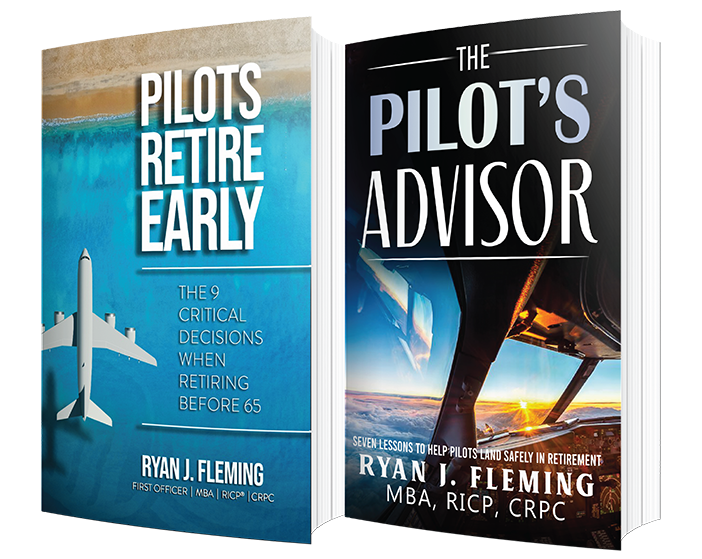
Attention, aviators, when you’ve spent years in the cockpit managing the complexities of flight, isn’t it time you navigated your retirement with the same precision? Introducing Retire pilots.com Right at your touchdown zone on our homepage, there’s a beacon flashing ‘Get My Free Tool Kit. Click that, and you’ll be cleared for a direct route to Ryan’s Retirement Toolkit, tailor-made for pilots like you. Inside, you’ll find two of his important works: The Pilots Advisor and pilots retire early. Between these two books, you can decipher the nine critical decisions when retiring before 65 and discover the seven lessons to help pilots land safely in retirement. But that’s not all. This toolkit is packed with altitude high value, including extras to get your retirement plans off the runway and light the afterburners on your 401 k vector on over to Retire pilots.com to grab your toolkit and let’s embark on this journey together. Yeah, I think that’s a great comparison to make from that quote, and I think you kind of see, you know, by the end of the movie, Maverick is starting to realize that he needs to help take care of that next generation and set that next generation of pilots up for success and impart his knowledge in all those similar ways that you want to do that, maybe for your family, from a financial perspective, from a knowledge perspective, all of those kinds of things. So, I think that’s great. All right, last one, Ryan, and then we’ll get out of here. Talk to me, Goose, which doesn’t have anything like incredible behind it, but we all loved Goose in the movie. When, when he dies in the movie, I mean, just, I mean, almost stopped watching the movie. I couldn’t handle Goose going out through everything. Maverick always had Goose in that original movie to lean on, and then when Goose is gone, like everything just got harder, and I don’t know, just kind of really underscores the importance of that co-pilot on the plane, that person that’s going to be by your side to help you, you know, in the fight, in the battle, through your pursuit of rising through the ranks, so many different comparisons you can make there.
Ryan Fleming 14:55
Yeah, and I mean, you think about him talking to Goose in the first movie, and then of. Course, you know, the most recent one, he’s still talking to Goose, and, and navigating your financial lives. I mean, it’s no different, you know. You need to have somebody to talk to, you need to, you know, times are going to be tough, there’s going to be turbulence, and you need to have somebody that you trust to work, work you through that. Stay on course, you know, and you might, might be missing out on something that you haven’t even thought about, and I, I feel bad because there’s so many pilots that come to me when they’re 60 and they’ve missed out on so many opportunities because they just didn’t know what they didn’t know, and I wish I wish the Type A pilots would reach out earlier so that we can have that co-pilot throughout all those years of building and setting up all the tools, so that you’re ready for retirement, versus trying to clean up a mess, and in many cases it’s too late, you know. And I think that that’s what a good financial advisor does, it starts looking at the different levels of where’s this person at. I always say we got to walk before we can run, you know. Let’s fix where you’re at right now, and then as we get close to retirement, we need to start taking all these other steps for legacy planning, protecting your family, protecting against sequence of returns risk, and the reality is there’s just a lot more issues out there that pilots don’t even realize, and if they had a goose or a good financial advisor out there working with them over time, they’d be much, much more prepared for retirement.
Walter Storholt 16:24
Yeah. Well, that’s why the pilot’s advisor, Ryan, is here, right? So he’s here to be that person that you can talk to, get you through the tough times as you plan for your financial future, understand where the opportunities are, help guide you, and set that plan in place. If you’d like to schedule a time to meet with Ryan, it’s very easy to do that. You just order your toolkit. It’s a retirement toolkit that he’s put together, that’s packed with his book, great information, other resources as well to help you learn about finances and retirement. And it comes with a free portfolio analysis where you can meet one on one with Ryan and have that chat about you, where you are now financially, how you want to get to where you need to be in retirement and beyond, and all the things that need to be covered. Ryan’s going to help make sure that you have all of those gaps figured out, filled, and ready to execute when you get into retirement. And I think the final lesson here, you know, you look at Maverick and Top Gun, Ryan, and it really comes down to he was cocky, he pushed the envelope, he was a very aggressive person, but he learned that, you know, I’ve got to be a little bit more self-aware. I’ve got to dial it back at least a smidge. I’ve got to have some semblance of a plan and some self-awareness of where my weaknesses are if I want to truly succeed. And he was able to dial those things back in, still have that edge to him, but execute because he had some of those guardrails in place, and it’s the same thing with putting together a great portfolio. We can be aggressive, but we need guardrails. We got to find that right balance, and we’re going to experience that not only short term but the long term success too. And that’s my big takeaway from from the top gun conversation.
Ryan Fleming 17:56
Yeah, I thought you thought you did an amazing job of bringing that to a close, and it would have made me suddenly just realize thinking about that movie was when he finally realized that he needed to protect his wing man, that he needed a wing man, and the benefit of having somebody there to help you out, or watch your six, per se, and I think that’s what an advisor does, and, and I don’t know why anyone out there that’s not working with an advisor would not at least take advantage of a free portfolio analysis. You may think that you’re doing great, but let’s look at what you’ve been doing compared to what I’ve been doing with my clients. It might tell you a very, very different story. And you don’t know what you don’t know. So, reach out. More than happy to do an analysis and talk with anyone out there.
Walter Storholt 18:37
You can, of course, go to Retire pilots.com or just look for the link in the description of today’s show, and you’ll be all set. Ryan, thanks for the help, and we’ll talk to you again soon.
Ryan Fleming 18:46
Have a good one.
Walter Storholt 18:48
Take care, everybody. We’ll see you next time on The Pilot’s Advisor.
Speaker 1 18:55
Information is for illustrative purposes only, and does not constitute tax, investment, or legal advice: always consult with a qualified investment, legal, or tax professional before taking any action.
This podcast episode is for educational and informational purposes only. The opinions expressed are those of the speaker as of the recording date and are subject to change. This content does not constitute personalized investment, tax, or legal advice. Please consult a qualified professional before making financial decisions.