Preview of what we’ll cover today:
🛠️ DIY Mentality: Independence does not guarantee better outcomes
💼 DIY vs. Advisors: Lower fees may come with additional problems
📉 Common Mistakes: Stock picking and timing create risk
😰 Investor Emotions: Greed and fear undermine discipline
🧭 Professional Guidance: Objective advice can improve direction
Subscribe On Your Favorite App:
 YouTube
 Apple Podcasts
 Spotify
 Amazon Music
 iHeartRadio
 TuneIn
More About This Episode:
There’s an entire television network dedicated to doing things yourself — home renovation, landscaping, interior design, all of it. And the DIY mentality is genuinely admirable. But when it comes to retirement planning, the stakes of a bad install are a little higher than a crooked backsplash. Today, Ryan talks about what DIY planning actually looks like in practice. DIY has its place. But some projects are worth calling a professional, especially when the cost of getting it wrong follows you for the next thirty years.
Go Deeper Into The Episode:
0:00 – Intro
0:54 – Is Ryan into DIY?
2:59 – Reasons for DIY
4:35 – What Changes Their Mind?
9:16 – Opportunity Cost & Fees
12:01 – Get a Free Portfolio Review
Resources:
Retire Pilots – https://retirepilots.com
Get your FREE Retirement Toolkit – https://bit.ly/3ZmZsaX
Pilot Tax – https://pilot-tax.com/
The Pilot’s Advisor Podcast is also on video. Watch & Subscribe on YouTube: https://bit.ly/3EIEBW2
Connect with Pilot-Tax: https://pilot-tax.com/
Episode Transcription:
(Note, this is an automated transcription. Please forgive any errors.)
Walter Storholt 0:00
We’re talking about DIYers on today’s show. You know, there’s an entire television network, obviously dedicated to doing things yourself, and it’s all from home renovation to landscaping, interior design, anything you can really think of. And that DIY mentality really is pretty admirable in a lot of areas in life. But what about when it comes to retirement planning, you know the stakes are a little bit higher than just maybe you know messing up your wall trying to do a renovation. Let’s say, so we’re going to take a look at when the DIY approach is appropriate in your financial life, what it looks like in practice, and where some of the areas might be that you want to be careful of. We’re going to talk about that on today’s show. So Ryan and I will get started coming up next. back on the pilot’s advisor for another episode. Walter Storholt here with Ryan Fleming, the pilots’ advisor himself, and Ryan, looking forward to a great conversation with you today on this topic. I’m curious, are you a DIYer with you know other things in in life?
Ryan Fleming 1:00
You know that’s an interesting question because when I grew up, my dad built the first couple houses we ever lived in. Wow, that’s pretty
Walter Storholt 1:07
cool.
Ryan Fleming 1:08
Was super handy, you know, fixed cars, fixed whatever it was around. You’re either
Walter Storholt 1:12
going to follow in those footsteps or be like, I’m not even going to try and attempt to match that.
Ryan Fleming 1:16
Well, sometimes I don’t feel as much of a man because I’m not as handy as my father was, but what was interesting about it, you know, and I’m just talking about how my life has changed. My dad always pushed education, you know. Of course, I was playing sports and all that, and I I was worried because I didn’t know how to fix the HVAC like he could and all this stuff, and do plumbing and electrical, and he was like education, education, education, and I look at where I am now, and I I have it, and it took me a long time to not be the one blowing my yard, blowing off the leaves in my yard, or edging and cutting the grass, or you know, pick whatever it is. But then I think you get to a point where you realize that you could hire somebody to do those things that you might not even enjoy. I don’t enjoy working on my car and changing the oil on my car, let alone the time that it’s going to take me to do that. So I think there’s been an evolution in my life of I did all these things myself back when I had no money and I was poor, versus as I’ve learned to to you know get a better job or make more money, and then you pay somebody to do it. You pay a a specialist to do that for you. Another example would be when I was still in the military. I mean, I would do my own taxes, but you get to a point where you’ve outgrown that. You need to hire a CPA. I used to. I mean, I’ve I’ve always done my finances myself, and I assumed everybody else knew about you know finances and how to invest money and what to do with it. And I found quickly found out that that wasn’t the case at all. They had no clue, and that’s why I became a financial advisor. I realized there was a massive need out there.
Walter Storholt 2:58
Yeah. Well, let’s dive into that financial component. I’m curious, through all your years of working with pilots, when you come across somebody who’s not working with a financial advisor and taking the DIY approach, what are their reasons and motivations? Do you usually find?
Ryan Fleming 3:13
Well, honestly, in most cases, it’s because pilots are too cheap to actually pay a fee to an advisor. They look at the fees and they’re like, oh, I don’t want to pay this much in fees, and I call this cutting off their nose despite their face. Sadly, almost I analyze people’s portfolios on a weekly basis, and the DIYers are way, way behind those that have hired a financial professional, and it’s really sad, actually. Or they’ll focus on the fee that they’d pay an advisor, whatever the expense ratio is, and not realizing they’re probably missing out, as Vanguard says in its study, probably about 3% return annualized, and then you take 3% and you compound it over 2030, years. We’re not even in the same ballpark, all because they were too cheap to hire an advisor, and we’re not even talking about net of fees, right? So it’s really sad. And in most cases, the DIYers. I mean, there are some cases of guys that know what they’re doing, but the far majority, they’re not, and they show up and they they reach out to me a little bit before retirement or or right before they’re 60. And after we start going through some stuff, it’s the same every time. I wish I woulda, you know. God, I wish I would have reached out to you 10 years ago. Oh, I wish I woulda, and and I hate it because it’s the same story. I would recommend anyone, at a minimum, have a conversation with an advisor.
Walter Storholt 4:35
What gets them off of that train? Because I’m sure you’ve had some DIYers that then eventually they do come in and say, “Okay, I’m ready to overlook this, you know, this fee portion of my rejection, and I need I need somebody. What’s usually that thing that brings them in and kind of converts them?
Ryan Fleming 4:51
I think it’s a couple different things. I think number one, like if we have some market conditions where clients have been out there speculating and gambling with their money, and then they lose half. Portfolio, doing some stock picking or whatever might happen, or there’s some catastrophic event in the market, and they realize they don’t have a clue what they’re doing. Then they’re going to come with their tail between their legs, asking for help. The other one is getting closer to retirement. They’ve been kicking the can and ignoring this their whole career, and now it’s becoming a reality. And they’re finally coming to me because they know they need help, and and sadly, you know I’m going to try to clean up the mess before they retire. But man, once again, just like they say, I wish I would have come to you earlier, and yeah, you should have. You’d have a a much better retirement.
Walter Storholt 5:34
Yeah. So, would you say the most common mistakes are like stock picking for for folks, or are there others that people should be aware of?
Ryan Fleming 5:43
Well, I think stock picking, market timing, track record investing, making short-term emotional decisions with your money versus being disciplined in long-term-all of those things fall under speculating and gambling. I, I, I tend to find that those pilots that are constantly watching TV or and are reading magazines and listening to the financial noise that’s out there, meaning like they’re spending a lot of time on it. They they put their fingers in stuff too much and they’re actually in a worse position than that person that set set a portfolio and forgot about it. So, and you see this with the do it yourselfers. Like when I truly think about a do it yourselfer, I think about the person that is constantly engaged and trying to stock pick and doing research and doing all these things, and they end up they end up hurting themselves more than they help themselves. So the
Walter Storholt 6:32
do it yourselfers who just actually don’t try to do anything fancy and just stick it somewhere and do nothing are actually in better shape than the do it yourselfers that are like into it, yeah, yes, because
Ryan Fleming 6:43
of that speculating and gambling component. Because of putting, and you know, it’s the get rich quick scheme too. It’s like, oh, I’m going to put a leverage position in this one stock. I’m going to put 40% of everything I have because I’m about to get these massive gains. I.e. you know, think about Bitcoin. Yeah, I’m going to get these massive gains, and then all of a sudden, you know, they’re coming back to me because they just lost 30% and I’m just like, well, I don’t care what stock it is, I don’t care what position it is. You don’t want to have a leveraged position of your retirement assets in that one company. I mean, that’s just not smart at all, and and I see it all the time. It’s actually really sad. I mean, I watched it with the. I watched it with JetBlue and Spirit Pilots. You know, there was supposed to be this merger, and then I saw them taking these large leverage positions in their their company stock because they thought it was going to go through the sky. You know, when the merger happened. Well, guess what? The merger never happened, and and then those the the stock tanked, and and I got to see a lot of people lose half of their wealth in a short period of time, and it is that it’s that constant battle between greed and fear. It’s greed and fear that creates the stuff, and and you know when we’re we’re investing, it may not be as sexy, but doing the diversification, the long term discipline play is going to win, and and and the short-term emotional one doesn’t work. You’re going to hurt yourself. It’s just a matter of when.
Walter Storholt 8:11
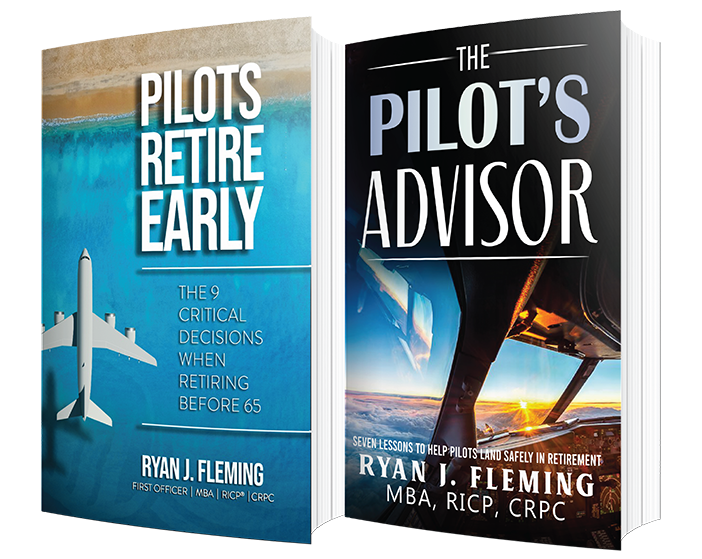
Attention, aviators! When you’ve spent years in the cockpit managing the complexities of flight, isn’t it time you navigated your retirement with the same precision, introducing retirepilots.com. Right at your touchdown zone on our homepage, there’s a beacon flashing. Get my free toolkit. Click that, and you’ll be cleared for a direct route to Ryan’s Retirement Toolkit, tailor-made for pilots like you. Inside, you’ll find two of his important works, *The Pilot’s Advisor* and *Pilots Retire Early* Between these two books, you can decipher the nine critical decisions when retiring before 65, and discover the seven lessons to help pilots land safely in retirement. But that’s not all. This toolkit is packed with altitude high value, including extras to get your retirement plans off the runway and light the afterburners on your 401k. Vector on over to retirepilots.com to grab your toolkit and let’s embark on this journey together. All good lessons. DIY can be great, and it’s kind of worth the risk. Maybe if it’s you know worst case scenario is you mess up the backsplash because you can always have the professional come in and fix it up for you and you know it’s not as big of a hit or an issue if you do mess it up along the lines. When we’re talking about life savings, retirement, what you’re going to live on for 30 years, man, who wants to mess that up? Well, and the
Ryan Fleming 9:37
opportunity cost of that is is yeah, it’s going to change your life, and and I’ll speak to fees too because I think there’s a lot of people out there that don’t want to pay an advisor a fee, and they look at oh I’m going to be paying this much over time, and I wish they would truly understand a net of fee return, and what that means is if you’re doing it yourself and you’re getting an 8% return on average. Year and an advisor is getting 10% return. I don’t care if you’re paying that advisor 20% You’re still winning. Okay, you’re doing better than you did before after all the fees. And and I try to relate it to pilots so they understand. And the way I do it is FedEx had this route from Hong Kong to Memphis that we used to fly back in the day, and it used to be, I guess, flying all the iPad, iPads, and iPhones back to the U.S. And after all fees, it netted like $8 million a day, something crazy like that, right? And and that’s it’d be like what the pilots are doing is they’re saying, well, I don’t want to fly that route. It costs way too much in gas. I mean, if you look at the fees on that gas, it’s a lot of gas to fly from Hong Kong to to Memphis. We should stop flying that. Well, yeah, it costs a lot of gas, but your profitability is through the roof, and I think that’s a way to look at fees versus what you get from it. If you can get one or 2% higher return on average, you’re in a way different position, net a fee.
Walter Storholt 11:04
Yep, big time. I think it’s a great illustration of exactly how this works in practice. Well, you know, if this strikes a chord in you today, it’s probably because this has happened to you. One of these examples that Ryan has given, and that can be painful, and that and that there can be shame. There can be guilt involved. A lot of emotions. I’m imagining you have to then navigate through, Ryan, when somebody comes in and meets with you, and they say, “Yeah, I screwed some stuff up, because that can be a hard place to get to. Is then admitting that you’ve made made a mistake, or that you missed an opportunity, or that you’ve had some fear, whatever it may be, that’s held you back, and maybe stuck with the DIY method a little too long, but if you can get over that, and Ryan can help you get over that mentality when you come in, then you can start the healing process and get back on the right track. Or if you haven’t made any of these mistakes yet, well, let this be a warning that it does happen frequently to people, and you can put in plans right now to avoid these issues in the future.
Ryan Fleming 12:00
And what I would say is this: at a minimum, take the time and at least set up a meeting, and we can look at what you’ve been doing, and I can show you what I’ve been doing, and it’s free. You can see if you’re on on on track, if you’re doing the right stuff, and I guarantee, if nothing else, you might get some free advice. You might get a golden nugget that might help you as a D DIYer to go go forward in a better direction, or you’re going to be in that meeting going, man, missed that, forgot about that, screwed that up, and and I you know I see it all the time. But at a minimum, set up a meeting and let’s check it out.
Walter Storholt 12:35
Yeah, absolutely. You might be more confident after the call in what you’re doing, but it might also point out a lot of big gaps in your plan and spark you to take better action. So don’t miss out on that opportunity. Very easy to take advantage of it. You can get a free portfolio analysis, a one-on-one visit with Ryan by ordering your retirement toolkit. It is linked in the description of today’s show. So just click that and order the toolkit. Schedule your time to meet, and you can have this in-depth conversation about your specific plan, situation, and questions. So check that out again in the description of today’s show. Ryan, thank you so much. Appreciate it. I’m going to go DIY some yard work here in a few minutes,
Ryan Fleming 13:14
as you should.
Walter Storholt 13:16
Time to mow the grass. All right, man. Have a good week, and we’ll talk to you soon.
Ryan Fleming 13:22
Thanks, Walter. Have a good one.
Speaker 1 13:28
This episode is for educational purposes only, and is not individualized investment advice. The Pilots Advisor LLC is an SEC registered investment advisor. Registration does not imply a certain level of skill or training. Past performance is not indicative of future results, and investing involves risk, including the possible loss of principal.
This podcast episode is for educational and informational purposes only. The opinions expressed are those of the speaker as of the recording date and are subject to change. This content does not constitute personalized investment, tax, or legal advice. Please consult a qualified professional before making financial decisions.