Preview of what we’ll cover today:
⏳ Longer Retirement: Preparing for the possibility of 30 years or more after leaving the cockpit
✈️ Pilot Deadline: Planning around the mandatory end of a major-airline flying career
🔄 Career Transition: Finding meaningful work or purpose after airline flying ends
🏥 Healthcare Costs: Preparing for coverage before Medicare and expenses later in life
💔 Gray Divorce: Understanding how a late-life separation can reshape retirement finances
🧭 Moving Target: Building a plan that can adapt as taxes, benefits, technology, and life circumstances change
Subscribe On Your Favorite App:
 YouTube
 Apple Podcasts
 Spotify
 Amazon Music
 iHeartRadio
 TuneIn
More About This Episode:
Retirement planning today doesn’t look like it did even a decade ago, let alone the way it looked for our parents. On this episode, Ryan provides several realities you need to be aware of in 2026 to build toward a successful retirement. Retirement isn’t the same finish line it used to be, and pretending otherwise makes it harder to plan for. The realities change. A good plan should be able to change with them.
Go Deeper Into The Episode:
0:00 – Intro
0:46 – Personal Updates
1:58 – Retirement Reality Check
2:25 – Living Longer in Retirement
5:25 – A More Active Retirement
8:36 – Life After Flying
11:00 – The Pension Difference
14:06 – Healthcare & Long-Term Care
20:36 – The Sandwich Generation
22:10 – Gray Divorce
23:37 – Retirement Keeps Changing, Be Prepared
Resources:
Retire Pilots – https://retirepilots.com
Get your FREE Retirement Toolkit – https://bit.ly/3ZmZsaX
Pilot Tax – https://pilot-tax.com/
The Pilot’s Advisor Podcast is also on video. Watch & Subscribe on YouTube: https://bit.ly/3EIEBW2
Connect with Pilot-Tax: https://pilot-tax.com/
Episode Transcription:
(Note, this is an automated transcription. Please forgive any errors.)
Walter Storholt 0:00
Well, it should be no secret that retirement today is a lot different than it used to be, but it may surprise you just how different it is. And I’m talking about even just from 10 years ago. But especially if you’re building your retirement framework on ideas that might be 1520, or 30 years old, maybe this is the way mom and dad did it. That could be a real error in your planning. And so we’re going to have a retirement reality check today, the 2026 version of this conversation. Look at what has really changed and why it’s such a big deal, and how it should reshape your retirement planning. We’re going to dive all into it next with Ryan, so stay tuned. Back on the Pilots advisor once again with Ryan Fleming. Ryan, how’s life treating you, my friend?
Ryan Fleming 0:44
Very good, Walter. It’s end of summer. College football is about to start. Yeah, exciting times. I’m going to go to the LSU Clemson game this weekend, and then I’ll be out in Colorado the weekend after to celebrate Fisher DeBerry getting a statue outside of Falcon Stadium, I’m excited.
Walter Storholt 1:02
Yeah, you got a lot of exciting things on the agenda. Hey, Tar Heels got their first win of the season overseas in Ireland, so I’m a happy camper. Yeah, and we’ll see what the rest of the tough schedule brings. But
Ryan Fleming 1:13
15 to 10 over there, and everybody’s talking about it right now. You know, they’re all debating this morning, and
Walter Storholt 1:18
yeah, was it a good win or is TCU just not very good? But hey, no points in the second half, and for a chunk of the first half too. So I
Ryan Fleming 1:27
don’t care what you think. If you give Belichick a little bit of time to build a team, he’s going to get some W’s. It didn’t just happen overnight. It’s not just because of Tom Brady. So yeah, hey,
Walter Storholt 1:38
when the Tar Heels meet Clemson, you and I may need to have a little a little wager go on or something about that. How about that?
Ryan Fleming 1:43
You just want to pay me now.
Walter Storholt 1:45
I feel like I need a handicap. Maybe we might have to bet on the sprint or something.
Ryan Fleming 1:51
We’ll talk later. We’ll talk later.
Walter Storholt 1:53
Yes, because it’s not looking great overall. But we’ll see. We’ll see. Awesome. Well, let’s dive into these retirement realities today and help some pilots out, Ryan, as we talk about these things. And that’s always the unique thing about your show, right? Because there are these retirement realities that might change, and it’s great advice maybe for you know the whole of retirement planners. But you have this specific focus for the pilot world and for you know specifically pilots in the industry who maybe some of these things affect more or less than the average person, so we’ll see if that plays a role here as we go through each of these. The first one, you know, look at the stats; it’s easy to tell and see. You probably know people in your family that you know are experiencing this as well. We are living longer, but that’s a really important reality to come to grips with, right?
Ryan Fleming 2:40
I absolutely agree, and I think talking about some of these things today on this show will be a good thing. We talk about the go go go years and then the no go years, and of course, there’s different planning that goes into that. And I think that one of the things that’s unique to pilots because of this is you do have that limited career. There’s many people that are ready to retire at 65, and then there’s others that are kind of getting kicked out the door, and they still feel healthy and they still enjoy their job. But guess what? You’re done unless you want to go fly, you know, charter or some some more corporate type opportunities at 65. You can’t you can’t fly for a major carrier. So planning for that 30-year retirement post 65 is getting to be more and more of a reality.
Walter Storholt 3:25
Yeah, and I would imagine for pilots as well. Like you know, you guys were expected to have short retirements when maybe we didn’t know as much about the health impacts of flying and how difficult that transition would be for pilots. I would imagine pilots specifically are now living a lot longer in retirement and fulfilling those years because you’ve learned how you’ve got to keep your body healthy during your career so that you can have that longer retirement.
Ryan Fleming 3:49
Well, I think that’s interesting too. And just going to pilots, you know, there’s a lot of studies out there about the radiation and stuff being a factor. And I really think that just from my own personal experience, you have guys that are very very healthy, but they it’s a part of their job to land, go work out, get their rest, and then there’s others that you know live a little bit harder. You know, run run hard, put away wet, and you can tell. So no different than any other career out there. I think there’s a huge dichotomy of those that have taken care of themselves than those that haven’t, and of course, that’s going to affect longevity as well.
Walter Storholt 4:22
Yeah, and so when you live longer, you’ve got to not only find out what you’re going to do for all of those years, like you mentioned, where how am I going to stay vibrant and healthy and active, but the financial component too. You’re having to build a plan that lasts for 30 years instead of lasting for five to 10 years, like it used to be, maybe for the prior generation.
Ryan Fleming 4:41
Well, and you got to plan for the worst case scenario. I mean, planning to die early and not worrying about saving or letting your money, you know, work for you and grow to have a good income plan is not a good plan. You know, yeah. I don’t think anybody wants to run out of money and they’re 7580, years old and and can’t work because that would not be yeah worst
Walter Storholt 4:59
case. Scenario in this, you know, situation is living to 100, right? Like, if if you flip it around and kind of think of it that way, like that’s the worst case scenario you’re trying to plan for. It’s easy to plan for if you’re going to live for two or three years in retirement. We could make that plan pretty easily.
Ryan Fleming 5:14
Yeah. Well, and and you know, we we the two things that we are guaranteed is is death and taxes, and plan accordingly.
Walter Storholt 5:21
Yeah, we just don’t know exactly the timing of all of that. Well, that brings us to reality number two: retirement has become a more active stage of life. So you mentioned and teased already the the no go, the slow go, and the go go years. But those go go years are lasting a lot longer than they used to as well, and the go-go years come with a lot of spending, don’t they?
Ryan Fleming 5:43
Yeah, I mean a lot of travel. That’s definitely a thing that happens. People retire, all those things that they’ve wanted to do all these years. How are we going to fund that? Make that happen. I don’t feel like that lasts for a long, long time, but I see it a lot with my my clients that are retired. Go on those few cruises, those first couple years, see areas of the country that you may or may not have seen, and you want to take your spouse to share that. But I also see like more active in the sense of whether it’s you donating your time or driving an Uber or going to work at Lowe’s, you know, whatever it is. But doing some of those things that you just never had time to do as a pilot because you’re always in and out. You never really get settled, and I’ve been out with this back injury for a little while here too. And it’s it’s funny when you’re in the grind, coming home, staying home for a few days, and then right back out. You just you get used to it and you just do it. But being home a little bit more now and watching watching my friends and buddies and clients in and out, in and out. It’s a tough lifestyle.
Walter Storholt 6:41
Yeah, I would imagine too. You know, you have the go-go years, and they may be short for some people, long for others. The slow-go years, maybe for pilots, that’s really the sweet spot that lasts a lot longer too. Where maybe you’re past the “we’re going to travel” because I’ve done that for my career essentially, and I’m going to relax at home a little bit more, but all the things I’m still capable of doing at home and those no-go years get delayed. So now you’re still spending money in that time. It just may be different than the finances or of travel and those kinds of things. But maybe it’s just time with grandkids, time with family. It’s shifting. It’s so different. Everyone can kind of morph and shape their retirement in a way that’s a lot different to where maybe we all fit in a little bit more of a box 1020 years ago.
Ryan Fleming 7:26
Well, and I think it’s going to change as as we go forward with technology as well. I mean, I I honestly think that AI is going to drastically change what the future looks like. I mean, even something as simple as an elderly gentleman that gets up and goes and works in his yard and cuts his grass and cleans out his garage for the third time that week. That’s probably going to change. I drive through my neighborhood and there’s quite a few lawns here now that are getting cut by robots. Like I’m driving my son to school and it’s like, ah, Mister Edwards is cutting his grass again, you know, and he’s probably sitting on the front porch drinking tea as the the mower goes around, and and even around the Fourth of July, some of these guys had a where it would cut like a flag or whatever else into the front yard. Oh
Walter Storholt 8:12
wow!
Ryan Fleming 8:13
Yeah, so times are changing. It’s pretty wild.
Walter Storholt 8:15
Yeah, two houses down from us, I saw it for the first time at least near me. The little robot was just, you know, nine in the morning. It was just doing its thing, just this little like Roomba, essentially, but going on the lawn doing the cut. I was like, “What?
Ryan Fleming 8:29
Yeah, it’s it’s pretty wild.
Walter Storholt 8:31
Nobody was in sight. The robot just cutting its yard, doing a thing. Yeah, pretty
Ryan Fleming 8:34
wild stuff. Pretty
Walter Storholt 8:35
funny. Yeah. Well, we’re also seeing people in the general retirement world and financial planning world, quitting work, but not cold turkey. So maybe some sort of transition to retirement where they’re working part time or doing consulting. It’s just not this. Hey, this is my big retirement party, and I’m gone forever. See you later. I’m never working again. Much more of a transitionary phase, or like hey, doing things I’ve always wanted to do, maybe for a career. But what about pilots? You you tease this a little bit that maybe you’re seeing some of this.
Ryan Fleming 9:08
Well, you see different things. I mean, I definitely see some pilots that still want to go fly, so they’re going to go fly that corporate job, or maybe they’re going to go instructed as Cirrus, just doing some. I think it’s Part 135 type things. The other the other thing I see is a lot of pilots go to be sim instructors, you know, just to have purpose, keep going. They go to become sim instructors, and then outside of that, then you got the full gamut of you know, do you have a hobby? What’s the plan? I mean, I joke about Lowe’s and Home Depot or even Walmart because my dad, God rest his soul, always used to say he couldn’t wait to be a Walmart greeter. He wanted to be out there, just not having a care in the world, but just you know greeting people or talking to him. and And for him, it would have been a little bit more appropriate, probably with Home Depot, because I think that dude would go to Home Depot like four times a week just to walk the hallways. He knew he knew more about where stuff was. Than than anybody that worked there, so yeah,
Ryan Fleming 10:04
and and he was he was
Walter Storholt 10:05
Ron Ron Swanson, where he would walk walk in and the guy would come up to help him, and he would just look at him and say, “I know more than you. Get out of my
Ryan Fleming 10:12
way. Well, we call it we call it his garage Rex Depot because he had more tools. Nice, I mean, it was bad. But but you know that’s a real thing. And then being a pilot and traveling a lot, you know, a lot of us use Uber. I talk to a lot of my Uber drivers, and it’s amazing how many of them are retired. Whatever, I mean, doctors, lawyers, it doesn’t pilots, and they’re just out there to earn a little extra cash, you know, quote unquote beer money, and and just talk to people and having a purpose, or their wife wants them to get the hell out of the house, so they go drive an Uber for a couple hours.
Walter Storholt 10:46
Yeah, yeah, it’s a great fit for a lot of people and gives them something to do. And for those who love driving, like that’s another another avenue to get out there and do that and see things and learn your city and town and all that kind of stuff. So it’s pretty cool. Another retirement reality that we need to think about is the one employer one pension model is mostly gone. But I have a feeling that this is an area you you tell me, Ryan, where actually it may still be a little bit more intact in the pilot world. I imagine there’s a little more loyalty to to airlines, and you stick around a little bit longer. But what do you think?
Ryan Fleming 11:20
Yeah, that’s a great thing to bring up. It is definitely different in the airline industry. In most cases, a person that you know gets hired on by a legacy carrier stays there, and that’s I think it’s a problem that our career has because you can’t just leave Delta to go to United 15 years into your career because you’d have to start all the way over, and there there needs to be some sort of a way to go between airlines. Of course, that wouldn’t benefit the airline, so it doesn’t happen. Yeah. So that is a problem. However, would I see a huge difference? A huge difference when I look at planning. Let’s say that you’re a pilot that’s at Delta or American or one of those legacy carriers that no longer has a pension. Okay, FedEx and UPS still have pensions. When we get into the planning phase of retirement, it is light years difference having a baseline pension versus not. When everything has to come from your 401k to produce that income outside of your social security, and that’s it, it’s a whole different ball game, and and even on top of that, somebody that finished up in the military that has a military retirement with a cost of living adjustment on top of that, completely different planning for retirement. So you know what situation you’re in, and if you don’t have a plan for this, you probably need to talk to me because it is a drastically different scenario and situation if you don’t have a baseline income, and and it’s really sad because pensions in many many cases, you know, it’s a lot of deferring risk, and if the more risk that you can take off of your back in retirement, I think the better it could be, and and that goes in, you know, I’m sure we’re going to talk about healthcare and some other stuff too, because those are some of your major, major costs in retirement.
Walter Storholt 13:03
Yeah, yeah. The more kind of sources you can create, the better. So value those things when you have them at your disposal. Lots of good lessons there. It’s a good illustration too that you just have to make sure that all the different opportunities that you have to save for retirement, you’re taking advantage of them, but then making sure that they’re all working together properly when you get to that retirement date. That’s what Ryan does each and every day, helping pilots get to and through retirement. If you would like to talk a little bit more about your particular situation, a great place to start is by getting the retirement toolkit. You can click the link in the description of today’s show. When you get that toolkit, you’re also going to qualify for a free portfolio analysis, where Ryan will look at your specific situation one on one and have that conversation to see if you’re a good fit to work with one another, if you’re in great shape, if you have some things that you need to tweak. It’s a great way to find out where you are and how well prepared you are in this current environment and with your current situation. So check that out again. Link in the description of today’s show so you can find it easily, get that free toolkit, and qualify for that portfolio analysis as well. We’re talking about retirement realities, and another one, Ryan, that you just mentioned was healthcare costs. My goodness, they are higher for sure, less predictable than most people are budgeting for, and you know when you try and plan on like the range of healthcare dollars that you might spend in retirement. It’s hard to plan for because yeah, you might end up pretty good and it’s a very low expense, or you might have lots of issues and it’s off the charts. It’s really hard to dial that number in for a lot of people.
Ryan Fleming 14:34
It’s amazing to me. I feel so lucky and so fortunate that I somehow got into the military because you know, my wife and I both served over 20 years, and we have Tricare for life. And I see it all the time. I mean, pilots that want to retire a little bit early, if they served in the military and they want to retire at 60, it’s not that big of a deal. It’s like, all right, cool, we have Tricare, let’s go. But it’s a completely different situation if you have somebody. Wants to retire early and they don’t have that because they start looking at the cost of healthcare versus having an employee you know covered healthcare plan at least to 65, and most I’d say 98% of the time they decide to keep working, and then we start looking into long term care insurance. Okay, anytime we look at that, it’s so expensive that most people choose not to. You go down a path of, well, I’m going to self-insure because I don’t have a choice. So this brings me back to things that people don’t really think about, and they need to think about earlier in their career. All the airlines have insurance that’s covered by the employer. If you don’t have a plan to have permanent insurance in place by the time you retire, you’re wrong because all of a sudden you’re going to wake up and your family’s not going to be protected. The other side of that is if you get that insurance in place, well, guess what? That’s what a lot of people are using for long-term care. So let’s say you have a $2 million death benefit, and all of a sudden you’re in a home or need nursing or whatever. They know that you’re going to die. They also know that you’re going to get paid $2 million when you die. So you can actually pull money from that plan or take the loan from that policy to start paying long term care insurance and save your retirement assets to pass on to your family. So it doesn’t blow up your whole plan, but once again, it comes back to planning. I it amazes me how people want to talk about returns of their portfolio versus what we might have done over the like the past five months or six months, and fail to see the big picture of all the planning that’s involved. You know, I can’t beat the S and p5 100 every year. I can’t beat the S and p5 100 every three months. Like you know, but those are the things that pilots focus on, and and I I watch do-it-yourselfers all the time do all this stuff by themselves. Come to me at 60, and they’ve not planned for anything. They have no clue what retirement looks like. They don’t understand the distribution phase of retirement. They don’t have any protection for their family. They don’t have a plan for survivor benefits. They don’t have a long-term care plan. And guess what? At 60, it might be too late, or it’s going to be real, real expensive. So there’s a lot of things that that you got to talk about, and it goes back to the whole you.
Walter Storholt 17:27
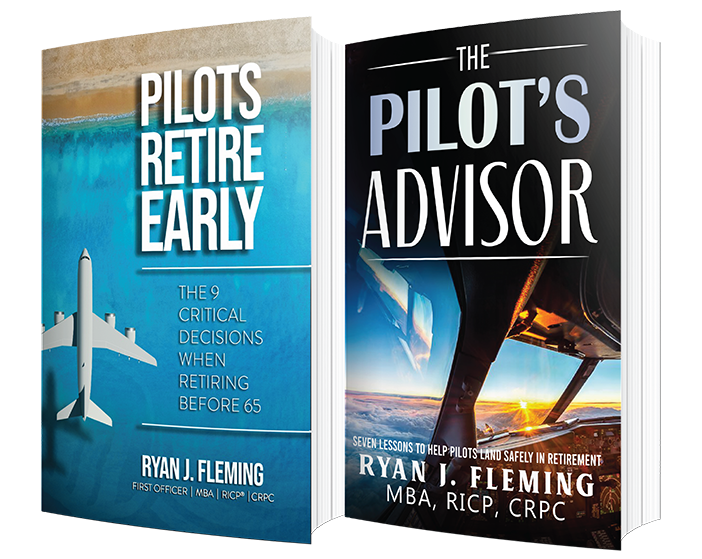
Attention, aviators! When you’ve spent years in the cockpit managing the complexities of flight, isn’t it time you navigated your retirement with the same precision? Introducing retirepilots.com, right at your touchdown zone on our homepage, there’s a beacon flashing “Get My Free Toolkit. Click that, and you’ll be cleared for a direct route to Ryan’s Retirement Toolkit, tailor-made for pilots like you. Inside, you’ll find two of his important works: The Pilot’s Advisor and “Pilots Retire early. Between these two books, you can decipher the nine critical decisions when retiring before 65, and discover the seven lessons to help pilots land safely in retirement. But that’s not all. This toolkit is packed with altitude high value, including extras to get your retirement plans off the runway and light the afterburners on your 401k. Vector on over to retirepilots.com to grab your toolkit and let’s embark on this journey together. Yeah, it’s so important to highlight that when I’m glad that you got passionate talking about that because it does make a huge difference.
Ryan Fleming 18:38
Give me my soapbox back. I’m standing on that.
Walter Storholt 18:41
Yeah, no, that’s good stuff because you’re right. I mean, and what you described was a lack of freedom too. Like when you said somebody who might want to retire at 60 or 61, and then they do the healthcare numbers and realize they can’t, and then they keep working. That’s freedom, kind of taken away from you by not planning for that in advance. Or again, those long-term care options. A lot of people don’t know that some of those products, some of those solutions exist out there, so they kind of just ride that risky wave for a lot longer than they have to. Instead of being able to have solutions in place, a lot of the things that DIYers just don’t know and run into trouble with when they could have made a huge difference with a little bit of advanced planning and a conversation, and so I mean, it just makes total sense to bring that one up, big time. Yeah,
Ryan Fleming 19:25
it’s well, and I am passionate about it. Unfortunately, I mean, because I deal with that a lot, and I think that that pilots have a reputation of being very, very cheap, and so you know what they’re saving by not having an advisor, they more than they they got to get out that pen and write that check later on, and it was like you know it’s definitely a coulda woulda shoulda case for sure. The other thing I want to bring up too is we’re in this weird part of life too, where there’s so many, and maybe it’s like 50s and 60s, 40s, 50s and 60s. Not only are we taking care of our parents, but we’re also taking care of our kids. A lot of kids are getting out of college; they don’t have jobs, and so you’re you’re taking care of your adult children. You’re taking care of your parents. I mean, the dynamics in our country have drastically changed, and I don’t know. With automation, it might get worse. And so I’m not saying that we can plan for all those things, but need to be thinking about
Walter Storholt 20:24
it. Yeah, yeah, you kind of know that maybe you’re going to take care of aging parents. What I don’t think people accounted for was you might also still be taking care of your children in the process, and that’s what we’re seeing a lot of. I think they’re calling that the sandwich generation, where you’re kind of taking care of the folks on the outside, and you’re the you’re the meat in the middle of the sandwich, and boy, you just talk about the burden that that creates, not only financially potentially, Ryan, but emotionally too. That can be very taxing on folks, and I I think you’re right. Like that’s something that we can talk about, but hard to understand the true impacts of it for years to come because it may shift even more, but you’re seeing that with more multiple generations living under one roof, or at least still supporting, you know, still paying certain bills for the kids, trying to help them get into their first home because home prices are so high. All those kinds of things are compounding these days, and if people are putting all of those things in front of their own retirement planning, that’s what kind of creates the problem. That’s the putting your mask on other people before putting it on yourself, right?
Ryan Fleming 21:25
Yeah, yeah, for sure. And you know, I get a lot of situations where I’ll be helping a client. You know, they ask me, “Hey, do you mind talking to my children? Help them plan, what have you? And you know, if somebody’s living at home and they’re working, I think it’s fantastic in the sense of just put money away as much as you can while you can, yeah. But you know, all the all the aspects that we’re talking about it it affects multiple generations of people, and that’s why I think having a legacy plan, having a way to pass on tax free money to the next generation, is is definitely a thing, and and might be become more of a thing as jobs, our job situation, and the ability to take care of ourselves is kind of changing. Yeah, it’s really scary stuff.
Walter Storholt 22:10
I’m curious what you think about this one, Ryan. It’s gray divorce is the the term that you’ll hear folks getting divorced later in life, in retirement or on the cusp of it, thus the the gray comment, gray here. So gray divorce. What about in the pilot world? Because a divorce that late, no doubt, is going to reshape what retirement looks like from a plan standpoint financially, but also from what you’re going to do with your time and your energy in retirement. But what about in the pilot world? I would imagine this could be just as prevalent, if not more, because we joke about it. But like you know, you spend your whole career being gone, and now all of a sudden you’re with your spouse. All of a sudden, they that can be a great thing, or it could be bad.
Ryan Fleming 22:48
Sadly, it’s it’s a reality. I mean, I see it a lot, and and I think that you know, and it changes too if the kids are all grown because there’s not alimony payments and stuff like that. Yeah, and every situation’s a little bit different, but are you paying for two houses now, or you know how how does that look, and what what is the agreement, or what state do you live in? How are the finances split up? I don’t even know how to comment on that. All I can say is, you know, I’m very passionate about my job, but one of the things I deal with all the time is when life happens and having to have difficult situations and conversations, and and life’s only so you know life’s short. You got to be happy, and you got to you got to live life. And no, that’s that’s that’s a that’s a tough one.
Walter Storholt 23:34
Yeah. Well, these are just a sampling of some of the new realities of retirement planning. A lot of these things folks didn’t have to deal with 20 or 30 years ago. Planning was definitely a lot simpler. Now it’s more complex, more options, which can be a good thing. Ryan, we’ve got a little bit more maybe flexibility, but man, just so many more variables to juggle. And that just one last time underscores the importance of planning, of having a proper analysis of your portfolio, and you don’t have to become an expert in all of these things if you’re a pilot, but you need to learn a little bit. There needs to be some education along the way, and I know that’s what you’re really passionate about when you help pilots out.
Ryan Fleming 24:10
Yeah, and you know, last thing I’ll say as we close here, Walter. I know we’re just kind of spitballing and talking about a lot of these things, but it’s not the same finish line it used to be in retirement, where you had a clear, defined goal, and you just plug some numbers. I mean, it’s like the goalpost keeps moving. Social Security that used to be able to plan or be a portion of your retirement-who knows if that’s even going to be around? I mean, I think it’ll be around, but it’s going to be reduced. So, how much of that can we use in planning? What are taxes going to look like? I mean, it’s-it’s tough. We got to make some big assumptions, so don’t wait till it’s too late. Definitely have a plan, and and you’ll thank me later.
Walter Storholt 24:45
Yeah. All right. Well, get that plan in place, folks. Again, the easiest way to do it: click the link that’s in the description of today’s show. If you’ve never done that before, order your retirement toolkit. It’s a free box packed with all sorts of good information from Ryan: books, resources, studies, guides. Great starting point for many pilots to begin this retirement planning journey, and again, it qualifies you for that free portfolio analysis, where you can have a one-on-one conversation and look at your finances and your retirement plan with Ryan and go through the planning process with him. See if you’re a good fit to work with one another by engaging with us in those ways. And until next time, Ryan, thank you so much, sir. We’ll look forward to talking to you again soon.
Ryan Fleming 25:23
Sounds good, Walter. Thanks as always.
Walter Storholt 25:25
Yeah, take care, everybody, and we’ll see you again next time right back here on the Pilots Advisor.
Speaker 1 25:33
This episode is for educational purposes only and is not individualized investment advice. The Pilots Advisor LLC is an SEC registered investment advisor. Registration does not imply a certain level of skill or training. Past performance is not indicative of future results, and investing involves risk, including the possible loss of principal.
This podcast episode is for educational and informational purposes only. The opinions expressed are those of the speaker as of the recording date and are subject to change. This content does not constitute personalized investment, tax, or legal advice. Please consult a qualified professional before making financial decisions.