Preview of what we’ll cover today:
🧠 Personal Growth: Push past insecurity and self-doubt
🎙️ Putting Yourself Out: Stop fearing others’ opinions
📱 Market Noise: Avoid doom-and-gloom rabbit holes
📉 Investor Emotions: Don’t make reactive financial decisions
🤖 Artificial Intelligence: Learn where AI can help
⚠️ AI Limitations: Keep expertise and judgment involved
🔄 Adaptability: Embrace change instead of resisting it
Subscribe On Your Favorite App:
 YouTube
 Apple Podcasts
 Spotify
 Amazon Music
 iHeartRadio
 TuneIn
More About This Episode:
What if the biggest step forward is letting go of what you can’t control? In this episode, Ryan reflects on personal growth, staying grounded amid uncertainty, and adapting to a changing world. The common thread is learning where to focus your energy and where to stop letting fear, noise, or other people’s opinions hold you back.
Go Deeper Into The Episode:
0:00 – Intro
1:08 – Personal Updates
2:29 – Personal Growth and Insecurities
3:54 – Shedding Preconceived Notions
5:49 – The “Let Them” Theory
8:32 – Social Media & Navigating Market Noise
11:54 – Emotional Decisions
15:05 – Schwab Glitch Makes Accounts Show a 40% Drop
16:06 – AI Chatbots Give Wrong Answers (Study)
19:06 – Using AI Responsibly
AI Chatbots Give Wrong Financial Answers Most of the Time Study
The Let Them Theory: A Life-Changing Tool That Millions of People Can’t Stop Talking About https://amzn.to/4rPhtwB
Resources:
Retire Pilots – https://retirepilots.com
Get your FREE Retirement Toolkit – https://bit.ly/3ZmZsaX
Pilot Tax – https://pilot-tax.com/
The Pilot’s Advisor Podcast is also on video. Watch & Subscribe on YouTube: https://bit.ly/3EIEBW2
Connect with Pilot-Tax: https://pilot-tax.com/
Episode Transcription:
(Note, this is an automated transcription. Please forgive any errors.)
Walter Storholt 0:05
We’re back for another pilot’s advisor. I’m Walter Storholt, alongside Ryan Fleming, and yes, I probably sound a little bit different to our audio listeners to the podcast. Little under the weather this weekend, Ryan, but we still have to show up and do a show, right?
Ryan Fleming 0:20
Yeah, man, we had this scheduled, and you know what? I don’t don’t tell me about the pain. Show me the baby. I want to hear. I want to hear about how you don’t feel good. It’s
Walter Storholt 0:29
like in the football days. Like, don’t don’t come and tell me your your toe hurts. You know, get out there on the field and play. Right.
Ryan Fleming 0:34
Well, you you know who’s the person that used to say that to me, right?
Walter Storholt 0:37
I’m sure it was. I’m sure Larry was you know all over you on that. I’m sure it was
Ryan Fleming 0:41
Larry Legend. It was Larry Larry Fedora. Don’t tell me about the pain. Show me the baby.
Walter Storholt 0:47
I love it. I love it.
Ryan Fleming 0:48
Speaking of which, since we we started talking about this, you see the shirt I’m wearing. I mean, Air Force finally beat Navy. So, yeah, it was that. That’s been three years, I think, which is sad, but we we the Air Force Academy had a victory over Navy, so I’m feeling feeling pretty good now.
Walter Storholt 1:06
Some bragging rights, and for our video viewers, you may notice a slight difference, Ryan. You know the the brand is the black and white, right? The old school sort of style of coloring here on the show, but I’m just going to say it’s in honor of the victory of Air Force. We’re we’re leaving just a little bit of blue hue, a blue tone in the picture today. So
Ryan Fleming 1:25
a little, a little tint of blue, just to make sure it’s Air Force blue and not any of that Carolina blue that you love. There
Walter Storholt 1:30
you go. Yeah, yeah. I’m I’m currently doing the show with my Carolina blue shirt on. I don’t know when we dial back my saturation if I’ll have a similar blue or not. Well, we’ll just make sure you
Ryan Fleming 1:40
change that. We don’t want Carolinas with
Walter Storholt 1:42
editor Dan. Don’t do it. Don’t do it. Keep the Carolina in there. Well,
Ryan Fleming 1:46
Walter, I’m sad. I know you have you know young young boys, so they bring germs home and then they pass it on to you. And it sounds like you’ve been struggling all weekend. Yep. He
Walter Storholt 1:56
makes it all worthwhile, though, man. I tell you what, like he’ll he’ll help you get through anything. You know, you can be very low and not feeling well, and he’s not feeling well, and all it takes is just one little funny laugh or noise or smile, and you’re like, “Ah, it’s all good. Yep.
Ryan Fleming 2:09
Well, it’s a. I’ll put I put my pilot advisor hat on here. It’s a. You know, I think I felt like when I had kids, that you finally your life truly had purpose. Like you knew why you were here, and then you had something to take care of, and it just changes. It changes quite a bit. Changes a lot of life for sure.
Walter Storholt 2:25
It does. It does.
Ryan Fleming 2:27
So I was at a financial advisor conference last weekend, or not weekend. You know, Wednesday, Thursday, Friday of last week, and you know, just caused me to reflect upon a lot of things. Some of the stuff that was talked about was we were talking about AI and how that’s going to affect the world, and you know, financial financial advising and and research and all that. So that was one topic that was discussed a lot. I I’m at a point now in my career where I go to these events and they ask me to present to other other advisors, and so I was actually thinking about it. You know, there was a point in time when I started doing a podcast with you where I didn’t want to put my face out there. I didn’t even want to do a podcast. You know, just being being shy and and it’s you know I guess come a long way because you got to put yourself out there and you can’t you can’t worry about what other people think, and and worrying about what other people think, I think holds a lot of individuals back. And then I was just listening on Audible to a book that talks about that. So throwing a lot of stuff out there reflection wise, but you know that’s life though too. You know we constantly worry about what other people are thinking or how people are going to view us. Or I don’t like the way I look on camera, and I don’t like the way you know I like the black and white because I don’t look you know all those all those things all those insecurities we have as as humans, and sometimes you just gotta say screw and go for it.
Walter Storholt 3:52
Yeah, some good lessons in there, Ryan. I I can I feel you on all of those. You know, tying in you know the financial side, and then being on on camera and and what that takes for you. I mean, I was in the same boat. You know, I went to school for journalism and went through the paths of broadcast where we were doing TV and radio, and I was really more drawn to the radio side. I wanted a career in audio and radio, and and really didn’t want to be on camera much. Didn’t enjoy the experience as much, and you know we’ve we built our podcasting business all on that kind of you know framework of doing radio and podcasting. You and I
Ryan Fleming 4:28
started on straight just podcast, just the audio, right? Yeah, we
Walter Storholt 4:32
we worked together for a couple of years before even really see what each other looked like. And but hey, the way of the world kind of demands this video these days, and so what do we do? We have to adapt. We have to overcome insecurities, fears, and just learn how to deal with it and make the best of it. And I feel like there’s a lot of lessons between you know the same thing, like becoming a father and learning what’s important, and and being able to just shed maybe some of the preconceived notions that were holding you back. And having a kid over the last year has helped me do that. Just be much more confident in lots of different areas in life, and you just have to. It kind of forces you to, and I think that’s the way of the world in a way.
Ryan Fleming 5:07
I’m sitting here laughing to myself because I used to joke all the time that that Walter’s voice-he was all you know-he’s made for radio because, of course, everybody knows he has that great radio voice. And then, of course, now now we started doing video, and then my my grandma has the hot or no it wasn’t it wasn’t my grandma it was it was it was Gigi that said she thought Walter was a very good looking man. I’ve
Walter Storholt 5:31
always got a fan in Gigi. I know that. Yeah. So there you go. You
Ryan Fleming 5:34
got you know now now that we’re doing video. You know everybody’s like, “Ooh, who’s this Walter guy? All right.
Walter Storholt 5:39
Oh my gosh! Please don’t. Anyway, the book, the book that I was
Ryan Fleming 5:44
talking about, and I want you to put in the show notes because I’m, you know, I’m,
Walter Storholt 5:48
yeah,
Ryan Fleming 5:48
I’m not really good at reading anymore. I used to read a lot. I used to read a lot when I was crossing the Pacific or the. I know it’s hard for you, Air Force
Walter Storholt 5:55
guys.
Ryan Fleming 5:56
Yeah, yeah, yeah. There we go. So you, I can’t make that joke. I’m not from a
Walter Storholt 6:00
military institution, but you you made it too easy.
Ryan Fleming 6:03
Walter just wants to fit in, guys. He just I’m just trying. I’m trying, guys. But the the book’s called the Let Them Theory. Have you heard about this yet? The
Walter Storholt 6:10
say left hand.
Ryan Fleming 6:12
Let the Let Them Theory. Let me see if Let Them. I’m listening to it on Audible right now. The Let Them Theory. Okay. Um. Anyway, we’ll put it in the show notes for today. Yeah, but it’s it’s it’s got some good lessons and just talking about how don’t hold back for other people, don’t you know worry what other people are thinking. You just got to go go for it, you know. And and so with all those things we’re talking about, I just feel like it kind of applies to some of the things.
Walter Storholt 6:39
That’s a Mel Robbins’ book. It looks like so.
Ryan Fleming 6:42
Yep, it was a New York number one bestseller. I think my wife read it at some point in time, and then I brought it up, and she’s like, “Oh, it’s in our Audible, and I was like, “Oh, all right, well, I’ll go listen to it.
Walter Storholt 6:53
Very cool. Yeah, I’ll look forward to checking that out. So you’ve just been listening to that.
Ryan Fleming 6:57
Yeah, I’ve been listening to that here lately, and then that’s kind of what caused me to reflect back on, you know, this wild path, you know, crazy adventure that we call life, and I remember Steve Sharp. Steve Sharp is does a lot of my creative, you know, does my website, helps me with some other things. And you, your company and Steve Sharp’s company works hand in hand a lot of times on getting the podcasts out. And I can remember. You know, I don’t know how many years ago it was now, five, six years ago, where he was pushing me like, “You gotta, you gotta put yourself out there. You have to be the baby, the face of this company. And and no different than any other aspect of life. There’s going to be haters out there. I mean, people, you know, there’s haters. It doesn’t matter what you do, who you are, and so it makes it that much sweeter when I get you know I get emails or texts from clients or prospects, and they talk about how they love the podcast and keep doing it, and hey, this episode was really cool, and and so haters are going to hate, but I’m glad there’s a lot of fans, and and we have a lot of followers now too.
Walter Storholt 7:58
Yeah, well, you keep things real here on the show, which I think speaks volumes, but kind of funny that you brought that book up, and I was just kind of looking at it on Amazon real quick. And chapter one is stop wasting life on things you can’t control, and feedback from haters is one of the things you can’t control. And learning to be able to shed that. There’s things in in parenthood that you have to learn that lesson, right? You can’t control everything that’s going on, and so stop wasting your life, you know, stressing about that and trying to control the things that you can’t. Boy, to tie it back into finance, right? Like I kind of feel this a little bit right now with so much doom and gloom and worry about the economy and the future and what’s going to have to happen after midterms, and just all the stuff, right? And it can spin you up. I’ve noticed Ryan that, like, I don’t know if you are feeling this. The social media, like whatever one you’re on most frequently, the algorithms seem to be getting better and better at feeding you, like, like overloading all of the doom and gloom. I felt like I had a very appropriate feed for a while, like a little bit of doom and gloom, a little bit of happiness, a little bit of this. And like lately, it’s just all doom, and it’s all very personal to like the things I do actually because you’re
Ryan Fleming 9:15
clicking on it. I mean, it’s you know there is so much more access to what I used to call the financial porn out there, and now if you click on it, it’s going to give you more, and so it’s very, very easy to go down that rabbit hole. Yeah. So if you go down that rabbit hole, one thing you’re interested in, it’s going to give you some more doom and gloom on it, and more and more and more. And then the next thing you know, the world’s going to implode tomorrow. I mean, that’s what you’re getting, and that’s how you feel. And I’ve learned a long time ago that it it actually affects my mood. Okay,
Walter Storholt 9:42
100%
Ryan Fleming 9:42
And so it’s weird. I have to watch the markets every single day, and I do. But I am actually able to take all the noise out of the picture, just because I know what markets have done historically. And you can’t listen to the short term noise. You have to focus on the long term. I mean, we have so many things that we could talk about. Today, with interest rates hikes going up to 10 years, you know the highest it’s been in in 23 years, and how is the market at all time highs? And but it’s it’s no different than it was 1020 years ago. You just got to go look at magazines back then, yeah. And they’re all they’re all there to get you to do something. It’s either to induce fear, right, or greed, or it’s an ad that’s pushing that to get you to buy an annuity. You know, some guaranteed returns or some safe haven, and and you know to not focus on how expensive those things are. So, do do I have to talk people off the ledge? Yeah, absolutely. You know, and I think half of half of being a good advisor and a good investor is being unemotional because you have to be.
Walter Storholt 10:48
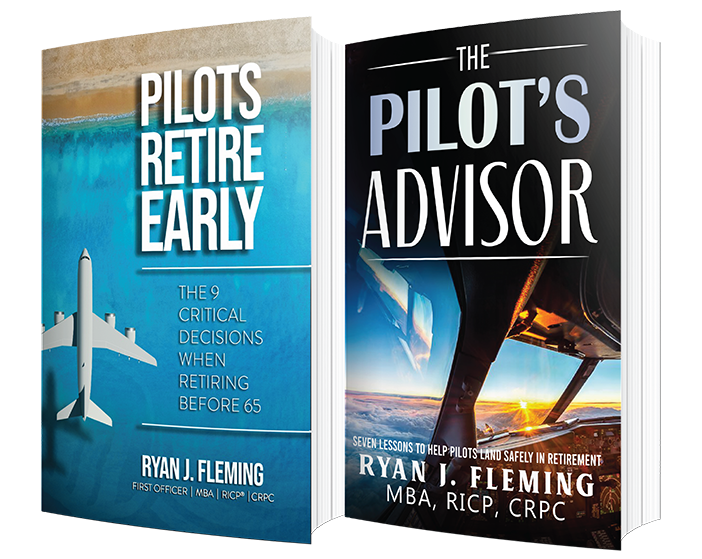
Attention, aviators! When you’ve spent years in the cockpit managing the complexities of flight, isn’t it time you navigated your retirement with the same precision? Introducing Retirepilots.com. Right at your touchdown zone on our homepage, there’s a beacon flashing. Get my free toolkit. Click that, and you’ll be cleared for a direct route to Ryan’s Retirement Toolkit, tailor-made for pilots like you. Inside, you’ll find two of his important works: The Pilots Advisor and Pilots Retire Early. Between these two books, you can decipher the nine critical decisions when retiring before 65, and discover the seven lessons to help pilots land safely in retirement. But that’s not all. This toolkit is packed with altitude high value, including extras to get your retirement plans off the runway and light the afterburners on your 401k. Vector on over to retirepilots.com to grab your toolkit and let’s embark on this journey together. Yeah, but it’s so difficult when you’re in the middle, especially if you’re in a phase of life where you’re making a lot of changes or the ups and downs of the market might affect you more than normal. I’m thinking about people who are raising my hand here, right in the process of buying and selling a house. Well, now I’m really in tune to how fast houses are going off the market, what interest rates are doing, what the prices are, what happens if I sell and then the prices drop over here, and what you know. Now you’re in tune, and now your emotions start taking over control. Where if it had been six months ago, I’d be like, ah, whatever, I don’t really care. But that goes for people who are approaching retirement, right? Like a pilot who’s getting closer to retirement. They may not have cared what the market did for 2030, years, but now that they’re within a year or two of retirement, uh oh, I really care about this now, and I’m very emotionally invested in what happens. And to me, that leads to usually bad decisions, right? When we let our emotions start ramping up so much, when we go through those phases, do you find people make wise decisions when their emotions get stoked like that? Are they usually making poor? Well,
Ryan Fleming 12:54
absolutely not. I talk about it all the time, and the good thing is we say things on the show over and over again, and I actually have my clients repeat those back to me now, and they go, “See, I listen, I listen. And one of those that we talk about all the time is not making short-term emotional decisions. And unfortunately, if you dig into behavioral finance, people are way too emotionally attached to their assets, to their house, to their money to make prudent decisions, prudent, you know, unemotional decisions, and and it gets especially worse when you have times like this, and it makes me think that it might be a good time to get Chris Zarnick, you know, our mortgage guy, on here to talk about rates and what he’s seeing. I just saw a headline that mortgage applications is at a 20 some year low. I think it was like 1995. So do the math on that. Actually, that’s what 31 years.
Walter Storholt 13:47
Yeah.
Ryan Fleming 13:48
So that yeah 2020
Walter Storholt 13:50
ish would take us toward the crash. So even before that’s kind of kind of wild.
Ryan Fleming 13:54
And and you in a market of maybe selling a house in Colorado and then moving back to the East Coast. It’s finally really becoming a buyer’s market. Like even the Colorado market is starting to soften quite a bit, and so I do see that and have those conversations with my clients right now. And and yeah, there’s a lot going on.
Walter Storholt 14:13
Hey, if you’re interested in a relatively brand new house with a view of the mountains on the Front Range of Colorado in the northern, you know, in the northern area, get in touch with us on the podcast. I’ve got a great house to show you.
Ryan Fleming 14:23
What’s the actual city that you live in?
Walter Storholt 14:26
It’s technically Johnstown, but we’re we’re basically right on the edge of Loveland, so Fort Collins, Loveland, Northern Colorado area.
Ryan Fleming 14:34
Yeah, seen a lot of we have a lot of listeners that were academy grads, so they’re all in like they’ll probably know about where in between in between Denver and the Springs is where a lot of those people live. But
Walter Storholt 14:45
yeah, yeah. What else are we going to talk
Ryan Fleming 14:46
about? Since we haven’t talked about anything that we said we’re going to talk about,
Walter Storholt 14:49
we can dive into whatever you want, man. This is just one of those free flowing episodes, but it’s packed full of good good little life lessons. So yeah, I love I
Ryan Fleming 14:57
love it. I actually I actually enjoy when we. Do some podcasts like this where we just let it flow and talk about what’s going on in the world. And oh, so I sent this out in an email to my clients. Two things have happened this week. Number one, of course, on a Friday, Schwab has reporting problems where like it makes people’s accounts look like they lost 40% And oh, guess what? Friday was a big up day, so everybody wants to go to their accounts,
Walter Storholt 15:21
oh man,
Ryan Fleming 15:21
check out their accounts and be like, “Hey, how do we do today? And it shows they lost like 40% So this is the kind of stuff that I get to deal with. Yeah, and I’ve logged in
Walter Storholt 15:29
before, and it’s shown all zeros. Like clearly, it’s just not populating something. But to show an actual drop like that would be very scary. Yeah,
Ryan Fleming 15:37
yeah. So of course, you know, and there’s different reporting stuff going on where I can see that that’s clearly not the case. I know what our portfolios did. We did, you know, did very well at capturing those gains for the last couple days. But of course, Schwab all through the weekend had this problem. So you want to talk about emotions? Yeah, I started getting texts from people. I’m like, all right, what’s going on? You know, reached out to Schwab, found out that there was definitely a problem going on, which has taken days for them to fix. So dealing with that, and then I sent out another email that was talking about, and it was an article. And actually, I’ll send it to you as well, so we can attach it to the show notes. It’s an article on, of course, everybody’s tapping and using, you know, whether it’s Chat GPT, Clot, whatever. They’re using that to to research, find out information, and it’s a new study on looking at that with financial planning and how it’s going to help you invest. And it has to where like 56 or 59% of all the calculations that are done were wrong, and how you got to be very very careful, especially using AI with stuff that is going to affect your life decisions, so it turned into a whole debate at this financial advisor conference amongst the different generations, different advisors, and what it’s going to look like before. So we’ll attach that article because I think it’s like anything else. Take it with a grain of salt. Yeah, it really reminds me of I don’t know was it 10 years ago when we started having all these robo advisors like oh these these these robo advisors very early
Walter Storholt 17:10
AI feel to it yeah
Ryan Fleming 17:12
correct and that was going to take over and then quickly we realized that that’s not a factor in some of the mistakes that were made and not having somebody to to talk to and discuss life events, but you know that’s that’s what we’re in, and it’s it’s a very I would say exciting time and also a very scary time because to seeing what the future is going to hold and what this how it’s going to change our society because we already know it’s going to
Walter Storholt 17:39
yeah I think we’re this is another one of those big moments, like the introduction of the vehicle, like the the introduction of the car, the introduction of the plane, right? The introduction of the internet. This is the next big, massive shift of technology and the way of life that we’re going to have to figure out and adjust to. But none of those developments before have, you know, ended us, and I don’t think that’s going to happen here. It’s going to be another tool, another way of doing things that, you know, the the beauty of the free markets, right, are going to figure out how to do it all. But as usual, the the technology moves faster than the fixes and the guardrails do, so that that gap is always where the nerves are. And okay, we’re going to create some problems here. How can we can how fast can we fix them? And how big of an issue will they be before we can put some guardrails around this thing? But I view it at least right now some great tools. If you’re not over reliant on it, you can use it. It lets me in my job do you know the work of I’ll say like one and a half me’s, because I can be way more efficient with certain tasks on a day-to-day basis. It’s like having an assistant in many cases, so that that’s really nice. I love it because it helps me ask smarter questions about topics I normally wouldn’t know what to ask. I can give it more specifics on my situation. So instead of finding a random Google blog and trying to figure out what applies to my situation to try and learn about a topic, I can give it a little bit more detail and it can tailor questions to me to then ask someone. So I’m sure you’re gonna. I know you run into that probably more often now, where people are coming to you with like more educated questions than typical, and you’re like, okay, they’ve they’ve been very obvious to
Ryan Fleming 19:19
me when it’s something that comes from AI,
Walter Storholt 19:22
yeah, which is great in a way, as long as you still are leaving room for conversation, expertise, and trust on the other side. But but but there’s just so many different ways that you can utilize this new tool in your tool belt. But there’s also a lot of uses for it that we won’t even know exist for a while.
Ryan Fleming 19:40
Yeah, and and there’ll be mistakes made. I don’t, you know. Of course, I, you know, just I use it. I see it a lot more for like organizing thoughts, you know, where I can spit out an email and then I’m like, all right, clean this up a little bit. But when I think about it more from a macro level, and that’s where I think about massive winners and massive losers, and when I. Think about it from you know like massive winners. I start thinking about companies and stocks and those that are going to give us you know this is the next industrial revolution. So there’s going to be sectors that are going to have 2,000% returns out there. It’s going to happen, but there’s going to be a lot of failures too. Companies that just don’t make it if they don’t transition, they don’t adapt. They’re they’re not going to be here tomorrow, and so that’s the way I think about it. Is a little bit more from a macro perspective on on investing and just the world and what it’s going to look like. Because certainly things are going to become more and more efficient.
Walter Storholt 20:35
Yeah, no no doubt about that. So you’ve got to build a financial plan. You’ve got to build your life around that ability to adapt. I think the stick your head in the sand and pretend like it’s not happening method. I think those are the folks that are going to be hurting, you know, years from now. As as painful it is to try and adapt, to try not to be that person. At least in my mind.
Ryan Fleming 20:55
Yeah. Well, you just can’t run from it, and I think that’s the bottom line: is you need to to not try to avoid it. Not try to run run from it, and and see how it can help your life. No different than technology has been for our parents and grandparents. Yeah, those that have you know brought it in and tried to learn it versus those that have just you know shut it off and be like, I can’t can’t deal with this.
Walter Storholt 21:17
And always say please and thank you to your AI chat bots so that they’ll remember that you were nice to them when they take over the world, right?
Ryan Fleming 21:23
I haven’t heard that yet, but I think I might start doing that. I’ll end it with, please put this together respectively or respectfully, Ryan.
Walter Storholt 21:31
I, I’m, I’m one of those people. I like. I know I’m. You know, people talk about water usage with AI, and I’m like, I know this is going to waste a gallon of water, but I can’t leave it hanging after like I finish a chat, I can’t not say thank you or give it give it a pat on the back. Like perfect, you nailed it. Thanks. That’s pretty. I just have to have that closure. It says a
Ryan Fleming 21:54
lot about your character there, Walter. Yeah, or he secretly deep down is a little scared of them taking over the world.
Walter Storholt 21:59
Maybe a little bit of both. Maybe a little bit. All right. Well, good
Ryan Fleming 22:02
episode, man. I enjoy talking about it. We look forward to. I think we’re going to actually record again tomorrow, so we’ll have
Walter Storholt 22:08
yeah
Ryan Fleming 22:09
actually a topic to discuss for next time.
Walter Storholt 22:11
We’ll see if the voice improves a little bit before then. We’ll link to that book that Ryan mentioned in the show notes. Check it out, the Let Them Theory. I’m going to go download it on Audible too and listen to it over the next week or two, and look forward to seeing what that one’s all about. And we’ll also link to that article about AI and financial advice as well. Well, thanks, Ryan. I’ll talk to you tomorrow. Episode probably be a week after this one, but we’ll talk soon.
Ryan Fleming 22:34
All right, we’re going to give you another chance here. I’m trying to get Walter to understand how pilots work and things we say. We say, and so at the end of the show, I’m going to say positive rate.
Walter Storholt 22:43
Gear up.
Ryan Fleming 22:43
All right, we’ll talk to y’all later.
Speaker 1 22:49
This episode is for educational purposes only and is not individualized investment advice. The Pilots Advisor LLC is an SEC registered investment advisor. Registration does not imply a certain level of skill or training. Past performance is not indicative of future results, and investing involves risk, including the possible loss of principal.
Transcribed by https://otter.ai
This podcast episode is for educational and informational purposes only. The opinions expressed are those of the speaker as of the recording date and are subject to change. This content does not constitute personalized investment, tax, or legal advice. Please consult a qualified professional before making financial decisions.