Preview of what we’ll cover today:
📅 Retirement Date: Know what has to line up
✈️ Timing Factors: Weigh pension, savings, and healthcare
🧠 Retirement Mindset: Prepare for life after flying
📝 Income Planning: Build the retirement paycheck
🧾 Spending Needs: Know what retirement actually costs
Subscribe On Your Favorite App:
 YouTube
 Apple Podcasts
 Spotify
 Amazon Music
 iHeartRadio
 TuneIn
More About This Episode:
“When can I retire?” might be the question Ryan gets asked more than any other. Some people are chasing an age. Others are chasing a number. Today, Ryan is breaking down what actually determines the answer. The date on the calendar or the number in the account might feel like the finish line, but neither one tells the whole story. That’s what the planning process is actually for.
Go Deeper Into The Episode:
0:00 – Intro
0:33 – Determining a Retirement Date
1:04 – When Is It “Safe” To Retire?
3:04 – Factors Influencing Retirement Timing
4:52 – The Psychological Transition to Retirement
7:01 – Ryan’s Financial Planning Process
10:13 – Benefits of Working with a Financial Advisor
12:12 – Work with Ryan
Resources:
Retire Pilots – https://retirepilots.com
Get your FREE Retirement Toolkit – https://bit.ly/3ZmZsaX
Pilot Tax – https://pilot-tax.com/
The Pilot’s Advisor Podcast is also on video. Watch & Subscribe on YouTube: https://bit.ly/3EIEBW2
Connect with Pilot-Tax: https://pilot-tax.com/
Episode Transcription:
(Note, this is an automated transcription. Please forgive any errors.)
Walter Storholt 0:00
When can I retire? It may be the most asked retirement planning question of any advisor, and certainly of Ryan, the pilot’s advisor. It’s such a key and important thing to think about, and it gives you that date you can start focusing on and getting excited about, and it kind of gives you that final permission to do it. So we’re going to talk all about picking that retirement date on today’s show, let’s get to it. Back on the Pilots Advisor, Walter Storholt, alongside Ryan Fleming, the Pilots Advisor himself. And Ryan, we’ve got a great episode today. Simple question, right? When can I retire? I’m sure you get asked it almost every single day from new clients, but it’s not always an easy answer, is it?
Ryan Fleming 0:41
No, it’s not, and I think it’s a great question. It’s going to be a good podcast. I don’t think people understand how much money they have to have saved to to actually retire if they don’t have a pension. But we’ll talk about all those things.
Walter Storholt 0:53
Yeah, well, we’re going to look at some of the key questions that you kind of need to dive into if you want to indeed answer this question of when can I retire, and some of the most important parts and elements of that to be thinking about. So obviously, it’s a common question. Sometimes it takes the shape of when is it safe to retire. So in my curiosity, I guess where it’s peaked is in most people that you meet with in your experience, are folks kind of anchored on a certain age, or is it $1 amount they’re shooting for when they’re trying to find that safe moment or time to retire?
Ryan Fleming 1:26
I don’t think pilots are looking for a specific number. I think that when I tell them they have to have a million dollars saved to spit out about 40 or 50 grand a year, when we look at the safe withdrawal rate, I think they’re very surprised by that number, and I also find that there’s pilots that if they don’t want to go all the way to 65 and they want to retire early, those that don’t have permanent health care because of serving in the military find out how much health care costs, and then many of them decide to just continue on to 65 just because they don’t want to pay out of pocket that much prior to Medicare, so those are the things I see. And then, of course, those that didn’t save enough, and they’re they’re hoping that the retirement age for pilots goes from 65 to 67, or they’re already looking for that next job. So, I think a lot of it is dictated by how good of a saver you were early on, and also health concerns. You know, if you’re nice and healthy, I think most most pilots either they want to fly all the way to the end and finish up strong, or hey, I’m fully healthy and young, and I want to retire early so I can go live life and avoid a lot of the health concerns that that pilots discuss by flying to 65, and I don’t know if you’ve heard all those, Walter, but like, there’s a lot of people that that talk about those that fly to 65 don’t have the same same longevity as those retire a little bit earlier. So
Walter Storholt 2:53
yeah, I mean, it makes sense the the demand physically, mentally, and you know emotionally, family, all the those things go into those extra years of service in such a demanding job. It makes total sense. I’m guessing most people come in. Correct me if I’m wrong. I guess most people come in with some sort of expectation of when they’re going to be able to retire. They’ve got to have at least some little feel of. Well, I’m kind of thinking maybe next year in a couple of years or when that might be. Is that usually a correct assumption, or is there something, some factors that usually move that date forward or backward more than most, like the healthcare one that you were talking about?
Ryan Fleming 3:27
Well, I think the healthcare dictates a lot of that, like we discussed. Yeah, I find that planning for a FedEx or UPS pilot, or even a military pilot, somebody that has a pension, is completely different than planning for one like a Delta or United pilot where there’s no longer a pension, so you’re just looking at what you have saved and Social Security to spit out that income. There’s there’s a little bit of unknowns with the market and sequence of returns risk without having that baseline, and so I think that pilots are a little bit more hesitant on when to pull the trigger, then you know, which which makes sense. I get it. I mean, not having that baseline income definitely changes the planning for sure. So so those are some of the things I see, and also the career field of aviation is a little bit different because you really can not. There is not many jobs where you can. I don’t for lack of a better term pull the throttles back and and fly you know do like half a schedule I think it’s becoming a little bit more common in the workplace where if you have a job you can maybe work you know three days a week or or pull it back a little bit and lose your benefits but but the aviation career field with these legacy carriers I mean you can keep your health care you can you can keep all your insurance and just not fly a full schedule and I think that flexibility allows pilots to practice retirement for the last few years if they want to.
Walter Storholt 4:51
Yeah, I mean that transition time has to be so valuable and helpful to be able to. Hey, I don’t want to go 100 anymore, but I don’t want to go zero anymore. And that used to be the choice everybody kind of had to face in the world, and it’s been nice to see it adapt a little bit to be a little bit more friendly to have a middle ground in maybe your last couple of years of working. And boy, that gives you a lot of planning flexibility, right? Like if it’s somebody who’s wanting to pull those throttles back, and but they’ve got the healthcare issue. Well, maybe that’s a middle ground solution for somebody. It’s not always okay. You just have to work full time for three or four more years than you expected. You know, enjoy, and you suffer through those final few years. There’s a way to make this enjoyable and still work mathematically too.
Ryan Fleming 5:33
Well, I think we talk a lot about how you know some people don’t retire very well. You know, they have trouble having a reason to get up in the morning, or having purpose, and and how that can affect things. So I also think the practicing retirement is healthy. Just tiptoe back into being home more with your spouse and seeing how that goes. Spending spending more time at home and and you know seeing if you’re ready to retire because I do know a lot of guys that have retired. They love the first couple months and talk about how amazing it is, and then three months later they’re like, “Man, I wish I could go fly a trip right now.” Like I wish now I’m ready to go back on the road because it’s hard to turn it off. It’s hard to turn it off when you’ve been in the grind for 20, 3040 years, and that’s just what you did, right? When you when it’s your norm. It’s your norm, and you’re used to that. And once that goes away, after the quote-unquote honeymoon is over, you know the honeymoon of retirement’s over. And then it’s like ah man, I wish I could go, you know, fly a trip here and there. So and and and maybe the spouse feels the same way. Like you know you you need to get out of here. The joke that we always talk about with retirement with airline pilots, okay. And I always joke and say she doesn’t like you that much, you know. So ease into that retirement picture, or you get twice the Mike for half the pay, you know, twice the Walter for half the pay. So
Walter Storholt 7:00
love it. Well, this is also one of those topics that’s a nice blend of the sort of like softer side of planning, right? Where you’re just talking about lifestyle and sort of desire and you know spousal relationships, things like that, versus the actual math and the planning part. But let’s finish with that planning part and with the harder part of all of this, the harder science of it, if you will, your process. You’re the pilot’s advisor, so we’ve been talking very specifically, obviously, on this show about pilots for many years and what makes their industry unique. How does your process help somebody really zero in and figure out this date, and especially for pilots specifically?
Ryan Fleming 7:38
Well, thankfully, the airline industry is a very in demand job and they get compensated well. So in most cases, when we start looking at a retirement income plan and we start looking at what the benefits are going to be with Social Security or any other pensions and and and building it out, what their safe income level could be, it looks pretty good. I mean, there’s not a lot of clients that I’ve had that when we start transitioning into retirement, where it’s like, “Ooh, this is not good at all,” and and things aren’t good. You might have to go get a second job. I don’t think that that happens very often. But building out that retirement income plan, you start looking at when you’re going to retire. You start looking at healthcare needs. You’re going to start looking at Social Security, when to when to start drawing that? All those factor in to give you what kind of income you could be looking at. And let’s look at is your house paid off? Cars? You know what’s what’s that budget? And nobody likes to talk about that that monthly budget. But when you are on a fixed income, that those things have to be discussed. And and no different than anything else, we like to kick the can down the street on that. The reality of retirement is normally the first time where people start really looking at their expenses and going, maybe we don’t need that. I don’t want to say gym membership or whatever, but you know, maybe we don’t need that extra Paramount Plus or HBO streaming servers. You know, they get a little bit. It gets real.
Walter Storholt 9:07
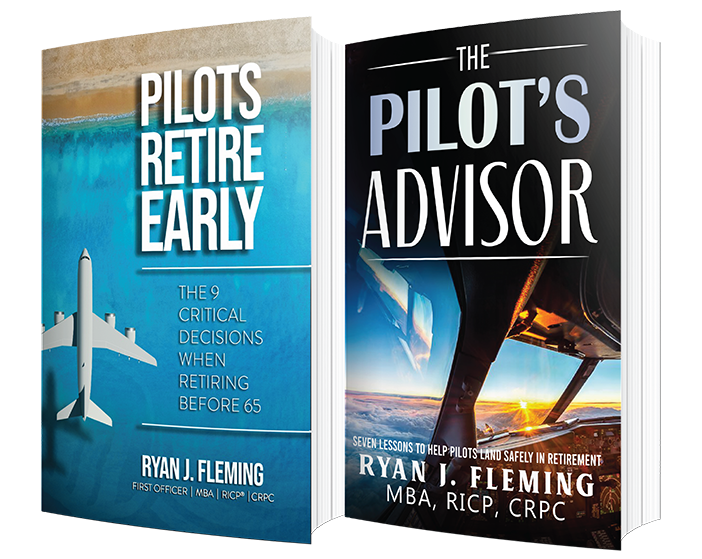
Attention aviators! When you’ve spent years in the cockpit managing the complexities of flight, isn’t it time you navigated your retirement with the same precision? Introducing retirepilots.com, right at your touchdown zone on our homepage, there’s a beacon flashing “Get My Free Toolkit.” Click that, and you’ll be cleared for a direct route to Ryan’s Retirement Toolkit, tailor-made for pilots like you. Inside, you’ll find two of his important works: The Pilots Advisor and Pilots Retire Early. Between these two books, you can decipher the nine critical decisions when retiring before 65, and discover the seven lessons to help pilots land safely in retirement. But that’s not all. This toolkit is packed with altitude high value, including extras to get your retirement plans off the runway and light. The afterburners on your 401k. Vector on over to retirepilots.com to grab your toolkit and let’s embark on this journey together. Great points, and I think you draw a really neat illustration there. Where normal financial planning, a lot of clients come in, and it’s a question of can I retire, and that’s the nice thing here when you work with pilots. Really, this is the more central question. It’s like, all right, I probably can retire, but when does it make the most sense? When’s it most efficient? When can I maximize what I’m getting? When can I have these kind of goals and desires I have match up with those? So it’s just more of you know looking for those advantages rather than just the permission to retire.
Ryan Fleming 10:41
And and things I’ll say that matter, right? We we look at studies and we know that those individuals that work with a financial advisor are in a much better position when it comes to retirement. I get to see that all the time. If I have a client that’s been a client of mine for 10 years and they’re going into retirement, they’re in a much much better spot than somebody that never worked with an advisor. They call me when they’re 62 or 63, or God forbid. I mean, I get a lot of calls at 64 and a half. You know, like, hey, I’m about to retire. I don’t know anything. I don’t know what I’m doing. So, number one, working with an advisor in almost every case, that person’s more prepared for retirement. And you’re right; the issues aren’t can I retire. It’s more like we have a tax problem versus a money problem. How are we going to look at Roth conversions? Are we going to defer our pension for a year? Which, by the way, I get that a lot with FedEx pilots, and I don’t think it makes any sense. So if you if you’re thinking about that and you do think it makes sense, let’s put some math to it and make some assumptions. But but yeah, it’s a lot more of those questions, like you’re talking about, that are more lifestyle and legacy planning versus can I retire?
Walter Storholt 11:47
Yeah, one bad investment, one bad withdrawal or loan choice from a plan, you know, one just big mistake can you know put you way behind where an advisor would have helped you prevent you from making those mistakes, having that relationship in place, so it pays for itself just in that way. Let alone then the tax advantages, the efficiency advantages, and everything else that you can underline. So, take a look at your financial situation right now. If you’re thinking about retirement, that date’s maybe starting to creep up a little bit, or you’re starting to ponder what date or age that might happen in. You’re thinking about picking that retirement date. These are the kinds of questions need to be thinking about. But boy, maybe the biggest one is: Do I need to work with an advisor, and what will that advantage look like, and how will that help me? If you want to explore exactly what that looks like, it’s very easy to do it. We’ve got a link in the description of today’s show. If you’re a longtime listener, you know the drill. But if you’re new to the show, there’s a link to a toolkit that’s going to allow you to get a physical box with Ryan’s books, lots of resources, and more information specifically built for pilots to help you understand the key things about planning for retirement. The most important part is that qualifies you for a free portfolio analysis when you get that toolkit, where you’re going to meet one-on-one with Ryan, talk about the specifics of your plan, and start to discover where are the gaps, where are the areas of improvement, and how ready you truly are for retirement. So, if you’re looking for a next step, download or click the link in the description of today’s show to get that toolkit and schedule your time to meet with Ryan. That is the best path forward. Ryan, thanks for taking a look at this topic and conversation with us today, and we’ll talk to you soon.
Ryan Fleming 13:27
As always, Walter, I appreciate it. Have a wonderful day out there in Colorado. All you loyal listeners out there, fly safe.
Walter Storholt 13:34
Yeah. What about gear up?
Ryan Fleming 13:37
It’s called all right. Positive rate.
Walter Storholt 13:39
Gear up. I was ready for it. We’ll talk to you next
Ryan Fleming 13:42
time, and I can tell you were ready for it, and that’s exactly why I didn’t do it. I wanted to leave you. I wanted to leave you hanging because you were sitting there going, “Here we go!” I remember. Can’t
Walter Storholt 13:49
leave me hanging. I finally had it. All right, we’ll
Ryan Fleming 13:52
try it again. Positive rate.
Walter Storholt 13:54
Gear up. We’ll see everybody next. Missed a
Ryan Fleming 13:55
pro tip. See you.
Speaker 1 14:01
This episode is for educational purposes only and is not individualized investment advice. The Pilots Advisor LLC is an SEC registered investment advisor. Registration does not imply a certain level of skill or training. Past performance is not indicative of future results, and investing involves risk, including the possible loss of principal.
Transcribed by https://otter.ai
This podcast episode is for educational and informational purposes only. The opinions expressed are those of the speaker as of the recording date and are subject to change. This content does not constitute personalized investment, tax, or legal advice. Please consult a qualified professional before making financial decisions.