Preview:
Today we’re talking about Type A personalities. If you’re driven, competitive, and goal-oriented then you’re part of the club that often struggles during difficult markets. When things get tough, your instinct is to work harder, push more, and fix the problem. But in investing, that instinct can sometimes backfire.
Subscribe On Your Favorite App:
 YouTube
 Apple Podcasts
 Spotify
 Amazon Music
 iHeartRadio
 TuneIn
More About This Episode:
In this episode, Ryan explains why Type A pilots, used to control, precision, and quick decisions, can be their own worst enemies when markets get volatile.
You’ll learn why inaction is sometimes the best strategy, how to know if your current risk level is actually aligned with your goals, and what separates pilots who thrive in tough markets from those who panic. Ryan walks through key questions that every investor should ask when markets turn south, and he breaks down what it means to build a resilient plan you can stick to, regardless of turbulence. If you’re a high-achieving aviator, this episode will help you fly smarter through financial storms.
Here’s what we cover in this episode:
🧠 When doing less is actually doing more
🧮 Risk vs. reward: are you overcorrecting?
✈️ What pilots get wrong about control and timing
🧍♂️ Why solo investors may need a wingman
📉 Turn bear markets into long-term opportunity
0:00 – Intro
0:51 – What is a “Type A” Personality
2:55 – 1: Are You Taking the Right Kind of Risk?
4:34 – 2: What Types of Risk Are You Taking?
8:48 – 3: If Bear Market Ends Tomorrow, Will I Benefit?
10:14 – 4: If Bear Market Continues, Is This A Home Run For Me?
12:28 – 5: Am I Talking To The Right People?
Resources:
Retire Pilots – https://retirepilots.com
Get your FREE Retirement Toolkit – https://bit.ly/3ZmZsaX
Pilot Tax – https://pilot-tax.com/
The Pilot’s Advisor Podcast is also on video. Watch & Subscribe on YouTube: https://bit.ly/3EIEBW2
Connect with Pilot-Tax: https://pilot-tax.com/
Episode Transcription:
(Note, this is an automated transcription. Please forgive any errors.)
Walter Storholt
Today we’re going to be talking about something that I think really matches up with pilots out there. Are we talking about type A personalities and why doing less might be your best move when it comes to financial and retirement planning if you’re a type A personality, a pilot Today’s episode is perfect for you. Back on the pilots advisor. I’m Walter Storholt alongside Ryan Fleming, thanks for joining us on the podcast today as we talk a little bit about type A personalities and pilots. You know a few of those? Ryan, yeah,
Ryan Fleming
quite a few. I think this is a great topic, because historically, pilots are very, very type A lot of them are former military aviators. So this is a perfect conversation to talk about the people that I deal with in in pilots, for sure. Yeah,
Walter Storholt
all right. Well, let’s break it down. First of all, what is type A? So if you don’t know the whole type A, type B personality thing, let’s see if this sounds like you type A personalities are known for being ambitious, organized, competitive and sometimes impatient. They like to be in control and solve problems quickly, pretty much, other than the impatient part, all problem are all, you know, qualities that seem to resonate as a for a good pilot, even the impatience I would think Ryan can actually be kind of a good thing for a pilot, right? Like, hey, we’re trying to stay on time. Like, let’s get things going, you know, get that paperwork over to me, get that check done. Let’s move the ball forward, right? Well,
Ryan Fleming
I think all those are great qualities for many different jobs, whether it’s being a pilot, you know, there’s probably a vast amount of career fields that works great with unfortunately, when it comes to managing money. Pilots tend to be their own worst enemy. I see those that are do it yourself, or that are constantly studying and looking at this and and buying and selling stocks they if you look at their portfolio, compared to those that just stayed the course and were hands off and didn’t touch anything, in many cases, that type A personality hurt himself more than they helped themselves. And I see it all the time. It’s
Walter Storholt
interesting. You see the type A personality sometimes get in trouble when markets are unpredictable. Now they’re always unpredictable, but when they’re especially unpredictable or especially volatile, like we’ve seen in 2025 sometimes those Type A’s take a hit for sure. If
Ryan Fleming
you’re driven, competitive, goal oriented, and you’re part of that club that tends to struggle during difficult markets, you you want to do and make emotional decisions when things get tough, your instincts to work harder, push more, or you got to do something to fix the problem. Yeah. But in investing, that instinct backfires no different than, hey, we had this big market pullback. I have to do something. And it’s like, no, no. You know, that’s at the time when you shouldn’t, you know, you don’t want to cut your you know, your nose off despite your face. Yeah, that’s the time when you don’t want to make that mistake.
Walter Storholt
Great points. So how can we help those who are Type A personalities? Well, it was interesting timing when we kind of had this idea to talk about Type A’s out there, a CNBC commentator, Josh Brown, he developed a list of questions that he says should help you through difficult markets. And we thought this would be perfect to pair for Type A’s out there. The first on Josh’s list, he said, Am I taking the right types of risk? And how do I know? A central question you think for Type A’s? Well,
Ryan Fleming
I think it is, I mean, but you know, this is why working with a financial professional is going to benefit you for a multitude of reasons. You know, we’ve already built out a portfolio for your risk tolerance, and so it’s able to handle the ups and downs of the market. I mean, we know that they’re going to happen. But if you’re a type A personality, and you have stuff happen in the market, you know, then you will suddenly want to change your risk profile, you know, at the worst possible time. So, and this is where, I mean, I’ve said it a million times to you, Walter, you know, pilots want all of the upside and none of the downside, yeah. And, and type A personalities, yeah, that’d be a good question to ask. And then, you know, how would you know if you’re taking the right types of risk? Well, that should have been determined before. You know, our feet were put to the fire. It’s kind of like the best way I can explain this, which would be good is, when you fly airplanes, we talk about do doing all your flight planning on the ground, okay? And having a plan and having it all set up, because once you’re actually flying the airplane, you know, and a bunch of stuffs happening, you want to have that, that deck of cards already stacked, where you know the answers to most of the problems, you know, when things get a little bit too tough,
Walter Storholt
yeah. And Josh breaks it down. Because his second question, and I’m curious about this, he says, It sounds like the same question, but it’s, am I taking the right amount of risk? So first he focuses on types of risk, and then amounts of risk help me understand the difference between the two. Because I feel like I’m saying the same sentence
Ryan Fleming
over I think that types of risk would be like, hey, you know, are you making prudent decisions on, on, you know, what companies or how you’re investing your money? I. Would, I wouldn’t want to, you know, we’re not buying penny stocks. We’re not trying to, you know, doing things that would be imprudent, or speculating and gambling with people’s money, okay, okay. And then, you know, the right amount of risk, I think, is a little bit more of how aggressive you are. Say, like, how much you know stock versus bond, like, what’s your actual asset allocation? Um, and I can tell you right now, I think one of the biggest mistakes that people make with investing is not being aggressive enough, because they don’t understand how much money they truly need in retirement. I mean, I even, even the pilots that have saved all this money, I don’t think people have a any clue what that number is or how much they actually have to save to replace the income that they’re earning right now. That’s
Walter Storholt
a really good point. It is, it is, I also find it interesting. You had that comment about PILOTs always wanting, you know, all of the upside with none of the downside. It finally clicked as to why that makes so much sense for pilots. Because you work in an industry where there’s no other option. You need all of the upside and none of the downside. It’s like, when we went rock climbing this past year, and our instructor that was guiding us up the wall, he was like, this is a no fall zone. He’s like, I was like, what happens if we fall? And he’s like, No, it’s it’s a no fall zone. He’s like, you’re strapped in, but if you’re before that next clip in and you fall, you’re gonna get hurt, like, badly. So this is a no fall zone. He’s like, you probably won’t die, but you’re gonna get hurt pretty bad, so just don’t fall. It’s a no fall zone, and that, like, rewires your brain a little bit to be like, okay, yeah, it’s not an option. And I feel like pilots are like that in your line of work, it’s, I’m not making mistakes. It’s not an option. But in financial planning, you kind of get that that’s aligned a little bit differently, because every time the market goes down, it might feel like a mistake, but it’s a feature, not a bug, really.
Ryan Fleming
Yeah? And, you know, flying is a zero sum game, like you’re talking about, and investing, you have to take on more risk to get that, that increase in return. Yeah. I mean, that’s just a part of the game. And so people have the tendency when things are really, really good, like, Hey, why? Why didn’t I make as much money as that person over there? Well, you know, maybe you’re invested at a different risk tolerance. Maybe you naturally need to be more conservative. But, you know, they want that extra return that they’re not getting when things are good, yeah, but if they’re when things were bad, if they were down, that much more now they’re questioning, hey, what am I doing? Why was I doing this? You know, is it this? So it’s, I think it’s only human nature to to question things or react differently, because we don’t like that pain, that pains. We don’t like that like we like feeling good. And so, you know, that’s, human nature.
Walter Storholt
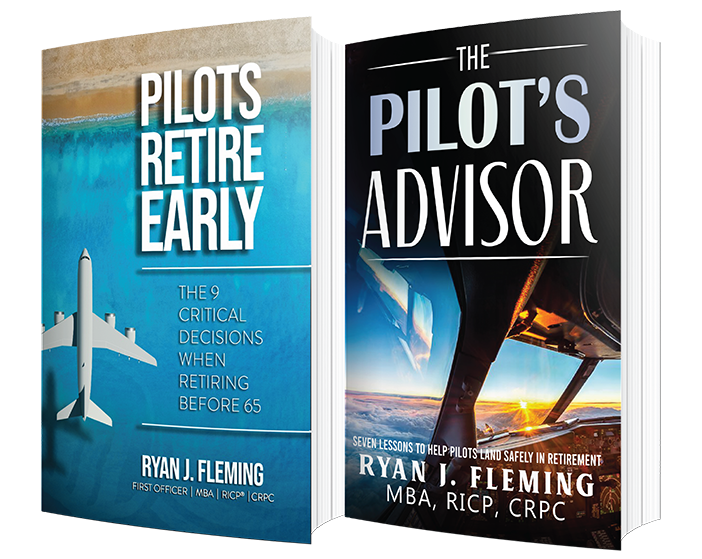
Attention. Aviators, when you’ve spent years in the cockpit managing the complexities of flight, isn’t it time you navigated your retirement with the same precision? Introducing retirepilots.com right at your touchdown zone on our homepage, there’s a beacon flashing. Get my free toolkit. Click that, and you’ll be cleared for a direct route to Ryan’s retirement toolkit, tailor made for pilots like you. Inside, you’ll find two of his important works, the pilot’s advisor and pilots retire early. Between these two books, you can decipher the nine critical decisions when retiring before 65 and discover the seven lessons to help pilots land safely in retirement. But that’s not all. This toolkit is packed with altitude high value, including extras to get your retirement plans off the runway and light the afterburners on your 401k vector on over to retirepilots.com to grab your toolkit, and let’s embark on this journey together. Well, speaking of pain, we’re talking about, you know, down markets, or volatile markets, or maybe we just describe them as, you know, difficult markets, if the bear market were to end tomorrow, this is another question, Josh brown proposes that Type A’s, or at least we’re applying it to Type A’s. Ask themselves, will I be positioned to benefit? What do you think of that question? How does one go about figuring that out?
Ryan Fleming
Well, I look at this. I look at a bear market as opportunity. I know the facts are, we make most of our money in a down market. We just don’t realize it. But are you able to reposition and take advantage of all the deals out there, and then maybe even leverage your way out to get ahead and take the opportunity that was presented to us? And if you don’t know how to position yourself, that’s probably where you need a financial professional once again. And how long is this bear market going to going to last? And I think those are all different factors. Because, like, right now, I know this market is going to turn around, but I also don’t want to turn around right now, because I want to buy more into it. Like, I’m like, hey, maybe if they can get a couple more paychecks, if I can buy more into the market, yeah, because I know it’s going to benefit, you know, the bigger picture later on. But of course, I want this market to turn around. I want to make, you know. Big, big gains for my clients, but this is just the environment that happens, and you just got to make sure you make, once again, unemotional decisions for the long term and not emotional decisions for the short term. The next
Walter Storholt
question seems like the most important one to me, because it really unveiled, like the short term volatility is one thing when we talk about this next question, it really should reveal how strong your plan is, how well it’s suited for your goals, for your station in life. Can all be unlocked, at least through my eyes, with this next question, and that is, if the bear market continues all year, is it a knockout punch for my portfolio? And I can see that being the case for somebody who is maybe planning to retire, let’s say January of 2026 and if they’re not properly planning a bear market the rest of the years, devastating
Ryan Fleming
it is. And this is, this is two totally separate questions, because I look at this and go, are you retired yet? And if the answer is, no, a bear market for a whole year, whether they realize it or not, is, is great for them, because you’d continuously be buying more while it’s down, buying more while it’s down, and then as the market comes back, it’s going to grow into that much more. Where it becomes a problem is, if you’re in retirement, a pullback in the market is not a big deal for somebody that’s retired, taking income if it only lasts for a month or two. I mean, if you think about the 4% safe withdrawal rate we talked about this once before, one or two monthly payments off of that, what like maybe point three, 3% of your portfolio at that point in time. It’s not a big deal, but when we looked at sustained pullbacks in the market one or two years now, we’re talking about something that’s called sequence of returns risk, and this could very much blow up your whole portfolio. And so when we’re planning for retirement, we want to have a plan for that already. Okay, so, and just what I like to call Safe Money, if the markets pull back for that whole year or two years, where’s the money that we’re going to pull from already, whether it’s in a portfolio or it’s sitting over in cash, or we have it sitting in an insurance policy, where we actually make the decision, hey, I’m not going to liquidate anything out of my portfolio during This down market, I’m going to reach over here with that safe money, because I plan for this, and I have an out. And I think when I think about aviation and pilots, this should be a no brainer for most people, and unfortunately, a lot of people don’t plan for it. I always think, whether I’m driving a car, flying an airplane, what’s my out if this happens? What do I have over here to make sure that I’m still going to be safe? And I think this the exact same thing should go with investing. Yeah,
Walter Storholt
the last question that Josh proposed here points us right back in your direction here, Ryan, it’s a bit of a self serving question, but it is a good one, and it’s to ask yourself your type A personality and you’re trying to navigate through difficult markets. Hey, has anyone else been looking at what I’m doing. Do I have that accountability buddy? Am I talking to the right people? Well, we always
Ryan Fleming
talk about the Air Force of having a wingman. And the funny part is, I don’t think those people are talking to others, and they don’t have somebody backing up their plan in most cases. One of the ones that, you know, I get, all I could tell you, all kinds of investing stories, but one of the ones that I saw most recently, a guy had fallen in love with the stock, and so he decided to take a leverage position with the stock, and he’s lost his you know what? Like bad. I mean, it’s down like 50% but he’s been holding onto it for years and years and years because he doesn’t want to sell it until it comes back. And I’m like, Well, why don’t we just go ahead and accept the loss here, like realizing that we screwed up and we made a bad decision, so we can take what’s left and reallocate it in over a bunch of different stuff, so when all those things come back, you’re in a better position, versus sitting here and just hem hawing over this one stock until it comes back. And then on top of that, you know, when you have a big loss in a portfolio off that one position, you can use that loss to offset other gains. And it just goes to show you, you know, because this guy’s very type, a single seat fighter pilot type, yeah, but he doesn’t even know what he doesn’t know because, you know, like, just doesn’t understand how investing or taxes work. And and I, and I’m like, How long have you been holding this stock? And it was, it was, like, years, because he was refused to sell it, because it had to come back, and I don’t want to accept that loss. And it was a very interesting conversation about that whole piece. Yeah,
Walter Storholt
stories like that are tough, but hey, if you are the kind of person that likes to take charge, that likes to, you know, stay ahead, I think these tough markets do present their challenges for you, for all the reasons that Ryan’s laid out for us on the episode today, but the real edge isn’t trying to react more. It’s not trying to fix the problem today and dive into the nitty and gritty. It’s really getting the right plan and executing it. And often it takes an outside resource to help you set that up, to be your checks and balances, to be that person that can kind of speak truth into your life, a little bit about your financial setup, kind of like that example you just shared with us, Ryan, so if that’s you. Your type A personality. You’re a pilot. You’re trying to figure out the best path forward in your financial life, trying to figure out how to get through these down markets or these difficult markets, whether they be on the up or the downside, and figuring out if you are positioned properly. Don’t hesitate to reach out to Ryan and have a conversation about your plan. The best way to get in touch is to download, actually, or request, I should say, for free the retirement toolkit that Ryan has specifically built for pilots. It’s a physical box that’s got Ryan’s books in it, special reports and other things that pilots need to know about planning for their financial futures and retirement. You can order that, and along with that, you’ll get a free portfolio analysis. So check that out. We’ve got it linked in the description of today’s show, and you can order that for free and be on your way to a more successful financial future. And we love our Type A’s on this show. Ryan, right? But sometimes we need a little bit
Ryan Fleming
of help, yeah, and in many cases, less is more, and it’s been proven that we’re too emotionally attached to our money to be prudent at investing it, and that’s why you probably need the help of a financial professional. Yep,
Walter Storholt
good lessons on today’s show. Ryan, thanks so much. We’ll talk to you soon.
Ryan Fleming
All right, Walter, take care. We’ll see you next time.
Speaker 1
Information is for illustrative purposes only and does not constitute tax investment or legal advice. Always consult with a qualified investment legal or tax professional before taking any action.
This podcast episode is for educational and informational purposes only. The opinions expressed are those of the speaker as of the recording date and are subject to change. This content does not constitute personalized investment, tax, or legal advice. Please consult a qualified professional before making financial decisions.