Preview:
Target-date funds just passed $4 trillion in assets. They’re now the default investment in many 401(k)s, and millions of Americans are using them without really understanding how they work. So, are they a smart choice… or just the easiest one? In this episode, Ryan breaks down why target-date funds, despite their popularity, might not be the best fit for pilots navigating toward retirement.
Subscribe On Your Favorite App:
 YouTube
 Apple Podcasts
 Spotify
 Amazon Music
 iHeartRadio
 TuneIn
More About This Episode:
While these “set it and forget it” funds offer convenience and auto-adjust over time, Ryan explains the major blind spots: a lack of customization, suboptimal returns, and limited risk management. Defaulting to a cookie-cutter strategy can often hurt more than help, especially when you have specific income goals, tax needs, or early retirement plans. Ryan lays out the common mistakes he sees in pilot portfolios, like overlapping allocations and misunderstood glide paths, and how to correct them. Plus, you’ll hear what one pilot’s overly conservative fund choices cost him.
Here’s what we cover in this episode:
🛫 Why target-date funds are now the default, but not always the best
🧾 What’s inside a target-date fund (and what’s missing)
🚨 The major risks of a “one-size-fits-all” retirement plan
💸 How layering target-date funds leads to lack of diversification
🔍 Why pilots need a customized investment and distribution strategy
0:00 – Intro
0:18 – Target-Date Funds: The $4 Trillion Question
1:40 – What Is a Target-Date Fund?
2:25 – What’s In It & Why So Popular?
3:50 – Autopilot Investing: Good or Bad Idea?
7:31 – Real Story: Overlapping Funds
9:15 – Final Thoughts
Resources:
Retire Pilots – https://retirepilots.com
Get your FREE Retirement Toolkit – https://bit.ly/3ZmZsaX
Pilot Tax – https://pilot-tax.com/
The Pilot’s Advisor Podcast is also on video. Watch & Subscribe on YouTube: https://bit.ly/3EIEBW2
Connect with Pilot-Tax: https://pilot-tax.com/
Episode Transcription:
(Note, this is an automated transcription. Please forgive any errors.)
Ryan Fleming 0:00
If you have your 401, K invested in a target date fund, you’re going to want to reach out to me as soon as possible.
Walter Storholt 0:11
Welcome to another episode of the pilots advisor. And I’m Walter Storholt alongside the pilots advisor himself, Ryan Fleming and Ryan, it’s gonna be a good show today as we talk about target date funds. And here’s kind of the big news, if you will, they just passed, and this is a hard number to get your brain around, $4 trillion in assets. So there’s $4 trillion in these target date funds out there, and they’re pretty much the default investment for many, for one case, for Americans, and I’m sure for a lot of pilots out there as well, even if we don’t really understand how they work or what they’re doing for us, but a lot of people assume it’s the default choice. But is it necessarily the smart choice? Is it just the easiest choice we’re going to try and get to the bottom of all of that? So thanks for joining us, as always, Ryan, looking forward to diving in with you, absolutely. And I love the fact that it’s actually the default choice, because a lot of 401 K plans before had it where you’d just be going into cash, and unfortunately, many people had their money sitting in cash for years, which is almost criminal, doing nothing, doing nothing. So I like the fact that a lot of these 401 K providers have made a target date fund based off of your birth date. The default choice, however, is the best choice. Absolutely not. If I see somebody in a target date fund, I want to talk to them right away. Another number that kind of drives this home. This is according to Vanguard eight out of 10. Vanguard 401, K investors hold a target date fund today, so you can see that they’re extremely popular. No wonder there’s $4 trillion in these things. So let’s get to the skinny and break this all down. Ryan, first of all, for those who don’t know, let’s start with the basics. What exactly is a target date fund? A target date fund is something that’s designed based off of when you’re going to retire. So the portfolio is going to automatically go from a more growth oriented portfolio, and as as pilots, I like to say, start it starts to pull the throttles back a little bit as you get closer to that date, and gets a little bit more and more conservative. So it’s all based off of your age. Has nothing to do with your risk tolerance, has nothing to do with your situation.
Ryan Fleming 2:12
That glide path approach makes it desirable for some investors, but it’s really the lazy man’s way of investing in their 401, K, and we’re going to talk about all the problems that involves with doing that today is a target date fund in itself. The word fund, does that mean mutual fund, and what’s in, what is typically in a target date fund? Yeah. So most target date funds are made up of, you know, whether it’s, let’s say it’s a Vanguard target date fund or it’s a fidelity target date fund, ultimately, that investment company is going to have a bunch of their funds in there. They’re normally heavily weighted in US large cap, but it’s going to be a diversified portfolio based on that number. And like I said before, as it gets closer to that target retirement date, it’s going to get more and more conservative. Okay, very so there’s this auto adjusting that happens. Why do you think they’ve become so popular over the years? Is it just because it’s easy? And we Americans, and that’s not unique to Americans, but we like things that are easy. Sadly, I think yes, number one, it’s the default. It’s easy. I call it the lazy man’s way, but it just goes to show me how many people ignore probably the most important thing that’s going on in their lives to get them prepared for retirement, and that’s actually digging into your 401 K and making sure it’s working for you, making sure it’s as efficient as it can be. And with it being the default on a lot of these 401 K plans, I think it’s because a lot of people don’t hire a financial advisor. It gets set up as the default, and then they never even look at it, and have no clue what they’re missing out on as far as growth and how that affects your compounded growth over time. So let’s talk about, you acknowledge some of the benefits Ryan that auto rebalancing, the fact that, hey, it’s better than sitting in cash for many people. So it’s not like it’s some evil invention here, you acknowledge that, hey, this has been a good thing for people. But where do you start to see what’s the catch? Where do you start to see this phase out of being a fit for somebody? Well, I do think it’s a move in the right direction, versus somebody having all their money going into cash. I think it is. It’s better than an individual or pilot out there, stock picking or market timing and doing some of the things that are going to really hurt them by speculating and gambling. I’d much rather have somebody do a target date fund than doing some of those things. But the problem is, it doesn’t understand your situation at all. It’s a one it’s a cookie cutter approach for every single person that’s out there. It doesn’t know your profession. It doesn’t know anything about you. And because of all those things, there’s no customization to it at all. And when I go and look at historical returns, or year by year returns, not only is it a lot, you’re not getting the returns, the market returns, that I would expect you to get, but it makes zero.
Walter Storholt 5:00
Adjustments for what’s going on in the market, a lot of problems throughout. What else do we need to watch out for? Or where do we start exploring alternatives or a better way forward? Because I know this is one of your favorite things, to take one of these off the shelf retirement plans for a pilot and totally change it, totally look at all the areas you can optimize, make more efficient and take to the next level. Yeah, I mean, the things I look at with it, there’s, I mean, there’s a lot of stuff. I kind of, one of the things that’s talked about with target date funds is mediocre returns. And of course, that definitely is a piece and and for me, I don’t care. The only reason we’re here is to outpace inflation and make your money grow so that you can retire comfortably. So after fee returns matter. It’s probably the only thing that matters. So not only do they have a reputation of having mediocre returns, I’m not going to talk about the fee aspect of it, because what really matters is that after fee return, but I think there’s because of the lack of diversification that a lot of these target date funds have, there’s not really good risk management. I’d say it’s sub optimal, and we can go into detail about that. But when you’re not reacting or making movements or reallocating based off of what the market’s doing, you’re taking a passive approach, which is kind of a thing of the past. Our markets have really, really changed, and so if we have a big market downturn, you’re not going to get back on the tracks quick enough to take advantage of what’s going on, and I think that’s a problem
Unknown Speaker 6:26
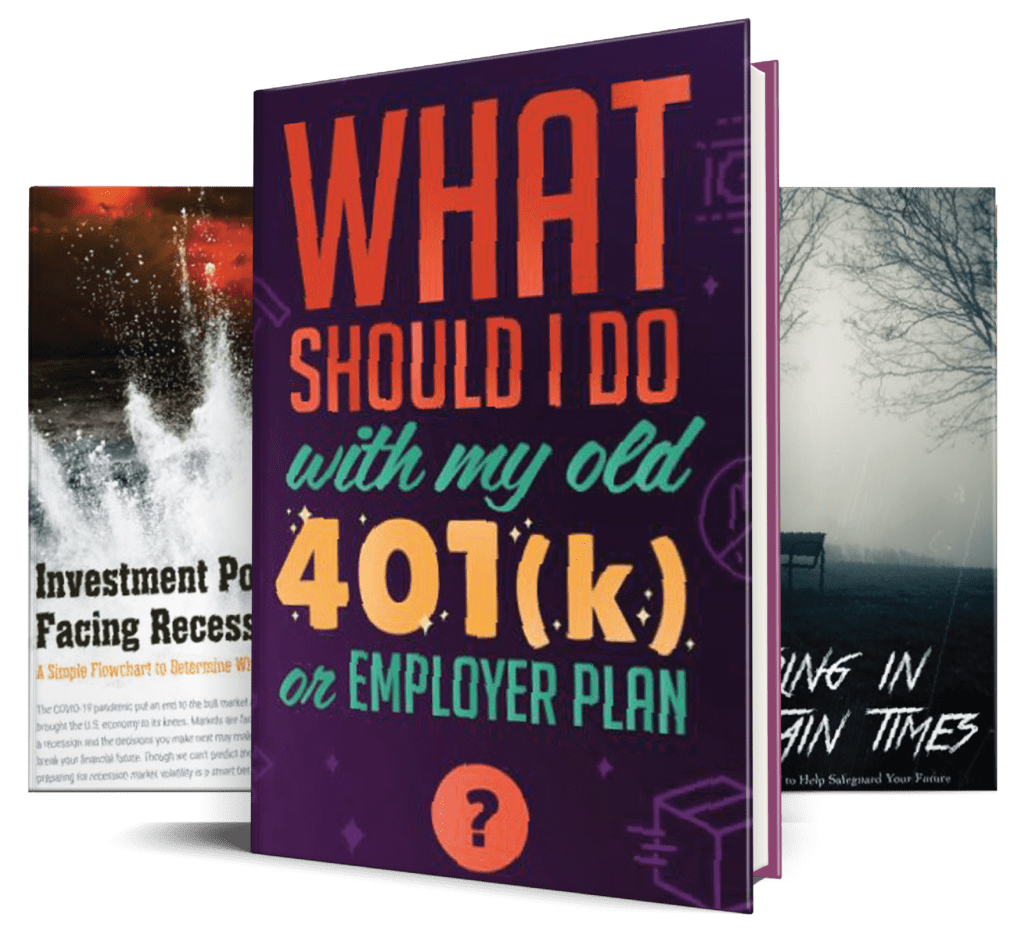
attention aviators, when you’ve spent years in the cockpit managing the complexities of flight, isn’t it time you navigated your retirement with the same Precision? Introducing retirepilots.com right at your touchdown zone on our homepage, there’s a beacon flashing. Get my free toolkit. Click that, and you’ll be cleared for a direct route to Ryan’s retirement toolkit, tailor made for pilots like you. Inside, you’ll find two of his important works, the pilot’s advisor and pilots retire early. Between these two books, you can decipher the nine critical decisions when retiring before 65 and discover the seven lessons to help pilots land safely in retirement. But that’s not all. This toolkit is packed with altitude high value, including extras to get your retirement plans off the runway and light the afterburners on your 401 k vector on over to retirepilots.com to grab your toolkit, and let’s embark on this journey together. Take
Walter Storholt 7:30
us under the hood a little bit when you’re planning with a client, maybe a story of a recent client that came into the office with this kind of issue, a bunch of target date funds and not much else in terms of direction planning for retirement or in their portfolio. What do you then start really looking at, where do you make the tweaks and adjustments make that tangible for us? Yeah, so I think you know, and to talk about recent cases where I’ve seen the target date funds be a portion of someone’s portfolio, I see it a lot with some of the younger investors that have just set that up, and then they’re reaching out and saying, Hey, can you help me out? Because I know this is not the best thing, but more recently, I’ve seen a lot of pilots that are really nearing retirement, and I think one of the biggest problems we have is people aren’t aggressive enough during those years where they still have time to be aggressive. So I recently came across a guy, and I won’t say what airline, Hawaiian Airlines,
Ryan Fleming 8:26
this individual had was way too conservative, and had been way too conservative for a large portion of his career. And so you start seeing whether you’re just behind on retirement assets or another problem that I’ve seen recently is where they’ve decided to put the to allocate their money in target date funds. But then it was like Target Date 2040, target date 2035, where they’re just stacking them on top of each other. And these, these funds are very, very similar, with small tweaks on the mix between stocks and bonds, but all in pretty much the same stuff. So you’re really stacking the same strategy, and you have massive overlap at that point. Not no diversification. They might think they’re diversifying, but they’re they’re really not, because the nuances are pretty small between them. Lots of problems. Well, great. Bullet points all across the board. Ryan, so final thoughts on target date funds, if it’s something a pilot is thinking of putting their 401 k into, or already has a lot of their funds into their next steps, what they should be thinking about? Yeah, if I was to summarize talking about target date funds, I get that it’s a convenient approach to retirement investing. It may not be suitable for all investors because it doesn’t have any of that customization. There’s potential for higher fees, I’d say performance and risk management be the biggest things, because a lot of them have sub optimal performance. Whenever I see a portfolio with the target date fund, I’m like, oh, yeah, because I know that we can do better than what they’re doing. So if you have a target date fund, if you’re 41k
Is allocated in the target date fund. You need to reach out to us at the pilots advisor. We’ll analyze the whole portfolio and show you under the hood how all this looks and how you can do better. All you have to do is go to retirepilots.com that’s retirepilots.com great place to start. You can also get your retirement toolkit there as well that’s packed with more great information, guides, helpful tips to help you get ready for retirement. It’s a great starting point for a lot of people. And along with that, Ryan, you’re always open to then having an analysis with somebody, which I’m assuming, looking at this 401 K and diving into this target date fund conversation would be part of that portfolio review, absolutely. And if you order my free toolkit, you’re going to get books I’ve written, you’re going to get some tax information. You’re going to get some infinite banking concepts. But I think the most valuable portion of that, of ordering the toolkit is you get a free portfolio analysis. And why not? It’s free. Get to see how you’re doing compared to the rest of the industry. Get to see how your returns have been compared to what we’ve done for our clients, and really understand your diversification and some missed opportunities that you might be overlooking. And one of the things I’d also say is I think pilots know they have to save for retirement. They understand that, but they don’t understand the distribution phase at all. And those little details of what you’re doing today in your 401 K, really matter for down the road. So looking at some strategic tax planning, absolutely, reach out to us. Order our toolkit. We’ll set up a zoom call and go through it with you all about the details. Pilots know best how important details are, right? So again, you can get all of that information. Order your toolkit for free. It’s linked in the description of today’s show. You can find it right under the video if you are watching on YouTube, which, by the way, don’t forget to hit Like on this episode by clicking the thumbs up button and subscribe, so you don’t miss future episodes as well. If you’re listening to the audio version, it’s also linked in the description there for you as well. Or it’s just very easily from wherever you are, go to retirepilots.com all the information there for you on the website. Ryan, thanks for the help. We’ll talk with you soon. Always a great time talking to you. Walter, if you guys are out there flying around the world, fly safe.
Unknown Speaker 12:11
Information is for illustrative purposes only and does not constitute tax investment or legal advice. Always consult with a qualified investment legal or tax professional before taking any action you.
This podcast episode is for educational and informational purposes only. The opinions expressed are those of the speaker as of the recording date and are subject to change. This content does not constitute personalized investment, tax, or legal advice. Please consult a qualified professional before making financial decisions.