Preview of what we’ll cover today:
💡 Whole life insurance as a fixed-income alternative
🔑 Infinite banking and the “and asset” concept
📉 Protecting against sequence of returns risk
✈️ Pilots’ unique retirement planning challenges
🏦 Why premiums aren’t bills but wealth-building deposits
Subscribe On Your Favorite App:
 YouTube
 Apple Podcasts
 Spotify
 Amazon Music
 iHeartRadio
 TuneIn
More About This Episode:
What if the safest part of your portfolio wasn’t bonds, but something with guarantees, liquidity, and tax advantages? In this special episode, we’re sharing Ryan’s recent appearance on the Wealth Warehouse podcast, where he sat down with David Befort and Paul Fugere to talk about whole life insurance, infinite banking, and why these strategies deserve a second look.
Ryan explains how specially designed whole life policies can serve as the “and asset” in your portfolio, protecting your family while also providing living benefits you can use along the way. They discuss how to think differently about premiums, why liquidity matters in retirement, and how life insurance can help mitigate sequence of returns risk. You’ll also hear Ryan’s perspective on pilots’ unique financial challenges, why many families are underinsured, and how true legacy planning requires rethinking your thinking. Are you skeptical of whole life insurance or curious about infinite banking? This episode might change how you view wealth building and protection forever.
Go Deeper Into The Episode:
0:00 – Intro
2:13 – Ryan’s Background
4:49 – Infinite Banking for Real Families
9:27 – Life Insurance and Tax-Free Advantage
13:08 – Rethinking Life Insurance
18:02 – The Accumulation and Distribution Phases
20:56 – Don’t Wait, Start Doing Something Now
24:38 – Military Survivor Benefit
32:28 – Don’t Misclassify Whole Life Insurance
36:00 – Closing Thoughts for Pilots
Contact Kelly Phillips, Mortgage Expert & Branch Manager at Fairway Home Mortgage
843-209-8805
kelly.phillips@fairwaymc.com
Resources:
Retire Pilots – https://retirepilots.com
Get your FREE Retirement Toolkit – https://bit.ly/3ZmZsaX
Pilot Tax – https://pilot-tax.com/
The Pilot’s Advisor Podcast is also on video. Watch & Subscribe on YouTube: https://bit.ly/3EIEBW2
Connect with Pilot-Tax: https://pilot-tax.com/
Episode Transcription:
(Note, this is an automated transcription. Please forgive any errors.)
Walter Storholt: Hey, everybody. Welcome back to the Pilot’s Advisor. On today’s episode, a little something different. The pilot’s advisor, Ryan Fleming, was recently a guest on the Wealth Warehoused podcast. He covers on that show some powerful topics like infinite banking, whole life insurance, sequence of returns risk, and much more. We thought this conversation was too good not to share with you here, so without further ado, let me get you over to Ryan and the guys with the Wealth Warehouse podcast.
David: All right, welcome back, everybody. Hey. Today we’re joined once again by our good friend Ryan Fleming, the pilot’s advisor and man, Ryan and Paul. Uh, hey, Paul, you’re looking very tan. Ryan, you’re probably very red, which is why you’re black and white. I don’t know, but I think we’re all looking a little tanner. Uh, we all just got back, what, yesterday? From a week in Puerto Rico together. Um, it’s good to see you guys there. Yeah, I feel like.
Paul: I feel like it’s been forever since I’ve seen both of you, but it’s actually just been forever since we’ve actually recorded an episode. Dave. It’s been, like, probably three weeks or something. Two at least. It’s been. It’s been a while.
David: Yeah, we’ve been banking them.
Ryan Fleming: Well, I certainly feel just tired from a week of hanging out with you guys, but I think that there was, uh, some amazing conversations. I’m glad we’re a little bit motivated to. To get another recording together and talk about all the benefits of what you guys do.
David: Yeah. Excellent, man. Yeah, it was great spending time together. And, uh. Yeah, I mean, we all got back. I got back late last night, and we’re like, all right, let’s get on. Let’s record tomorrow morning, first thing in the morning. So let’s do this. Uh, so here we are. Maybe we’ll be a little foggy, but hopefully we’ll be, uh, you know, good enough for everybody to get something from this. Yeah.
Paul: And if I look or sound weird. Sorry, guys. If I look or sound weird, everybody, then it’s because I’m on a. I’m on a. In a marina, on a boat. The WI fi is free. It’s not particularly great. It’s like 20 megabytes per second. So, uh, we’re gonna do our best, though, to make it sound good.
Ryan Fleming: We’re used to you looking and sounding weird. Paul. It’s okay.
Paul: Like, alf.
Ryan Fleming: I wasn’t gonna say it.
David: Yeah, we’re gonna be redoing some things, so stay tuned for that. Um, yeah, so. All right. Well, let’s. Let’s get started. Ryan, you’ve been on the show a couple times, but why don’t you just give us your quick background, your qualifications, and, and why, you know, why people should listen to what you have to say.
Ryan Fleming: Uh, yeah, absolutely. Uh, I’m. I’m the pilot’s advisor. I mainly work with airline pilots, uh, from all the major carriers, all the legacy years. Did, uh, 22 years in the Air Force, flying C17s. Been, uh, at FedEx for almost 14 years now. So I am you, I am one of you. So I know I speak all those languages, whether it’s military, tsp, 401k with all the airlines. And I know, uh, specifically. And of course, uh, you know, if you want to. If you want to know a better way, I can show you a track record that is pretty, uh, desirable, um, and we can look at what you’ve been doing. But, um, what happens is most airline pilots, if my name’s out there, they’ve heard of me, they go and order my retirement toolkit. Um, and it has a lot of actually stuff like what we’re talking about today, a couple books I’ve written, some tax strategies. Um, and then if qualifications put, uh, me on the spot here, um, I went to the Air Force Academy like yourself. Um, I have my RICP, my MBA, my CRPC, and I’ve been in the industry since 2008.
David: Okay, great. So, and primarily you say you work with airline pilots from the legacy carriers. And, you know, what you do is actually you have the ability to manage their 401ks. Maybe not all airline pilots know that they don’t have to have whatever big brokerage house managing their 401k. They can choose somebody else if they want to. So that’s a pretty cool option.
Ryan Fleming: Absolutely. And they’re not limited to those funds that Charles Schwab or Fidelity, depending on the airline you’re with, has picked for your 401k. So whether that’s the PCRA for Schwab, which is the personal choice retirement account, or if you’re at Fidelity, it’s called the brokerage link. You can actually get access to anything on those custodians platforms. And so what I normally do if I meet with somebody or they order my toolkit is we’ll sit down, I’ll explain some of the options they have or that they might not be taken advantage of. Uh, whether it’s one of those links or, uh, doing the super backdoor roth inside their 401k, we’ll have a conversation about it. And it’s probably something that’s very desirable or it’s free, so why not? And then we can sit down and I can actually show them how to pull their historic returns and show them what we’ve done for our clients. And so I call it the IQ test because, I mean, it’s just numbers. The only reason why we’re there investing your money is to make it grow so you can land, uh, in retirement safely. Nice.
David: So you have, you practice infinite banking. So I like that to be well known because you’re one of the few financial advisors, I guess maybe the only that I’ve ever met. I’m
00:05:00
David: sure there’s others out there, but I haven’t met any who actually practice and promote infinite banking to their clients, which is a little different because then that takes, you know, most advisors, um, you know, you’re concerned about assets under management. Aum. Um, um, but you tell guys, hey, ah, you need to put some of your money into specially designed life insurance contracts. Uh, specifically dividend paying high cash value whole life insurance, which is what we discuss on this podcast, what we practice, what we teach our clients. Uh, where did you stumble upon infinite banking, and why did that appeal to you?
Ryan Fleming: Well, I think it’s all about education. And just like you brought up, it should be a conflict of interest for me and my profession is. But if I’m truly a fiduciary and I want to do what’s best for my clients, this is something that they need to have exposure to. It does so many things. Uh, if I was to think back on how I stumbled upon it, um, you know, because I know so many people out there, you listen to Dave Ramsey and it’s, oh, you know, buy, term, invest the difference, or, or they look at life, uh, insurance or whole life insurance as a. That, you know, it has a negative connotation unless you truly educate yourself and, and about it. And I definitely think that when we start talking about who actually uses this, most of the time it’s very educated, wealthy families, and they’re able to cross generations and have generational wealth because of it. And I think that we need to get the message out there to make it a little bit more mainstream for the average person because it’s such a powerful tool. And what I would like to do today is, is talk about all those things that I view as why it makes sense why you want to have this as a. In your portfolio. You know, because when I think about a family, I think about their overall portfolio of all the things they do, how they’re protecting their family, how, you know, all the things that you want to talk about. And I think this is a vital piece. Uh, one of our colleagues calls it the and asset because it’s working for you in multiple different places. And I look at that, um, and if you want me to dive right in, guys, I mean, big picture I like to think about this is if we have a portfolio, you’re going to have a mix between stocks and bonds or equities and fixed income. However you like to refer, refer to it. And I view specially designed whole life insurance as exactly where you should be putting your money if for that, uh, fixed income portion of your portfolio. I mean, if you want to have a 60, 40 portfolio, 40% of all your assets need to be in specially designed whole life. If you want to have a, you know, a 9010 portfolio, 10% of all your assets need to be in, uh, specially designed whole life. And I want to talk about why.
David: Yeah, so let’s talk about that. Because typically the fixed income portion, uh, of a portfolio is, is bonds. Right? So how, why would you promote whole life insurance in the way that we design it here, uh, instead of bonds in someone’s portfolio?
Ryan Fleming: So when you, when you introduce bonds or fixed income into a portfolio, what you’re really wanting to do is be a little bit more conservative. You want to bring that standard deviation down or that risk level down. And if you look at Treasuries and fixed income right now, we don’t know what’s going to happen with that. I mean, look, in 2022 when interest rates were rising, what happens to bonds? They’re just plummeting. Right? So we found out that that’s not a safe alternative. But if you look at insurance being the fixed income portion of your portfolio, let’s look at all the benefits. Number one, there’s no risk. It’s got downside protection. It is tax free. And it you, if you do it like we do, where it’s specifically designed, it’s guaranteed. So you’re taking that portion of your portfolio, you’re making it tax free, you’re making it where there’s no downside at all, where it’s guaranteed. And then we haven’t even talked about the death benefit that’s attached to it, taking a portion of that portfolio and locking it in with all these benefits. And I watch a lot of people lately, I guess since 2022, when interest rates got higher, they’re very, very comfortable putting a ton of assets into these um, high yield savings accounts. And I’m, I’m asking the question, well, if you’re going to lock your money in at that 4 or 5%, why would you not put money into a life insurance policy? And I think that’s where we have to bridge the gap with the education and getting people to truly understand how powerful it is.
David: Yeah. Paul, why don’t you explain. Ryan just mentioned tax free. Will you expand on that? Uh, on the whole life insurance side, what’s all the tax free talk?
Paul: Sure. Well, of course the death benefit, which Ryan mentioned, you know, which is often, in the IBC world, it’s often ignored, but that is, that is going to transfer to your beneficiaries income tax free. Right. So imagine um, this giant windfall of millions and millions of dollars going to the next generation, the generation after all, without income tax. So that’s one way, that’s one tremendous tax advantage. The other one is,
00:10:00
Paul: is, you know, technically whole life insurance is, is a tax deferred asset. It is accessible though, and you can use it during your lifetime in a tax free environment. And of course we do that several different ways. Primarily in the IBC world, we use policy loans to access the growing cash value, basically the present value of the death benefit, the equity of the policy, tax free, as we, uh, all three of us do all the time, use policy loans for all kinds of things, whether it’s building a pool or financing a boat purchase or a car purchase or an investment opportunity. And Ryan, you said something when we were hanging out the pool the other day, which I liked and I think this is critical for people to understand, is that getting someone to understand all you’re doing, your money is still going to go do all the things you want it to go do. You’re just changing the sequence of where that money goes first. And if you can be really understand that folks capturing money inside a system of policies that’s going to work for you no matter what, going to be accessible tax free no matter what, and then protecting your legacy, it becomes really a no brainer. But again, like Ryan said earlier, that education really needs to be, you know, the client needs to embrace it, they need to put in some effort because we can’t necessarily teach this or make you catch this concept.
Ryan Fleming: So you can leave a horse to water, but you can’t make, make them drink. And I look at this where people feel like when they got to, when they have to make that premium payment, that that money’s going away or that it is a bill and it’s not, I mean, I think any of us, when we have a premium payment due, we’re excited, right? Because, because you’re actually moving more money into this vehicle that is so, so powerful and gets more powerful with time. And so I think you really need to understand that it is not a bill. So let’s just assume that you had. And I don’t care what the amount of money it is, let’s say it’s $2,000 a month. All we’d ask you to do is sequence that through a policy. You still have access to that money even if you wanted to go invest it or go use it for something else. But if you sequence money through that policy, you’re going to be building a massive death benefit over time. And so no different than people investing money in the market, they don’t understand that it is still liquid. They still have liquidity, which is a massive, massive, huge thing. I mean you could have all the money in the world invested in a 401k or any other tax deferred vehicle for retirement and you have no liquidity, no access to it at all. And if you want to pull from it, the government’s going to charge you or penalize you 10%. Now I understand why they’re doing that. They want to promote people saving for retirement. But this is a liquid asset that is so, so powerful. Your money grows tax free. It’s guaranteed and 100%. It has to be about a lack of education because when you start looking at all the benefits to it, uh, it’s pretty amazing. And I love it when you guys actually start talking about all the benefits to what the product that we’re talking about. We go through all these things and everybody’s like, oh yeah, I like that, I like that, I want that too. And then, and then it’s like, well, it’s, it’s specially designed whole life insurance. Like, oh, insurance again.
David: Yeah, Everybody wants what whole life insurance offers, but they don’t want whole life insurance. Yeah, until, until they re like Nelson Nash, the uh, author of becoming your own banker. You know, the, the guy who discovered infinite banking. In the book we recommend everybody read, he says, rethink your thinking. Um, and that’s just it. You gotta think differently about, um, take your preconceived notions, your misunderstandings, um, of what you think whole life insurance is and give it another look from a different angle and rethink your thinking. Uh, because the one thing you mentioned there, the liquidity, that is huge. Because if you’re putting, um, say you know, 25% of your portfolio into bonds and all that, you know, is it, is it really liquid? Uh, no. What if you have an emergency today? What if you get furloughed? What if you lose a job? What if, what if, what if it’s.
Ryan Fleming: Not guaranteed, it’s not tax free. I mean, we could go on.
David: Yeah, but in this scenario you have these guarantees. It grows, uh, it’s accessible. All that growth even is accessible tax free. And you can, like you said, you pay a premium. But it’s not like you don’t have access to that money anymore. You do in the beginning. You have access to less than the full amount you paid. But over time, eventually, and usually quicker than people realize, you’re going to have access to everything you’ve ever put in and then some. And you have access to that for any reason, whenever you want. Um, and I think we all know you’re. And like Nelson says in the book, your need for financing during your life is going to outweigh your need for death benefit. But if you do this, you’re going to have both covered.
Ryan Fleming: Yeah, it’s very, very powerful. And I, and I do at some point want to lead the show here to start talking about sequence of returns, risk and what it’s going to do for you in retirement. Uh, but there’s
00:15:00
Ryan Fleming: so many great things just like you’re bringing up now that, that it’s hard because you want to keep talking about the liquidity and how it’s going to work for you now, right?
David: Yeah. So Paul, did you have thoughts on that before we move on to that next topic?
Paul: No, I was just going to say, like, you know, we often run into people that are, you know, very financially savvy, uh, and very disciplined. And the disciplined people, you know, that I’ve, that I’ve, um, been exposed to, they’re, they’re very, you know, high yield savings account type people. No, you know, no tsp, maybe they have a Roth IRA or something. Um, but what really gets them is like, wait a minute, Paul, you’re telling me that I can access the equity of this policy without interrupting the growth. I’ll still get the full dividend. And that kind of has clicked for some people. Like, wow, I can never, I can have this, the savings vehicle, this safe, you know, risk free savings vehicle with a death benefit that will never stop growing. All I have to do is pay the premium, which is the money I’m saving anyway somewhere else. And that really has made a difference in a lot of my cases where it’s just that light bulb moment, like, oh my God, it just keeps growing and growing and I. And there’s nothing I can do about it. Yeah, it’s just going to keep growing and growing.
Ryan Fleming: Well, I don’t want to get too much into the weeds, but let’s just say you’re an airline pilot and your company, of course, is going to be putting or matching. You know, it’s actually not a match, but they’re going to be putting, let’s say, 18 or 19% of whatever you make inside your 401k. You’re investing your money, you’re getting ready for retirement, you’re investing for the future. Now, let’s assume on the outside that you want to keep investing your money in a high yield savings account or a brokerage account because you like the markets and you want to keep putting money in there. Well, that’s fine if that’s what you want to do. But let me create a scenario for you. Take every single penny that you make outside of that and put it into premium, put it into an insurance policy. And if you’re one of those people that still want access to the market, you can borrow money back and put it into the market. We just need you to sequence the money through an insurance policy. And just to give you an idea of how this looks, I know it’s complicated, but this is what I do. Uh, let’s say you are putting money into an insurance policy and you want to borrow a percentage of that back. And let’s say right now, say you had to borrow the money back at 5%. As long as you’re taking that money and putting it somewhere that’s going to out earn 5%, you are creating an arbitrage and your internal rate of return on that money, working for you in two separate places, mind you, is off the charts. Okay, so all that money that you have into the insurance policy is earning dividends and interest. Yes. You’re taking out a loan against it. Now you go put it in the market and you make 10%, you are winning, winning big time. So it’s not for everyone. It’s a little bit more complicated when you do that. But let those dollars that you’re earning work for you for the rest of your life. By sequencing it through an insurance policy, obviously I would want you to leave a large value in the policy. But if you’re one of those people that can’t get past that and you still want to put money into the market, you can. I mean, that’s what I do.
David: Yeah, the. And asset. So let’s talk about, you know, we talked about really the, the accumulation phase, which is your working years. And then especially for pilots, there’s no getting a mandatory retirement. So you got to be done flying and earning that active income. Let’s talk the distribution phase. And one of the big risks, and you already mentioned it, is something called sequence of returns risk. So why don’t you, uh, expand on that.
Ryan Fleming: If you’ve created one of these policies and you have a certain percentage of your money once you enter the distribution phase of retirement, which mind you, I think pilots know that they need to save for retirement, but they don’t really understand how the distribution phase works. And one of the biggest threats to you in retirement is retiring when you need to start producing income. And let’s just assume those first two years of you in retirement, the market’s down 10, 20%. You are going to blow up your retirement picture because you are selling stuff while it’s down and you have to sell more to get that income. And by you doing that, your, your outlook on your retirement is drastically changing. Now if you have one of these specially designed whole life insurance policies, what happens is you’re Never accessing your 401k assets in a down market. If the market was down 10 or 20%, I would say, nope, we’re not taking income from there. We’re going to go grab it from that insurance policy that is never going down, that is guaranteed, that is tax free, and that’s how you’re going to have your income during that down market. What it does is it allows that 401k to recovery and grow to even a bigger and bigger asset later. Um, we always talk about a 4% safe withdrawal rate. If you have a LIRP, what I like to call it, a life insurance retirement plan, where you add this in to your retirement plan of the distribution phase. Your safe withdrawal rate is more like 9%, which is a massive difference. And I know you guys talk about it, almost gives you permission to spend down that 401k
00:20:00
Ryan Fleming: over time because even if you go through all your 401k assets, when you decide to retire from this earth now, there’s a massive tax free death benefit sitting there for your family and there’s no tax bill attached to it at all. So true legacy planning to true wealth transfer, true generational wealth, you have to.
Paul: Own one of these policies or own 20 of them.
Ryan Fleming: Absolutely.
David: Working on it. Working on it.
Paul: Yeah, working on it.
David: So that’s a great point. It gets you a license to spend in retirement, because you don’t have to leave anything left over for your wife, your husband when, when you’re gone. Like, oh, we got to. We got to pinch pennies to make this last until maybe one of us lives to be 100, we’re going to need that money. It doesn’t matter. You can spend more freely knowing that all of that’s going to be replaced, assuming you built in a large enough permanent death benefit that’s growing every single year. And that’s another thing about it. The longer you live, the more death benefit there is to leave behind when you’re gone. Which is great, because things are going to get more expensive the longer you live.
Ryan Fleming: Uh, well, and that’s why people need to get a policy. And I don’t care how much premium they’re. They’re starting out with, Start doing something, do some forced discipline in the right direction. And I think is, as you get older or as you get more educated, because we see it all the time, people start thinking about legacy planning a little bit more. They start thinking about retirement. Retirement a little bit more. And I think the more educated you are and the closer you get to retirement, then people want more of that insurance stuff that we’re talking about. And, uh, it’s sad to me, because I don’t know how many times I’ve had somebody that reaches out to me and they’re 60 or even 65 right near the end, and I started explaining to them what I do for my clients or how we set it up and how many times you hear somebody go, God, I wish I would have known about this when I was 30. Or, I wish I would have started that when I was 40. And what we’re trying to do is get the. Get the information out there so that we can make some very, very good decisions while you’re still in your 40s or 50s. And the beauty of these things is they just get more and more efficient. And, you know, if somebody really understands it, because if they really understand it, then they start asking about getting these policies for their kids.
David: Yeah.
Ryan Fleming: And. And we can go into a whole nother, you know, conversation about that. Like, I mean, I look at episodes on that.
David: Yeah.
Ryan Fleming: I mean, that College, uh, savings, 529. No. You want to do one of these for your children?
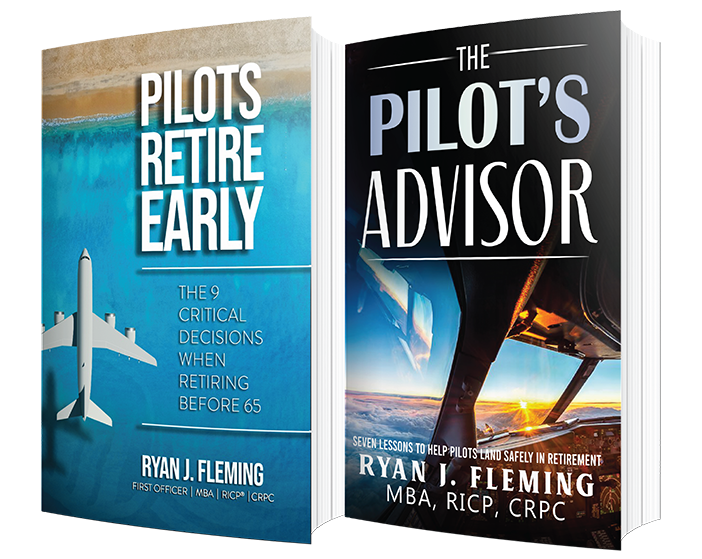
Walter Storholt: Attention, aviators. When you’ve spent years in the cockpit managing the complexities of flight, isn’t it time you navigated your retirement with the same precision? Introducing retirepilots.com right at your touchdown zone. Um, on our homepage there’s a beacon flashing. Get my free toolkit. Click that and you’ll be cleared for a direct route to Ryan’s retirement toolkit tailor made for pilots like you. Inside you’ll find two of his important works, the Pilot’s Advisor and Pilots Retire early. Between these two books, you can decipher the nine critical decisions when retiring before 65 and discover the seven lessons to help pilots land safely in retirement. But that’s not all. This toolkit is packed with altitude high value, including extras to get your retirement plans off the Runway and light the afterburners on your 401k. Vector on over to retirepilots.com to grab your toolkit and let’s embark on this journey together.
David: You bring up something that a lot of people are going to think, I’m too old for this. You know, pilots who are approaching 60 and they start seeing horizon, uh, the retirement, uh, on the horizon, um, and they’re thinking, man, well that would have been cool if I had Learned about that 10 years ago or more. Well, I’ve worked with a number of pilots who are 60 years old who are inside of a five year window to retirement. And there’s ways to really get ahead of the game and set yourself up for success so that by time you retire, this policy is efficient and every dollar you’re paying is creating more than $1 in, in cash value that’s accessible tax free during retirement and will continue to grow. Um, I always say it’s not about how many years are behind you. How many years do you expect to have in front of you if you’re 60? Like if you expected, I mean, I, I don’t know, I want to live to be 100. Um, maybe that’s not realistic for everybody, uh, or even me, who knows. But, well, you got, you still got a lot of years in front of you. You got a couple decades perhaps of retirement. That’s a long time to build an asset like, like whole life insurance.
Ryan Fleming: Well, you guys have seen the way I live. There’s no way I’m making it till 90. And I, I don’t expect to.
David: This is true.
Ryan Fleming: M, you know, live every day to the best of the best of my ability. But, uh, to, to, to piggyback on what Dave’s talking about, just things that I think about and of course, because my niche and the people that I
00:25:00
Ryan Fleming: mostly work with are airline pilots, I’m going to, I’m going to bring it back to that. Um, whether you’re, you have a Military pension, or let’s say you’re a FedEx pilot or a UPS pilot and you still have a pension. People are geared towards just doing that 50% survivor benefit. And, and it’s, I, I think it’s easy math. Like, the only, the only reason why people don’t look at this is because they don’t know about it. So if you start looking at taking a 50 survivor benefit, you’re going to lose a portion of that pension check. We know how much it’s going to be per month. So we multiply that by 12. And then we know how much you’re giving away every year that you continue to live, what you’re giving up to have that 50% survivor benefit. Let’s say that’s $10,000 a year. It doesn’t matter what the number is, but think about how much insurance you can buy with that money. And then it continues to grow every year that you live. And then that death benefit continues to grow as well. And so the whole reason why we have a 50% survivor benefit is to protect your family or to protect that spouse. But if that pension would, was going to spit out 40 or $50,000 a year prior to taxes, because we haven’t even talked about that money getting taxed.
Paul: It’s going to be taxed.
Ryan Fleming: Yeah. Versus the alternative. Boom, Something happens, and all of a sudden your, your, uh, family gets $2 million tax free. Well, guess what? That $2 million, we can spit out a lot of money for them way beyond that, $50,000, um, by, by planning ahead and leveraging your money. And, and once again, every year that you live, if you take that 50 survivor benefit, poof, that money’s gone, never working for you ever again. You don’t even get it. If you come up with a better plan, not only are you keeping that money in the pocket, in your pocket, or pushing it through an insurance policy, it’s continuing to grow for you for every single one of those years that you live. And I don’t, I don’t know about you, but I, I want to plan for success. I don’t want to plan to fail. And, uh, I think once again, it’s an education piece and understanding what is a better way for, uh, our money to work for us. And a true testament to that, I think we all have a military background. I mean, I did 22 years in the Air Force. Paul, you were in the army. Dave, you just hit your 21 years. Anyway, congratulations because you guys are all finishing up now. Let me ask, uh, uh, uh, You. How many of us took any survivor benefit at all with our military retirement?
David: I did not. In fact, as soon as I got my 20 year letter, I got on there and declined it.
Ryan Fleming: Well, and, and the general, you know, Colonel Carey, you guys know my wife. She, uh, did, she did very well in the military. And so you’d look at that. She earned a pension. She’s got a check of the month club. And I flat out told her, I said, nope, I don’t, I don’t want you to do a survivor benefit, you know, which would benefit me should something happen to her. But I know that, that pension check and those dollars now, today and every day that she lives and every year that she lives, we can use that and make it work for us better to where I’ll be more protected down the line should something happen to her now. And we all, we all know she’s going to outlive me by probably 20 years. But, but, you know, it’s, it’s the perspective on what we’re talking about. Yeah.
Paul: And I have the same conversation with our, with our military clients is, you know, the, if you take sbp, the longer, the longer that person lives, the least impact, the less impactful it becomes. It became a, you know, you have to look at, am I going to pre decease my spouse? You know, what are the odds of this? I don’t know. And neither do you, and neither they. But odds are it’s not going to be, it’s not going to be by a lot of, a lot of years. There’s not gonna be a huge delta there. Uh, and that money, as you said, is just better served as premium because you’re, you’re creating instant estate, like instant wealth, many times or 20 times the premium. Right. So people really need to consider that. And then of course, the SBP in any circumstance is going to be taxable income that’s going to eat into what the, what the spouse receives anyway.
David: Right. So you got to reduce that.
Ryan Fleming: Um.
David: Yep. You know, so if a FedEx guy is receiving like 65,000 a year or his spouse, his wife, you know, after he’s gone.
Ryan Fleming: Before taxes.
David: Before taxes. You’re talking maybe 50,000 after taxes, you know, at best. So how, you know. Yeah.
Paul: Depending on what state you live in, of course, as well, like state’s going.
David: To be into that as well. Yeah.
Paul: Minnesota.
David: Yeah. You do take a lot of risk with the survivor benefit plan. You have to go first and your, your spouse has to outlive you by a certain number of years to make up for all that money you put in over the years.
Ryan Fleming: Yep.
David: Right. Yeah, yeah.
Paul: Yep.
Ryan Fleming: Well, and sadly, another conversation that we have all the time is, oh, I have, I have insurance. I have life insurance. Well, that’s because Delta’s paying that insurance while you’re working. That’s, you know, $1.2 million or whatever, whatever the number is. But now if you’re going into retirement, you’re going into that distribution phase
00:30:00
Ryan Fleming: and guess what? That insurance, poof. Just disappears and suddenly you’re not protected at all. And, and we have that conversation a lot. We’re like, oh, yeah, I have insurance, but no, you don’t have permanent life insurance. And the day that you walk off property, that’s gone.
Paul: Yeah, you have renters insurance.
Ryan Fleming: Yeah, well, and it, and I, I hate to say it, but I almost view that as a term policy.
Paul: It is. I mean, it’s literally a group term policy. That’s. Yeah, it’s like SGLI for pilots.
David: And the term is, you know, at the end of your employment is the end of the term, whenever that is correct. Um, yeah, yeah, the other thing some people say as well, no, I don’t need life insurance. We’ve got plenty in a 401k. I’ve got a pension, my wife’s going to be fine. Okay. Um, yeah, well, you don’t have to leave it to your wife. Do you have kids? Do you have grandkids? Do you want to support, uh, maybe pay for your grandkids college? You could start a legacy right there. It doesn’t have to just be money that, that you know, your wife or husband spends after you’re gone. It could be you set up a legacy, set up something, ah, to promote those future generations and give them a leg up. How great would it have been, you know, for, for you to get a leg up when you were young and not start behind the power curve if that’s the situation you started in.
Ryan Fleming: Yep. And this is me playing the devil’s advocate, but, uh, yeah, but I just wrote a check for $20,000 and, and suddenly my cash value is only like 17 or 18. And I look at that and I go, yes, but if something happens to you tomorrow or anytime this year, your return on investment. And of course you look at it, it’s like 14,000% in that first year, you know, like, yeah, you want to talk about the best place to put your money and leverage it. And of course, you know, over the life of a policy, and you guys are the experts, but over the life of the policy, it goes from that 14,000%, it gets lower, lower, lower, lower, lower. And so if you have that policy for 20, 30 years, then it ends up being, I don’t know, 5, 6% tax free growth. But anytime before that, you are winning. If you look at your return on investment because of that tax free death benefit that’s attached to it.
David: Yeah. And you’re winning anytime either way, it’s still going to be multiples of what you ever put in. Um, because I, uh, mean that’s going to grow. Unless you live to be 121, your death benefit’s always going to be higher, uh, much higher than, than your cash value.
Paul: Yeah, I think it’s okay. Go ahead, Ryan. I was just going to say it’s important to properly classify things. And I think early on a lot of people are misclassifying, meaning they’re comparing it to something that it’s not. You can’t compare whole life insurance to anything but whole life insurance because it’s not an investment product. It’s not a bond, you know, it’s not equities, it’s not, it’s none of those things. Right. It’s, it’s insurance. And you’re, you’re buying death benefit.
David: Yeah. When you put money into, uh, your bond portfolio when you die, does your spouse receive a multiple of all the.
Ryan Fleming: No.
David: Uh, what was in that portfolio? No, they received exactly what was in that portfolio. Right. No other product can you put in dot, you know, pennies and get dollars guaranteed.
Ryan Fleming: Yeah. Versus putting a hundred thousand dollars into a cd. I mean, what are we doing here?
David: Right. There’s.
Paul: Unless it’s next year’s premium, I’m okay with that.
Ryan Fleming: Yeah, sure.
David: You gotta save it somewhere. Yep.
Ryan Fleming: And I just, I sit back and I’m shaking my head right now because, uh, I’m excited. I get to pay my kids policies premium this month. And I’m, I’m, I’m excited for their future because they’re going to be so set. Uh, but at the same time, I’m going, man, these kids are so spoiled. Like, I wish, I wish.
David: No idea.
Ryan Fleming: I wish my father was funding a Roth IRA and a whole life policy for me when I was 16.
David: What.
Ryan Fleming: Could you imagine what your life’s going to look like?
David: You can point to this chart and tell them, hey, at this age you’re going to be a millionaire. Just so you know.
Ryan Fleming: Guaranteed.
David: Yep.
Ryan Fleming: And of course it’ll probably be better than that because, you know, when you look at what actually happens, it’ll be a lot. It’s it’s, yeah, it’s more than the guaranteed portion. Um, and, uh, you know, I made a lot of bad decisions in my 20s and you know, you always talk about, well, I wish I wouldn’t have bought this or I wish I wouldn’t have done that or I wish I would have started. And for me, uh, honestly it was, I wish I would have started one of these policies when I was in my 20s.
David: Yeah, with that, with that, uh, cadet loan from USAA. Could have got that a nice policy started instead of burning it on a, a Honda Accord like I did.
Paul: Yeah, especially when you look at the policies, you know, in Nelson’s book. Because you graduated in 2000, right, Ryan? So. Or 2001. So the policies issued back then were enjoying, still enjoying interest rates from the, from the 80s in their performance. So they were, I mean, they were, they’re still good now, but they were incredible back then.
David: Uh, you mentioned interest rates. That’s another thing. I enjoy
00:35:00
David: a higher interest rate environment, I guess, for a higher interest rate environment now because of the way I understand money and what I can earn on my investments and what I earn on the dividends and my policies and the fact that I always have access to, to cash at, uh, at single digit rates guaranteed, no matter how high.
Paul: The interest rates go, artificially low savings rates or low fed rate or whatever you want to refer as is, uh, it just punishes thrifty people.
David: It does.
Paul: If I can’t earn anything in savings, then I have to put money. Sorry, Ryan, but I’d have to put money at risk. Right. And I’d have to put it in the market so I can get 5, 6, 7, 8%, whereas right now I can get 4 and a half in a CD which has, you know, theoretically no risk. So, yeah, I like, I like the, the normal, I like normal rates.
David: As Nelson says, hey, interest rates go up, interest rates go down, but the process of banking continues. Which is what, what we’re all about is, is really the process of banking.
Paul: That’s right.
David: So I think we’ll, we’ll wrap it up. But Ryan, I’ll give you any, any closing statements here, um, before we wrap the show and, and you know, we’ll do more episodes in the future on more specific topics, I think. But, uh, yeah. Any final thoughts?
Ryan Fleming: Um, just to wrap it up for the pilot side and I don’t know how, how, uh, I’ll pull this together, but we’ll try it. You know, when I think about pilots, it’s a very unstable profession. You Know you’re working and you need to have good health or your job goes away. And if you want, and most pilots are relatively, uh, risky, you know, they like to keep the throttles up, they like to, to, you know, get their money to grow. They want all the upside and none of the downside. But if you want to talk about a stable asset and an unstable profession where you can put your money somewhere and it’s going to, you know exactly what it’s going to do. This is it. And so you want it to be a part of your portfolio and you want to be able to protect your family. And I recently, I’ll end the show with this. I recently had a good friend of mine who uh, was, it was his 50th birthday and he was on a trip with his buddies. They were out on the west coast, uh, to celebrate his 50th birthday party and they were going on a golfing trip and he went to bed that night and never woke up.
David: Wow.
Ryan Fleming: So 50 years old. And now his family, that, that money that he was making to, to help his family and grow his family is gone overnight. Now you want to talk about how real this is, and I hate to say it when something like that happens, you’re an airline professional and you’re making 3, $400,000 a year and you only have a million dollars of life insurance that the company provides, that’s not going to be enough to truly protect your family.
David: Yeah.
Ryan Fleming: And so, uh, or, or even looking at the victims in Texas with the flooding recently, I mean, I think about that stuff, it keeps me up at night because I wonder how many of those people didn’t protect their family. And, and I mean, I mean uh, I get emotional over it and I’m dealing with it. And, and if you truly love your family, this is something that you’re going to consider and think about. And, and, and people don’t like talking about money and they don’t like talking about death. But guess what? That’s life. And if you truly care about your family, you need to think about this and have those conversations.
Paul: Yep, I’ll, I’ll piggyback on that, Ryan. And you know folks, you’re not, you’re not going to give up anything by buying dividend paying whole life insurance structured for infinite banking concept. You’re giving up nothing. Especially over the long. You are gaining so much. So Ryan, thank you, thank you for that, you know, that personal story and uh, it does get very real, especially you know, we’re all in the insurance business in one way or another. And it does get real once in a while when once someone graduates and, uh, doesn’t have adequate protection. Something that we always think about as well. So I appreciate that.
Ryan Fleming: Well, and thank you guys for having me on. Um, I think my clients will end up listening to the show. I’ll get it out to them, and I think it gives everyone a whole different perspective. And I appreciate what you guys do to protect families and. And continuing on your podcast to educate people, because it’s all about education. And I think if anyone does listen to your podcast, though, it’ll eventually get beat into them how valuable this asset is.
David: Yeah, absolutely. All right, well, thanks for joining us again. We’ll have you on here again before too long, I’m sure. Um, and until then, everybody control your.
Paul: Capital or somebody else will.
David: Information is for illustrative purposes only and does not constitute tax, investment, or legal advice. Always consult with a qualified investment legal or tax professional before taking any action.
This podcast episode is for educational and informational purposes only. The opinions expressed are those of the speaker as of the recording date and are subject to change. This content does not constitute personalized investment, tax, or legal advice. Please consult a qualified professional before making financial decisions.