Preview of what we’ll cover today:
💰 Understand your income needs for retirement
✈️ How travel and new experiences can impact your finances
🏠 Test out your long-term plans before committing
💡 Build routines and purpose to thrive in retirement
💬 Have a conversation with your advisor about the first year
Subscribe On Your Favorite App:
 YouTube
 Apple Podcasts
 Spotify
 Amazon Music
 iHeartRadio
 TuneIn
More About This Episode:
So, you’re retired. Now what? The “First Year Rule” suggests that many of your best retirement months will happen in the first year. It’s a pivotal time to set the tone for a fulfilling retirement, emotionally, physically, and financially for the years ahead. Today, Ryan explores how to navigate this critical phase, offering practical insights to help you create a strong foundation for a retirement that’s rewarding, balanced, and full of purpose.
As Ryan highlights, it’s essential to have a sustainable income plan and a sense of purpose during your retirement transition. Don’t rush into big changes, like buying a house or moving across the country, without testing the waters first. The habits, routines, and choices you make early in retirement will echo through the years ahead. Be intentional now, and you’ll set yourself up for a retirement that’s not only financially sustainable but also deeply fulfilling.
Go Deeper Into The Episode:
0:00 – Intro & Football Discussion
4:11 – Learn how to adjust financially
6:23 – Establish a sustainable income plan or withdrawal strategy
9:36 – Pursue a purpose
12:36 – Test-drive your long-term plans
Resources:
Retire Pilots – https://retirepilots.com
Get your FREE Retirement Toolkit – https://bit.ly/3ZmZsaX
Pilot Tax – https://pilot-tax.com/
The Pilot’s Advisor Podcast is also on video. Watch & Subscribe on YouTube: https://bit.ly/3EIEBW2
Connect with Pilot-Tax: https://pilot-tax.com/
Episode Transcription:
(Note, this is an automated transcription. Please forgive any errors.)
Walter Storholt 00:00
Walter Storholt 00:00
Well, you’re retired. Let’s say some people subscribe to this idea called the first year rule, which says that a majority of your best retirement months are going to happen in that first 12 months of retirement. So how can you be strategic during that first year and set the tone for yourself to have a successful retirement, both physically, emotionally and financially. Well, today we’re going to talk about what you need to know about this first year of retirement, this first year rule, and how to best prepare for it. I’ll grab Ryan and we’ll get started back again on the pilot’s advisor, Walter Storholt, alongside Ryan Fleming at financial advisor, specifically working with pilots for many, many years, helping them get to and through retirement. Ryan, great to chat with you again today. How’s life treating you?
Ryan Fleming 00:49
Life’s pretty good. Walter, you know, we’re we’re into football season now. And of course, I love college football. I love NFL football. The only problem I’m having is on Tuesdays and Wednesdays, there’s no football. And I don’t
Walter Storholt 01:01
understand that. I mean, can’t we just got re hooked, and now they take it away for two days? Yeah. I mean,
Ryan Fleming 01:06
you might as well, you know, now that we have it on Thursday, we have it on Friday, we have it on Sunday, Monday. You know, why not just fill in the whole week? Because I don’t know what to do with myself for those two days.
Walter Storholt 01:15
Wasn’t there actually a Tuesday game? I have to go check. But didn’t Missouri play Kansas or something on a Tuesday or, like, a special game of the week. I missed it. But maybe that was, it’s
Ryan Fleming 01:24
possible, but I missed it. I was looking going, it just feels like there should be another game. And, you know, it was like, Well, I guess it’s Tuesday and Wednesday, but yeah, I would not, I would not be surprised if that starts to change over time, just because certain teams know that they could get on TV by taking on one of those days. Yeah, no different than it used to be. I think it was, you know, the Thursday night game. You remember it was Virginia Tech beamer ball, right? And, you know, and the Hokies really took advantage of that Thursday night game for a long, long time.
Walter Storholt 01:51
Yeah, absolutely. It’s a, it might be a chance for some smaller schools to get night games versus getting shoved into that noontime slot and that sort of thing.
Ryan Fleming 01:58
So, yeah, it’ll be, it’ll be interesting to see how it plays out. I actually, I don’t really post on social media outside of work. You know, the pilots advisor very often, but yeah, week one, I was able to run into Kirk herb Street and hang out with him on the sidelines. Did you see that
Walter Storholt 02:14
picture? Nice. No, I didn’t see it well. Yes, it was almost 25 years to the day that I got. We’ll put it up on the screen for our YouTube audience, okay, but
Ryan Fleming 02:23
yeah, it was almost 25 years to the day where was actually interviewed by Keith Jackson, and then Kirk herb Street.
02:31
Wow, that’s cool. Yeah,
Ryan Fleming 02:35
Keith Jackson actually called our game when we played at Notre Dame, and it was my junior year, I believe. And you know, Keith Jackson being the voice of college football, that’s, that’s kind of like, where I feel like I actually arrived and was actually a player and all this stuff and and I had a pretty big day, and just remembering back, Keith Jackson said something about me dominating him, or something like that. And I was like, All right now, now that Keith Jackson said my name and that somebody now, so
Walter Storholt 03:01
I’m gonna clip that and use that in the future. If only it was so easy to, like, you know, clip things like that in the past, in your playing days, you’d have probably a lot more, you know, good footage to turn to in the comments and highlight reels that people would have created for you, and all that good stuff.
Ryan Fleming 03:16
Well, unfortunately, that’s been many, many years ago, back when they had leather helmets. Now, I don’t know where the time has gone.
Walter Storholt 03:22
Okay, wasn’t that bad? Wasn’t that bad? I love it, though that’s awesome.
Ryan Fleming 03:26
Well, we’ll put it this way. Larry Fedora has been retired for a few years, and that was my old position coach. And of course, I bring him up because you know you knew him when you’re at North Carolina. So yep,
Walter Storholt 03:37
absolutely got to interview Larry on his introduction day into being the UNC head football coach, which was pretty cool. Right after his press conference, walked over to my radio table, and we were the first ones that got to do an interview with him, which was pretty neat. So, yeah, we had him on the podcast a couple a couple of months back, which we
Ryan Fleming 03:55
did. We did, you know, imagine how easy this podcast would be for the two of us if it was a sports podcast or a college football look at us. We could just run with this whole episode. That’s right, exactly. I thought we’re going to talk about retirement planning and retirement, but let’s just talk about
Walter Storholt 04:09
college football. I love it. I love it. Well, no, let’s give the people what they want. We promised talk about finances, right? If they if they clicked on the thumbnail expecting, talk about that first year rule of retirement. I suppose we should deliver on that. So fine, okay, I’ll be, I’ll be the parent of the conversation.
Ryan Fleming 04:29
Ronnie definitely has to be the adult supervision. And it is not me Awesome.
Walter Storholt 04:34
All right. Well, let’s talk about that first year rule. So first thing to do is learn how to adjust financially. So why is this something somebody’s got to figure out in that first couple of months? Why is that so important?
Ryan Fleming 04:45
Well, it’s not just that first couple of months. I mean, you really are embarking on a whole new aspect of your life where that income is not coming in anymore. It’s all outgoing, or, as we call it, the distribution phase. We also look at those first few years from a health standpoint, as the GO, GO year. Dollars with good reason. I mean, that’s when you actually have the time to go do all those things that you wanted to do, to travel. Take those things off your bucket list, have some of that freedom and flexibility where you’re not going to work or you’re not preparing for that next trip. But it’s really interesting too, because I get to watch how people handle it in much, different ways. I think that retirement in general, you really have to have a purpose, a reason still to wake up. I see those that prepare for retirement in a very positive manner, and they start doing all these things, but eventually they’re going to slow down, doing a lot of massive changes prior to retirement. I think, from a planning standpoint, makes it very, very difficult. I think, you know, when we sit down with a client, we’re getting near close to retirement, and they’ve stayed in the same house, we know what their mortgage payment is. We know what they plan on doing, from a travel perspective, it makes it a lot easier, versus that person that’s trying to change everything right before they retire. You know, we’re going to leave Michigan and go buy a house in Phoenix, and then, you know, we’re doing all these, we’re having to reinvent their whole life at that point from an income standpoint. So it makes a little bit difficult, but yeah, so that first year with all those changes, you have to be very, very flexible. We have to really look at what your income needs are above and beyond, say, your pension or your social security and not even getting into increased medical costs over years.
Walter Storholt 06:24
Yeah, it’s a great point, and I know a lot of that focus goes into the spending part of the equation too, when you’re talking about adjusting, but there’s another real key here, and that’s to now establish that sustainable income plan. Hopefully this is something you’ve done before you get into retirement, where you’ve talked to an advisor about a withdrawal strategy, how are you going to turn that big bucket of money and maybe some of the other assets that you have into sustainable income in retirement? This is high up on the list to do in that first year of retirement, or to prepare for that first year of retirement, because we got to get that right, right out of the gate.
Ryan Fleming 06:57
You do, and it’s really scary, because you can’t go out and fly that extra trip to get that extra income to pay for that car that’s banged up, or whatever other life events happen. You’re, for the first time in your life, really on a fixed income. And coming up with that plan and talking about what that budget is going to look like is extremely important, and more important than that, too. I mean, it’s tough to balance, you know, those first couple years of retirement, we brought up and said, the GO, GO years, because sometimes there’s a lot more spending that goes on to knock out those vacations or those things that you want to do. But on top of that, when we talk about sequence of returns risk, it really is those first couple years. It’s, you know, if you have a down market right when you retire, right when you’re starting to pull income from your your 401, K and other retirement assets, it has a massive effect on the next 30 years. You can really blow up your retirement plan, versus somebody that retires in those first three years of retirement. They have this fantastic markets, you know, a fantastic market with lots of growth, and suddenly their 401 K looks completely different than it did when they first retired. And so that constant analysis, that conversation, watching the income and also understanding the tax consequences of pulling from your IRA or 401 k, when it’s tax deferred money, it’s it’s a whole different level of explanation and understanding when you’re talking to clients, because they really don’t understand the distribution phase and what it looks
Walter Storholt 08:31
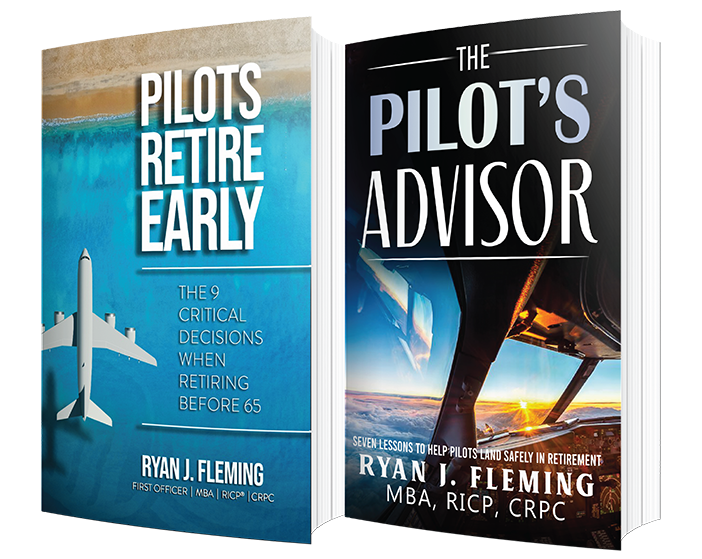
like attention aviators, when you’ve spent years in the cockpit managing the complexities of flight, isn’t it time you navigated your retirement with the same precision. Introducing retirepilots.com right at your touchdown zone on our homepage, there’s a beacon flashing. Get my free toolkit. Click that and you’ll be cleared for a direct route to Ryan’s retirement toolkit, tailor made for pilots like you. Inside, you’ll find two of his important works, the pilot’s advisor and pilots retire early. Between these two books, you can decipher the nine critical decisions when retiring before 65 and discover the seven lessons to help pilots land safely in retirement. But that’s not all. This toolkit is packed with altitude, high value, including extras to get your retirement plans off the runway and light the afterburners on your 401k vector on over to retirepilots.com to grab your toolkit and let’s embark on this journey together. I think this next one’s really big for pilots, right, especially those who are staying busy in their careers and keeping a very busy flying schedule, maybe not picking up other hobbies and other things going on in life, and that’s to pursue a purpose. Seems to me, Ryan, like pilots, have this very focused purpose, right? You get the plane to the destination, there’s repetition, Inc. It. There’s, although it’s a difficult routine, there’s routine in it, and then that goes away in retirement. We’re not even talking about the money part here. This is just, what are you going to do with your time, your energy, your mind, physically, all of those kinds of things
Ryan Fleming 10:13
well, and I think it’s something that’s very scary leading into retirement, I always joke that I’ll work to the day I die, and I think I will, just to have, you know, as much as much as sometimes I don’t want to wake up and do a podcast with you, or I don’t want to answer emails, but it gives you a purpose. It gives you some direction. And I do think that that’s one of the scariest things going into retirement, is, what are you going to do? You’re not going to have that flight that has defined your schedule for the last, you know, 30 years, and I get to watch a lot of people.
Walter Storholt 10:39
I was going to suggest podcasting could be your post your retirement career. You know, your football podcast. You launch that and retire it. There’s your purpose.
Ryan Fleming 10:49
Well, I have to give a shout out to one of my clients. There’s one of my clients that does a podcast. It’s really awesome, and it’s called So there I was, and he interviews a lot of old. Sorry, I did say old. I apologize for that, but old, old pilots and talks about some of their war stories and talks, you know, and there’s nothing better than sitting around at the bar with a bunch of pilots telling old war stories. I mean, it’s actually quite entertaining. And so that’s what he’s really done, is he’s dug in and he has a podcast. I mean, he has a purpose, something that he’s going to go do to share another one, because it’s tough to watch. I mean, some people really thrive in retirement, and other other clients, they struggle. I recently had a client that told me that he was fighting for his sobriety, and he which I think is awesome, I mean, but what really changed for him was he always had a flight or, you know, you knew he had to fly. So he had, you know, didn’t, didn’t drink. He had a reason not to. Well, in retirement, he really had no reason not to. And so with travel and everything else, you know, hey, I’ll take a beer. Hey, I’ll take a margarita. And he really found out that he was having, you know, struggling. And so it just showed me, just another example of how your life totally changes. In retirement, you don’t have something to show up for every day, and how that might change your actions day to day. And I see it. I mean, you know, some people are stuck with the TV on, whether it’s Fox News or CNN and maybe the couple cocktails and that becomes their life. So I would, you know, don’t be scared of retirement, but I would 100% try to come up with a plan, have a purpose, or, like you said, build a routine. I think those that have a routine tend to thrive in retirement versus the other way around.
Walter Storholt 12:35
Yeah, absolutely. So some key things to focus on in your first year of retirement. We’ve got one more kind of tidbit to give you here, and it’s back to the financial element, and that is to test drive your long term plans. I also think of this as, like, maybe stress testing our plan, right? Ryan, like, let’s see what it can handle for the long term. What are some of the ways that you view that as being a helpful measure in that first year of retirement.
Ryan Fleming 13:02
Well, I don’t, you know, like I said from a conversation before, I don’t think it’s really healthy to change everything that first year, because there’s so many variables that are out there. I would actually prefer somebody downsize, relocate, or spend, you know, you know, we talked about snow birds. I would start doing some of those things prior to retirement, because then you at least know what some of those costs are going to those costs are
Walter Storholt 13:23
going to look like. So don’t necessarily retire and then immediately go buy the, you know, class, a motor home, and the two rent, you know, the two vacation homes and like, implement this very specific plan for retirement, because you may not end up wanting to live that lifestyle. Is that kind
Ryan Fleming 13:37
of what you’re getting? Well, that that an increased cost to do all those things. I mean, right? When all these things that really, really matter where you you know, those first few years of retirement actually determine what that how life’s really going to be because of that sequence of returns when you start drawing income from all that you’ve saved over the years. So, you know, I want you to enjoy your retirement, but I don’t think it’s where you just go crazy. But yes, I definitely believe in test driving your long term plans like you were talking about, you know, go spend some time at that place that you thought you wanted to move to in retirement, see if it’s the right fit before you actually plant your flag. I mean, I think that just makes sense, you know, go rent in that new city and and see if it’s going to be the right fit for you in retirement before you just pull up sell your house and just show up, because it might not be the big thing. Now, I watch a lot of people that they have these grand plans, and then the next thing you know, you have grandkids. And guess what? Mama wants to be around her grandkids, and I’ve watched that happen quite a few times. But like, Bill, I thought you said you were going to Florida when you were well, yeah, my wife had other plans.
Walter Storholt 14:45
Well, actually, on the same page, right? Yeah,
Ryan Fleming 14:47
and I see that all the time. I mean, it’s no different. You know, we talk about we can do our best to plan for life, and then then life happens. But I think having positive, good conversations with your financial. Advisor with your spouse, really thinking about retirement versus just showing up is going to help you and benefit you in the
Walter Storholt 15:05
future. Yeah, absolutely. Well, there’s habits, routines, choices that you make early in retirement that are going to echo through the years ahead. So don’t make mistakes during that year of retirement, that first 12 months. Be intentional about it. Plan for as much of it as you can in advance, and you’ll be set up much better for that financial future that you’re going to face. If you’ve got questions you want to take a look at your specific plan with an advisor like Ryan Fleming, who works exclusively with pilots all across the country. All you have to do is go to retirepilots.com and order for free the toolkit. The toolkit is going to set you up well for retirement. It’s packed with Ryan’s books, resources, guides, helpful information that teaches you about some of the basics and the important items. When it comes to planning for retirement, we’re talking about portfolios. We’re talking about risk and investing. We’re also talking about some of the softer stuff as well finding purpose, thinking about housing, the other lifestyle elements and spending that comes along with retirement, all that’s covered in the toolkit. And by getting the toolkit, you also qualify for a free portfolio analysis where you can meet one on one with Ryan to talk about your specific plan. So it all starts by getting that toolkit. There’s no cost to do so just order it@retirepilots.com or click the link in the description of today’s show, Ryan, thanks for the help, and we’ll talk to you soon.
Ryan Fleming 16:23
Thanks for a great show. Walter, and I find this to be the perfect time to throw out a George Patton quote, because it just came up in my mind. But a good plan, violently executed now is better than a perfect plan executed next week. So come up with a plan. Let’s press forward, and then don’t wait till retirement to come up with that plan.
Walter Storholt 16:42
I love it. Good way to end it. Thanks, Ryan. See you.
Speaker 1 16:50
Information is for illustrative purposes only and does not constitute tax investment or legal advice. Always consult with a qualified investment legal or tax professional before taking any action.
This podcast episode is for educational and informational purposes only. The opinions expressed are those of the speaker as of the recording date and are subject to change. This content does not constitute personalized investment, tax, or legal advice. Please consult a qualified professional before making financial decisions.