Preview of what we’ll cover today:
✈️ Fuzzy Math & Flying Lessons: why “winging it” doesn’t work in retirement
💸 The 4% Rule Debate: why it’s more complicated than it looks
🧾 Fees & Value: how advisors can add 3%+ net benefit even after costs
🚨 Sequence of Returns Risk: understanding timing and volatility impact
🪂 Pilot Principles Applied: discipline, big-picture awareness, and staying calm
Subscribe On Your Favorite App:
 YouTube
 Apple Podcasts
 Spotify
 Amazon Music
 iHeartRadio
 TuneIn
More About This Episode:
You’ve probably said it before: “I ran the numbers; I should be fine.” But what if your math is lying to you? Today, Ryan exposes the “fuzzy math” that can quietly sabotage your financial future. Drawing on lessons from aviation and decades of experience helping pilots plan for retirement, he shows how to balance big-picture thinking with precise financial navigation. Don’t settle for “it should be fine,” learn how to make sure your math actually adds up.
Go Deeper Into The Episode:
0:00 – Fuzzy Math in Financial Planning
1:24 – Pilots Are Trained To See the Big Picture
4:19 – Fuzzy Math in Mutual Funds
6:24 – The 4% Safe Withdrawal Rate
12:20 – Tax Concerns in Retirement
14:10 – Capital Gains Tax and Investment Returns
Resources:
Retire Pilots – https://retirepilots.com
Get your FREE Retirement Toolkit – https://bit.ly/3ZmZsaX
Pilot Tax – https://pilot-tax.com/
The Pilot’s Advisor Podcast is also on video. Watch & Subscribe on YouTube: https://bit.ly/3EIEBW2
Connect with Pilot-Tax: https://pilot-tax.com/
Episode Transcription:
(Note, this is an automated transcription. Please forgive any errors.)
Walter Storholt 00:00
Well, you’ve probably said something like this before. Hey, I ran the numbers and I should be fine. Well, what if the math that you’re relying on isn’t really telling the whole story? Well, today, we’re going to unpack some of the most common examples of fuzzy math that are in retirement planning and financial planning, and we’re going to show you how to spot them before they can cause serious problems in your portfolio. Can’t wait to talk about this with Ryan. I’ll grab him, and we’ll get started back again on the pilot’s advisor. I’m Walter Storholt alongside financial advisor and pilot himself, Ryan Fleming. We call him the pilot’s advisor. Obviously, the name of the show as well, and we’re talking about fuzzy math on today’s episode. But Ryan actually surprised me a little bit before the episode today, folks, I kind of presented this idea to him, and he was like, Well, I don’t know if I want to talk about fuzzy math sabotaging someone’s financial future. Sometimes the fuzzy math can be a good thing. And that one took me by surprise a little bit, so I’m interested to see as we go through these Ryan exactly why that’s the case, and this should be pretty fun,
Ryan Fleming 01:02
yeah. And I think having a basic knowledge of math and some of those big numbers and those financial principles will give us the big picture, you know, give us a WAG, per se, where we’re at. But you don’t want to be that person, like, just like you said that. Well, we should be okay, you know, that’s not good. But I actually, when I, when I see this episode and some of the things we’re going to talk about, it actually reminds me of flying. And the reason why I say that is you got to, you got to be able to see the big picture. And with flying airplanes, you had to be be able to see the big picture. Now, back in the military, we were doing time control stuff to an airdrop, or time control stuff to the, you know, to go meet a tanker out in the over the Atlantic to get gas. So whatever the mission was, there was some time control there. And it always blew my mind that people would not see the big, bigger picture, like, if we know that we had to take off at 1030 and we took off at 1033 why wouldn’t you just immediately start, started flying fast, because you know you’re behind, right? But, but people don’t do that. They stick their head down in the box and start hitting numbers and trying to get it to recalculate, and then wait to speed up. And I’m like, You just missed the big picture, right? Okay, so yeah, and I think with a lot of flying principles, and maybe I went too deep into the weeds on this with the flying, but most pilots will relate to what I’m talking about. And I think that it’s very valuable to have fuzzy math in in your head just to know where you’re at. Another example of this in the flying world would be that, you know, if you’re about to get slam dunked, you know, you know that you’re late on the descent, the controllers aren’t getting you down. And you’re like, Hey, I’m we’re about to get slam dunked. Well, that takes just basic math, you know, the three to one rule, or whatever you use, but you don’t want to be that pilot that you’re over there looking at them, going, they have no clue we’re about to get, you know, dunked here and but we’ve all been there. We’ve all been there. So I think this fuzzy math conversation is gonna be
Walter Storholt 03:12
fun. Yeah, sometimes. So it sounds like you’re saying sometimes you need to be okay with fuzzy math. Like your example of, hey, we’re a few minutes behind. I don’t need an exact calculation of exactly what mile per hour I need to hit, and you can just go, you just go faster, and then we’ll figure it out in a couple of more minutes. But for now, I know the problem I need to solve. I need to go a little quicker out of the gate. We’ll figure out the exact math a little bit later. But the fuzzy part is just saying, Hey, I have enough information to know a course of action here. We’re going to take it well.
Ryan Fleming 03:42
And I think it’s a generational thing too, because if you look at some of the older school pilots, they had some of that fuzzy math that were made them better aviators because the box, you know, the computers didn’t tell them what to do. Yeah, they were pilots first. And like, hey, you know, be a pilot first, yeah. And I think the new generations where, you know, they’re, they’re, you know, nose is right in their phone all the time, or same thing with the automation on an airplane. Well, we got to have some of these basic principles and know the fuzzy map of the numbers, and then that will help us get into retirement a little bit easier. All right.
Walter Storholt 04:19
Well, let’s look at these individual examples. So what I’ll do is read a statement that sounds like maybe it’s some fuzzy math. You let us know which side of the equation this is kind of falling on, like good fuzzy math, or something to definitely be aware of here. And let’s not sabotage our future by kind of following this blindly. The first one is about mutual funds, and the statement might sound something like this, Hey, the mutual funds that I’m invested in have averaged 7% annual growth for the past five years, and I’m perfectly happy with that return moving forward. Well, there’s a lot of problems
Ryan Fleming 04:49
with that one in my in my opinion, because there’s no guarantees that that returns going to be there. Moving forward, past
Walter Storholt 04:57
performance can predict future results, I think, is how all. Disclaimers go, right, yeah.
Ryan Fleming 05:01
You know, if we’re in an aggressive portfolio, over the long term, I could see us getting eight to 10% but where people really make the mistake here in the financial world is, and let’s take that 7% you talked about. They will go into a compounding interest calculator and say, Oh, here’s my money. I want to get 7% every single year, you know, and that’s continuously compounding, but the markets don’t work that way. Yeah,
Walter Storholt 05:28
in five years, I don’t have this much, but that’s not how it works.
Ryan Fleming 05:32
Yeah, yeah, you might have a 7% average, but guess what actually happened? You were up 22% this year. Then you lost 15% then it was up 2% then it went down. And so an average rate of return is definitely, you know, something to look at, but especially the math and retirement, when you’re actually taking returns, or you’re taking income in retirement, now you don’t care about an annualized return as much as you care about a consistency of return, you don’t want that big fluctuation when you’re taking income, because then it really hurts. So just know what the numbers what we’re actually looking at for, for growth and everything. But you can’t make some assumptions that are going to really have you ending up in Washington, DC when you’re planning on trying to go to New York.
Walter Storholt 06:23
That’s right, exactly. All right. Another statement you might hear, they say, I can take 4% out of my portfolio every year without running out of money. So if I just follow that rule, I’ll be fine. I
Ryan Fleming 06:34
actually don’t have a problem with that. I think the 4% safe withdrawal rate is, I mean, it’s been used for a long, long time. I think it is relatively conservative. But I think this is where, when you’re in the distribution phase of retirement, it’s much, much more complicated than that. You got to see, you know, actually continue to do analysis every single year, looking at your tax brackets, you know, thinking about RMDs, or the biggest one that nobody take. You know, obviously, people miss out on taxes and inflation, health care costs, but one of the most important things as you enter retirement is sequence of returns risk. You know, are you going to retire and suddenly it’s a 20% down market when you’re pulling income that’s going to have a drastic effect on your portfolio, and so I like the 4% safe withdrawal rate as a big, big wag number, but the details of the environment and where you are in retirement are going to matter a lot more than that. You’re going to have to get some analysis. You know, I’m just a guy talking on a podcast, but this is why you want to have a financial advisor so you can dig into the details,
Walter Storholt 07:42
which you also happen to be, which is good and helpful. Just just to make that clear for anybody new to the audience,
Ryan Fleming 07:49
I actually had an email this morning that I think it’d be valuable to share in the podcast. Yeah, okay, go for it. It was a lady that emailed me, and she’s not a client, you know, she’s a prospect, but she’s like, Hey, I’m thinking about this. And fidelity offered me, you know, and she’s basically asking me if I thought it was worth it for her to pay fidelity to manage her portfolio. Okay? And, you know, I don’t think fidelity does the best job out there. I mean, I’ve analyzed a lot of their, you know, portfolios. They’re going to put somebody in a bunch of fidelity funds, but I didn’t focus on that. My response was, regardless of what direction you go in, I 100% think that you should go find a financial professional to help you, because you’re going to more than get back whatever fee you know that you’re going to pay. And I think, I think too many pilots, too many people, too many investors, focus on the fee that they’re going to pay and not realizing that they’ve done a ton of studies on this. I mean, even you know, Vanguard did the huge study that everybody talks about, if you’re working with a financial advisor, you’re going to get 3% on average, more return, you know, and that’s compounded over all the years, which more than makes up for the fee. And I think a lot of the stuff that they talk about asset allocation discipline, just professional knowledge of, you know, retirement planning, but, but my response was, Well, yeah, I definitely think you should hire a professional and I don’t know how I got on that track Walter, but there I shared, I shared that,
Walter Storholt 09:18
yeah, I’m sure that’s another fuzzy math thing that we could have brought up, talking about the fees inside of your portfolio, or the cost of working with a financial advisor. So we’ll just throw that in as another, as another prep that we had on the list here.
Ryan Fleming 09:32
And what it is, it’s fuzzy math. Am I willing to pay 99 basis points, or am I Wait? Am I willing to pay 1% when I’m probably going to get two or 3% extra return every single year? Well, yeah, you should take that all day long. Absolutely. You should do that.
Walter Storholt 09:48
I hear a lot of stories too, where a financial advisor, you know, pays for him or herself, just in not even looking at returns and those kinds of things. But you help somebody avoid one. Major mistake. It’s already paid for itself, you know, 10 times over, in some cases. So you know, one big mistake that you would have made, maybe trying to time the market, maybe something as simple as not having your beneficiary designations properly, you know, filled out, and that gets discovered by working with an advisor, like those kinds of things that could dramatically change your financial picture or what you wanted to happen, your wishes and goals, right there pays for itself many, many times over. So it’s like with a lot of other things in life, right? Having that professional guidance can make all the difference,
Ryan Fleming 10:32
and setting up a strategy for retirement, it’s not just all about I mean, I’m the first one to say that returns matter. Okay, that’s why we’re here. We’re trying to make money. But I see it time and time again, where a pilot will look at the math and go, Yeah, but I’m going to pay 1% on all this, you know, money, and they’re doing the math of how much they’ll pay in fees over the next 20 years. And then I’m like, but yes, we just went back and looked at your last 10 years of returns, and, you know, we’re we’re averaging 4% better return than you every single year, compounded annually, like you don’t get it. Yeah, this is a simple IQ test, and you’re failing
Walter Storholt 11:16
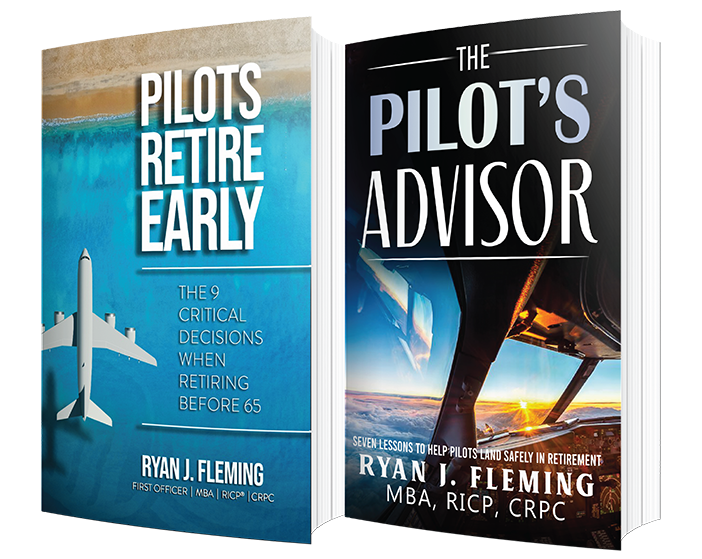
attention aviators, when you’ve spent years in the cockpit, managing the complexities of flight, isn’t it time you navigated your retirement with the same precision? Introducing retirepilots.com right at your touchdown zone on our homepage, there’s a beacon flashing, get my free toolkit. Click that and you’ll be cleared for a direct route to Ryan’s retirement toolkit tailor made for pilots like you. Inside you’ll find two of his important works, the pilot’s advisor and pilots retire early. Between these two books, you can decipher the nine critical decisions when retiring before 65 and discover the seven lessons to help pilots land safely in retirement. But that’s not all. This toolkit is packed with altitude high value, including extras to get your retirement plans off the runway and light the afterburners on your 401 k vector, on over to retirepilots.com to grab your toolkit, and let’s embark on this journey together. Well, let’s move to another one, because there’s one that kind of works nicely on the heels of the fees conversation and that value and considering the difference maker between having that extra return every year or not, and that’s when it comes to taxes. And you’ll hear the statement a lot of the time that says, You know what, I’m not really worried about taxes in retirement. I’m going to be in that lower tax bracket anyway. So things will, things will be getting better automatically for me, just from that one element alone. And I know that’s something you can pick apart, very much, like the fees for a financial advisor.
Ryan Fleming 12:51
I think it’s okay to say I think I could or should be in a lower tax bracket by then. But the problem is, we don’t know what the tax brackets are going to be, and we have a major problem in this country with the national debt. So how are we going to how are we going to handle that? So it’s okay to to think about the possibility of but I think there’s a lot more that goes into it. The other thing that I heard a guy say the end, I don’t know if this really works for airline pilots, because most airline pilots make a pretty good living, and then they retire, and then they’re, you know, normally, probably in a lower tax bracket than they were during their major working years. But this other advisor said he goes, Why would you ever plan on making less money? You know, like I said, I don’t. I don’t know if that really works for the pilot case, but as an entrepreneur or businessman, it makes all the sense in the world, like, oh, yeah, I’m planning for failure. No, when I’m, you know, 5560 years old, I’m making a killing. So I thought that was just an interesting perspective.
Walter Storholt 14:01
It’s like people’s hesitation to people hesitate to make more money because they’ll have to pay more taxes when they make more money. And it’s kind of like, well, no, that’s still a good problem to have. Like, don’t, don’t let the fact you’re going to pay more taxes keep you from making more money, even if you’re in a higher tax bracket. It’s still a good thing.
Ryan Fleming 14:19
Yeah. Well, and I get that a lot with them not understanding capital gains tax. Well, yeah, but if I invested my money and then I wanted it back, then I’d have to pay taxes. And I go, well, actually, you only have to pay taxes if something really, really good happened. So I hope you have to pay a million dollars in taxes, you know, because it’s only a small cut. Uncle Sam wants his cut. But yeah, because you let you allowed your money to work for you. I have a client who, he kept talking to his brother. Kept talking to his brother. He’s like, You need to sit down with Ryan. You really need to get your life in order, because this individual just hadn’t done it. And next thing you know, he’s he. Married, and he’s in his 40s, and he hasn’t got his act together, and his brother knew that, so I ended up having a meeting with this guy, and I got him to get his money to start working for him. Okay? I mean, this guy had a decent amount of money, but just sitting in cash, losing to inflation. We call that going broke very safely. Wasn’t even really investing in retirement accounts, but the conversation that we’re having right now is he ended up having to pay taxes. Well, that’s because we made you, like, 15% on your money. Guess what, buddy, you know, when you invest money outside of retirement account, it’s a good thing if you’re paying some taxes, because guess what? We got all that dividends and interest for you, and now the wheels are starting to go. And it was, it was very interesting to see the reaction in his brain where it was like,
Walter Storholt 15:51
you know, yeah, that’s awesome. I’m sure you love seeing moments like that, though, right? I mean, those are kind of the fun clients to work with when you can kind of show them this whole area of knowledge and financial planning they didn’t know existed.
Ryan Fleming 16:04
Yeah, and, you know, and I love this job, you can lead a horse to water, but you can’t make them drink. I try to show people principles. I’ll try to teach them. I’ll try to and sometimes they don’t get it, and it used to make me upset, but I’ve learned that they have to discover it themselves before they’ll really move forward. So different ways of explaining that over time, but, but I love this job, because I truly think that I can change people’s lives, you know, if they’ll just listen and accept some of the principles, accept some of the discipline, it really is a game changer, and I enjoy that aspect of it for sure. Well,
Walter Storholt 16:39
fantastic. That’s a good way to end it, Ryan. Lots of examples of some fuzzy math that people often operate with in retirement. Not always a bad thing. Sometimes it opens the door up for great conversation. We just want to make sure that we’re not ending that sentence with I should be fine. This should work out. We want more certainty in the financial planning process, and that’s what Ryan provides to his clients each and every day. So if you’re a pilot and you’re trying to set up a successful financial future for yourself, you’re not working with a financial advisor right now, or you’re not working with an advisor who’s doing this level of detail in the planning process, looking at all the different components and parts of retirement, of financial planning, that should be something that raises maybe a red flag or an alarm bell. You know, it’s a warning light going off in the cockpit that something’s wrong or something could be better or better optimized. So reach out. Talk to Ryan about your situation. You can get a customized review of your plan when you order the retirement Toolkit by going to retirepilots.com that’s linked in the description of today’s show. Click that order your toolkit, and along with Ryan’s books, great information about preparing for retirement and more resources, you’re going to get that free portfolio analysis where you can then look at the specifics of your plan with Ryan and talk about areas that do indeed need that improvement, and turn this fuzzy math into something a little bit more solid, a little bit more predictable, easy to understand, and it’s going to set you up with more certainty in your financial future. Ryan, thanks so much for the help. Great advice on today’s show, and we’ll talk to you again
Ryan Fleming 18:07
soon. Absolutely sign up for the free retirement analysis, the portfolio analysis. You don’t want to be one of those people that said, woulda, coulda, shoulda, and or I like to think in the flying world is suddenly you got that big red light on you because you’re running out of gas and you’re not at your destination.
Walter Storholt 18:23
Yep. Not a problem any of us wants, and we can avoid it by checking the gas tanks status before we take off, right? And you can do the same thing with your finances. Check the status now before you get to the end of that destination, to retirement again. Retire pilots.com. Your place to go, linked in the description for Ryan. I’m Walter. We’ll see you next time on the pilots advisor. You adviser.
Speaker 1 18:46
Information is for illustrative purposes only and does not constitute tax investment or legal advice. Always consult with a qualified investment legal or tax professional before taking any action.
This podcast episode is for educational and informational purposes only. The opinions expressed are those of the speaker as of the recording date and are subject to change. This content does not constitute personalized investment, tax, or legal advice. Please consult a qualified professional before making financial decisions.