Preview of what we’ll cover today:
💰 The unique tax challenges that pilots face
🧾 Why deferring taxes isn’t always smart
🚀 Roth accounts = long-term freedom
📊 Taxable brokerage accounts offer flexibility
⚖️ True tax diversification = balance + control
Subscribe On Your Favorite App:
 YouTube
 Apple Podcasts
 Spotify
 Amazon Music
 iHeartRadio
 TuneIn
More About This Episode:
This Veterans Day episode of The Pilot’s Advisor features Zach Smith from Pilot Tax for a deep dive into one of the biggest challenges facing airline professionals: retirement tax planning. Ryan and Zach explain why airline contracts that fund 18–19% of pay into 401(k)s create future RMD headaches, how Roth strategies can help you gain long-term control, and why taxable brokerage accounts can be a powerful, flexible alternative to overfunded retirement plans.
They also break down common misconceptions about Roth eligibility, the pros and cons of cash balance and deferred comp plans, and how to strategically balance tax-deferred, tax-free, and taxable assets for smoother landings in retirement.
Go Deeper Into The Episode:
0:00 – Intro
2:31 – Marriage Later in Life
3:52 – Financial Planning in Second Marriages
6:29 – Having a Shared Vision & Emotional Security in Late-Life Marriages
8:40 – Practical Advice for Financial Planning
12:09 – Importance of Communication with Your Spouse (Especially with Kids)
Want to get deeper into your tax strategy? Get in touch with Zach:
info@pilot-tax.com
317-984-7666
Resources:
Retire Pilots – https://retirepilots.com
Get your FREE Retirement Toolkit – https://bit.ly/3ZmZsaX
Pilot Tax – https://pilot-tax.com/
The Pilot’s Advisor Podcast is also on video. Watch & Subscribe on YouTube: https://bit.ly/3EIEBW2
Connect with Pilot-Tax: https://pilot-tax.com/
Episode Transcription:
(Note, this is an automated transcription. Please forgive any errors.)
Ryan Fleming: So welcome to a special edition of the Pilots Advisor podcast. It is Veterans Day, so happy Veterans Day to everyone out there. And I’m recording with a little Air Force action. Air Force hat, um, because of the special occasion. But with that, we have Zach Smith from Pilot Tax, and I want to appreciate Zach for being here. Zach, thanks for taking your time to be on the podcast with us today.
Zach Smith: Absolutely.
Ryan Fleming: So today we’re going to talk about, we’re going to break down the different pots of money and then also how they act over time and how that creates a situation for required minimum distributions in retirement. I think it’s something that is probably the least understood by a lot of our pilot clients. And on top of that, why we’re going to talk about why it’s such a problem in the airline industry. This is not something that’s faced by, uh, all the, all the different, uh, industries out there, but it’s specific to the airline industry. Once they lost their pensions. And I always say this, you know, pilots know they have to save for retirement, but they don’t really understand the distribution phase of retirement. So the little details that we can talk about and go over together today, I think is going to really, really help. So the setup that we’ll talk about, and Zach, you know, you’ll have plenty of time to jump in here and give me your opinion. I’m just going to set up how the airline industry works and why it looks a little bit different than a lot of other companies. So once they lost, once all the airlines lost their pensions, what happened was they negotiated contracts, have these massive B fund contributions. And you can see up here, I said airline companies contribute 90% of pay in your 401k. Well, I get it that not everybody’s at 19% yet, but there’s contracts out there where it’s going to go up to that. There’s a massive amount of your money that’s going to be dumped into your 401k in B Fund contributions by the company. All that money is tax deferred, and it’s not tax free. So what we’re doing with that money is it’s basically being kicked the can down the street and it’s going to grow to a much, much larger amount, and then you’ll owe tax on it in time. So. And it’s not a small amount of money either. It’s, it’s a significant amount of money. Just take, for example, if a pilot makes $300,000 a year, I mean, that’s almost, what, 20. It’s almost 30 grand that they’re dumping into your 401k. And most pilots are. It’s pretty easy to max out their 401k every single year at $70,000 between the company and, uh, and sorry, my math was really, really bad there. It’s almost $60,000, um, at that, you know, if they make $300,000 a year. So you’re not avoiding the taxes. You’re basically just kicking the can down the street. You’re delaying them. Uh, Zach, you want to say anything about that just as we set this up?
Zach Smith: No, you’re absolutely right. And we’re running into this problem, and the airlines recognize it. And I know Ryan’s going to dig into this as well. With the amount of money going into 401ks as these contracts came out, uh, the companies had to make some adjustments and acknowledge the fact that they owe the pilots the, you know, 18, 19% a year, uh, into these buckets. So I think we’re going to. I think we’re going to dig in a little bit here. But nonetheless, Ryan is absolutely correct that not only from an investment perspective, but what I. My most challenging clients are those that come to me at 64, 65, and try to do some planning. And it’s not that they don’t have enough money to retire. That’s usually never our issue, Ryan. With the pilots, the problem is we have a huge tax problem, uh, from 65 to 72 and beyond. And even for their kids later.
Ryan Fleming: Yeah, for sure. And I always say that it’s like, we don’t have a money problem. We have a tax problem or maybe a massive tax problem. And it gets even worse if they have a military pension or a pension from some of the other airlines and.
Zach Smith: Then Social Security and everything else on top of it.
Ryan Fleming: Yeah. Because their time horizon for that money’s even farther off. So now not only do we have to move a lot of that money, but it’s going to continue to grow as well. And I don’t think pilots, uh, truly understand when they defer the tax on this money, when they actually start taking it out in retirement for income, and they actually have to pay income tax. It kind of surprises them. You ever notice that?
Zach Smith: We do. And I think what you and I are really working, uh, against is the old investment adage. Right. The old save money. Now take the tax deduction today because I’ll be at a lower tax rate when I retire. Right. That’s the old school way of thinking, in my opinion. So I know you, and I have really tried to push our clients to, to really think about the long term tax savings here and the ability to control the money, um, you know, over their career and into retirement.
Ryan Fleming: Well, I look at it two different ways. It’s that old adage, I think applied in a sense, but not when there’s this much tax deferred money. And I think that’s what’s different about the airlines. When you have 18, 19% of whatever you’re making and these are, you know, airline pilots that make good money. It’s a totally different situation than, than Joe whoever works down at the factory
00:05:00
Ryan Fleming: and he’s putting in 8% and his company’s not contributing anything. I mean, he’s going to need, he’s going to need all that money for income anyway, so it’s not really a problem. Uh, but the airline industry is a lot different. And I look at it the way I, the way I like to think about it. I see airline pilots, they want the savings today, they want that small tax savings today. So they want to do tax deferred contributions to reduce their AGI by like 23,5, which is peanuts in my opinion. That’s a small, small benefit for what they’re giving up, letting that money grow forever tax free. Um, and I look at it and I go, I don’t really know where tax rates are going to be in the future when you look at our national debt. So it’s, it’s a known quantity. The way I look at it, a known tax today, even though it’s in a high, high tax bracket. But do you want to pay tax on that little kernel of corn or do you want to wait till it grows into this massive harvest, mind you, compounding interest on millions and then pay tax on it. I would rather pay the government to go away today.
Zach Smith: I agree and our practice is really encouraging. And I know a lot of our, a lot of our clients we spoke with, they’re going to know this phrase is we are moving away from, you know, necessarily a deduction based strategy and more to an acceleration of recognizing the tax today. And as Ryan said, any money that you’re going to be able to spend, we are going to have to pay tax on it. It’s about choosing when and how we pay the tax and hopefully reducing that by accelerating the recognition of income through after tax contributions and things like that. Today I don’t want our clients to be scared of paying tax. We’re going to have to be paying tax no matter what. Let’s do it the right way.
Ryan Fleming: Well, and have control over that tax. I mean, we know Uncle Sam’s going to get his. So you want to pay him a little bit systematically right now, or do you want to just let it grow, grow, grow and grow, and then you don’t even know what you’re going to pay him down the line, but he’s going to get his because he always does.
Zach Smith: Absolutely.
Ryan Fleming: And I know pilots don’t like pain, but, you know, sometimes ripping the band aid off and then having that little amount of money that grows tax free forever, I mean, you can’t put a price tag on that, especially if you’re a younger pilot in your 30s or 40s. I mean, that is a, a massive amount of time to let your money grow tax free. And let’s be very clear, Roth is the best type of money for us. And the only reason it’s offered to us is because of the government’s mismanagement. And they need tax revenue now. I mean, it’s not something that’s been around for a long, long time. But I think that they’ve. They learned early on that, hey, if we’re letting everybody defer taxes until retirement, they. Their tax revenue was not what they needed it to be. And that’s where the Roth option came out. Um, so it’s something to definitely take advantage of.
Zach Smith: And to your point, just to go further in that, that’s why there’s no limits on how much you can convert to Roth today. You know, you can convert. You know, there’s no limit annually on how much you move to Roth because it accelerates the collection of the tax for the irs.
Ryan Fleming: Yeah, it’s pretty. It’s pretty wild. So just talking about the Roth advantage. I know we’re talking about Roth, but you may not understand it. Um, and Zach, you can see the slide there. Do you want to just go through the Roth advantage?
Zach Smith: Yeah, absolutely. So the way that the Roths work is when you put the money into the Roth 401Ks or, uh, a Roth IRA through a backdoor or any of those vehicles, we’re essentially taking after tax dollars and dropping it into the account. So all that money gets taxed today through your normal payroll or however you’re taking money out of your bank account to do the backdoor Roth. But all that money is getting dropped into this Roth account. Okay. And then, so what’ll happen is that money will never be taxed again. It can grow and grow and grow and grow. And then when we decide to start pulling that money in retirement, the earnings and the Contributions are tax free. This is essentially the opposite of the traditional route. Okay, the traditional route, we get a deduction today, which is great.
Ryan Fleming: Right.
Zach Smith: But the problem is that money’s gonna grow for the next 30, 40 years, and then anything that exits those traditional accounts will be taxed. So the contributions and the tremendous amount of earnings we’re going to have over 30 years. Now, the other benefit here, uh, hitting on point three that Ryan’s got in the slide here, the other big problem we have with pilots that have huge balances in these tax deferred accounts, the traditionals and things like that, is that once we hit a certain age right now it’s 72 and a half, and it’s going to step up over the next couple of years, 73, 75 and so on. You have to start taking money out of these accounts. And the amount of money that you take out, referred to required minimum distributions, is based on your age and life expectancy tables. We have no control. Once we hit that point, we’ve got a certain amount we got to take out. And this, this goes into. I know Ryan will get in a little more, um, to this later, but when we’re talking about transition plans and estate planning with kids, we can create a huge tax problem inadvertently for people inheriting this money because of what’s referred to as the 10 year rule. So, you know, if you pass away and have 2 to 3 million dollars in a traditional IRA, traditional 401k,
00:10:00
Zach Smith: that money has to exit that account, usually under the ten year rule. So you may have kids that have, you know, a career of their own, they’ve got income of their own. And now we’re trying to disperse 2 to 3 million dollars over a 10 year period to the kids. And there is no workaround for this. The money’s got to come out. So the good thing about the Roth is, number one, no RMDs.
Ryan Fleming: Right?
Zach Smith: Right. We don’t have to take the money out and we hit 70, uh, 2, 73, 75, the money can sit there and grow. And in the event that you pass away and we have 2 to 3 million sitting in a Roth, that money goes tax free to your kids too.
Ryan Fleming: Right.
Zach Smith: We are still subject to the ten year rule. But I don’t care. I don’t care at all because they could pull all that money out year one and we pay no tax.
Ryan Fleming: Yeah, it’s a huge difference. And, and I, you know, it’s all about not wanting to leave a mess for your children or the next generation or whoever your Beneficiaries are. But I think we deal. We deal that where someone gets this huge windfall of an inherited ira. But once you look under the hood and you start realizing how quickly they have to distribute that money and pay tax on it, it actually becomes a stressor at that point. It’s like, all right, now we got to come up with a strategy for this. Right? Um, one other thing I want to.
Zach Smith: Hit on that, Ryan. We see that in our practice a lot, because it seems to me that a lot of times pilots, kids tend to follow in the footsteps of their parents, right? So we have a lot of pilots whose parents were a pilot, uh, mom or dad or both, and they have accumulated a lot in retirement. So then, you know, we have a pilot that’s in the peak of their career at 50 years old, earning great money, and now we are inheriting a substantial amount of money. So we get up into these high tax brackets just with a, you know, a beneficiary in their career. And then we’ve got a potentially $3 million traditional IRA problem on top of that for these inheriting, you know, inheriting parties. And. And, you know, it’s in a position a lot of times these kids don’t need the money right now, but we are just stuck in a really bad tax position because of tax deferred money that was left by mom or dad.
Ryan Fleming: Well, and I think the key point behind what we’re talking about here is, is controlling how you pay your tax and when you pay your tax. And I like to refer to it as strategic tax planning. We already know with the airlines, we’re going to have a ton of tax deferred money anyway because of those B fund contributions. So let’s control it and pay as we go. And, uh, the last thing I’ll say before we go on the last slide is I get that your income is a high tax bracket, and let’s say it’s 30%. But 30% on a little bit today is much different than 30% on a massive amount later on. You know, it’s just the pizza pie gets bigger and bigger and bigger, which is that much more tax that you’re going to pay. Um, before I go to the next slide, the last thing I wanted to say, because I think this is something that comes up a lot that I deal with, and I’ll. And I’ll let the Mr. CP talk to you guys about it, is I’ll get a new client, a new prospect. You know, they’re in their 50s, and they go, oh, well, I don’t qualify for uh, any of that Roth stuff. I don’t qualify. And I go, well no, those income limits are for a Roth ira, a Roth individual retirement account, but this is a Roth 401K where there’s no income limits. You could have been doing roth the last 10 years and you haven’t been taking advantage of it. And that comes up a lot. And let alone even not understanding the after tax conversions and, or how we can do a backdoor Roth ira.
Zach Smith: Absolutely. And I’m seeing that more and more with new uh, folks that jump on board with us as well, um, that they were under the belief that those contribution limits for income applied to IRAs and 401ks. Um, and you’re absolutely right Ryan, we see that quite a bit. Um, and I don’t know that whether it’s a onboarding miscommunication when they join the airlines and they’re talking about their options or um, if they just a misunderstanding how these plans work. But nonetheless, Ryan’s right. The income limits for contributing to a Roth do not apply to a company sponsored 401k plan. If it’s a company sponsored plan. We operate under a different set of rules.
Ryan Fleming: And that’s no small mistake. That’s a massive mistake. Um, um, and what happens is it’s that new options negotiated with an airline contract, they’re not going to pull you aside and you know, Alpa’s not going to pull you aside or the benefits people aren’t going to call you up and go check out these bells and whistles. It might go out in one email or you know, somebody talked about it and if you don’t see that that change has happened, well, guess what, 10 years goes by and you haven’t taken advantage of it. And it’s no small thing. It’s a massive, massive thing that you could have taken advantage of. No different than the super backdoor Roth that people talk about. So as these changes happen, as the, these different airlines have these different plans that come up and we’re going to talk about them later today, market based cash balance plan, you know, income tax deferral, you know, um, deferred income plans, a lot of these things are being negotiated right now and you got to stay on top of it or work with an advisor and a tax advisor and we can help you guys do the right thing because those
00:15:00
Ryan Fleming: little details inside your 401k are going to play a massive difference down the road in retirement if you don’t take advantage of these things or do some tax MIT mitigating strategies or some tax, strategic tax planning that Zach and I work with on a day to day basis. Now the next thing we’re going to talk about is something that’s called a taxable brokerage account. Um, this is one of Zach’s favorite accounts. I think when we start talking about things that we can do, how we can give pilots more control of their money, why we don’t necessarily agree with spilling money over into a market based cash balance plan, and how a taxable investment account is actually a beautiful thing. So, Zach, I’m going to let you, uh, talk about this, why you like it and then we can add to it. So go ahead.
Zach Smith: Oh, absolutely. So second to the Roth accounts, these taxable brokerage accounts, in my opinion, are one of the best vehicles we have. And there’s a couple different reasons for that. Of course, for me, from the tax side, the cool thing about these brokerage accounts, as long as we’re all working as a team, we can really do a nice job of controlling the tax implications of the investments in here. Now, these brokerage accounts, number one, have flexibility to invest in whatever Ryan wants to put his, put his clients in. Right? He can have the best interest of clients and minds in terms of investment return. And we’re not restricted by some of the options inside of a 401k company sponsored plan. So we have essentially unlimited flexibility inside these brokerage accounts. Number two, and this is the big one for me is the tax implications. Because your advisor has control of the account, we can really control the tax implications of these. Right? Everything in these taxable brokerage accounts, they’re taxable accounts, right? So we have to pay tax on money as it’s earned in these accounts. We know that. Right. Because they are after tax accounts effectively. So they to remain after tax, tax has to be paid as money is earned. This is the fun part. This is where we can control it. We decide when we buy and sell assets, right? It’s money as it’s earned. So we recognize no capital gains in these accounts until assets are sold. And this is where Ryan and I really tag team. You know, if we need to free up assets for an individual, we can talk about, hey, tax loss harvesting, you know, Ryan, where are we at in terms of maybe some losses we can recognize? And of course Ryan’s going to say we barely have any. Right? And over the past couple years, we really haven’t. Ryan’s done fantastic, but we can strategize how to recognize these. If people need access to money and we can control the tax piece because of that. Thirdly, we m have access to this money at any point. With the 401k plans, the cash balance plans, once the money is in there, it’s hard to get out without being really expensive, right? Early withdrawal penalties, tax on withdrawals. It can get really expensive to try to get access to that money. With these taxable brokerage accounts. We’re not taxed on distributions, right? We’re not taxed on early withdrawal. We can pull the money at any point. So really, you know, Ryan alluded to this is one of my favorite many times I recommend people using taxable brokerage accounts as an alternative to a 529 plan. There’s many, many, many states out there that give no benefit for contributing to a 529. And the IRS across the board does not give any people benefit at contribution time. So for those folks that live in states that either have no state tax or they give no benefit for putting money into a 529 plan, the brokerage accounts are a fantastic option. And a lot of times with the 529 plans, our investments are very, very limited. You can pick from a few funds to invest in the 529 plans. So then you fast forward down the road with the 529 plans and say, uh, uh, a child decides not to go to college or they decide to go another route. We have access to this money, right? We have access to the money to use it for whatever they want, whether it’s a down payment on the house, a wedding, what have you. And then furthermore, we always talk about passing money to kids. Brokerage accounts get to take advantage of what’s called stepped up basis. So if mom or dad have a huge amount of gains in their brokerage account when they pass away, what happens is when the inheriting person, inheriting child gets that money, their basis or their purchase price of the stocks in that account is the value at the date of death of mom and dad. So they could sell everything tomorrow many times and pay no tax on the money. So these are also a phenomenal wealth transition plan as well, in my opinion.
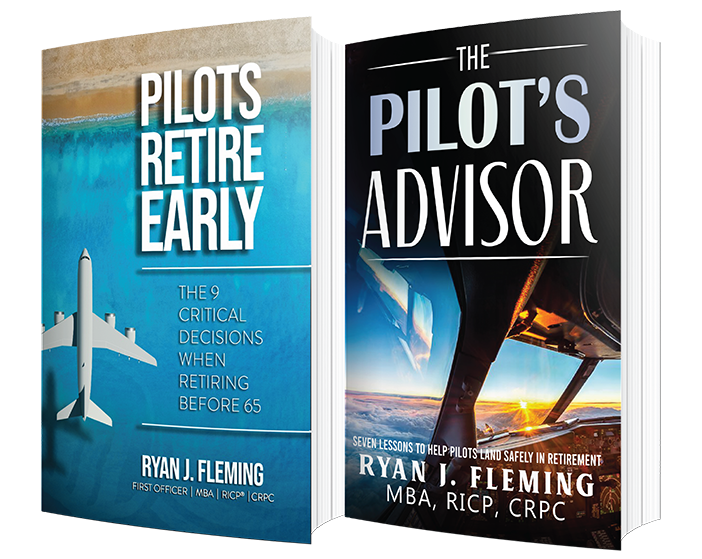
Walter Storholt: Attention, aviators. When you’ve spent years in the cockpit managing the complexities of flight, isn’t it time you navigated your retirement with the same precision? Introducing retirepilots.com right at your touchdown zone. Um, on our homepage, there’s a beacon flashing. Get my Flight free toolkit. Click that and you’ll be cleared for a direct route to Ryan’s retirement toolkit. Tailor Made for pilots like you. Inside, you’ll find two of his important works, the Pilot’s Advisor and Pilots Retire early. Between these two books, you can decipher the nine critical decisions when retiring before 65 and discover the seven lessons to help pilots land safely in retirement.
00:20:00
Walter Storholt: But that’s not all. This toolkit is packed with altitude high value, including extras to get your retirement plans off the Runway and light the afterburners on your 401k. Vector on over to retirepilots.com to grab your toolkit and let’s embark on this journey together.
Ryan Fleming: And I like to think about that wealth transition because it matters. And the only things I’ll tag team on this, there’s many, many investors out there that have no clue that they can invest money into the market and still have the flexibility and liquidity that these plans have. Too many times I see people putting all their money into a high yield savings account where they’re just treading water, barely keeping up with inflation. Just like Zach talked about. These plans are very, very flexible, very, very liquid. And you know the next, the other thing you get to hear about is, well, yeah, but if I need my m, if I want my money back, I got to pay taxes. And I go, yes, you have to pay capital gains tax, but only if good things happen. So that principle that you put in there, you’re never taxed on. You’re only going to pay capital gains. And of course we’ll try to make sure it comes out to be long term capital gains. But I hope you have to pay a million dollars in taxes because that means we just killed it. Your money worked for you and grew a phenomenal amount. And Uncle Sam just wants his little cut. So capital gains tax is a good thing because it means you made a lot of money.
Zach Smith: Absolutely. And to Ryan’s point, the capital gains, so long as we do it on a long term basis. This is why Ryan had mentioned we try to do this, uh, on long term sales. There’s a much more favorable tax rate for long term capital gains as opposed to ordinary income. And to that point, let’s go back to the retirement accounts. When you pull money from tax deferred retirement accounts, that all hits at your ordinary income bracket and moves right up the brackets. Capital gains are treated separately. And that’s why again, you know, I, I will reiterate, these are one of my favorite types of accounts to invest in.
Ryan Fleming: Well, I think I, I love them too. And it, I, I, you know, it provides maximum flexibility. It can be your car fund Your vacation fund, your education fund, your new house fund, and let your money work for you and I. And once again, what you were talking about with the state planning, with that step up in cost basis, I mean you can’t put a price tag on that. Imagine these Accounts has a $500,000 gain and it just goes away. I mean that is unbelievable. And good, good tax planning.
Zach Smith: Absolutely. One other thing, uh, from a tax perspective for folks that give to charity, giving appreciated stock can also be another good strategy for us, uh, to avoid capital gains and still get good charitable deductions. And we don’t need to go too far down that road today. But it just lends more credit to the flexibility of some of these accounts.
Ryan Fleming: Yeah, flexibility is key. Flexibility is huge. All right, so we’re talking about all these different accounts and we’ll talk about a few other things. But it all leads to something that’s very specific in our industry with the airlines and that’s there being that RMD problem, that ticking tax time bomb. And it is, it’s truly a tax avalanche that’s down, down the road if you don’t make some smart decisions with inside your 401k. Um, you want to add anything to this, Zach, on just what this looks like?
Zach Smith: Uh, essentially this entire slide is what we’re trying to avoid. In summary, or trying to minimize if you will, um, this is the problem in retirement and it’s especially becoming a problem. And this is going to be huge, especially for the new hires coming in at 30 years old, upgrading quick with the airlines under these new contracts. I mean it’s a problem even for our 50 and 60 year old pilots. This is the big problem we are trying to avoid.
Ryan Fleming: And generally the way it looks, we know we have a problem. And once a pilot retires, we can control how much money comes out of these tax deferred accounts. And from, let’s say a Pilot retires at 65, so we have about eight years to move money when it strategically, when it makes sense to try to minimize this problem. But in most cases the money continues to grow. So we’re, we’re, we’re trying to move money and lessen the problem, but then it keeps creating more of a problem as those assets grow. So the farther you get behind on this, the worse, the worse it gets and you actually end up paying more tax to Uncle Sam in the end.
Zach Smith: He’s right. Ryan is absolutely correct here. And I do want to, I do want to say that in most situations we’re never going to be able to have all the money as Roth money, uh, it’s generally, uh, at the income level and the contracts that we’ve seen with the pilots. This idea that all the money can be completely after tax is not realistic right now. Now we can, we can have some aggressive conversion strategies as Ryan mentioned, you know, 65 to 72 or 75. We can, we certainly can. But I don’t want people to be afraid of having some money in traditional when we go to retire. We can’t avoid all of it, but we’re trying to minimize it.
Ryan Fleming: Well, I think it’s all about flexibility. I never tell, like I actually tell
00:25:00
Ryan Fleming: people all the time that I don’t think you should convert that or I don’t think you should convert this. It’s about having a balance and having flexibility in retirement where with Roth accounts you can actually still get income and not push yourself into another tax bracket. Well, right. It’s, it’s having control and flexibility once again. And just, uh, the, the larger and larger amount of tax deferred money you have, you lose control and, and it can become a big problem. So leading right into that, talking about losing control and, and making the problem even worse. So everybody likes instant gratification, okay? Pilots love instant gratification. They want it to feel good today, even though down the line it’s going to be a lot more painful. And when I start thinking about tax deferred accounts, when I start talking about these max market based cash balance plan, when we start talking about these deferred compensation plans, all these things that the airlines are negotiating and presenting right now are only going to make the problem worse down the line. And so that instant gratification of not wanting to pay a little bit of tax today is really going to kill you later on and compound the problem. And we’ve done a couple of podcasts on these plans, but here we go. Let’s talk about market based cash balance plan and deferred comp plans.
Zach Smith: All right, all right, well, let’s. These are two completely different things that have similar tax implications. Right? So the market based cash balance plans, these are really pretty new. What would you say, Ryan, the past three years, Delta was the first one out of the gate with these things. And then a lot of the other airlines have followed behind. You know, American just rolled theirs out. United’s probably going to have a vote within the next year on theirs. The previous one didn’t, uh, pass. Ryan, you and I talked about that. Um, by and large, I am not a fan of the market based cash Balance plans. Um, this is a method to defer some tax, uh, for any of the excess contributions from the company. Uh, spilling over. Right. They spill over cash, if you will. The problem with these cash balance plans, and I know Ryan will agree, is they are extraordinarily conservatively invested. It’s more tax, you know, Pervert. Excuse me, more tax deferred money. And, uh, we don’t have access to it. Right. I like my brokerage accounts because we have access to the money. We can’t touch this market based cash balance plan money and we can’t dictate how it’s invested. It’s in a trust. It is locked up by their, their advisors and the stipulations that they’re under. And you know, a lot of you folks at American and even Delta can look at the cash balance plan rules. They don’t guarantee any kind of return on investment. Right. They’re very vague in terms of what it’s invested in. And there is stipulations both in American and at Delta that say we will guarantee that you at least get your money back out of it. Right. Um, you know, American refers into it as credits that are put into the account. They say, we’ll get your credits back. Right. Your balance will be the credits you put in. That means we might make no money on this, right? It’s possible. I mean, that’s not ideal what we’re looking for. But the bigger problem is we already have this tax deferred money problem and this is just adding to it. Anything that goes in that cash balance plan, I want, I want, uh, our people to think of it as traditional IRA money. It is more traditional money.
Ryan Fleming: Yeah. And uh, that’s what it’s traditional money with no control of how it’s invested. Um, the true goal is guaranteed, a principle. And you know, I’m sure it’s going to grow, but it’s very, very conservative, like in Delta’s plan. I mean, it was an extremely conservative allocation that I would not recommend for some, uh, some pilots. Imagine pilots that are in their 30s and 40s, and a lot of those pilots that are in their 30s and 40s are the ones that didn’t understand it and didn’t opt out of it. And so now they’re going to have a large amount of their money that’s not going to go into a taxable account where we have control and flexibility and liquidity for day to day life, which many of those need right now. With having new families and kids, it’s tied up where they can’t control it. And it’s not being invested for somebody that’s got 30 years of growth for that money. So I don’t like them at all personally. I, um, think at a minimum, the airline should give their employees an option whether to opt in or opt out. And I really think that they should have that option every single year. Because I know a lot of clients that didn’t realize what they were signing up for or didn’t realize they had to opt out of it. And now they’re stuck in that plan until 59 and a half. And I just don’t. Can’t agree with that.
Zach Smith: No. And I agree with you, Ryan. And the frustrating part with Delta, you know, they were the first one to get a contract. They were the first one out of the gate. If I remember correctly, they gave their pilot group about three weeks to decide to opt out. So Ryan and I at the time were scrambling, number one, to figure out exactly what this thing was and to try to recommend as quick as we could to people to opt out. Now, the American plan that just rolled out, uh, there is an option to opt out, but if I understand the rules correctly, you guys are going to have the opportunity beginning towards the end of this month through December to opt out of this, uh, tier two option, I believe is what they’re referring to it as. And then you will not have an option to re opt out of this until the end of 2028. So it’s looking like whatever we choose today is going to stick for two
00:30:00
Zach Smith: calendar years, um, and then we may be able to get back out of it. Currently right now with Delta, once you’re in, you’re in. Um, that may change in time. Um, but for right now, um, American’s the one that, the only one right now that we see an opt out clause with.
Ryan Fleming: All right, so moving on, what we’re going to talk about, we’ve talked about the balance. What’s the goal? The goal is true tax diversification. Having balance across all your assets, having some money in your pre tax cash balance deferred comp plans, having some in Roth or tax never money where it’s going to grow tax free forever. Uh, the taxable accounts that we talked about before, capital gains flexibility or just liquidity and flexibility for life. I think that those accounts are, are huge and pilots should have a much, much larger amount of their money in those accounts. Um, all of these give control to manage your income, minimize taxes or control how you pay taxes, reduce RMDs, and it gives you more Control on Medicare and Social Security taxation later on, which. Zach, you want to touch on that and then I’ll move on to our next slide.
Zach Smith: Yeah, absolutely. So this is just lends to more of what we’re talking about. Just the flexibility in retirement from the tax side. It gives me the ability to strategize and control your tax bracket a little bit. Uh, the big word here is control. Right? It gives us control or some level of control.
Ryan Fleming: So an action plan. Why are we talking about all these accounts? I think the main reason we get asked about these all the time and I wanted to put a podcast together where we’re trying to take a little bit of time to educate our pilots on why the problem is that we face consistently and having an action plan or understand why. Zach and I talk on a day to day basis of what we think is the best thing for airline pilots and how to spread out or have balance with their money. So for an action plan here, um, I’ll take the first one and Zach and you can, we can kind of go through it together. But I would put nothing but Roth contributions in your 401k plan for you. And maybe even super backdoor, you know, after tax conversions. Roth money is your best kind of money. You’ll thank me later when it grows for 30 years tax free. And when you take it out, it’s completely tax free. If you have the ability to do what we call a backdoor Roth, you don’t have a traditional IRA balance. We can do a backdoor Roth every single year. And I can explain that to you. And this is why it’s important to work with not only a tax advisor, but a savvy financial planner as well. Because if you’re not taking advantage of these things, you’re missing out.
Zach Smith: Absolutely, absolutely. And these need to be done, this planning for these, uh, what he referred to as a Super Omega Backdoor inside the 401k plans, these can be tremendous tools, but they need to be in conjunction with planning with regards to the market based cash balance plan. These plans change our strategy a little bit when we’re doing things inside the 401k. And Ryan and I can both talk, you know, a little bit more about those on an individual basis because everybody’s situation is different. It absolutely is. But these need to be kind of done from a holistic approach because there’s a lot of factors that will play into, uh, individual strategies and, and yeah.
Ryan Fleming: I think, ah, that’s a great point. Because if you don’t have cash over cap like you used to, and you’ve opted into one of these plans. Um, as you can see down there, deferred comp cash balance plans. Now you got to be very, very strategic because now the game’s changed and you’ve lost more control. Right.
Zach Smith: And the big piece with that is we are trying to minimize the amount of money that goes into these cash balance plans. That is, that is my strategy. I think that’s Ryan’s strategy as well, to minimize what goes in these cash balance plans. So if we are currently, or you are currently enrolled in the cash balance plan, we may need to adjust our strategy a little bit. But uh, nonetheless, I, I completely agree with where we’re, where we’re going with this, Ryan. I think, um, these are the big things that we want our pilots at every age to do.
Ryan Fleming: Yeah. And I would hope, you know, and obviously there’s forced discipline where we set it up every single month and it goes into it. I would rather go into a cash balance plan versus you. Not saving at all. But the hope, if I was to give advice to any of our clients or prospects out there, that taxable investment account is where all that money should go. Let’s limit the amount of spillover that goes into these market based cash balance plans or, or even these deferred comp plans and start building that taxable investment account where you have full liquidity, full flexibility. And it’s once again, as we talked about before, a great, uh, way to, to transfer, uh, wealth later on with a step up in cost basis.
Zach Smith: Right. And Ryan, you brought up a really good point. If you are a disciplined saver, if you are a disciplined saver, these strategies are fantastic. Where we take money that otherwise would have gone into the cash balance plan, assuming that you can opt out, we take money that otherwise would have gone into the cash balance plan and we defer that to a taxable investment account. Now, if you’re not somebody that’s responsible about saving and you know who you are, right. You know who you are. If that’s the case, the cash balance plan may be your safe way of doing this. But, um, if we have the ability to opt out of the cash balance plan and then that cash over cap that comes to you as compensation, pretend that
00:35:00
Zach Smith: it’s invisible. Let’s defer that to your taxable investment account and treat that as another, another retirement vehicle that we control.
Ryan Fleming: Yeah, get, get it out of your checking account. Your checking account, when you look at that’s going to determine, uh, whether you go out to eat that night. Or whether you guys go buy a new car, whatever it might be. Um, try to pay yourself first. Get it out of that checking account, get it invested in a taxable investment account and let your money grow. Compounding interest is a beautiful, beautiful thing. It takes a long time to get a million dollars saved, but because of compounding interest, $2 million comes really, really fast. Um, and building that snowball while you’re early is one of the most powerful things any young airline pilot can do. And then you can be in your 50s and really control what your future looks like and control what your retirement looks like. So, um, Zach, I want to thank you for being on the podcast today. I’m hoping that our airline clients, prospects get something out of this podcast. This last slide here, key takeaways. I know we’ve beat the dead horse, but I’m going to let, uh, Zach give a nice summary and if I have anything to add, control our money strategically. Tax plan. Make decisions today so that you have control later on. It might take a little bit of pain today. We might be some ripping some band aids off, but in retirement you’re going to have a much, much better situation in that distribution phase.
Zach Smith: Right. And to Ryan’s point, you know, the pilots like immediate gratification. Right? We all do to some extent. When we look at some of these strategies in terms of the Roth contributions and things like that, M. Most of the pilots are not going to notice a difference. Right. Conceptually there’s a huge difference here. But in terms of your take home pay, in terms of lifestyle, you’re going to notice a minimal impact with this and it’s going to have tremendous long term solutions.
Ryan Fleming: I think in many cases, even doing a Roth contribution versus not or getting that money out of your checking account, it’s, it’s crazy because most pilots don’t even notice the difference.
Zach Smith: Correct.
Ryan Fleming: Yeah, I had, I’ve had many pilots that had no taxable investment account and I, I call it liquid security. If life happened tomorrow, where are we going to get 60 grand? And they look at me with these crazy eyes like uh, and all that money that’s in your 401k is tied up. You know, you can’t get access to that unless you, you pay a penalty or you can take out a small loan, which I never recommend.
Zach Smith: Right.
Ryan Fleming: I’ve had many, many pilots where we’ve set up a plan where we automatically invested out of their checking account into a taxable investment account. And just a couple of years later they’re like, well, where the hell that $120,000 come from. And that’s, that’s the power of forced discipline and paying yourself first. So, anyway, I hope, I hope all our listeners out there got something out of this today. Zach, once again, thank you for getting on the podcast and going through this with us with that CPA expert tax advisor. Um, uh, input. Um, and I think that’s the true beauty of us working with Pilot Tax. You know, we’re talking on a day to day basis, and as these changes happen at each of the individual, individual airlines, we’re able to talk about it and try to come up with a plan that can maximize it for our pilots and their situation.
Zach Smith: Absolutely, absolutely. Happy to be here, Ryan. And, uh, I know you and I both are happy to answer questions as they come up.
Ryan Fleming: All right, well, sounds good. If you guys have any questions, reach out to Zach at Pilot Tax, reach out to me at the Pilot’s Advisor, and we’ll do our best to give you guys the best information that we can come up with out there. Thank you. Talk to you soon.
Zach Smith: Information is for illustrative purposes only and does not constitute tax, investment or legal advice. Always consult with a qualified investment, legal or tax professional before taking any action.
Speaker 1 16:48
Information is for illustrative purposes only and does not constitute tax investment or legal advice. Always consult with a qualified investment legal or tax professional before taking any action.
This podcast episode is for educational and informational purposes only. The opinions expressed are those of the speaker as of the recording date and are subject to change. This content does not constitute personalized investment, tax, or legal advice. Please consult a qualified professional before making financial decisions.