Preview of what we’ll cover today:
🛡️ Protection focus: Protect family, retirement, and reduce sequence risk
🕒 Term vs. permanent: Term is cheap; permanent stays and builds value
💰 Why whole (not universal): Guarantees, tax advantages, safer structure
✈️ Retirement jet engine: Backup income source in down markets
📚 Pilot resources: Tools, books, and education for deeper planning
Subscribe On Your Favorite App:
 YouTube
 Apple Podcasts
 Spotify
 Amazon Music
 iHeartRadio
 TuneIn
More About This Episode:
We got a great question from a listener: “What’s better? Term life insurance, universal life, or whole life?” Straightforward question. Not a straightforward answer, especially if you’re in your 50s. In this episode, Ryan walks through how life insurance decisions evolve over time and why what worked earlier in your career may not hold up as retirement approaches. Tune in to hear the key differences between term, whole, and universal life, and how it may impact your retirement.
Go Deeper Into The Episode:
0:00 – Intro
1:28 – Addressing the Listener Question
4:52 – Life Insurance 101
5:42 – Whole Life
9:32 – Term vs. Permanent
14:18 – Retirement “Jet Engine”
Resources for this episode:
Becoming Your Own Banker: Unlock the Infinite Banking Concept by Nelson Nash: https://amzn.to/3NLTdfj
How we help eliminate Sequence of Returns Risk: https://www.youtube.com/watch?v=vSsR7Km5XRw
Permission to Spend: Maximize Your Retirement with the Best-Kept Secret in Personal Finance https://amzn.to/4uIfXgG
Resources:
Retire Pilots – https://retirepilots.com
Get your FREE Retirement Toolkit – https://bit.ly/3ZmZsaX
Pilot Tax – https://pilot-tax.com/
The Pilot’s Advisor Podcast is also on video. Watch & Subscribe on YouTube: https://bit.ly/3EIEBW2
Connect with Pilot-Tax: https://pilot-tax.com/
Episode Transcription:
(Note, this is an automated transcription. Please forgive any errors.)
Walter Storholt 00:00
Welcome to another edition of the pilots advisor on today’s episode, we actually got a question from a listener. They wrote in what’s better term life insurance, Universal Life or whole life? It’s a straightforward question, but is the answer as easy to cover? We’ll find out on today’s episode. I’ll grab Ryan and we’ll get started here on the pilot’s advisor. You welcome to another episode. I’m Walter Storholt, as always, joined by the pilot advisor himself. He is, of course, Ryan Fleming and Ryan great episode today, as we just kind of talk about this conversation about term whole universal life, not a difficult question for somebody to ask, but maybe a little bit more nuanced, trying to actually answer a question like this. So are insurance questions something that you’re getting from pilots a lot when they engage in the financial planning process with you?
Ryan Fleming 00:49
Not too much. I feel like I’m more educating them on you’re bringing up the topic, yeah, to plan for retirement. And it’s amazing how much the insurance conversation has changed for me personally as I’ve aged and as my education. You know, we’re constantly trying to find a better way, constantly trying to find a way to protect ourselves in retirement, to protect ourselves against sequence of returns risk, to protect ourselves from the government being one of our major beneficiaries.
Walter Storholt 01:19
You’re using a one word there a lot, protect Yeah.
Ryan Fleming 01:22
And I think that. I think the conversations really changed, and I think it’s important for us to talk about that, yeah.
Walter Storholt 01:28
Well, I don’t know this person’s question, the person who asked the question, I don’t know their age, this pilot, but let’s say they’re in their 50s, just for the fun of it. When a client’s in their 50s, I would imagine a lot of them are going to have some sort of Term coverage in place. What’s the first question you ask them about it as you start kind of kicking down doors and exploring a little bit of their situation?
Ryan Fleming 01:51
Well, I think it’s important for us to just talk about insurance in general. I would say, when we’re younger, if we have any insurance at all, most people are following the Dave Ramsey tool, you know, where you don’t have a lot of money to invest, and you’re going to buy a term policy and invest the difference. You know, buy term, save invest the difference, which makes a lot of sense. I mean, that’s protecting your family when you don’t have those assets. What changes for airline pilots is a couple things. Number one, once they get hired by one of the legacy carriers. Most of these carriers carry quite a bit of employee sponsored insurance programs, well over a million dollars. So the insurance piece kind of falls outside the purview of these guys, and what they worry about, and what happens with many is they’re coming up on 60 or coming up on retirement, and I have to, you know, remind them you realize, as soon as you walk away from the company, or as soon as you’re no longer employed there, all that insurance protection goes away at that point in time. If some, some of them, want to buy term insurance, it’s a lot more expensive. But even then you’re paying into term and then it just goes away. So that protection is going to fall off at some point in time. So what’s changed? Well, insurance companies love term insurance because 90, I think it’s like 98.5% of it never pays out. Sure you pay into it, whatever money. It’s much, much cheaper than permanent insurance, but you pay into it, you pay into it, you pay into it, it never pays out. And it’s the most profitable type of insurance that the insurance and they love it for that exact reason, yeah,
Walter Storholt 03:24
and the customer is kind of happy that they didn’t have to use it, right?
Ryan Fleming 03:28
Yeah? Well, you know, it beats the alternative, yeah. But you know, the whole, the whole reason for it is protecting your family, in case you’re not there to work for the next 20 years, or whatever, you know, whatever you’re protecting, you get that tax free lump sum. Which Tax Free is good, and that can protect your children, protect your spouse, and so it serves its purpose. Yeah, what I didn’t realize was, as I’ve gotten more and more educated, and I started seeing what the wealthy people have been doing for generations, and that’s permanent life insurance. And then the question becomes, why? Well, when we first started investing our money, we invested in taxable investment accounts. We invested in a Roth IRA, maybe when you’re younger and you’re like, oh, I need to max out my Roth IRA. And then what’s the next step? You get hired by a major airline. You’re making more money now that airlines putting 18 or 19% of all the money you make in there, you’re making your own contributions. You’re maxing out your 401, K at $72,000 a year, or whatever the IRS limits are. Each year, you’re putting money away in a taxable investment account for your liquid security. And then the question that most people never get to, but they airline pilots are getting to, well, what’s next? And I think what’s next is insurance and permanent insurance, because it plays such a vital role in the distribution phase of retirement that we’re going to talk
Walter Storholt 04:53
about, yeah, break it down for us and specifically what pilots need to be thinking about here. Because term’s pretty straightforward. But then you get permanent, and it’s kind of broken into whole. There’s universal, and I know there’s a lot of misconceptions between those two, some promise, some flexibility. There’s a lot of praise for whole, but at the same time a lot of criticism as well. So give us a kind of an understanding or a breakdown of those, for those who don’t have the 101, on that, and take us to that next level as well, of like, what’s really a particular concern to pilots when you start bringing this up. Well, I
Ryan Fleming 05:22
still believe with what Dave Ramsey says is we want to split investing from insurance. They’re two separate things. Universal is the type of insurance that’s packaging the two, where you want some insurance, but you want to have your money invested in the market too.
Walter Storholt 05:38
Universal is having your cake and eating it too Exactly.
Ryan Fleming 05:41
And I’m not a big fan of that. When I’m talking about permanent insurance, I’m strictly talking about whole, because whole has guarantees, and we can say the word guaranteed, which we’re never allowed to say in the investment world. So insurance, I don’t look at as an investment. However, it’s a very safe money in place that you can put your money that’s going to grow with, with dividends and interest tax free. So there’s, there’s a very good benefit for it, but you got to make sure that you’re doing it for the right reasons. If you want to invest your money, you should still invest in the market. But where insurance really comes into play is legacy planning and sequence of returns risk, or where can I put my money? Where it’s going to be safe. We have so many people that are, and I think this came from 2022, where there’s so many people putting money in a high yield savings account. Well, why do you think people got so into high yield savings accounts?
Walter Storholt 06:35
Walter? Well, because it was zero for so long that when it went to two or three or whatever, that’s felt very exciting, right? Well.
Ryan Fleming 06:43
And what happened in 2022 because, you know, inflation was going sky high, it became like four or 5% so people started dumping a ton of money into a high yield savings account because it was safe, and they knew they’re going to get that return, but they were still treading water, because that’s just where interest rates were right. And what happened as soon as interest rates started coming back down? Well, that’s high yield savings accounts adjust and come
Walter Storholt 07:05
back down too. Yeah, yeah, the cost of the eggs and the milk still felt the same, right?
Ryan Fleming 07:09
Yeah. And what’s, what’s crazy about permanent life insurance is you get your one guy called it the and asset. And I’m going to give a shout out to a couple things right now, because if you want to do some more research on this, myself and Dave beffort made a website called IBC for pilots. And it’s IBC, the number four pilots.com and you can go watch some videos and really educate yourself on it. There’s also a book that’s amazing by Nelson Nelson Nash. It’s called becoming your own banker. I would highly recommend reading that, because it could change your whole perspective on how you can use this to fund things in your life, but how it can play into ensure in retirement planning. And here’s the way I like to think of it, I’m all about having my money in equities. I want I don’t want to keep up with inflation. I want long term growth. I’m riskier than most, meaning I can handle the ups and downs of the market, because I feel like I understand what happens long term. I can take the emotion out of it. I want to, I want to get a good return on my money. However, when we go into retirement and we start needing income from those assets, we can’t handle that volatility unless you have pensions and other stuff. So everybody’s individual situation is going to dictate how they you know, their plan is put together. But most couples, when they go into retirement, when they can’t handle that volatility, they pull the throttles way back, not as much equity exposure. You know, everyone talks about the 6040 model. You know, you know what the 6040 model is, right? Well, yeah, what? Most people don’t realize Walter is on this I’m gonna start asking Walter, because he’s very well educated. But what’s, what’s the 6040 model, Walter?
Walter Storholt 08:50
That would be the 60% you know, stocks and 40% bonds, as you get older, too. That’s what you kind of move your asset allocation toward. That’s sort of like the easy way to do it, the old way to do it, maybe
Ryan Fleming 09:02
the big words too. He said asset allocation.
Walter Storholt 09:05
Yeah, two points for that, right? Look at this guy. We’re recording this during March Madness. That’s that was a three pointer, right there.
Ryan Fleming 09:12
So, yeah, we won’t bring that up either. There’s some big upsets last night. So yeah, Tar Heels. Yeah, I know I wasn’t gonna bring it up, but it’s okay. High Point. High Point. Hey, badges. The badges go down.
Walter Storholt 09:25
We can root for high point now, absolutely.
Ryan Fleming 09:27
So, yeah, it’s a North Carolina school there, right? Yeah, exactly, yeah. So we should get in a sidetrack here. Let’s get back. So the 6040, model, that’s what a lot of investors go to in retirement. They need a more conservative portfolio. Well, the way I like to think of this, if we can have permanent life insurance anytime I want some money that’s not exposed to the market, I can put it in an insurance plan that’s guaranteed to grow and not lose value. Because even bonds, I mean, we saw in 2022 those were going to. High as interest rates were going up, bond prices were going so. Was it safe? Because there’s almost no risk with insurance. What happens is, you’re automatically lowering your standard deviation of your overall portfolio by putting some money in that insurance policy. And why? How does that work? Well, when we pull income from your your retirement assets. We don’t want to pull it when the market’s down. If the market’s down 10 or 20% you could blow up your whole portfolio by taking income out of that portfolio for a sustained period of time. And if you want to look up and research what we’re talking about, we’re talking about sequence of returns risk. We need to sell more assets to get the same amount of income if the markets retracted or pulled back. If you have cash value and life insurance, you can pull your income from the insurance policy during those down periods of the market. What’s crazy? When you do the analytics on this, we always talk about a 4% safe withdrawal rate. You know where you can pull 4% from your from your investments, and still have a 2530, year retirement regardless of what the market does, even in worst case scenarios, if you have an insurance policy, or we’d like to call it, I call it a lerp life insurance retirement plan, if you have this built in, you can have more like a 9% safe withdrawal Rate. Or there’s books about this too. Permission to spend. You have permission to spend your money while in retirement, getting to enjoy life, because now you have a system in place where you’re not going to blow up your portfolio, so you’re going to get all those good returns when the market’s good, but you’re protecting yourself against the down market and not depleting your 401, K assets, or your IRAs, however you want to talk about it in those down markets, the other aspect of it, while we call it the and asset, let’s say you never had to tap into it, or let’s say you are taking loans against that insurance policy. You don’t have to just pass on whatever you have saved to your family at that point in time, because if you have money in this there’s a guaranteed tax free death benefit that’s attached to it. So you could spend your 401, K all the way down, and boom, you decide to retire from this earth, and next thing you know, your family gets $2 million tax free. You’re right back to where you were. But you got to spend and enjoy your money while you were alive. So there’s a lot of aspects to this. It’s much more complicated than Oh, I’m just going to buy an ETF what have you. But the benefits are huge
Walter Storholt 12:33
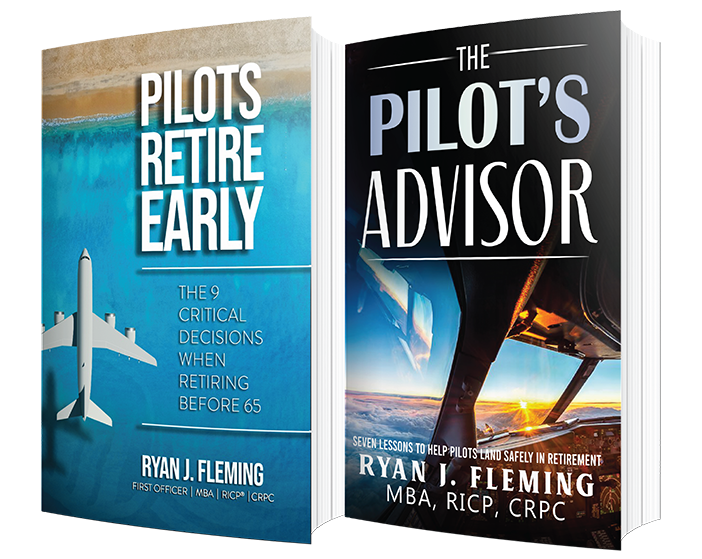
attention aviators, when you’ve spent years in the cockpit managing the complexities of flight, isn’t it time you navigated your retirement with the same precision? Introducing retirepilots.com right at your touchdown zone on our homepage, there’s a beacon flashing. Get my free toolkit. Click that and you’ll be cleared for a direct route to Ryan’s retirement toolkit, tailor made for pilots like you, Inside, you’ll find two of his important works, the pilot’s advisor and pilots retire early. Between these two books, you can decipher the nine critical decisions when retiring before 65 and discover the seven lessons to help pilots land safely in retirement. But that’s not all. This toolkit is packed with altitude, high value, including extras to get your retirement plans off the runway and light the afterburners on your 401 k vector on over to retirepilots.com to grab your toolkit, and let’s embark on this journey together. What I’m hearing you say is term insurance is the nice, simple, easy solution that’s easy to understand and execute, but it doesn’t afford you all of these other protections. So you’re just protecting kind of one thing with the term insurance policy, but with a permanent life insurance policy, you can be way more creative. You can protect more than just one thing as well, because you’re really using it, even though it’s a death benefit, still in life insurance, you’re using it while you’re still alive. And even though it’s not, you’re not viewing it as an investment itself. It’s playing into the investing equation because of the flexibility it gives you on the other side. So that’s, that’s where I’m seeing, like the magic is that that you’re kind of describing massive
Ryan Fleming 14:19
amounts of flexibility. And when we fly airplanes, we have a bunch of redundant systems in place. So if you lose one hydraulic system, another one steps up. I mean, airplanes are very intricately designed, so if bad stuff happens, you’re normally okay and can still land safely, even though that airplane is in a much in a degraded state. Yeah, this is kind of like doing that for your retirement plan.
Walter Storholt 14:43
So you’re saying most pilots out there are retiring on a glider plan. It’s a little more simple of a design. We really need the airplane designed retirement plan that’s got redundancies, it’s got a few more systems and flexibilities, and thus is then capable of doing much more. Than a glider cam
Ryan Fleming 15:01
well, and I did a video on this called the retirement jet engine, which I’ll have Walter post so you guys can watch that as well.
Walter Storholt 15:07
We’ll put a link up here on the screen or down in the show notes as well.
Ryan Fleming 15:11
You and your team, they’re just amazing. All this stuff. We can
Walter Storholt 15:14
make little boxes appear like magic for video. I keep telling
Ryan Fleming 15:17
him, if he could put a little bit more lipstick on this pig and make me look a little bit better on camera that would help, but
Walter Storholt 15:23
AI will get there one day. But we asked AI to improve your face, and it said, No, we can’t do that right now. Sorry, we’re not, we’re not that good yet.
Ryan Fleming 15:30
Yeah, we got to keep working on that. But we’re a lot better off. I mean, you know, we figure what, three years ago, I wouldn’t even get in front of a camera, and now we’re doing podcasts, video podcast all day long.
Walter Storholt 15:41
That’s right, yeah, that’s pretty cool.
Ryan Fleming 15:43
So come a long way. Walter, we’ve come a
Walter Storholt 15:44
long way. Yeah. Well, thank you to the question, asker, hopefully that gives you some great insight. I know that we can’t just tell you pick this one. We have to look at your specific situation, obviously. And that’s what Ryan does, you know, each and every day, I say, in the office. But your office is pretty loose term. These days, you’re going to be all over the place, meeting with people, talking with people, interacting, conducting plans. But wherever Ryan is, this is what he’s doing every day, helping people decide the best way to invest, plan for their financial future, plan for retirement. And the conversations are deeper than just, you know, what stock what? You know, where do I put my money? Over here, it’s so much deeper. It’s conversations like this. How do I handle life insurance? Where does that fit into the puzzle? Social Security, so many other things, obviously, that come into the equation for pilots specifically, as well. If you’d like to engage a little bit more with Ryan after today’s conversation, please do all you have to do is click the link in the description of today’s show. You’ll be able to get a free retirement toolkit if you have not ordered one of those before, it’s a free box of assets. Essentially, that’s going to give you some really cool access to Ryan’s books, reports, lots of great information to help get you started along the retirement planning journey. And it also qualifies you for a free portfolio analysis, which is a one on one meeting with Ryan and a conversation about your plan specifics. So take advantage of that link in the description. Of course, we will also link to some of those other resources that Ryan mentioned as well. That website, IBC for pilots, will link to that Nelson Nash book as well, as well as the sequence of returns video. So check all of that down below as well. Ryan, thanks for the help on our life insurance conversation today. We’ll chat with
Ryan Fleming 17:20
you again soon. Always a pleasure. Walter, we got to get off this because we got to go watch some March Madness.
Walter Storholt 17:25
I don’t know who to root for anymore, I guess, high point, but let’s do it all right, sounds good, man, we’ll see everybody next time. Thanks for joining us on the pilots advisor.
Speaker 1 17:38
Information is for illustrative purposes only and does not constitute tax investment or legal advice. Always consult with a qualified investment legal or tax professional before taking any action.
This podcast episode is for educational and informational purposes only. The opinions expressed are those of the speaker as of the recording date and are subject to change. This content does not constitute personalized investment, tax, or legal advice. Please consult a qualified professional before making financial decisions.