Preview of what we’ll cover today:
🎯 Purpose: Building meaningful routines after flying
🧞 Financial Genie: Identifying your biggest money stressors
💭 Money Lessons: Reflecting on past financial decisions
❤️ Emotions: Connecting feelings with financial choices
🧭 Personal Goals: Discovering what truly matters most
✈️ Pilot Toolkit: Resources for retirement preparation
Subscribe On Your Favorite App:
 YouTube
 Apple Podcasts
 Spotify
 Amazon Music
 iHeartRadio
 TuneIn
More About This Episode:
Talking about money can be hard for some people, and sometimes it just takes the right question to get things rolling. Ryan goes over a few today that he thinks are worth asking. None of these questions are really about money. That’s kind of the point. Sometimes the best way into a financial conversation is to start somewhere else entirely.
Go Deeper Into The Episode:
0:00 – Intro
0:48 – UNC vs. Clemson, Football & Life Lessons
4:40 – The Tuesday Morning Question
8:13 – 3 Financial Wishes
11:51 – Reflecting on Past Financial Lessons
17:38 – Your Plan in Unique
19:50 – Request a Toolkit
Resources:
Retire Pilots – https://retirepilots.com
Get your FREE Retirement Toolkit – https://bit.ly/3ZmZsaX
Pilot Tax – https://pilot-tax.com/
The Pilot’s Advisor Podcast is also on video. Watch & Subscribe on YouTube: https://bit.ly/3EIEBW2
Connect with Pilot-Tax: https://pilot-tax.com/
Episode Transcription:
(Note, this is an automated transcription. Please forgive any errors.)
Walter Storholt 0:00
On today’s episode of the Pilots Advisor, we’re going to talk about simple conversation starters. But these are really important things. They’re questions that you should be asking about your financial future. And if you ask the right questions, it’s honestly going to just do wonders for getting the right process rolling, so that you can experience financial and retirement success. We’re going to talk about some of the top things pilots should be asking about and thinking about to get this ball rolling on today’s episode. Ryan, welcome to the show once again. Hope life is treating you well, my friend.
Ryan Fleming 0:33
Thanks for having me, Walter. I appreciate it. Out here rolling, you know, it’s a Thursday. We’re recording on a Thursday today. Kind of, kind of rainy, kind of dreary, to be honest with you.
Walter Storholt 0:42
Yeah, we’re we’re rainy and dreary even in Colorado as well. So I I have to let I have to let you know Ryan get some bragging rights here. So Ryan was at the Carolina Clemson game a couple of days before we’re taping today’s episode, and I’m a Carolina grad, and Ryan obviously is in the backyard of Clemson and close to the program, and Clemson beat UNC after a long rain delay. But it was kind of cool. You got to run into some former coworkers of mine, I guess, in a way back when I used to work at the university in the sports department, and that was pretty cool seeing pictures of you and and some folks that that I used to run in the same circle with. Yeah, it was kind of
Ryan Fleming 1:20
kind of fun, right? Well, first of all, it didn’t seem like old Billy Belichick was pretty very happy after that game. That’s I think he got quite a few headlines for his lack of professionalism.
Walter Storholt 1:32
Yeah, did you see the clip when they were coming out to delay the game? And I guess it’s one of the officials who was coming out there, and he’s like, “Hey, stop the game! And Bill looks over at him, just goes, “Shut up!
Ryan Fleming 1:43
I I have not seen that clip, so if you can find it, please please send it to me.
Walter Storholt 1:48
It’s pretty funny. Yeah,
Ryan Fleming 1:49
please send it to me. So no, like you know, let’s talk about that. I know the week prior I was out at the Fisher DeBerry. You know, my coach getting recognized with a statue outside of Falcon Stadium, which is well well deserved. I mean, College Football Hall of Fame, amazing man, and of course, I was hanging out with Larry Fedora, who was my position coach way back in the day, who was the head coach at Carolina for how many years? You probably know better than me.
Walter Storholt 2:14
What was he about seven or something like that? Yeah,
Ryan Fleming 2:16
man, decent decent run there. So I was hanging out with Larry Fedora, which is great, and then at the Clemson game, I was up in the Masters Club, and one of my good buddies, who happens to be a Naval Academy grad, who’s a Goldman Sachs guy, he was the ROTC instructor in in Chapel Hill way back in the day for I don’t know a few years. So he had his one of his buddies coming up to hang out in the Masters Club. I was like, “Oh, cool! Well, it happens to be what I think the associate AD for North Carolina.
Walter Storholt 2:48
Yeah, yeah. I don’t know Rick Steinbacher. I don’t know what his current title is, but some somewhere high up in the athletic department. Yeah,
Ryan Fleming 2:53
and him is him and his brother were both up there. They both played football at UNC back in the day. Great guys. I mean, I really enjoyed spending time with him, and then so I threw the Larry Fedora name at him, and then I was like, “Hey, I got one for you, and I told him Walter Storholt, and he’s like, “Oh hell yeah, I know Walter, and he said, “You’re a great guy, and said, “Tell you hello, and so yeah, walked down memory lane there, right?
Walter Storholt 3:17
Pretty cool, yeah. Rick’s a good guy, good folks, you know, kind of in that circle, and worked with him many many years on and off, working in the local radio market there in Chapel Hill. And then when I worked for the university with the women’s basketball team, Rick was the first person to take me out to lunch and kind of welcome me to the athletic department. And how cool was that representative? And yeah, it was very cool. So just quality human being, and it was just neat to see a picture pop up with you and him on my phone this past weekend. Yeah, just hanging
Ryan Fleming 3:43
out, just hanging out, you know. Yeah, trying to trying to teach all you UNC boys a little bit about football. That’s all.
Walter Storholt 3:49
Yeah, well, you taught us as you usually have. So well, see,
Ryan Fleming 3:54
you talked about bragging rights. I’m sorry, like we. I mean, I think Clemson had 32 yards in the first half. I mean, what a what a horrible game, horrible game. But you know, coming back out second half and trying to put it together, and I think what it shows though is much like life. I mean, you got to overcome adversity, get a little bit of momentum. Bad stuff’s going to happen. You’re going to get punched in the face again, again. You know, are you going to get back up and just keep fighting? But yeah, I mean Clemson was able to pull it off, which of course I loved, and of course Walter didn’t like, and I haven’t talked any trash, so I’m surprised. Surprised he brought it up.
Walter Storholt 4:31
Withholding a little bit, so yeah, he’s been good. He’s been good. Well, yeah, look at you turning that into a deep life lesson. I love it. That’s fantastic. So, well, speaking of life lessons, let’s let’s get into the finance part of this. That that was a great conversation starter, but let’s talk about financial conversation starters. And some of these might seem a little bit off the wall to our listeners and viewers at first glance, but you know, as a pilot, kind of just put yourself in these positions and and see why these questions lead. To good conversations, so the first one, Ryan, is picture yourself retired. So you’re talking to a pilot who’s a couple years away from retirement. Maybe picture yourself retired. It’s 1045 on a Tuesday morning. What are you doing? Why would that be a revealing question and a good conversation starter for somebody to be thinking about?
Ryan Fleming 5:17
I’ve found with people retiring, whether they want to or not, you know, like like thinking about retirement, it’s hard for people to get themselves to really get there and actually be in the moment. I think everybody wants to retire, but then the reality of retirement sets in after you know the first month or two, three months. It’s like, oh, this is great. I’m not going back to work, and then all of a sudden, it’s the whole now what? Like, oh my gosh, this is the way life’s going to be. So, picturing yourself retired on a random Tuesday morning, what are you doing? I mean, I think you’ve already got up. You’ve you’ve had your coffee, maybe if that’s a part of your morning routine. Maybe you go on a walk. But it’s a great question to really dig in and think about if I am not going to work if I’m not commuting to work to go fly airplanes. What is my what does my life really look like?
Walter Storholt 6:05
Yeah, it takes it out of the abstract and gives it kind of a specific definition. It’s kind of funny that this is saying 10:45 on a Tuesday morning because I can tell you like where my dad, who retired within the last couple of years, exactly where he would be at 10:45 on a Tuesday morning, he’s going to be on a ferry going to Vinyl Haven, which is an island off the coast of Maine, driving the food truck for AIO, the local like benefit organization that helps feed the community, because he volunteers with that group, and he’s the Tuesday morning driver that goes to the island and distributes food to the group, and then he takes the ferry back in the afternoon, and that’s he loves his Tuesday routine, and that’s exactly what he’s doing and wanted to do during his retirement days. So taking it out of the abstract and saying, “Yeah, that’s my Tuesday mornings” is giving back to the community and driving and being on a boat, and that’s all my favorite things.
Ryan Fleming 6:56
Well, I think that’s fantastic, and and I think the the main thing I see is just having some sort of a purpose or some sort of a routine. I think we’ve talked about on the show many times. Those that don’t have those things, they don’t have a purpose or a routine or some special interest that’s going to get them out of bed in the morning. It doesn’t normally end well.
Walter Storholt 7:13
Yeah, absolutely. So it’s it’s going to be a different answer for everybody, and that’s what’s okay. Is it might also look we were signing our our house paperwork. We were talking on a previous episode about buying a house. We were signing our house paperwork at Panera the other morning before work started, and it was pretty cool because I saw a retired couple come in, and they each had their books, and they got their coffee, and they sat down at Panera next to the fireplace, and they got their books out. And I actually asked them after we signed our paperwork and and just you know asked him a few questions and that’s their that was their Tuesday morning. It was a little earlier than 1045, but that’s their Tuesday morning routine. They like to go and instead of just sitting at the house, they want to get out to get their day started and feel like alert and not just kind of stuck in their home. And so that’s their Tuesday morning routine each week is to go and read and have coffee at at the Panera, well, and getting
Ryan Fleming 8:01
getting out of bed, I think is key too. Getting out of bed to go do something, whether it’s going on a walk or whether it’s going to breakfast or what have you, getting out of bed, getting out of the house is very very important.
Walter Storholt 8:11
Yeah, I ask myself that question. Yeah, I got
Ryan Fleming 8:14
one to yeah that I use sometimes, and I think is pretty good. You know, because it’s hard to ask somebody, you know, what keeps you up at night, or what they worry about, because they do worry about those things. But it’s hard to put your, you know, your finger on it because it’s different for everybody else. And one of the ones was like, you know, the whole financial genie. If you had three wishes, or or what three money problems would you wish to go away or solve? That’s a good
Walter Storholt 8:37
way to frame it, right? It makes it easy to think about having your your your genie in a lamp and your three wishes that gets to the heart of probably what immediately pops in their mind that they want to fix what it would be.
Ryan Fleming 8:47
Yeah, well, you know, if you had all the money in the world, what really would it change? There’s still stresses in life, and there’s still things that you’re thinking about. No different than like you know you have a million problems until your health is of issue, and then you have one problem,
Walter Storholt 9:02
right? Right.
Ryan Fleming 9:03
I don’t know. Take that one, Walter. If you could have three wishes, or if if money wasn’t a factor, what what would you be worried about?
Walter Storholt 9:12
Yeah, like the first thing that comes to my mind is pay off the house. So you can tell that like having that mortgage is a stress point, like having that bill each month, right? So yeah, boy, paid off house would be great. That would just make life easy, you know. So that would be the first thing that comes to my mind. If I’m at retirement, maybe my house is already paid off. It might be something else. Hey, maybe I’ve got three kids in college, and so you’re like, oh, pay college off, and then I’m I’m good. That would be a big stressor for me. Things like that, maybe medical bills, all sorts of things like that. I think is just revealing as to what’s probably the most pressing thing on somebody’s mind in their life.
Ryan Fleming 9:48
It’s hard for me because it’s like you know, life created all these money stresses early on, especially the way I grew up. You know, we didn’t have much of anything, especially not compared to my friends and. You know, there was that instilled hard work. You get up and work and go cut grass or work at the Ponderosa or whatever it is. But money is always the excuse to go do those things because you have bills and mortgages and need to take you know pay for food and. But if it wasn’t about all that, it’s funny to me how it, especially as I get older, it comes back to just working, just doing something. Like, let’s say you had all the money in the world and didn’t have to worry about it. Would you still go fly an airplane? Would you still fly for FedEx? Would you have still been in the military? And I remember them asking that question back when I was still flying in the military. Like, if you had all the money in the world and money wasn’t an issue, would you still be flying C 17 s, and I’m like, I think I would, you know, like I still enjoy that. But, but if money was off the table, I still think that I would work. And I, I mean, my wife calls me out for that all the time. That I’ll work to the day I’m dead, and I hate that that’s the way it is. But I think it was just so ingrained into me from childhood that I probably will.
Walter Storholt 11:01
Yeah, but it might be I’ll work three days a week instead of five in the normal world, or I’ll take you know. Hey, I hate that flight that I have to do to. I’m just picking somewhere random Thailand each month. You know, I’d rather just do domestic, or I want to just do these routes. I want to be more selective. That could be doesn’t always have to be as dramatic as I need to pay off this and that. Hey, if I could just make this one little lifestyle adjustment because I no longer need that extra income or I don’t have that pressure to always be earning the max. Hey, I’d like to make this one lifestyle tweak, and that would make me happy. It might be as simple as that.
Ryan Fleming 11:34
Well, for me, it’s if it’s a rainy, dreary day like it is today, I just want to lay in bed and leave me alone. Like I don’t want to get up and I don’t want to go do anything, which you know was another big reason why I had to leave the Midwest. I mean, I couldn’t deal with the overcast depression. I just it it was hard for me to get motivated. I got another one too. So many times I’ll teach a client a new a new planning tool or or like a better way to look at money or how to let their money work for them, or you know about insurance or whatever it is, and you know the whole knowing what you know now. What would you have done differently financially? Because I get it all the time. Like God, I wish I would have known about this in my 30s, or I wish I would have met you 12 years ago. So opening that door to regrets or lessons, because I get it all the time. Like I, you know, people that just set it and forget it, and then we actually look at what’s happened over the past 1015, years, and they’re consistently. I wish I would have known this. I wish I would have met with you. I wish I would have. So, what would you have done differently financially, knowing what you know now?
Walter Storholt 12:37
You know, I would go, and this may just reveal more about my personality. Is we? I’ve always bought very inexpensive, cheap cars. I’m not a car guy, so that helps me a lot. I think I just like something safe to get me from A to B. But I’ve always just usually like dad’s trying to get rid of his truck that he’s put 300,000 miles on, and I’m like, I’ll take it, and then I’ll drive it for a couple of years. When we moved out to Colorado, we bought with cash a it wasn’t brand new, but it was almost brand like had 8000 miles on it, brand new for you, brand new for me vehicle, and it was by far the most I’ve ever spent on a vehicle, and although I’ve enjoyed driving it and having it, it has eaten me up ever since buying it. Just the idea of tying up that much money in a depreciating asset-it’s not going to ever work for
Ryan Fleming 13:32
you again. It’s gone. I
Walter Storholt 13:34
kind of feel like I’ll never do that again. I will on my next vehicle. I will more than happy go back to having to put 1000 or $2,000 a year into fixing something up and handling older car issues, to not tie up that much money in a vehicle again. Because I’m like, I’m going to drive this thing until it explodes. Because I’ve just I have to like it’s just eating me up like the value loss on that on that car. So I don’t know. Well, see, like I love recalibrating back to a more frugal mindset in that way, I guess, is something I would do. Well, I
Ryan Fleming 14:04
think that shows your age too, because you know how you’re supposed to get older and grumpier and cheaper. You know, that’s like the natural progression of becoming your parents.
Walter Storholt 14:13
Yeah,
Ryan Fleming 14:14
and I love that mindset because that’s the million millionaire next door mindset. Unfortunately, most pilots are like buying new boats and airplanes and cars and of course the interest alone is ungodly. I’m trying to think of like what I would have done differently, and it’s funny because my immediate thought was, “Well, I wish I would have started investing earlier. I wish I would have bought like started buying stocks when I was like 12.
Walter Storholt 14:38
Yeah,
Ryan Fleming 14:38
but of course I had no education at that point in time, I didn’t know. I didn’t know how, you know, the market could be one of the greatest wealth creation tools of mankind. And I think, and and I’ve made the same mistake that you did. Like I, I had all those old cars where I pulled the clutch, you know, off the floorboard with a rope, and then I had a used car that was new to me when it had 110,000 miles on it. I thought about it. Brand new car, and then I finally did in my mid to late 20s because I was trying to keep up with the Joneses. Bought a new car. What a mistake that was! What dumb! But I had to learn that lesson myself. Yeah, going back to just
Walter Storholt 15:13
the old an old truck that just you know give me a bench seat truck that just makes funny sounds when you drive it around, and I’m I’m I’m good to go.
Ryan Fleming 15:21
I honestly think it is cooler to have the hoopty versus the the real nice car. Personally, like I maybe I’ll go get like just the nastiest oldest minivan and roll it around just for the fun of it. But
Walter Storholt 15:32
I like that idea.
Ryan Fleming 15:33
It tells me that it’s about the grind. I mean, I think the grind is way more important than you know. Had I bought Apple at 15 years old, and you know now I’m a millionaire.
Walter Storholt 15:43
Yeah,
Ryan Fleming 15:43
like
Walter Storholt 15:43
yeah, the
Ryan Fleming 15:44
the grind and life lessons are a part of life, and you know my daughter is going to go on an official visit to the Air Force Academy. I just found out that that’s going to happen, and
Walter Storholt 15:56
nice.
Ryan Fleming 15:56
I sounds so horrible, but I can’t wait for her to get punched in the mouth. I want her to go there and and go through basic training and and and struggle and and have that adversity because that’s going to make her such a better person in life and learn how to do things and she’ll realize how good she had it. I guess, but but I don’t know. I just feel like some some some. If I could predict the future, I would have done X, Y, Z. But it’s not about that. It’s about actually experiencing the hardships.
Walter Storholt 16:30
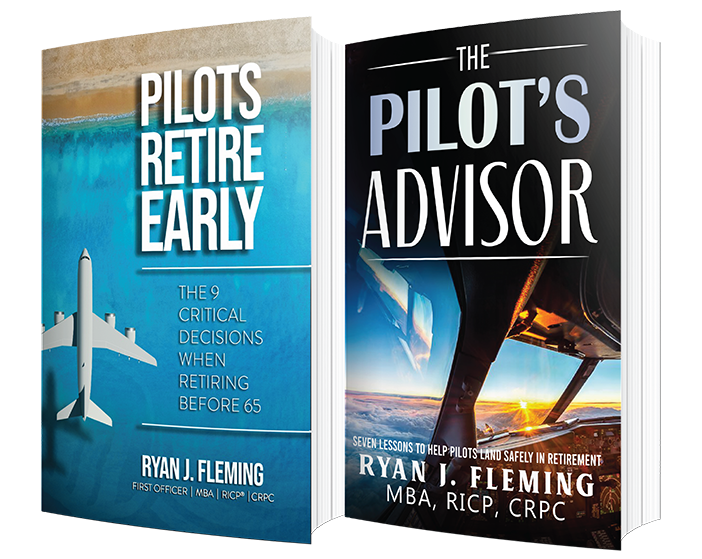
Attention, aviators! When you’ve spent years in the cockpit managing the complexities of flight, isn’t it time you navigated your retirement with the same precision? Introducing retirepilots.com. Right at your touchdown zone on our homepage, there’s a beacon flashing. Get my free toolkit. Click that, and you’ll be cleared for a direct route to Ryan’s Retirement Toolkit, tailor-made for pilots like you. Inside, you’ll find two of his important works: The pilot’s advisor and pilots retire early. Between these two books, you can decipher the nine critical decisions when retiring before 65, and discover the seven lessons to help pilots land safely in retirement. But that’s not all. This toolkit is packed with altitude high value, including extras to get your retirement plans off the runway and light the afterburners on your 401k. Vector on over to retirepilots.com to grab your toolkit and let’s embark on this journey together. Yeah, well, all good lessons. These are all good conversation starters. Let me fast forward to the end, Ryan. So you have this conversation with a client sitting across from you, as we’ve kind of gone back and forth with some of these things today. Why? Why go through these questions? How does that actually change someone’s plan or the way that you invest or save or work with that client?
Ryan Fleming 17:53
Well, I think it’s you know no different than talking about bucket list items and things that they got to do. What I what I find is every every client’s different, you know. Maybe it’s legacy planning and saving it all and passing it on to your kids, so that you know that that passing on a legacy is important to them. Others are like, I don’t, I’m not leaving them a dime. I want to travel. Asking the questions gets you to find out what truly matters to them, and and and in many cases, it’s different For the spouses, you know the husband wants this, but the wife wants something completely different. But getting those those conversations out on the table so that we can plan accordingly is important.
Walter Storholt 18:32
So this is why you can’t just go type in a couple of numbers into a calculator, have it spit something out, and then kind of operate that way in retirement because your answers to these questions inform how you should invest, how you should do your plan. I’m thinking just as a simple example, Ryan, like a couple who might be very similar to another couple, except for one important thing. Maybe they’ve got an age gap. One of the couples has an age gap of 20 years, and that completely changes the importance of maybe being more aggressive or more conservative, making sure there’s more money for because hey, hey, I’m going to pass away much earlier than my spouse. I need to make sure that she’s taken care of. Let’s say, and so we need to invest very differently to accomplish those varying goals in retirement, just from that one variable. Let alone if you throw in 5678, more variables between people.
Ryan Fleming 19:20
Absolutely, and it’s you don’t know what you don’t know, and the conversations lead a lot to that. Or something I see a lot is somebody that’s actually very, very conservative and risk averse, but yet they have all their money in the S and p5 100. Like that, somehow that’s comfortable. And I’m like, do you have any clue how much risk you’re actually taking on? You know, the the S and P will lose 30 or 40% one year again. It’s just a matter of when,
Walter Storholt 19:41
right? Yeah, and it could be tomorrow. It could be, it could still be another 10 years from now. Who knows? Yeah, but it’s going to happen again.
Ryan Fleming 19:49
So anyway, all all good conversation pieces, and that’s why it’s it’s so good to actually get beyond the numbers and and actually talk about the grade, the touchy feely, because we can take those and. And and then revert it back to planning and asset allocation and and and I think that you don’t get that with unless you’re talking to an advisor.
Walter Storholt 20:09
Yeah, if you’re only having conversations in numbers, they’re still an important piece of the conversation. But if that’s really the only kind of conversation you’re having, that’s a bit of a warning light on the dashboard, right? On the on the instrument panel. That’s something that you need to pay attention to and maybe rethink a little bit and start having these kinds of conversations because it’s going to inform the plan.
Ryan Fleming 20:29
Well, and and people are completely different. Some people it’s just about numbers; they don’t need to talk, and others need to talk through it and understand the plan and start building out a retirement plan 510 years before you even retire, others don’t want to talk about it until I’m reaching out to them, going, “Hey, man, you’re retiring in a month. Like, we need to sit down and actually build this out. Like, been reaching out to you, like, let’s talk about it, and they’re like, “Oh, whatever.
Walter Storholt 20:52
And some want to have these conversations and don’t want to know anything about the numbers, and so then they’re like, “Am I
Ryan Fleming 20:57
okay? Am I good? Yeah, you’re good. You
Walter Storholt 20:58
do it. Just give me a thumbs up. Yeah,
Ryan Fleming 21:01
well, or now, and I do, and I do do that with my clients. I let them drive the ship. If they want to meet all the time, we meet all the time. If they don’t want to meet, I’m not going to make them meet. I’m still looking at their portfolio and looking at the numbers so I can give them advice. But it’s up to them, you know, how how much or how little they want to meet. I just try to be here.
Walter Storholt 21:18
Yeah, all good stuff. If you’re listening or watching to today’s program, and you’re kind of wondering, yeah, I need this kind of planning. What are my first steps? Usually, what we do is we direct people to get Ryan’s retirement toolkit. It’s specifically built for pilots, speaks specifically to the industry, of course, along with general and helpful financial planning information. But it’s a great starting point for anybody starting to dip that toe into the retirement planning and financial planning waters. There’s a link in the description of today’s show where you can order that toolkit. When you do that, you also qualify for a free portfolio analysis, where Ryan will meet one-on-one with you to have these kinds of conversations and use some of these conversation starters as well as other questions to dive into the details with you. So don’t hesitate to reach out. Have that conversation with Ryan again. Link is in the description of today’s show to get your toolkit and start that process and that conversation. Ryan, thanks so much. We’ll talk to you again soon.
Ryan Fleming 22:12
Sounds great, Walter. Positive rate.
Walter Storholt 22:14
Gear up.
Ryan Fleming 22:15
We’ll check the missed approach altitude. Talk to you guys later.
Speaker 1 22:22
This episode is for educational purposes only and is not individualized investment advice. The Pilots Advisor LLC is an SEC registered investment advisor. Registration does not imply a certain level of skill or training. Past performance is not indicative of future results, and investing involves risk, including the possible loss of principal.
This podcast episode is for educational and informational purposes only. The opinions expressed are those of the speaker as of the recording date and are subject to change. This content does not constitute personalized investment, tax, or legal advice. Please consult a qualified professional before making financial decisions.