Preview of what we’ll cover today:
✈️ September Lump Sum: FedEx pilots have an important decision ahead
🏦 Infinite Banking: IBC offers an alternative way to put a windfall to work
🛡️ Whole Life Insurance: Properly structured policies can provide guarantees, liquidity, and flexibility
📈 Long-Term Advantages: The goal is to keep more money working inside your financial system
📞 Next Steps: Education and individual planning come before implementation
Subscribe On Your Favorite App:
 YouTube
 Apple Podcasts
 Spotify
 Amazon Music
 iHeartRadio
 TuneIn
More About This Episode:
FedEx pilots are about to receive a significant lump sum, and what happens next could have a lasting impact on their financial future. In this episode, Ryan is joined by David Befort to discuss a strategy pilots may want to understand before that money gets spent, transferred, or committed elsewhere. A lump sum can disappear quickly, but the right strategy may allow it to keep working for years to come.
Go Deeper Into The Episode:
0:00 – Intro
0:32 – September Lump Sum
3:30 – Infinite Banking
8:51 – Build your own survivor benefit plan
12:23 – Volatility buffer in retirement
20:32 – Long-Term Cash Accumulation
25:08 – Own a non-market-correlated asset
26:10 – Tax-free Legacy
33:40 – Implementation Options
41:00 – Resources and Next Steps
Resources for this episode:
EY Article:
Infinite Banking for Pilots by David Befort
Infinite Banking for Pilots: Befort, Mr David: 9798320594668: Amazon.com: Books
Connect with David:
Resources:
Retire Pilots – https://retirepilots.com
Get your FREE Retirement Toolkit – https://bit.ly/3ZmZsaX
Pilot Tax – https://pilot-tax.com/
The Pilot’s Advisor Podcast is also on video. Watch & Subscribe on YouTube: https://bit.ly/3EIEBW2
Connect with Pilot-Tax: https://pilot-tax.com/
Episode Transcription:
(Note, this is an automated transcription. Please forgive any errors.)
Walter Storholt 0:00
Hey FedEx pilots, if you’re receiving the September APRP lump sum, don’t spend it until you watch this episode or listen to it. We’re getting into tax withholding and the surprises that come along with it, rollover and transfer options, and an opportunity that most pilots don’t know about that can be a real wealth-building game changer. Before you move the money out of wherever it lands, check out today’s episode with Ryan and his special guest. Let’s get to it.
Ryan Fleming 0:32
Welcome to another episode of the Pilots Advisor podcast. This is Ryan Fleming, the Pilots Advisor. This one is pretty much for FedEx pilots. I like to you know if there’s something industry specific out there, I actually like to record a podcast so that we can really dig in on a certain airlines what they have going on, and of course, right now with FedEx pilots, September is a big month. Okay, we are getting that lump sum payment for you guys. It’s called the, and I even have to read this because I think it’s hilarious. The APRP, what the hell does that stand for? The Contracts Accrued Pay Retro Program. So, you guys got a 40% pay raise. You’re getting a big lump sum in September. What I want to do is make sure that you guys know all your options out there about what to do with this lump sum? Many of my clients have asked me. You know, we’ve talked about what their plan is, and I don’t want pilots to waste it. Okay, this this money’s already been taxed. You should have had this money five years ago, but you know the contract negotiations drug on. And so what I’ve done is I’ve invited Dave Beffert on our show, and many of you guys maybe already know Dave, but I’ll let Dave talk about a little bit about what he does. But I wanted to have a conversation about how we can let this once-I don’t want to say once-in-a-lifetime opportunity, but getting this lump sum payment, how can we keep it in your wheelhouse and let that be something that’s going to work for you long term versus just blowing it on a vacation, or paying off debt, or buying a truck, or buying a boat, and a lot of the things that pilots do. So, I apologize for that big long intro. But Dave, thank you for being on the show, and we’re going to talk about this big lump sum payment and what we can do with it. How are you doing today?
David Befort 2:17
I’m good, man. I’m good. Thanks for having me back. Always good to be here, and yeah, we got to see each other in person not too long ago, so that was fun. Always had a good time in Boston. Yeah,
Ryan Fleming 2:27
absolutely.
David Befort 2:28
Yeah, but we are we’re talking business today. So you mentioned yeah, this is specifically for the FedEx pilots. You got that contract, that new contract, finally. But really, this could be for anybody who has a windfall of any kind, either now or in the future. So keep this in mind. Even if you’re flying for a different airline, you get pay raises there too. And there’s probably different windfall opportunities within your your lifespan that you know some of these strategies could fit right into. But yeah, like you said, man, you could either spend it, or you could use that to to build some more wealth, some more security, some more certainty in in your financial life. And I think everybody listening to this show, they’re not here to learn about what cool stuff they can go buy with this newfound money in their pocket in their bank account. They’re looking to go a little deeper and be a little smarter than the average pilot out there, and say, “How can I put this to work to create something for me and my family for the long term? So, what I want to talk about today with with everybody here is the five reasons every FedEx pilot should consider implementing this concept. We’re going to talk about into your portfolio, and then we’re going to talk about the three best ways to go about implementing it. So let’s talk about the five reasons. Now let me back up a little bit and kind of lay the foundation here. If anybody’s listened to the podcast for some time, maybe they’ve heard you and I discuss the infinite banking concept. So that’s something that I specialize in. I’m a life insurance expert. I’ve been teaching this concept for last eight years or so, and practicing it for for twice as long-about 16 years of my life now. And this concept has been the the financial foundation of everything I’ve ever done. It helped me transition out of the military, being a pilot in the military like you were to the civilian world to get back in flung.
Ryan Fleming 4:25
You can’t do that. You got you can’t just say, “Oh, I was a pilot in the military. Sorry, dude. You got to tell everybody that you’re an A10 pilot. Come on, dude.
David Befort 4:31
Okay, I I flew A10s. I I was fortunate enough that nobody else in my class wanted the A10 when it came time for for drop night, and and I put that as number one on my list. So yeah, I I got to enjoy many years of flying that around the the world. So that was awesome.
Ryan Fleming 4:48
I think I think it matters. You know, and your company Max Performance Financial. You’re an A10 pilot. You even flew you know some of the regionals for a little while. But Dave’s a super smart guy. You should list. To him, and that’s exactly why I have him on the podcast today. So sorry about that, Dave. Go ahead.
David Befort 5:05
No, you’re you’re welcome to talk about me all you want, man. I appreciate it. So, all right. So let’s get back to it. So this the infinite banking concept. There’s a few more episodes on on this podcast. Go back, and I’d say go back and listen to them to get a good foundation on what this is all about. But really, it’s it’s creating putting a portion of your portfolio, whether that’s 20, 25% 30% into something that’s guaranteed that creates safety and certainty and de risks your entire portfolio. And in the case of the infinite banking concept, it’s really a process of banking. I teach and educate people how to put their own money somewhere where it gets to grow and compound uninterrupted for the rest of their lives, and at the same time, they get to leverage that and create a personal line of credit for themselves based on that growing amount of cash that they they accrue over their lifetime, and it continues to grow even as they access this personal line of credit. So they use that now instead of paying cash for a car or getting bank financing for a car, as an example, you use your personal line of credit that leverages the cash you’ve already saved up to go buy your cars, to go finance the things of life, and then you pay that line of credit back, so it’s there for you to use again. All at the same time, your cash has continued to grow uninterrupted because you’re not using your cash; you’re using the line of credit from the insurance company. So, Dave, what you’re saying is,
Ryan Fleming 6:38
what you’re saying is, and I’m going to apologize in advance because I probably will interject a little bit on this, but everybody talks about wanting to pay off their car note or you know for that big truck they got or that boat because they’re paying so much interest to the bank when those loans are out there, and if we can teach pilots how to sequence their money in a more more beneficial way, all that interest that they were paying on that note could have been inside of their own policy in their own bank, where all that interest would come back to them, right?
David Befort 7:10
Absolutely. You know, it’s been said we pay. If you look at what you pay on a mortgage, what you pay on other commercial loans or consumer loans, credit cards. If you’re paying interest on those, hopefully not. But the average American pays upwards of 30 to 34 cents per dollar on interest, and you’re probably also paying 30 to 40 cents per dollar on taxes. So how much do you get to keep at the end of the day? It’s it’s pretty scary to think
Ryan Fleming 7:34
about. Makes me sick to my stomach to hear that number, and I know that was from I think that was out of Nelson Nash’s book, but that that number alone makes me sick to my stomach.
David Befort 7:44
Yeah, absolutely. So, rebecoming your own banker, 93 pages will take you maybe three hours. Maybe a pilot will take four or five hours. So, I’ve I’ve even written a condensed version just for pilots called Infinite Banking for Pilots. We’ll make we’ll make sure
Ryan Fleming 7:58
we have a link to not only a website we put together, but also a link to to Dave’s book there if you want the Cliff Notes version.
David Befort 8:05
Yeah. So, but this product, I mean, the process of banking-that’s one thing, infinite banking. But it utilizes a product to bank with, because you got to have something to bank with. This product just happens to be what most people consider to be the most hated product they’ve ever heard of in their life, which is dividend-paying whole life insurance. So let’s just kind of erase your understanding of what you think whole life insurance is, and you know most people’s understanding of whole life insurance comes from somebody else’s misunderstanding. Very few people have ever investigated it themselves. Read that book I just mentioned. Read my book. You’ll get a pretty solid overview of what that is. I won’t take the time to go into that right now. But this product has so many, so much versatility. It’s kind of like the Swiss Army knife of financial products. And I’m going to show you five reasons why, especially FedEx pilots, this is this product is specially suited for your situation. So let’s let’s talk about this. One thing that you guys get at FedEx is the survivor benefit plan option when you retire, right? Sounds like a great idea. If you die, your spouse continues to get 50% You know, if you choose one of those platforms in the middle, one of the the programs in the middle, say 50% of your pension for the rest of her life or his life, right? Really, all the insurance company is doing is taking money out of your pension and essentially funding a life insurance policy with it. So why not take at least that same amount that you were going to give up in retirement, which, you know, according to the new structure and the new pension and all that, anywhere from 20,000 up to $40,000 a year that some pilots may be giving up in retirement to fund the survivor benefit plan. Why not keep that money in your own economy? Your own control, and let that work for you for the rest of your life.
Ryan Fleming 10:03
Especially if you plan in advance, because that same money that you’d be giving up down the line, you’re going to be in a much much better situation if you plan in advance and do what Dave’s talking about. And I got to at least say, I used to think that insurance was a bad thing. I was, you know, when I was younger, I didn’t understand it, and I didn’t understand how powerful it could be, but when you start working with airline pilots at the level of income that we have, this needs to be a part of your portfolio going into retirement, and it needs to be a part of your legacy planning. And we’ll continue to talk about those those things. But what I’m saying is, have an open mind because you want to listen to what we’re talking about.
David Befort 10:40
Absolutely, yeah. This is only for somebody who’s got an open mind, who’s willing to listen and learn something that maybe they were wrong about or they didn’t know about in the first place. So that survivor benefit plan, like like you said, Ryan, if you’ve got you know several years before retirement, especially even I work with a lot of FedEx pilots who are in their upper 50s, even early 60s before they start looking at this and say, “Hey, I, I would like to have some permanent life insurance in place because I’m going to lose it all when I turn 65. But if you got, you know, I don’t know what the average age out there. Say you’re a 45-year-old male or female out there, you got a long runway before you retire. You got a long time to build this up. Start now. Put that money aside. Put it into this plan and build your own survivor benefit plan, so that by time you retire, you’ve got millions of dollars in permanent death benefit that will be paid out to your spouse whenever you graduate from this earth. And guess what?
Ryan Fleming 11:38
Yeah, and the earlier you start, the cheaper and more efficient it becomes. No different than investing. Time is the biggest factor. Same thing with this. Good health. Absolutely. Younger, cheaper, more efficient.
David Befort 11:50
Right. Because every year you get older, life insurance becomes more expensive. So you get less death benefit for the same dollar. So when you when you create this this policy and and design this right now. You get to put that same money under your control and build that safety net, right? A guarantee. What you’ve referred to before is like the the bond portion of your portfolio. It could really be the bond portion, and the rest of your portfolio could be more towards growth.
Ryan Fleming 12:23
Well, and and I’ll interject there because I want this is what I love about it. It’s like I’m all about keeping the throttles up, having as much growth inside your 401k and your overall portfolio as possible. But if we’re going to start walking those throttles back and we’re going to have a little bit of fixed income, why don’t we make it into something that is not related to the market that’s guaranteed to go up no matter what, and it’s tax-free going forward. So the overall risk of your overall portfolio significantly drops when you start adding this in, because FedEx pilots do have a pension. I don’t know what the numbers are. Maybe it’s only 10% of your portfolio. Maybe it’s 15% I don’t know. Everybody’s a little bit different, but yes, this is a guaranteed way for safe money.
David Befort 13:04
Yeah, and you you de-risk your portfolio and everything because a lot of things sometimes people don’t always think about the risk they’re taking on when they sign up for their survivor benefit plan. Think about it: for that survivor benefit plan to actually make financial sense, one, you have to die before your spouse. If your spouse dies first, you’re not going to recover any of that money, right? The the plan just terminates because you don’t have anybody to leave it to anymore. So you got to die before your spouse, and your spouse has to outlive you long enough to recoup everything you paid into it and then some. So we never know what tomorrow brings. Maybe you, God forbid, you graduate from this earth the day after you retire, right? And then, hey, that survivor benefit plan looked like a good thing. But if you had built your own survivor benefit plan through through a properly structured and optimized dividend-paying whole life insurance policy, your spouse is going to receive potentially millions in an income tax-free lump sum that would equate to decades of that survivor benefit plan,
Ryan Fleming 14:06
and and you get it up front and right now. And I always laugh about this because I don’t laugh about it. But when you when you develop one of these policies, should something bad happen to you, you get like a 12,000% return on your money in those first couple years. I mean that’s insane to me. So, so you want to talk about protecting your family and doing it in a more efficient manner? This is what you do, and many of my clients are already taking advantage of this. I present it to almost every client. You know, down the road, I always talk about you got to you got to walk before you can run, and then once we’re running, there’s a lot of other things that we got to start looking at getting you ready for retirement, and this is one of the things that I think is the most powerful once you discover it.
David Befort 14:46
Yeah, great and great lead. And let’s talk about the second reason I think this is a really powerful concept and and and thing to put into your portfolio as a FedEx pilot is it creates a volatility buffer for you in retirement. So as. You talk about on your podcast a lot is hey that market is it’s unpredictable, right? Over time it’s going to go up, but hey if you retire and you guys have a forced retirement at 65, you can’t hang on. You know if the if the market takes a a dive the day before you retire, you can’t say well maybe I’m going to pull my retirement papers and stay in another two years and let the market rebound. You’re you’re out of luck, man.
Ryan Fleming 15:22
Yeah, and and and the word that I think about immediately with this is sequence of returns risk. You know, it could blow up your whole portfolio. You retire suddenly, the market’s down 20% Now it’s a little bit more protected for a a pilot that has a pension, but we don’t want to pull out of your 401k when the market’s down. But if you have built this out. Guess what? You don’t have to tap that portfolio at all while it’s down. You already have a plan in place. You already have redundant. We you know we set up a no different than an airplane where we have systems in place that if one hydraulic system goes out, that’s no big deal. We already got this set up, so we’re safe in retirement. Take sequence of returns risk off the table, and we just pull from this policy.
David Befort 16:04
Yeah, well, well said. And most pilots I talk to, when I ask, “Hey, where’s your volatility buffer? Where do you have access to cash, so you don’t have to take money out of the market when it takes a dive? And usually, they’re kind of they they don’t say anything. They’re like, well, I, I’ve never really thought about that. So they have really two options: one, continue taking money out of a down market, which just means they’re selling shares low. They got to sell more of them to get the same amount of money as they did the year before, which you know they dig a deeper hole. It’s harder to climb out of, like the sequence of returns risk you mentioned. Or what they do is they stop taking money out altogether and they just tighten the belt, you know. So they start living off. They they don’t go out as much. They don’t take those trips. They don’t go golfing as much. They just stay at home, tighten the belt, and stop spending money and just live off the pension only. Which
Ryan Fleming 16:57
is the last thing you want to do? You worked hard your whole life. Now you’ve retired. This is the go-go years where you want to go vacation and enjoy your life. But guess what? If you didn’t have a plan going into this, you’re doing exactly what Dave’s talking about. And the other thing that I love about this, if you build this out, everybody talks about a 4% safe withdrawal rate. Okay, and that’s assuming you keep pulling from your portfolio in those down years when things happen, but if you do this and you set this up, your safe withdrawal rates more like 9% Okay, so you have permission to spend, you have permission to enjoy your retirement, you even have permission to start going through a lot of your 401k assets because you know when you die, you are going to have a massive tax free lump sum that’s going to go to your family, and so they’re going to be squared away either way.
David Befort 17:46
Exactly. So you say permission. I I kind of like to say you have a license to spend. It’s fun, like you get to spend more money in retirement. In fact, there’s studies been done by you know some of the big four that that do all these comparisons, and what they say is, if you had you know permanent life insurance as up you know close to 30% of your portfolio, you actually are able to spend more money in retirement and you leave more money behind after you’re gone.
Ryan Fleming 18:13
Well, what it does, Dave, the way I think of it too, and let’s make sure that we link in the show notes some of those studies that you’re talking about. But if you have something like this set up, and like we talked about it being the fixed income portion of your portfolio, you can actually leave the throttles up on all your investments in your 401k or your IRAs because we don’t have to pull from it in a down market. So let’s be more aggressive. Let’s get those bigger returns over time. You know, better average returns because we’re not as as worried about consistency of returns and the math of retirement at that point. We already have a pot that we can go to when the market’s down.
David Befort 18:50
Yeah. So so be different. Don’t be like the crowd that they don’t have a volatility buffer. When you create your own volatility buffer over here, you can stop taking out of the market. Go take access your personal line of credit tax-free, and then when the market rebounds, you start taking back out of the market. So again, make it last longer, spend more.
Ryan Fleming 19:12
I always think about like even if you’re investing properly, you know, and we’re not talking about speculating and gambling with your money. We’re not talking about stock picking. We’re we’re not talking about getting rich quick and all those mistakes that pilots tend to make within the vesting side of things. If you’re doing it the right way, it’s not sexy, right? It’s not sexy. Insurance isn’t sexy. It isn’t exciting, but man, is it very very effective. And once people discover this, it’s I find it kind of funny because once they discover it, as they get more and more like closer to retirement or even in retirement, they want to move more and more of their money into insurance, right? Yeah, I mean it’s legacy planning, it’s guaranteed, it’s tax free, and you many pilots have that RMD tax. Problem, you got to move the money somewhere. Perfect place to put
David Befort 20:04
it. Exactly, like you, you strategize with all your clients that maybe during retirement you don’t have to touch your 401k in the first eight years right now up until age 73, but maybe you want to, and maybe you pull from that just to fund your premium for your policy and watch that just accelerate and compound so that your RMDs require minimum distributions at age 73 as of right now, I believe will be less. So you don’t have to take out as much, right? And you got a less, you know, lower tax burden and all that. So, all right. Well, let’s talk about the third reason why this concept is a great idea for FedEx pilots to implement. Is we’ve been talking about it that long-term cash accumulation that you’re building, and like I said, that’s cash that never leaves your system ever because you never pull that cash out. It just continues to compound and grow over time, and it creates a bigger and bigger personal line of credit every year from the insurance company that you have access to tax-free. By time you retire. It’s incredible what these things do, especially if you’re you’re one of those clients of mine who started when they’re like in their 20s or their 30s. It’s incredible by time they get to their 60s what they’ve built here. With every dollar of premium they pay in retirement, is creating sometimes $5 in cash that year, so think about getting a 500x return on your money in a single year that you get access to tax-free. But even somebody who’s only been doing it for five years, after five years, you’ll be at the point most often. Now it all depends on your health because you got to physically qualify, right? But most often, every dollar you’re paying, even after five years, is creating more than $1 in cash that year. So I always people say, “Well, you know, how am I going to pay this in retirement? You know, what if I don’t want to pay this? And I look at the numbers and I say, “Well, if you can give me $20,000, and I give you 30 or 40,000 back that same year. When do you want to stop giving me $20,000? So that’s usually the end of that discussion.
Walter Storholt 22:12
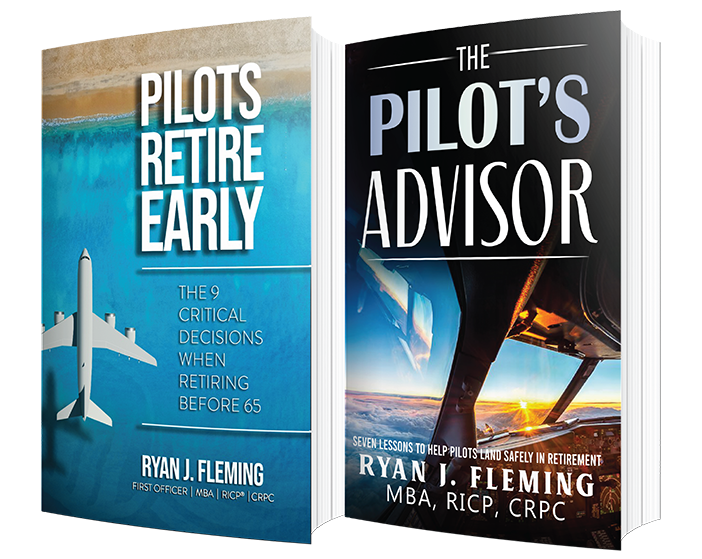
Attention, aviators. When you’ve spent years in the cockpit managing the complexities of flight, isn’t it time you navigated your retirement with the same precision. Introducing retirepilots.com. Right at your touchdown zone on our homepage, there’s a beacon flashing. Get my free toolkit. Click that, and you’ll be cleared for a direct route to Ryan’s Retirement Toolkit, tailor-made for pilots like you. Inside, you’ll find two of his important works: *The Pilot’s Advisor* and *Pilots Retire Early* Between these two books, you can decipher the nine critical decisions when retiring before 65, and discover the seven lessons to help pilots land safely in retirement. But that’s not all. This toolkit is packed with altitude-high value, including extras to get your retirement plans off the runway and light the afterburners on your 401k. Vector on over to retirepilots. com to grab your toolkit and let’s embark on this journey together.
Ryan Fleming 23:16
Well, I think too many people when we start talking about this asset class, they they think of it as a bill, like oh, I’m paying a bill, and you know, like term life insurance. I pay it, and it just goes away into Never Neverland. True. Well, with what we’re talking about, that’s not the case at all. It’s not a bill. You’re just moving. You’re actually moving money from one pocket to the other, and I hate seeing pilots all the time dump all this money into like a high yield savings account, and they’re totally comfortable with doing that. But yet, when we start talking about this, it’s like something they don’t want to do, and and it tells me right away they just don’t understand it.
David Befort 23:53
Yeah, I mean, you’ve mentioned I think on the podcast before. There’s there’s a lot of high profile individuals out there throughout history who’ve utilized whole life insurance to to build things like you know Walt Disney? We wouldn’t have Disney today if it wasn’t for his whole life insurance policy because he leveraged it for cash to go do that. J.C. Penney, a lot of politicians, you know John Harbaugh, a college football coach when he was at Michigan, like most of his compensation was in whole life insurance. Like it’s all over the place
Ryan Fleming 24:25
because he understood it, and no different than the the one that I like, honestly. Because I say this name, and I think people’s ears perk up is the Rockefellers. How how are we getting it to where the government’s not one of our major beneficiaries? How do we create a true legacy and pass on wealth to the next generation.
David Befort 24:43
Yeah, exactly. Because this is a it’s a private contract between you and a mutually owned insurance company, which means you’re part of you’re part owner of it, and it’s private. It’s a contract between the two of you. Nobody else knows about it. Nobody else sees where my cash is. Nobody else sees how much I have. Just me and the insurance company,
Ryan Fleming 25:02
and it’s protected,
David Befort 25:03
and it’s very well protected, much better than a bank account. We’ll just say that. So let’s talk about the fourth reason, and you already mentioned it once, is that this is a non-market correlated asset. So this is a cash and cash equivalent asset on your balance sheet, but it’s not correlated to the market, which means, like we talked about, when the market takes a dip, which historically it will every four to five years. That’s just historic over the time, you know, 100 years of the market. When it takes a dip, your cash value continues to grow, guaranteed, guaranteed, and through dividends. So you don’t have to like when people, yeah, the market goes up, great. It’s a good thing you have money in the market during that time. But when the market comes down, people start freaking out. You know, the sky is falling. I just look at my cash value and I say, “Well, that’s interesting. My cash value went up today. It’s higher today than it was yesterday. No, that’s a pretty good feeling. So I’m not saying everything’s got to be that. Yeah,
Ryan Fleming 26:01
always the case. Yeah,
David Befort 26:02
always the case. I mean, it’s guaranteed. So, and then you alluded to the the fifth reason. Now, there’s more, but these are the top five in my mind. But Dave,
Ryan Fleming 26:13
Dave, I apologize because you know Dave’s very organized. He’s got his five reasons, and here I I’ve jumped all over the place. You’re, but you hit
David Befort 26:21
them all because you understand the big reasons why people should do it because you do it yourself.
Ryan Fleming 26:27
Absolutely,
David Befort 26:27
the fifth reason is the tax or the the tax free legacy you will leave your family. So if you care anything about a legacy, and I’ve trust me, I’ve talked to people who said, “You know what? I don’t want to leave my kids anything. They need to work for it, just like I did. And one part of me sees that, and I understand where they’re coming from. But the other part of me, I ask, “Well, do we know what the future holds? What if your your kids do work hard? They do all the right things, but the market takes all their money, or there’s a big housing crisis, or what about if you have a special needs grandchild that has to have 24/7 care for the rest of their lives? That’s very expensive. Wouldn’t it be nice to have a legacy there? Maybe you put it into a trust and tell the trust what it it can use that money for. But it would pretty be pretty nice for you to be able to support family members in need, if that ever occurs. Now, if you don’t want to give them any money outside of you know emergencies or something like that, completely up to you. But you know, most people I talk to want to leave a legacy for their kids because you think about it, man. If you know my my parents are still alive and breathing, but my grandparents are gone. All of them. If none of them had life insurance, I can only imagine how much that would benefit my mom, who’s in retirement right now, if she had been left a large lump sum of tax-free life insurance. You know, the the you can just perpetuate this generation after generation, so my kids will never have to worry about running out of money in retirement.
Ryan Fleming 28:06
Another thing that I think of, and I know it’s not on your list, but people will, you know, clients, prospects will bring up to me long-term care insurance, and you start looking at it, and and for the far majority of people, it is way, way too expensive. Okay, it just doesn’t make sense inside their budget, inside their plan. But these policies can account for that. This is an easy way to self-insure. Can you explain what that would look like?
David Befort 28:32
Well, so there’s a couple different ways. One, you’ve got the cash value built up. So maybe if you haven’t been accessing that personal line of credit, or you have been to finance things and then paying it back over time, so you have it there to access again. But you’ve got a cash value balance built up that you could access to pay for long term care. But there’s also, if you physically qualify for it, most policies out there and the ones that I write include what’s called a chronic illness writer, and it doesn’t cost you anything as long as you qualify for it, it acts kind of like long-term care insurance. Where should you meet that definition of long-term care, as you’re you know when you’re older in your retirement years, and it’s a permanent condition, then this rider kicks in and it allows you to actually access your death benefit while you’re alive to pay for your care costs because that death benefit is permanent. It’s it the it’s guaranteed to pay out. So they’re just giving you access to a little bit of it early, so that you can pay for these costs and live comfortably.
Ryan Fleming 29:31
I think the big thing is we have FedEx pilots here today. What’s the fork in the road? You have this lump sum. You have a decision to make, regardless of what your. I don’t, you know. Everybody already has a plan in their mind of what what they’re doing with this money, okay? And it’s spend it or let it build for the rest of your life. But I even look at it and go, well, not necessarily. Even if you have debt, or you have that truck that you want to get, or you have that boat that you want to do, that that vacation that you want to do, all these things that you might want to just blow the. Money on. If you actually can be a little bit patient, you can sequence money through one of these policies and still create this legacy and still go get that truck.
David Befort 30:10
Yeah, thanks for bringing that up, man. Because you called it the and asset. It is. This is not either or. Like when people say I’m going to you know put money into a qualified account, you basically can’t touch that money until you’re 59 and a half, right? This money you put it into this product, and this and and learn this banking concept. You can both go get that new truck and create this legacy, and you know all those other five reasons. Create all of that with the exact same dollars. You just sequence it, like you said first into a policy properly structured, and then it creates that line of credit that you can use to go buy that truck.
Ryan Fleming 30:47
So if you’re one of those pilots that is about to blow this money, you’re the one that’s going to go buy that shiny new boat or car or whatever it is, or you’re that pilot that’s built up a lot of debt. This can still work for you if you learn how to sequence money, if you learn how to sequence money, this thing is unbelievably powerful. Now, I hope you don’t have debt, and I hope you’re not going to go blow it on some asset that’s just going to depreciate. But but if you are one of those, this is still a solution that can help you out. I hope you’re one of those people that’s going to work it through a policy or work it into you know your taxable investment account, and we can you know help you along the way. But if you have that debt, you have that plan where the money’s already gone. Let us teach you how to sequence money through this, and you’re going to be way better off long term.
David Befort 31:32
Long term, because at the end of the day, you’ll still have your original cash, and you’ll have your debt eliminated. So you know it’s usually in in a in a marriage one person’s a spendthrift and one person’s the saver. So if that’s you, you’re just a big spender. Then we’re talking right to you. If you’re the saver, then maybe your your spouse is a big spender. Well, this is a great way to kind of keep that money out of sight, out of mind, because you’re putting it. You’re not going to log into your bank app and see it every single day burning a hole in your pocket. It’s going to be over here in in another login where you can manage it all online. But that’s you got to go to a separate site and see how much is there and all that. And takes you a few days to get access to it, which is a good thing, putting friction between you and your money, so you don’t make stupid decisions on the spur of the moment, so just another thing psychologically to keep keep in mind.
Ryan Fleming 32:25
Well, and it’s it’s decision making. Like I think about airline pilots, they all make the same money. Like we know exactly what you make for whatever airplane you fly and what seat you sit on. So why is it that some people have way more left, and you know, like leading up to retirement versus not, I think this is one of those pivotal things. Like just by making a little bit better decision, you can still have the same stuff if you want stuff. You can have the same stuff, but do it in a more intelligent manner, a more efficient manner.
David Befort 32:56
Yeah, doesn’t mean you have to live like a year one FO, but I’ve talked to some captains retiring, and he said, “Hey, once I made captain, I never my lifestyle never exceeded what I was making as an FO at the time I I made you went to the left seat, which
Ryan Fleming 33:12
which we’re talking about the lump sum, Dave. But all these guys just got a 40% raise too. Well, guess what? Act like you only got a 20% raise, and now you can do this.
David Befort 33:21
Yeah, unfortunately, too many pilots act like they got a 60% raise when you get a 40% raise. So the math don’t math when you do that. The
Ryan Fleming 33:29
math don’t math. Can you explain that one?
David Befort 33:32
It’s pretty basic. Yeah,
Ryan Fleming 33:36
the math don’t math. I like
David Befort 33:37
it. It doesn’t it doesn’t add up, man. Well, all right. So let’s move on to how to implement this. So, you know, I’ve really narrowed it down to like three pretty simple and straightforward ways to take that pay raise and that lump sum, or just the lump sum, and create this in your life right now. So, the first one would be a blended approach where you take part of your pay raise, and you take that lump sum, and with that pay raise, you create a monthly premium that you’re paying into this. And with that lump sum, you do one massive one-time dump in. You know that’s a technical term of of all that cash on top of that premium to create a lot of access to capital right away, so that boosts your cash value. You have access to the majority of that right away through that personal line of credit. So, who’s this for? Like this one, I would say this is for somebody who’s going to be flying for at least five more years. You know, up to maybe they’re flying for the next 30 years, where they can pay that ongoing annual premium every year, just out of their pay raise, out of their active pay, and then that lump sum just kind of supercharges that. It’s kind of like afterburners on a jet, you know. But even if you only have five years remaining until retirement, usually by the five-year point. You could actually decrease the premium to a minimum amount that’s still generating more than $1 in cash that year every year for every dollar you pay in premium. So if you got five or more years left to fly, I think this is a great option. The second one, if you just want to use that lump sum, maybe you’ve already earmarked that 40% raise. Hopefully not. Maybe you have, but you you say okay, I’ve done that. I can’t. You know, expenses are still too tight for my lifestyle. But this lump sum, I I’m willing to put that to work. So there’s a couple ways we could do that. There’s what’s called a premium deposit fund with these life insurance contracts, where you could actually take that lump sum. Let’s call it $100,000 as an example. You get 100k lump sum. You could put all of that into a premium deposit fund that funds your policy premium for the next 10 years, and this premium deposit fund with the company guarantees a 5% interest rate every year on the growth, which really equates to just more premium. So after 10 years, you put that 100,000 in, you’ve actually been able to fund your policy with about $120,000 worth of premium. Okay, so the 10 years ends, that fund is depleted. You’ve spent it all. You funded this premium for 10 years. Now you have to start picking up the the premium out of pocket, right? Yes, with caveats. One, you could pay that premium out of pocket, which I think would be the that’s the most ideal thing to do if you have the capability. And at that point, every dollar you pay is more is certainly creating well more than $1 in cash that you can access that year, so you get a great return that year when you start paying out of pocket, or because you get dividends. Now dividends aren’t guaranteed, but with the companies I write for, you know dividends have been paid out for well over 100 straight years without ever missing a beat, so they’re a pretty good bet, and your dividends should be at the point by year 11 when you got to pay the premium to cover the premium for you if you if you choose. So what what this is called is premium offset. It’s just an option that dividend you tell the company, hey, use my dividend to pay my premium. I still want to be hands off, and and just watch my policy grow. The cash value will grow. The death benefit will grow. And it all and and you’ve been hands off your entire life. You made one smart decision and one payment in September when you got that lump sum.
Ryan Fleming 37:36
And God hope you know 11 years from now you’re getting a higher pay rate anyway. So maybe you have some extra cash that way, or you’ve upgraded too. So, you you should be in a different financial position 11 years from now as well.
David Befort 37:49
Yeah, true, and that’s if you want to do this right now when you have that kind of runway. You know who who this is for is really anybody looking for a set it and forget it kind of model, like fire and forget. I just want to make this one payment. I’m going to kind of keep that out of sight, out of mind. Let that do what it’s going to do, and and pay the premium for me for the next 10 years. Oh, but I know I also have access to that cash value growth every single year. So when I do want to go buy that new truck in three or four years, I’ve got cash value in there I can use to go do that and then pay myself back, pay that interest back. But this this strategy has actually been very well liked by a lot of FedEx pilots I’ve I’ve talked to who are retiring within 10 years. Maybe they’re retiring in in five years. Well, hey, now you don’t have to fund it for the next five years and your first five years of retirement. You don’t have to fund it, and then after that, like I said, there’s a minimum payment, and that minimum payment is going to be generating well over you know what you’re paying into it. You’ll have access to a whole lot more, and maybe you know RMDs come around age 73. You got to take money out anyway, so now you just use that to pay your premium. All right, so that’s two ways. Now the third way, and this is also just using that lump sum. Is you could like you have brokerage accounts for a lot of your your clients. Like a lot of them do, like a monthly. They fund their 401k, they fund this and that, and then they’ve still got money left over, and they say I’m just going to put some money into the brokerage account every month. Continue doing that. Now take this lump sum and throw it in the brokerage account. What we can do is pull the premium every year for your policy when that policy anniversary hits. That premium comes due. Just go to the brokerage account, Ryan. Hey, send me send me the 20,000, 30,000, whatever it is for my premium, and just pay it out of the brokerage account every year. We could also take part of that lump sum, create the first year’s premium for it, and take the remainder, put it in the brokerage account, let that fund, or at least supplement the ongoing premium in year two and beyond. So that’s that’s really that option’s good for anybody, whether you’re about to retire or you got a long time left. Now there’s a fourth option, and I’m not really going to get into the details. It’s a little more advanced, a little more complex. It’s if anybody is okay with a little more complexity to maybe run that money through another engine before it goes into a policy and just create more optimization with your dollars. That that would be like a one-on-one discussion I’d have with somebody probably not something I can get into here. It would take too long to discuss, but so you got some pretty simple options from either create a new premium that you want to commit to every year and use that lump sum as a boost, or use that lump sum as a one-time payment, be hands off for potentially the rest of your life, and you get to build all those things we talked about at the beginning of the episode-the five big things you’re building with this product-all with just that lump sum. So it’s working for you for the rest of your life instead of just that one time buying that boat or putting a down payment on the house or the lake house or or whatever you you might have in mind right now.
Ryan Fleming 40:59
Well, the thing that bugs me the most is I want pilots to let their money work for them. So, so much of that is being disciplined and making the right decision with their finances, and and this is definitely something that would get them long term going down a much better path where letting that that lump sum work for them forever. Right. I think that we’ve created a website that does a really good job, or at least intro to some education on this, and that is www.ibc the number four, and then pilots.com. We’ll have that in the show notes. I think that’s great. It’s got some videos because I haven’t found one person that once they truly discover what this can do for them, like once that light turns on and they have enough education and academics, they go oh, and that’s almost the way it is. You almost discover it, right? And then you’re like oh, now I now I get it, but but you’re not going to get there unless you have an open mind and actually learn about how it works,
David Befort 42:02
exactly. So yeah, those videos for anybody who’s a visual learner. We got the the download for the quick book, which I wrote so that a pilot can get through it in about 15 to 20 minutes. And I know what you guys do while you fly, so you could easily get through this thing on a single flight. But yeah, so I would say yeah. If anybody wants to talk more about this, I’m happy to have a conversation. You know, you can get my scheduling link from that website or whatever Ryan puts in the show notes. But you know, these are all individually tailored policies and plans for everybody based on your specific situation. They’re not a one size fits all. It’s individually tailored, and I take a lot of pride in that, and making sure we create the best thing for for your situation.
Ryan Fleming 42:50
What we’re trying to do here is is you know educate and create some options. But I think I think the point is you know Dave’s gone through a lot of the different things that you could do, how you could find it, what what it could be used for. But I think I think the real point is, regardless of what your plan is for this lump sum, it would probably be to your benefit to have a conversation with Dave to see if you could use this to keep it in your wheelhouse for the rest of your life, and still go do whatever you had in mind for this lump sum payment, and you could create a long-term protection for you, and and better prepare you for retirement. I’m here as a resource, obviously, for any of my clients, even prospects out there, and of course Dave as well. But but you have some time right now. We’re going to get this show out as quickly as possible, so that you can educate yourself and hopefully make a a better decision for you long term.
David Befort 43:40
Yep, and I would say I’ll just throw that out there too. Like you said, start now. Underwriting process takes maybe a month, so you’ve got some time to to do more education and more planning in in between before we get a an approval for you from the insurance company. But that would probably equate to about the time that lump sum is going to hit your bank account. So, if you got all that ready to go, as soon as that money hits your account, you’re off to the races.
Ryan Fleming 44:05
Well, Dave, I appreciate you taking the time. I think it’s important to to let pilots know what their options are out there, and we can talk to them on an individual basis for their individual situation. As far as the call to action, is there anything else you want to say to to the FedEx pilots out there.
David Befort 44:22
I just think to reiterate that website IBC for pilots.com, and you know you’ll find that in the show notes, and you can find my scheduling link on there and my book download. Do a little education before you come talk to me. It’ll make the conversation a lot more fruitful. We’ll have a quick 30 minute intro call, see if this is the right step for you to to proceed with underwriting, and then we’ll do some more strategizing after that.
Ryan Fleming 44:44
All right, Dave Bedford, Max Performance Financial. Thank you for your time, sir. Much appreciated. Thank you, buddy. All right, have a good one.
David Befort 44:55
This episode is for educational purposes only and is not individualized in. The Pilots Advisor LLC is an SEC registered investment advisor. Registration does not imply a certain level of skill or training. Past performance is not indicative of future results, and investing involves risk, including the possible loss of principal.
Transcribed by https://otter.ai
This podcast episode is for educational and informational purposes only. The opinions expressed are those of the speaker as of the recording date and are subject to change. This content does not constitute personalized investment, tax, or legal advice. Please consult a qualified professional before making financial decisions.